Milner Therapeutics Institute, University of Cambridge, Cambridge, UK.
Institute for Virology, FB10-Veterinary Medicine, Justus-Liebig University, Gießen 35392, Germany.
Sci Adv. 2021 Jun 30;7(27). doi: 10.1126/sciadv.abh3032. Print 2021 Jun.
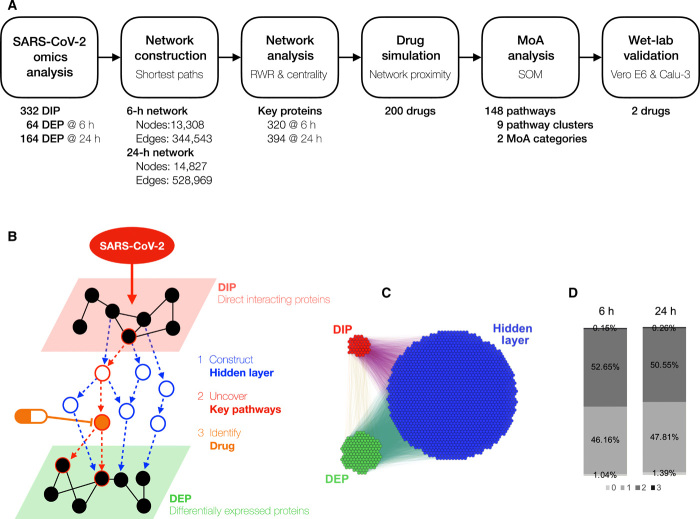
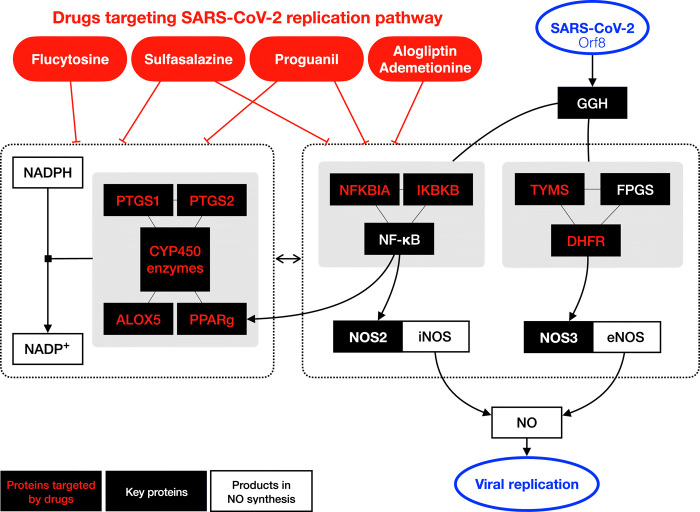
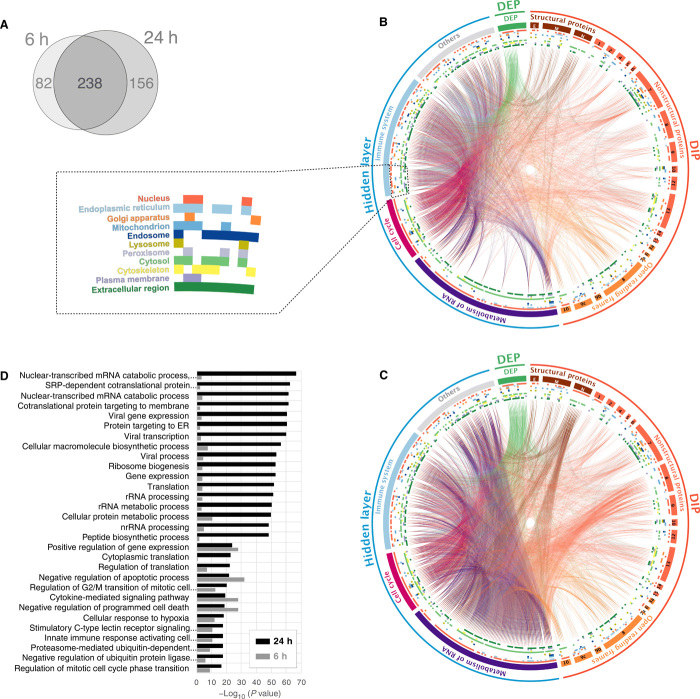
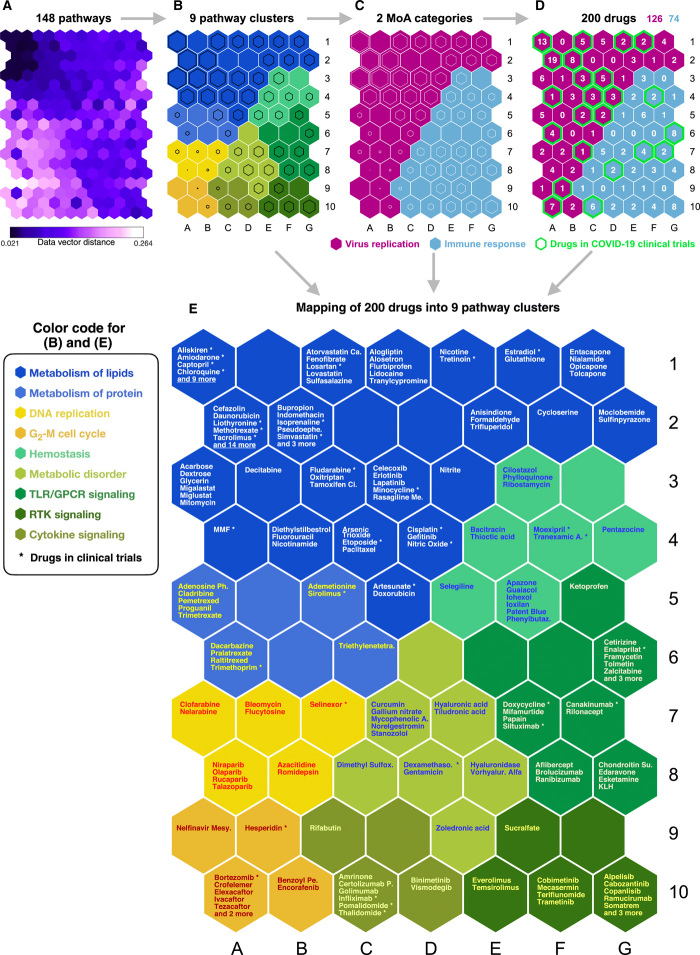
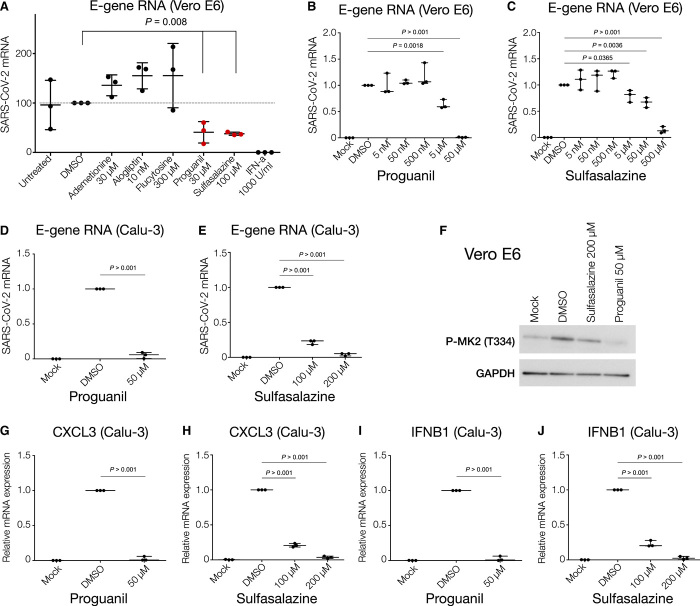
The global outbreak of severe acute respiratory syndrome coronavirus 2 (SARS-CoV-2) necessitates the rapid development of new therapies against coronavirus disease 2019 (COVID-19) infection. Here, we present the identification of 200 approved drugs, appropriate for repurposing against COVID-19. We constructed a SARS-CoV-2-induced protein network, based on disease signatures defined by COVID-19 multiomics datasets, and cross-examined these pathways against approved drugs. This analysis identified 200 drugs predicted to target SARS-CoV-2-induced pathways, 40 of which are already in COVID-19 clinical trials, testifying to the validity of the approach. Using artificial neural network analysis, we classified these 200 drugs into nine distinct pathways, within two overarching mechanisms of action (MoAs): viral replication (126) and immune response (74). Two drugs (proguanil and sulfasalazine) implicated in viral replication were shown to inhibit replication in cell assays. This unbiased and validated analysis opens new avenues for the rapid repurposing of approved drugs into clinical trials.
严重急性呼吸综合征冠状病毒 2 (SARS-CoV-2) 的全球爆发需要迅速开发针对 2019 年冠状病毒病 (COVID-19) 感染的新疗法。在这里,我们确定了 200 种已批准的药物,这些药物适合重新用于治疗 COVID-19。我们基于 COVID-19 多组学数据集定义的疾病特征构建了一个 SARS-CoV-2 诱导的蛋白质网络,并将这些途径与已批准的药物进行交叉检查。该分析确定了 200 种预测可靶向 SARS-CoV-2 诱导途径的药物,其中 40 种已在 COVID-19 临床试验中,证明了该方法的有效性。使用人工神经网络分析,我们将这 200 种药物分为两种主要作用机制 (MoA) 内的九个不同途径:病毒复制 (126) 和免疫反应 (74)。两种被认为与病毒复制有关的药物(普乐津和柳氮磺胺吡啶)在细胞检测中被证明能抑制复制。这种无偏见和经过验证的分析为快速将已批准的药物重新用于临床试验开辟了新途径。