Besnard Guillaume, Gorrilliot Océane, Raimondeau Pauline, Génot Benoit, El Bakkali Ahmed, Anthelme Fabien, Baali-Cherif Djamel
CNRS-UPS-ENFA, EDB, UMR 5174, Bât. 4R1, CEDEX 9, 31062 Toulouse, France.
INRA, UR APCRPG, BP 578, Meknès 50000, Morocco.
Plants (Basel). 2021 Jun 14;10(6):1207. doi: 10.3390/plants10061207.
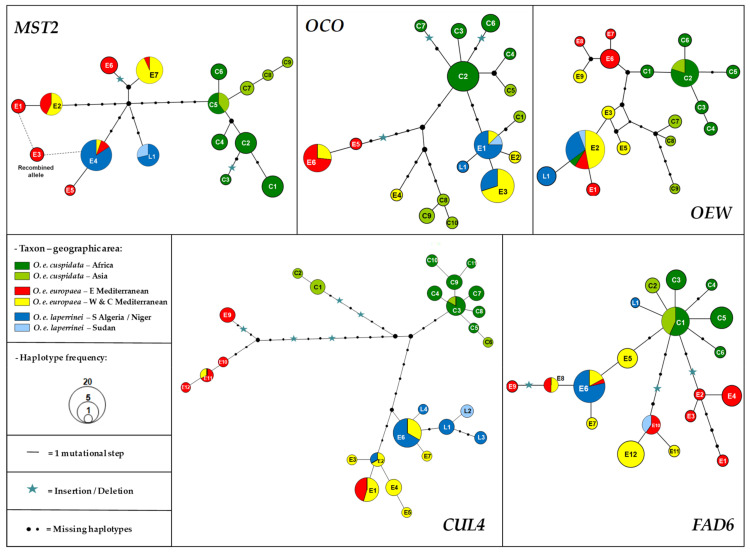
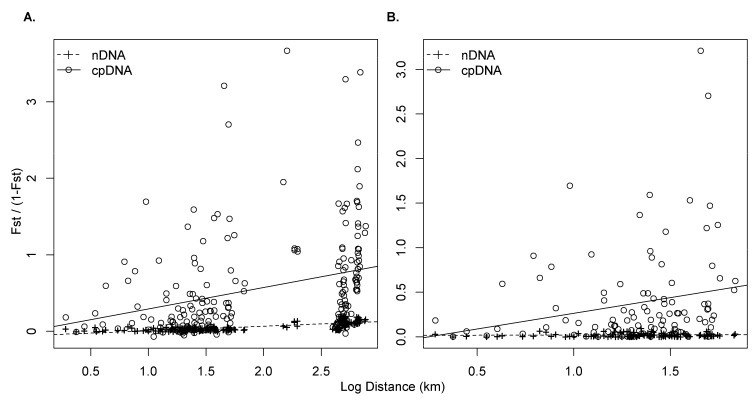
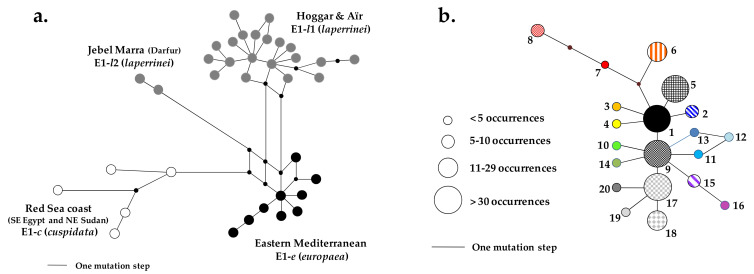
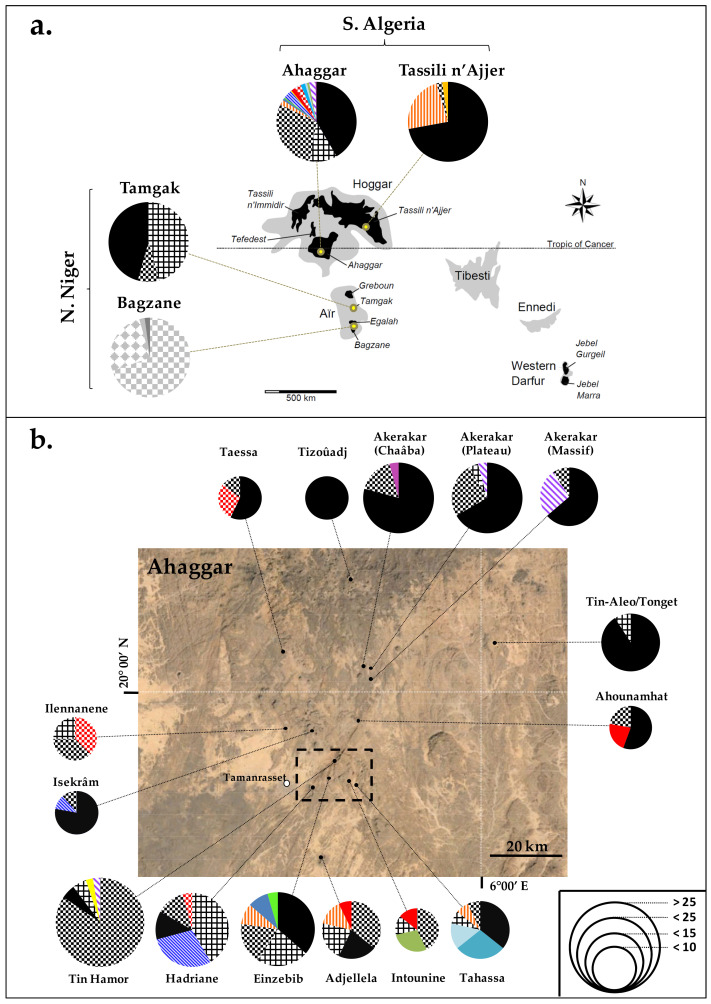
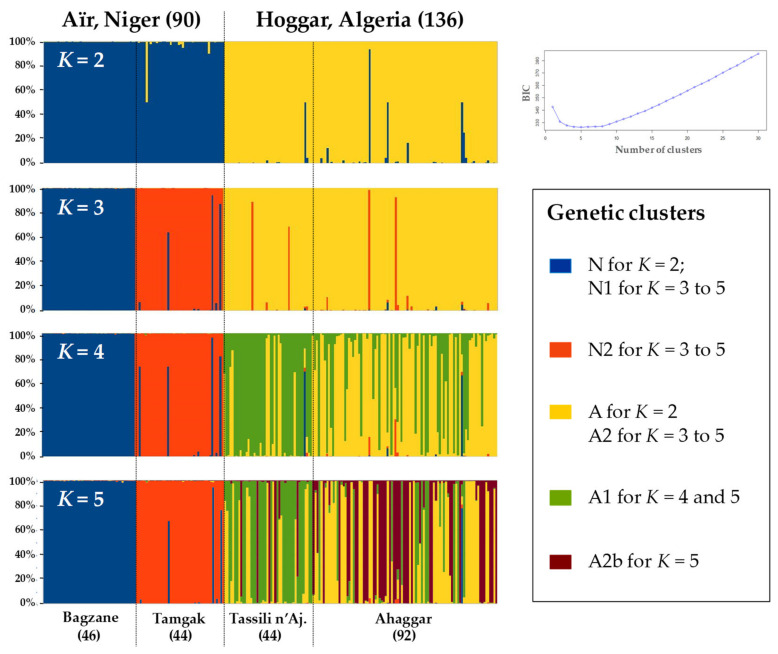
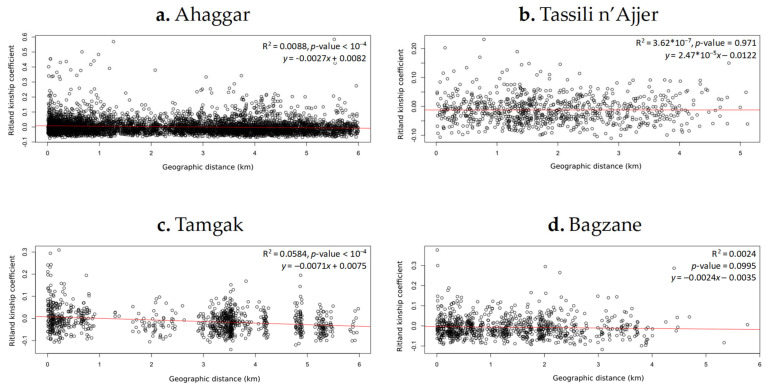
The Laperrine's olive is endemic to the Saharan Mountains. Adapted to arid environments, it may constitute a valuable genetic resource to improve water-stress tolerance in the cultivated olive. However, limited natural regeneration coupled with human pressures make it locally endangered in Central Sahara. Understanding past population dynamics is thus crucial to define management strategies. Nucleotide sequence diversity was first investigated on five nuclear genes and compared to the Mediterranean and African olives. These data confirm that the Laperrine's olive has a strong affinity with the Mediterranean olive, but it shows lower nucleotide diversity than other continental taxa. To investigate gene flows mediated by seeds and pollen, polymorphisms from nuclear and plastid microsatellites from 383 individuals from four Saharan massifs were analyzed. A higher genetic diversity in Ahaggar (Hoggar, Algeria) suggests that this population has maintained over the long term a larger number of individuals than other massifs. High-to-moderate genetic differentiation between massifs confirms the role of desert barriers in limiting gene flow. Yet contrasting patterns of isolation by distance were observed within massifs, and also between plastid and nuclear markers, stressing the role of local factors (e.g., habitat fragmentation, historical range shift) in seed and pollen dispersal. Implications of these results in the management of the Laperrine's olive genetic resources are discussed.
拉佩林氏油橄榄是撒哈拉山脉特有的植物。它适应干旱环境,可能是一种宝贵的遗传资源,有助于提高栽培油橄榄对水分胁迫的耐受性。然而,自然更新有限,加上人类压力,使其在撒哈拉中部地区面临局部濒危。因此,了解过去的种群动态对于制定管理策略至关重要。首先对五个核基因的核苷酸序列多样性进行了研究,并与地中海油橄榄和非洲油橄榄进行了比较。这些数据证实,拉佩林氏油橄榄与地中海油橄榄有很强的亲缘关系,但它的核苷酸多样性低于其他大陆类群。为了研究由种子和花粉介导的基因流动,对来自四个撒哈拉地块的383个个体的核微卫星和质体微卫星的多态性进行了分析。阿哈加尔(阿尔及利亚的霍加尔)的遗传多样性较高,这表明该种群长期以来维持的个体数量比其他地块更多。地块之间高到中等程度的遗传分化证实了沙漠屏障在限制基因流动方面的作用。然而,在地块内部以及质体和核标记之间观察到了不同的距离隔离模式,强调了局部因素(如栖息地破碎化、历史范围转移)在种子和花粉传播中的作用。讨论了这些结果对拉佩林氏油橄榄遗传资源管理的影响。