• 文献检索
  • 文档翻译
  • 深度研究
  • 学术资讯
  • Suppr Zotero 插件Zotero 插件
  • 邀请有礼
  • 套餐&价格
  • 历史记录
应用&插件
Suppr Zotero 插件Zotero 插件浏览器插件Mac 客户端Windows 客户端微信小程序
定价
高级版会员购买积分包购买API积分包
服务
文献检索文档翻译深度研究API 文档MCP 服务
关于我们
关于 Suppr公司介绍联系我们用户协议隐私条款
关注我们

Suppr 超能文献

核心技术专利:CN118964589B侵权必究
粤ICP备2023148730 号-1Suppr @ 2026

文献检索

告别复杂PubMed语法,用中文像聊天一样搜索,搜遍4000万医学文献。AI智能推荐,让科研检索更轻松。

立即免费搜索

文件翻译

保留排版,准确专业,支持PDF/Word/PPT等文件格式,支持 12+语言互译。

免费翻译文档

深度研究

AI帮你快速写综述,25分钟生成高质量综述,智能提取关键信息,辅助科研写作。

立即免费体验

亚麻和大麻纤维的碱处理对基于聚(3-羟基丁酸酯-co-3-羟基戊酸酯)生物复合材料性能的影响

Influence of the Alkali Treatment of Flax and Hemp Fibers on the Properties of PHBV Based Biocomposites.

作者信息

Frącz Wiesław, Janowski Grzegorz, Bąk Łukasz

机构信息

Department of Materials Forming and Processing, Rzeszow University of Technology, 35-959 Rzeszow, Poland.

出版信息

Polymers (Basel). 2021 Jun 14;13(12):1965. doi: 10.3390/polym13121965.

DOI:10.3390/polym13121965
PMID:34198616
原文链接:https://pmc.ncbi.nlm.nih.gov/articles/PMC8232267/
Abstract

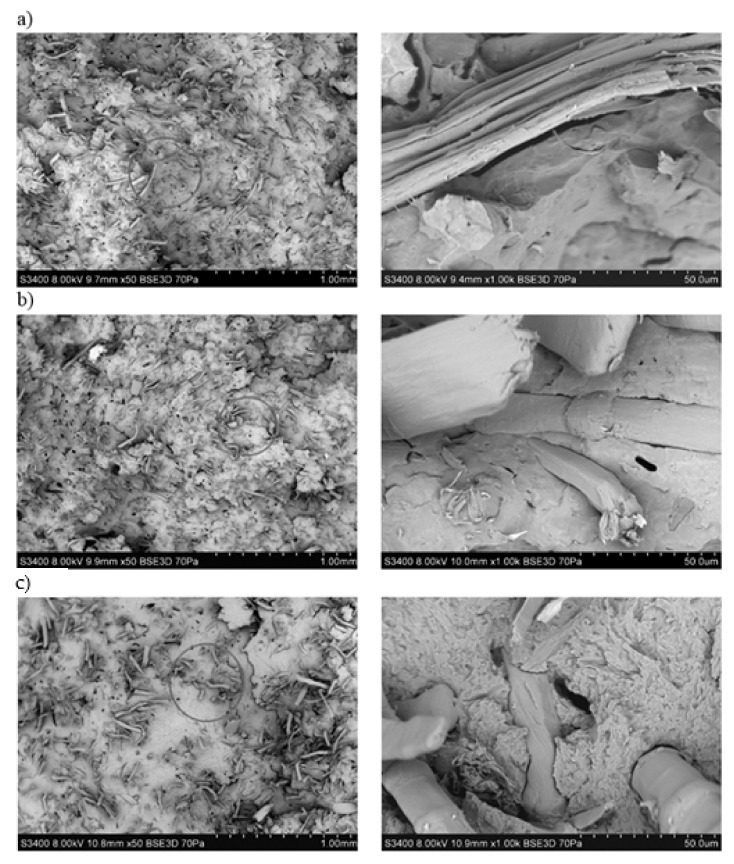
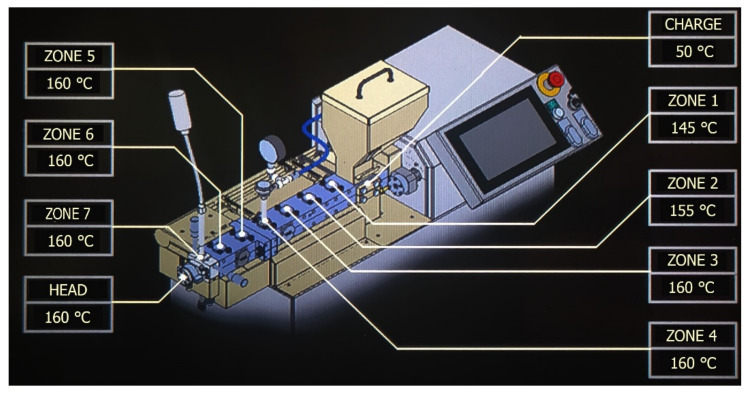
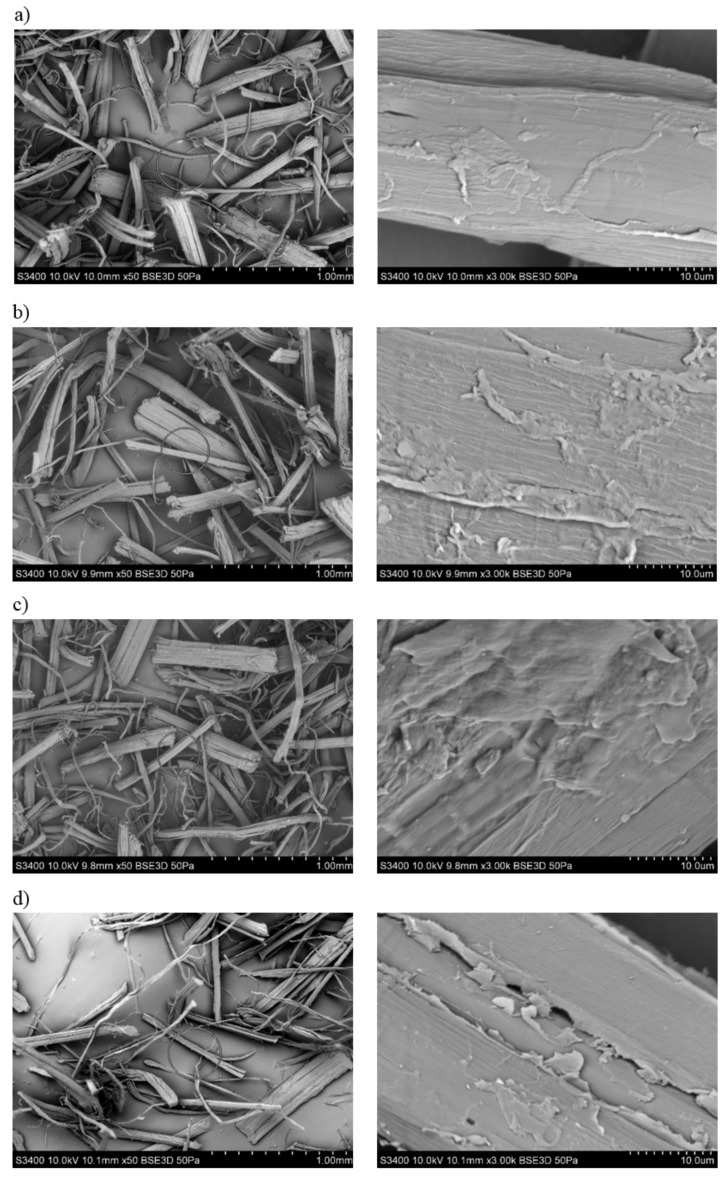
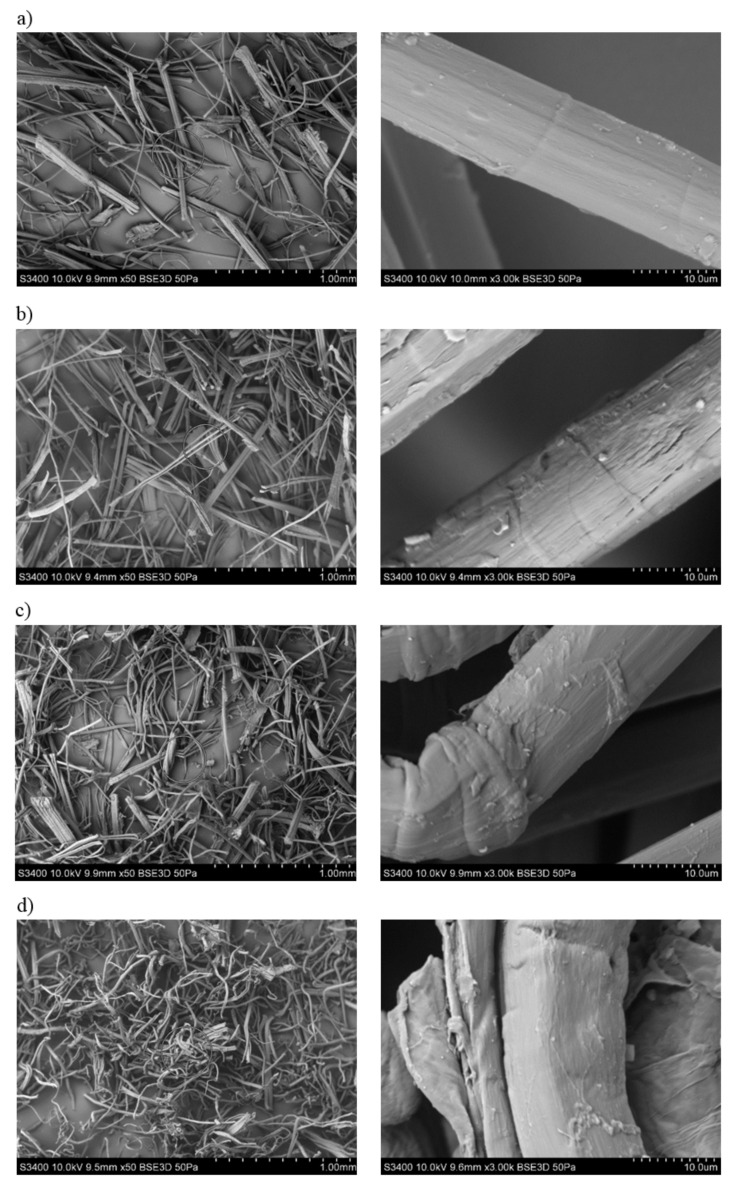
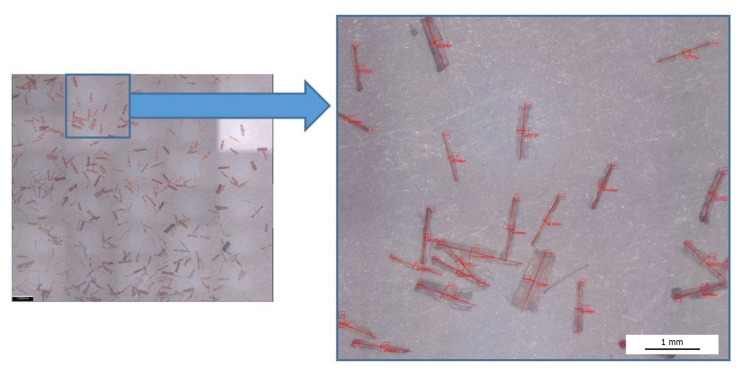
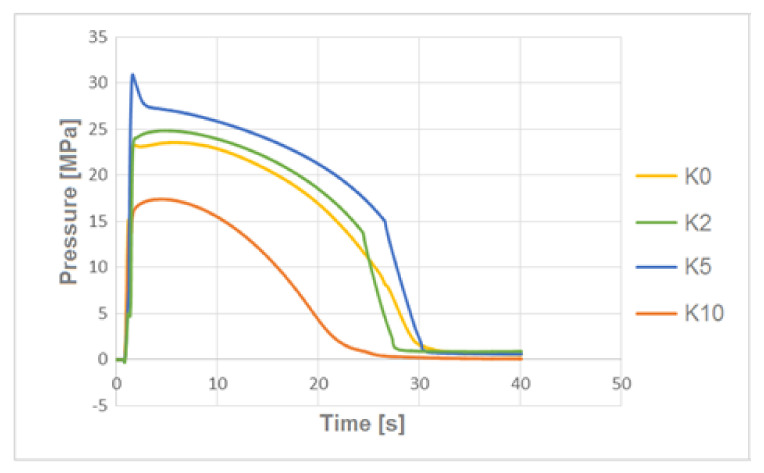
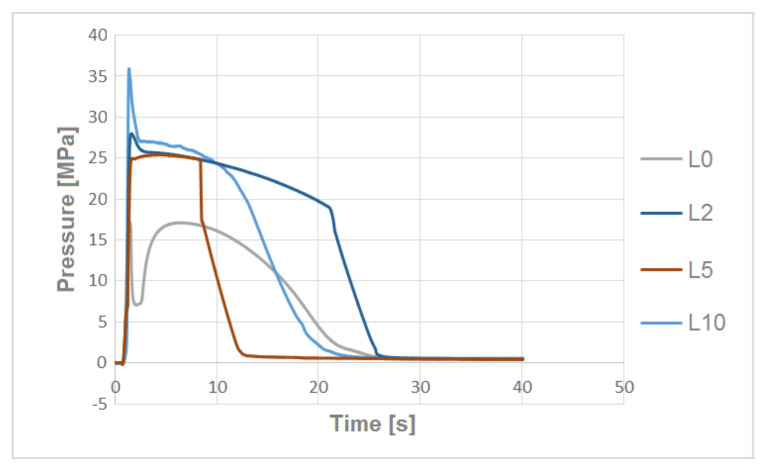
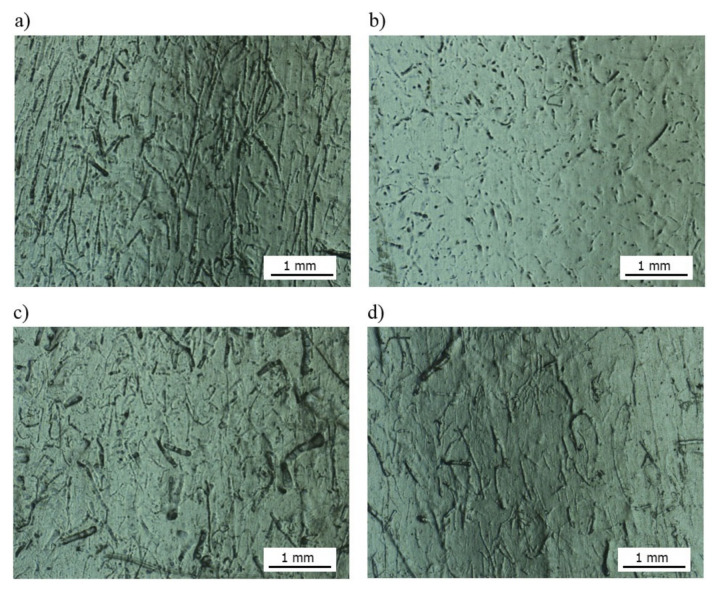
This study assessed the impact of alkali treatment of hemp and flax fibers on mechanical properties (determined by means of the uniaxial tensile test, impact tensile strength test and hardness test), processing properties (the course of the extrusion and injection process) and usable properties (shrinkage of molded pieces, degree of water absorption) of biocomposites on the base of poly (3-hydroxybutyric-co-3-hydroxyvaleric acid) (PHBV) biopolymer. For this purpose, 1 mm of length flax and hemp fibers was surface-modified by means of aqueous solution of NaOH (sodium hydroxide) with concentrations of 2%, 5% and 10%. The composites were made using the extrusion technology. The test specimens were produced by injection molding technology. In total, eight types of biocomposites with modified and non-modified fibers were produced, and each biocomposite contained the same filler content (15 wt.%). Their properties were compared in some cases with pure PHBV polymer. In the case of biocomposites filled with hemp fibers, it was noted that an increase of the alkalizing solution concentration improved most of the tested properties of the obtained biocomposites. On the other hand, in the case of flax fibers, there was a significant decrease in most of the mechanical properties tested for the composite containing fibers etched by 10% NaOH solution. The obtained results were verified by examining fibers and the destroyed specimens with a scanning electron microscope (SEM) and an optical microscope, which confirmed, especially, the significant geometry changes of the flax fibers etched by 10% NaOH solution. This procedure also resulted in a significant change of processing properties-a composite of this fiber type required about 20 °C lower temperature during the extrusion and injection molding process in order to obtain the right product. These results lead to the important conclusion that for each filler of the plant-origin and polymer matrix, the fiber alkalization method should be selected individually in order to improve the specific properties of biocomposites.

摘要

本研究评估了碱处理大麻纤维和亚麻纤维对以聚(3-羟基丁酸酯-co-3-羟基戊酸酯)(PHBV)生物聚合物为基体的生物复合材料的机械性能(通过单轴拉伸试验、冲击拉伸强度试验和硬度试验测定)、加工性能(挤出和注塑过程)以及使用性能(成型件收缩率、吸水率)的影响。为此,将长度为1毫米的亚麻纤维和大麻纤维用浓度为2%、5%和10%的氢氧化钠(NaOH)水溶液进行表面改性。复合材料采用挤出工艺制备。测试样品通过注塑工艺生产。总共制备了八种含改性和未改性纤维的生物复合材料,每种生物复合材料的填料含量相同(15重量%)。在某些情况下,将它们的性能与纯PHBV聚合物进行比较。对于填充大麻纤维的生物复合材料,发现碱化溶液浓度的增加改善了所得生物复合材料的大部分测试性能。另一方面,对于亚麻纤维,含10% NaOH溶液蚀刻纤维的复合材料的大部分测试机械性能显著下降。通过使用扫描电子显微镜(SEM)和光学显微镜检查纤维和破坏的样品对所得结果进行了验证,这尤其证实了10% NaOH溶液蚀刻的亚麻纤维的显著几何形状变化。该过程还导致加工性能发生显著变化——这种纤维类型的复合材料在挤出和注塑过程中需要约低20°C的温度才能获得合格产品。这些结果得出一个重要结论,即对于每种植物来源的填料和聚合物基体,应单独选择纤维碱化方法以改善生物复合材料的特定性能。
https://cdn.ncbi.nlm.nih.gov/pmc/blobs/c5c8/8232267/70e870b8ecb4/polymers-13-01965-g019.jpg
https://cdn.ncbi.nlm.nih.gov/pmc/blobs/c5c8/8232267/a14996fe0044/polymers-13-01965-g001.jpg
https://cdn.ncbi.nlm.nih.gov/pmc/blobs/c5c8/8232267/01fde1d020f8/polymers-13-01965-g002.jpg
https://cdn.ncbi.nlm.nih.gov/pmc/blobs/c5c8/8232267/e5742bb61deb/polymers-13-01965-g003.jpg
https://cdn.ncbi.nlm.nih.gov/pmc/blobs/c5c8/8232267/631b0cbd48bc/polymers-13-01965-g004.jpg
https://cdn.ncbi.nlm.nih.gov/pmc/blobs/c5c8/8232267/d7dba02ccfc2/polymers-13-01965-g005.jpg
https://cdn.ncbi.nlm.nih.gov/pmc/blobs/c5c8/8232267/770e43ea563c/polymers-13-01965-g006.jpg
https://cdn.ncbi.nlm.nih.gov/pmc/blobs/c5c8/8232267/9c6d955b77bf/polymers-13-01965-g007.jpg
https://cdn.ncbi.nlm.nih.gov/pmc/blobs/c5c8/8232267/bcfd77db8430/polymers-13-01965-g008.jpg
https://cdn.ncbi.nlm.nih.gov/pmc/blobs/c5c8/8232267/88b16c110292/polymers-13-01965-g009.jpg
https://cdn.ncbi.nlm.nih.gov/pmc/blobs/c5c8/8232267/bed22cb1ec10/polymers-13-01965-g010.jpg
https://cdn.ncbi.nlm.nih.gov/pmc/blobs/c5c8/8232267/b0f235fed6c5/polymers-13-01965-g011.jpg
https://cdn.ncbi.nlm.nih.gov/pmc/blobs/c5c8/8232267/49fadededcad/polymers-13-01965-g012.jpg
https://cdn.ncbi.nlm.nih.gov/pmc/blobs/c5c8/8232267/9ece28166fbd/polymers-13-01965-g013.jpg
https://cdn.ncbi.nlm.nih.gov/pmc/blobs/c5c8/8232267/03e7a08b68b2/polymers-13-01965-g014.jpg
https://cdn.ncbi.nlm.nih.gov/pmc/blobs/c5c8/8232267/ba6821f71c9b/polymers-13-01965-g015.jpg
https://cdn.ncbi.nlm.nih.gov/pmc/blobs/c5c8/8232267/dfefc89006d9/polymers-13-01965-g016.jpg
https://cdn.ncbi.nlm.nih.gov/pmc/blobs/c5c8/8232267/870e518d1a31/polymers-13-01965-g017.jpg
https://cdn.ncbi.nlm.nih.gov/pmc/blobs/c5c8/8232267/86161c76b756/polymers-13-01965-g018.jpg
https://cdn.ncbi.nlm.nih.gov/pmc/blobs/c5c8/8232267/70e870b8ecb4/polymers-13-01965-g019.jpg
https://cdn.ncbi.nlm.nih.gov/pmc/blobs/c5c8/8232267/a14996fe0044/polymers-13-01965-g001.jpg
https://cdn.ncbi.nlm.nih.gov/pmc/blobs/c5c8/8232267/01fde1d020f8/polymers-13-01965-g002.jpg
https://cdn.ncbi.nlm.nih.gov/pmc/blobs/c5c8/8232267/e5742bb61deb/polymers-13-01965-g003.jpg
https://cdn.ncbi.nlm.nih.gov/pmc/blobs/c5c8/8232267/631b0cbd48bc/polymers-13-01965-g004.jpg
https://cdn.ncbi.nlm.nih.gov/pmc/blobs/c5c8/8232267/d7dba02ccfc2/polymers-13-01965-g005.jpg
https://cdn.ncbi.nlm.nih.gov/pmc/blobs/c5c8/8232267/770e43ea563c/polymers-13-01965-g006.jpg
https://cdn.ncbi.nlm.nih.gov/pmc/blobs/c5c8/8232267/9c6d955b77bf/polymers-13-01965-g007.jpg
https://cdn.ncbi.nlm.nih.gov/pmc/blobs/c5c8/8232267/bcfd77db8430/polymers-13-01965-g008.jpg
https://cdn.ncbi.nlm.nih.gov/pmc/blobs/c5c8/8232267/88b16c110292/polymers-13-01965-g009.jpg
https://cdn.ncbi.nlm.nih.gov/pmc/blobs/c5c8/8232267/bed22cb1ec10/polymers-13-01965-g010.jpg
https://cdn.ncbi.nlm.nih.gov/pmc/blobs/c5c8/8232267/b0f235fed6c5/polymers-13-01965-g011.jpg
https://cdn.ncbi.nlm.nih.gov/pmc/blobs/c5c8/8232267/49fadededcad/polymers-13-01965-g012.jpg
https://cdn.ncbi.nlm.nih.gov/pmc/blobs/c5c8/8232267/9ece28166fbd/polymers-13-01965-g013.jpg
https://cdn.ncbi.nlm.nih.gov/pmc/blobs/c5c8/8232267/03e7a08b68b2/polymers-13-01965-g014.jpg
https://cdn.ncbi.nlm.nih.gov/pmc/blobs/c5c8/8232267/ba6821f71c9b/polymers-13-01965-g015.jpg
https://cdn.ncbi.nlm.nih.gov/pmc/blobs/c5c8/8232267/dfefc89006d9/polymers-13-01965-g016.jpg
https://cdn.ncbi.nlm.nih.gov/pmc/blobs/c5c8/8232267/870e518d1a31/polymers-13-01965-g017.jpg
https://cdn.ncbi.nlm.nih.gov/pmc/blobs/c5c8/8232267/86161c76b756/polymers-13-01965-g018.jpg
https://cdn.ncbi.nlm.nih.gov/pmc/blobs/c5c8/8232267/70e870b8ecb4/polymers-13-01965-g019.jpg

相似文献

1
Influence of the Alkali Treatment of Flax and Hemp Fibers on the Properties of PHBV Based Biocomposites.亚麻和大麻纤维的碱处理对基于聚(3-羟基丁酸酯-co-3-羟基戊酸酯)生物复合材料性能的影响
Polymers (Basel). 2021 Jun 14;13(12):1965. doi: 10.3390/polym13121965.
2
The Effect of the Extrusion Method on Processing and Selected Properties of Poly(3-hydroxybutyric-co-3-hydroxyvaleric Acid)-Based Biocomposites with Flax and Hemp Fibers.挤出方法对含亚麻和大麻纤维的聚(3-羟基丁酸酯-co-3-羟基戊酸酯)基生物复合材料加工及选定性能的影响
Polymers (Basel). 2022 Dec 8;14(24):5370. doi: 10.3390/polym14245370.
3
The Use of Computed Tomography in the Study of Microstructure of Molded Pieces Made of Poly(3-hydroxybutyric-co-3-hydroxyvaleric acid) (PHBV) Biocomposites with Natural Fiber.计算机断层扫描在聚(3-羟基丁酸酯-co-3-羟基戊酸酯)(PHBV)生物复合材料与天然纤维制成的成型件微观结构研究中的应用
Polymers (Basel). 2021 Aug 31;13(17):2942. doi: 10.3390/polym13172942.
4
The Influence of Chosen Plant Fillers in PHBV Composites on the Processing Conditions, Mechanical Properties and Quality of Molded Pieces.所选植物填料对聚(3-羟基丁酸酯-co-3-羟基戊酸酯)复合材料加工条件、力学性能及成型件质量的影响
Polymers (Basel). 2021 Nov 14;13(22):3934. doi: 10.3390/polym13223934.
5
The Mechanical Properties Prediction of Poly [(3-hydroxybutyrate)-co-(3-hydroxyvalerate)] (PHBV) Biocomposites on a Chosen Example.聚[(3-羟基丁酸酯)-共-(3-羟基戊酸酯)](PHBV)生物复合材料力学性能预测的一个实例研究
Materials (Basel). 2022 Oct 27;15(21):7531. doi: 10.3390/ma15217531.
6
Investigation of Hemp and Flax Fiber-Reinforced EcoPoxy Matrix Biocomposites: Morphological, Mechanical, and Hydrophilic Properties.大麻和亚麻纤维增强环氧基生物复合材料的研究:形态、力学及亲水性
Polymers (Basel). 2022 Oct 26;14(21):4530. doi: 10.3390/polym14214530.
7
Impact of ionic liquids on absorption behaviour of natural fibers/biopolyethylene biocomposites.离子液体对天然纤维/生物聚乙烯生物复合材料吸收行为的影响。
Sci Rep. 2021 Oct 14;11(1):20483. doi: 10.1038/s41598-021-99956-9.
8
Valorization of Hemp Hurds as Bio-Sourced Additives in PLA-Based Biocomposites.麻屑作为聚乳酸基生物复合材料中生物源添加剂的价值提升
Polymers (Basel). 2021 Nov 1;13(21):3786. doi: 10.3390/polym13213786.
9
Reprocessing Possibilities of Poly(3-hydroxybutyrate-co-3-hydroxyvalerate)-Hemp Fiber Composites Regarding the Material and Product Quality.聚(3-羟基丁酸酯-co-3-羟基戊酸酯)-大麻纤维复合材料在材料和产品质量方面的再加工可能性
Materials (Basel). 2023 Dec 22;17(1):55. doi: 10.3390/ma17010055.
10
Development of Polylactic Acid Films with Alkali- and Acetylation-Treated Flax and Hemp Fillers via Solution Casting Technique.通过溶液浇铸技术制备含碱处理和乙酰化处理亚麻及大麻填料的聚乳酸薄膜
Polymers (Basel). 2024 Apr 5;16(7):996. doi: 10.3390/polym16070996.

引用本文的文献

1
Enzyme-Enhanced Selective Physicochemical Transformation of Lignocellulosic Fibers for Green Textiles: A Case Study with Dual-Purpose Pineapple Plant toward Sustainable Agro-Industries.用于绿色纺织品的木质纤维素纤维的酶增强选择性物理化学转化:以两用菠萝植株为例迈向可持续农工业
ACS Omega. 2025 Aug 21;10(34):38826-38843. doi: 10.1021/acsomega.5c04005. eCollection 2025 Sep 2.
2
Incremental Forming of Natural Fiber-Reinforced Polypropylene Composites: Considerations on Formability Limits and Energy Consumption.天然纤维增强聚丙烯复合材料的增量成型:关于成型极限和能耗的考量
Materials (Basel). 2025 Jun 7;18(12):2688. doi: 10.3390/ma18122688.
3

本文引用的文献

1
Polyethylene-Matrix Composites with Halloysite Nanotubes with Enhanced Physical/Thermal Properties.具有增强物理/热性能的含埃洛石纳米管的聚乙烯基复合材料。
Polymers (Basel). 2019 May 2;11(5):787. doi: 10.3390/polym11050787.
2
Utilization of agricultural and forest industry waste and residues in natural fiber-polymer composites: A review.农业和林业废弃物及残渣在天然纤维-聚合物复合材料中的应用:综述
Waste Manag. 2016 Aug;54:62-73. doi: 10.1016/j.wasman.2016.04.037. Epub 2016 May 13.
3
Renewable resource-based green composites from recycled cellulose fiber and poly(3-hydroxybutyrate-co-3-hydroxyvalerate) bioplastic.
Assessment of the Effect of Multiple Processing of PHBV-Ground Buckwheat Hull Biocomposite on Its Functional and Mechanical Properties.
聚(3-羟基丁酸酯-co-3-羟基戊酸酯)-磨碎荞麦壳生物复合材料多次加工对其功能和力学性能影响的评估
Materials (Basel). 2024 Dec 15;17(24):6136. doi: 10.3390/ma17246136.
4
A Review of Natural Fibres and Biopolymer Composites: Progress, Limitations, and Enhancement Strategies.天然纤维与生物聚合物复合材料综述:进展、局限性及增强策略
Materials (Basel). 2024 Oct 4;17(19):4878. doi: 10.3390/ma17194878.
5
Development of Polylactic Acid Films with Alkali- and Acetylation-Treated Flax and Hemp Fillers via Solution Casting Technique.通过溶液浇铸技术制备含碱处理和乙酰化处理亚麻及大麻填料的聚乳酸薄膜
Polymers (Basel). 2024 Apr 5;16(7):996. doi: 10.3390/polym16070996.
6
Assessment of Hydrothermal Treatment Effects on Coir Fibers for Incorporation into Polyurethane Matrix Biocomposites Derived from Castor Oil.水热处理对椰壳纤维的影响评估,用于制备源自蓖麻油的聚氨酯基生物复合材料。
Polymers (Basel). 2023 Dec 4;15(23):4614. doi: 10.3390/polym15234614.
7
Reprocessing Possibilities of Poly(3-hydroxybutyrate-co-3-hydroxyvalerate)-Hemp Fiber Composites Regarding the Material and Product Quality.聚(3-羟基丁酸酯-co-3-羟基戊酸酯)-大麻纤维复合材料在材料和产品质量方面的再加工可能性
Materials (Basel). 2023 Dec 22;17(1):55. doi: 10.3390/ma17010055.
8
The Effect of the Extrusion Method on Processing and Selected Properties of Poly(3-hydroxybutyric-co-3-hydroxyvaleric Acid)-Based Biocomposites with Flax and Hemp Fibers.挤出方法对含亚麻和大麻纤维的聚(3-羟基丁酸酯-co-3-羟基戊酸酯)基生物复合材料加工及选定性能的影响
Polymers (Basel). 2022 Dec 8;14(24):5370. doi: 10.3390/polym14245370.
9
The Mechanical Properties Prediction of Poly [(3-hydroxybutyrate)-co-(3-hydroxyvalerate)] (PHBV) Biocomposites on a Chosen Example.聚[(3-羟基丁酸酯)-共-(3-羟基戊酸酯)](PHBV)生物复合材料力学性能预测的一个实例研究
Materials (Basel). 2022 Oct 27;15(21):7531. doi: 10.3390/ma15217531.
10
Recycled Multi-Material Packaging Reinforced with Flax Fibres: Thermal and Mechanical Behaviour.亚麻纤维增强再生多材料包装:热性能和力学性能
Polymers (Basel). 2022 Oct 19;14(20):4423. doi: 10.3390/polym14204423.
由再生纤维素纤维和聚(3-羟基丁酸酯-co-3-羟基戊酸酯)生物塑料制成的基于可再生资源的绿色复合材料。
Biomacromolecules. 2006 Jun;7(6):2044-51. doi: 10.1021/bm050897y.