Li Zhen, Li Yonghong, Zhu Jiang
Key Lab for Green Chemical Technology of Ministry of Education, School of Chemical Engineering and Technology, Tianjin University, Tianjin 300072, China.
Department of Chemical Engineering, Tianjin University Renai College, Tianjin 301636, China.
Materials (Basel). 2021 Jun 14;14(12):3284. doi: 10.3390/ma14123284.
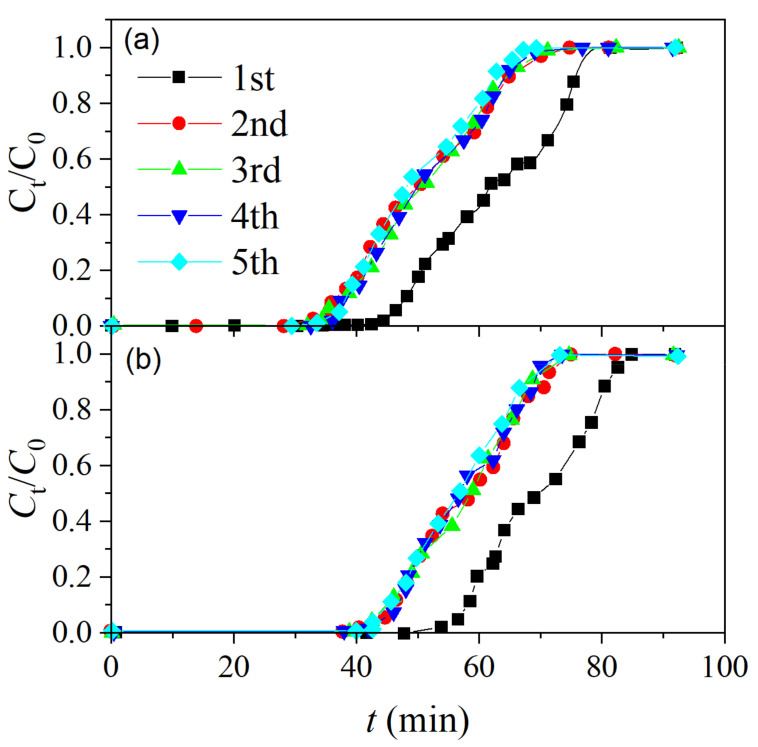
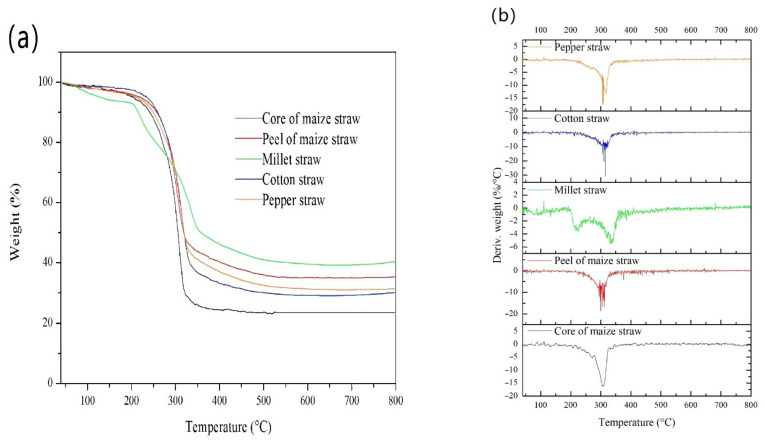
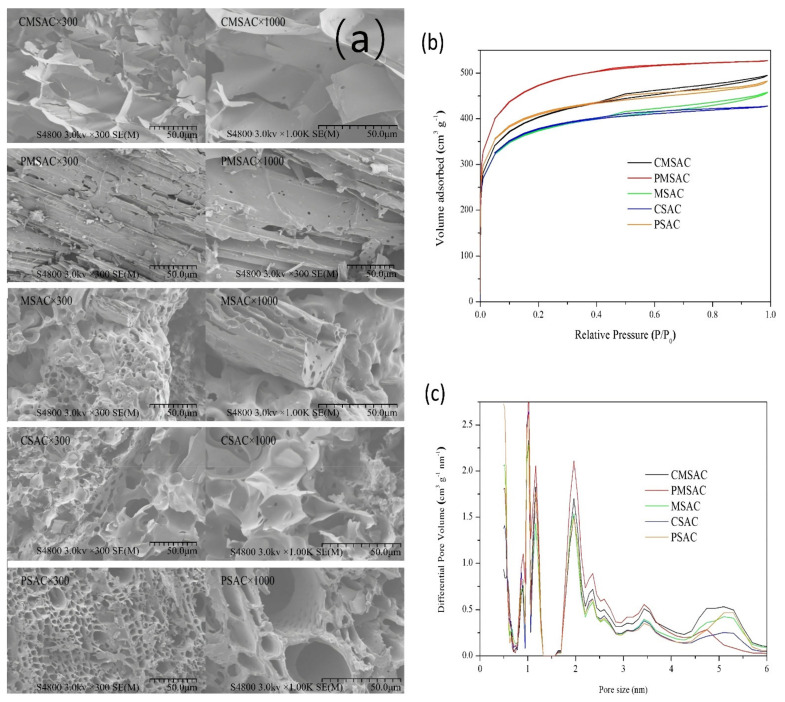
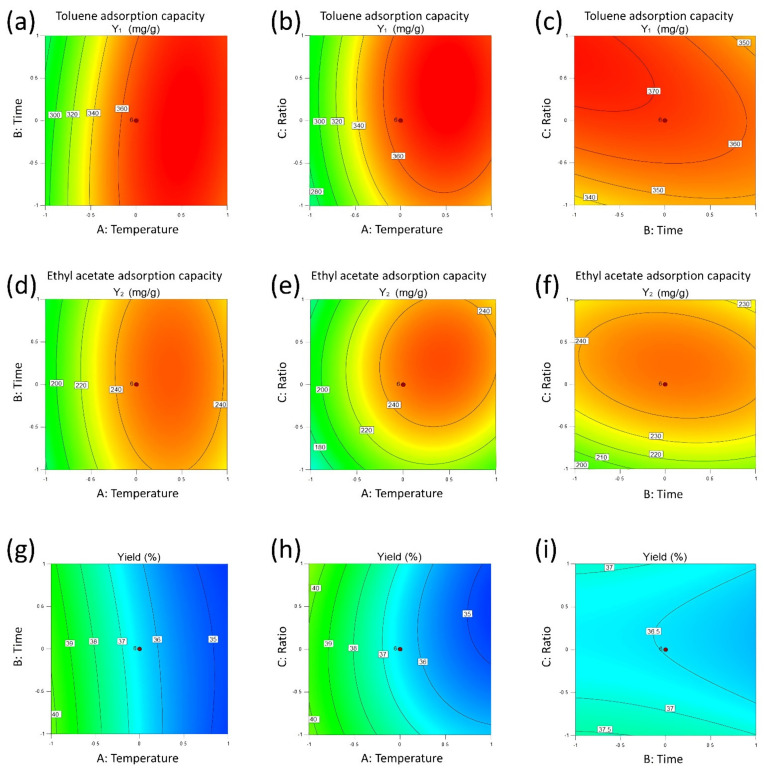
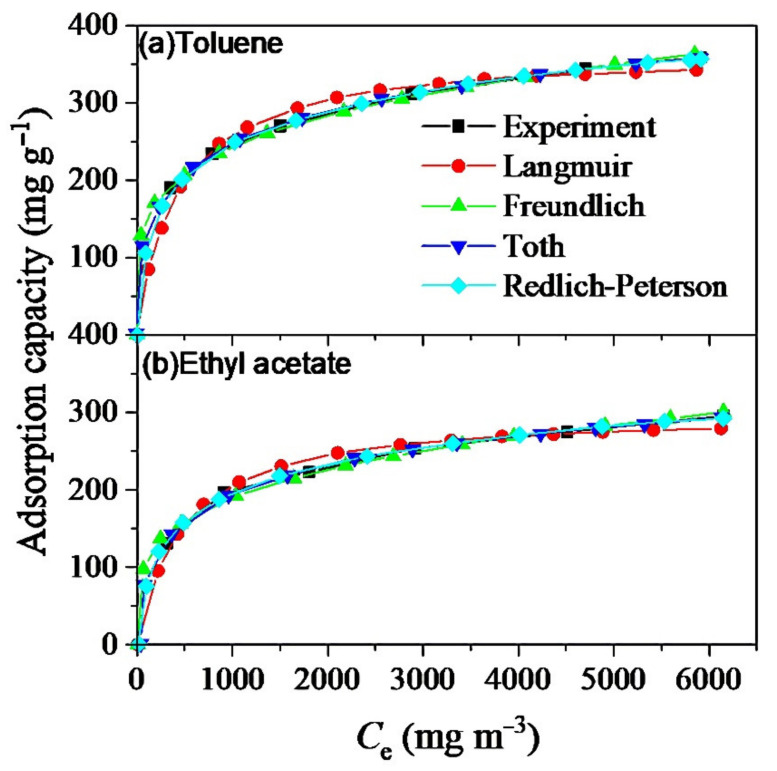
Straw is one of the largest agricultural biowastes and a potential alternative precursor of activated carbon. Activated carbon prepared from different types of straw have great differences in structure and adsorption performance. In order to explore the performance of different straw-based activated carbon in volatile organic compounds adsorption, five common straws were selected as potential source materials for the preparation of SAC. The straw-based activated carbons were prepared and characterized via a thermo-gravimetric analysis, scanning electron microscope and the Brunauer-Emmett-Teller method. Among the five straw-based activated carbons, millet straw-derived activated carbon exhibited superior properties in S, S and adsorption capacities of both toluene and ethyl acetate. Furthermore, the preparation process of millet straw activated carbon was optimized via response surface methodology, using carbonization temperature, carbonization time and impregnation ratio as variables and toluene adsorption capacity, ethyl acetate adsorption capacity and activated carbon yield as responses. The optimal preparation conditions include a carbonization temperature of 572 °C, carbonization time of 1.56 h and impregnation ratio (ZnCl/PM, /) of 1.60, which was verified experimentally, resulting in millet straw activated carbon with a toluene adsorption capacity of 321.9 mg/g and ethyl acetate adsorption capacity of 240.4 mg/g. Meanwhile, the adsorption isothermals and regeneration performance of millet straw activated carbon prepared under the optimized conditions were evaluated. The descriptive ability of the isothermals via the Redlich-Peterson equation suggests a heterogeneous surface on millet straw activated carbon. Recyclability testing has shown that millet straw activated carbon maintained a stable adsorption capacity throughout the second to fifth cycles. The results of this work indicate that millet straw activated carbon may be a potential volatile organic compound adsorbent for industrial application.
秸秆是最大的农业生物废弃物之一,也是活性炭潜在的替代前驱体。由不同类型秸秆制备的活性炭在结构和吸附性能上有很大差异。为了探究不同秸秆基活性炭对挥发性有机化合物的吸附性能,选取了五种常见秸秆作为制备秸秆基活性炭(SAC)的潜在原料。通过热重分析、扫描电子显微镜和布鲁诺尔-埃米特-泰勒法对秸秆基活性炭进行了制备和表征。在这五种秸秆基活性炭中,小米秸秆衍生的活性炭在对甲苯和乙酸乙酯的硫、硫和吸附容量方面表现出优异的性能。此外,采用响应面法对小米秸秆活性炭的制备工艺进行了优化,以碳化温度、碳化时间和浸渍比为变量,甲苯吸附容量、乙酸乙酯吸附容量和活性炭产率为响应指标。最佳制备条件为碳化温度572℃、碳化时间1.56h、浸渍比(ZnCl/PM,/)1.60,经实验验证,得到的小米秸秆活性炭对甲苯的吸附容量为321.9mg/g,对乙酸乙酯的吸附容量为240.4mg/g。同时,对优化条件下制备的小米秸秆活性炭的吸附等温线和再生性能进行了评价。通过雷德利希-彼得森方程对等温线的描述能力表明小米秸秆活性炭表面具有非均质性。循环利用测试表明,小米秸秆活性炭在第二至第五个循环中保持了稳定的吸附容量。这项工作的结果表明,小米秸秆活性炭可能是一种潜在的用于工业应用的挥发性有机化合物吸附剂。