García Mónica C, Naitlho Nabila, Calderón-Montaño José Manuel, Drago Estrella, Rueda Manuela, Longhi Marcela, Rabasco Antonio M, López-Lázaro Miguel, Prieto-Dapena Francisco, González-Rodríguez María Luisa
Departamento de Ciencias Farmacéuticas, Facultad de Ciencias Químicas, Universidad Nacional de Córdoba, Ciudad Universitaria, Haya de la Torre and Medina Allende, Science Building 2, Córdoba X5000HUA, Argentina.
Unidad de Investigación y Desarrollo en Tecnología Farmacéutica, CONICET, Consejo Nacional de Investigaciones Científicas y Técnicas, UNITEFA, Córdoba X5000HUA, Argentina.
Pharmaceutics. 2021 Jun 27;13(7):973. doi: 10.3390/pharmaceutics13070973.
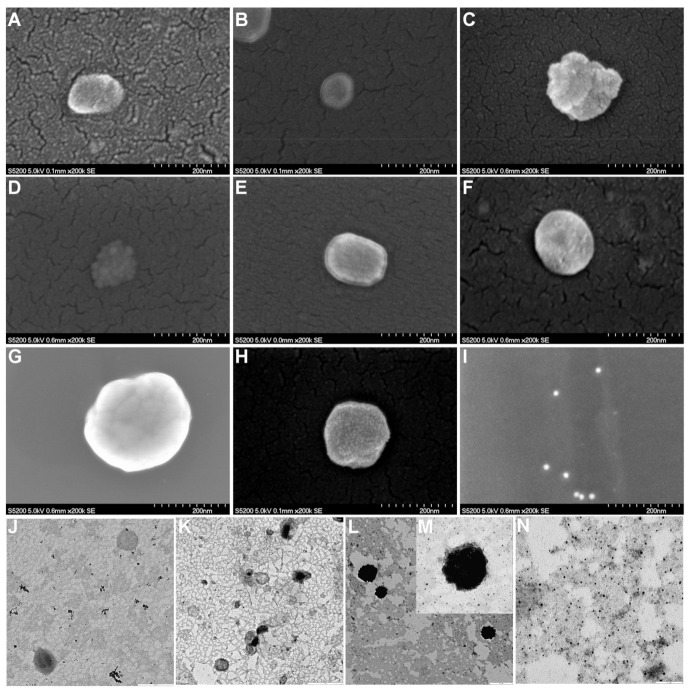
Stimulus-responsive liposomes (L) for triggering drug release to the target site are particularly useful in cancer therapy. This research was focused on the evaluation of the effects of cholesterol levels in the performance of gold nanoparticles (AuNPs)-functionalized L for controlled doxorubicin (D) delivery. Their interfacial and morphological properties, drug release behavior against temperature changes and cytotoxic activity against breast and ovarian cancer cells were studied. Langmuir isotherms were performed to identify the most stable combination of lipid components. Two mole fractions of cholesterol (3.35 mol% and 40 mol%, L1 and L2 series, respectively) were evaluated. Thin-film hydration and transmembrane pH-gradient methods were used for preparing the L and for D loading, respectively. The cationic surface of L allowed the anchoring of negatively charged AuNPs by electrostatic interactions, even inducing a shift in the zeta potential of the L2 series. L exhibited nanometric sizes and spherical shape. The higher the proportion of cholesterol, the higher the drug loading. D was released in a controlled manner by diffusion-controlled mechanisms, and the proportions of cholesterol and temperature of release media influenced its release profiles. D-encapsulated L preserved its antiproliferative activity against cancer cells. The developed liposomal formulations exhibit promising properties for cancer treatment and potential for hyperthermia therapy.
用于触发药物向靶部位释放的刺激响应性脂质体(L)在癌症治疗中特别有用。本研究聚焦于评估胆固醇水平对金纳米颗粒(AuNPs)功能化脂质体L用于阿霉素(D)控释性能的影响。研究了它们的界面和形态特性、针对温度变化的药物释放行为以及对乳腺癌和卵巢癌细胞的细胞毒性活性。进行了Langmuir等温线实验以确定脂质成分最稳定的组合。评估了两种胆固醇摩尔分数(分别为3.35 mol%和40 mol%,L1和L2系列)。分别采用薄膜水化法和跨膜pH梯度法制备脂质体L和装载阿霉素D。脂质体L的阳离子表面通过静电相互作用使带负电荷的金纳米颗粒得以锚定,甚至导致L2系列的zeta电位发生偏移。脂质体L呈现纳米尺寸和球形。胆固醇比例越高,药物装载量越高。阿霉素D通过扩散控制机制以可控方式释放,胆固醇比例和释放介质温度影响其释放曲线。包封阿霉素D的脂质体L保留了其对癌细胞的抗增殖活性。所开发的脂质体制剂在癌症治疗方面表现出有前景的特性以及热疗潜力。