Rivaud Mathilde R, Blok Michiel, Jongbloed Monique R M, Boukens Bastiaan J
Department of Experimental Cardiology, Amsterdam UMC, University of Amsterdam, Amsterdam Cardiovascular Sciences, Meibergdreef 15, 1105 AZ Amsterdam, The Netherlands.
Department of Anatomy & Embryology, Leiden University Medical Center, Einthovenweg 20, 2300 RC Leiden, The Netherlands.
J Cardiovasc Dev Dis. 2021 Jun 13;8(6):70. doi: 10.3390/jcdd8060070.
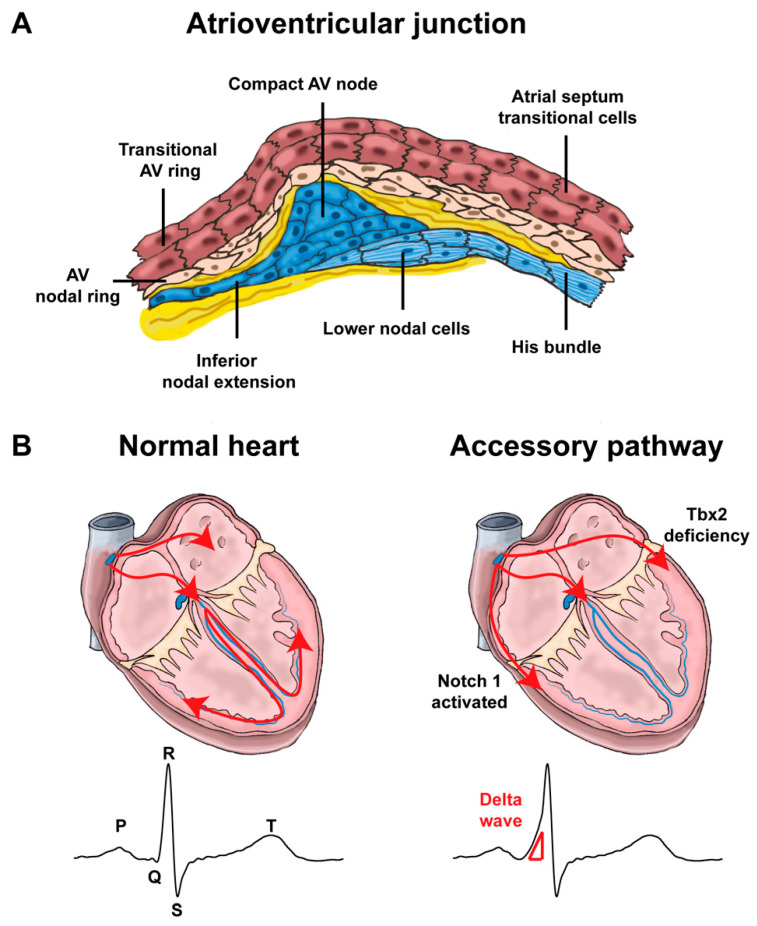
The electrophysiological signatures of the myocardium in cardiac structures, such as the atrioventricular node, pulmonary veins or the right ventricular outflow tract, are established during development by the spatial and temporal expression of transcription factors that guide expression of specific ion channels. Genome-wide association studies have shown that small variations in genetic regions are key to the expression of these transcription factors and thereby modulate the electrical function of the heart. Moreover, mutations in these factors are found in arrhythmogenic pathologies such as congenital atrioventricular block, as well as in specific forms of atrial fibrillation and ventricular tachycardia. In this review, we discuss the developmental origin of distinct electrophysiological structures in the heart and their involvement in cardiac arrhythmias.
心脏结构(如房室结、肺静脉或右心室流出道)中心肌的电生理特征,是在发育过程中由指导特定离子通道表达的转录因子的时空表达所确立的。全基因组关联研究表明,基因区域的微小变异是这些转录因子表达的关键,从而调节心脏的电功能。此外,在诸如先天性房室传导阻滞等致心律失常性疾病以及特定形式的心房颤动和室性心动过速中,也发现了这些因子的突变。在本综述中,我们讨论了心脏中不同电生理结构的发育起源及其与心律失常的关系。