Cheng Xia, Hübner Ralph, von Kiedrowski Valeska, Fricker Gert, Schirrmacher Ralf, Wängler Carmen, Wängler Björn
Molecular Imaging and Radiochemistry, Department of Clinical Radiology and Nuclear Medicine, Medical Faculty Mannheim of Heidelberg University, Theodor-Kutzer-Ufer 1-3, 68167 Mannheim, Germany.
Biomedical Chemistry, Department of Clinical Radiology and Nuclear Medicine, Medical Faculty Mannheim of Heidelberg University, Theodor-Kutzer-Ufer 1-3, 68167 Mannheim, Germany.
Pharmaceuticals (Basel). 2021 Jun 7;14(6):547. doi: 10.3390/ph14060547.
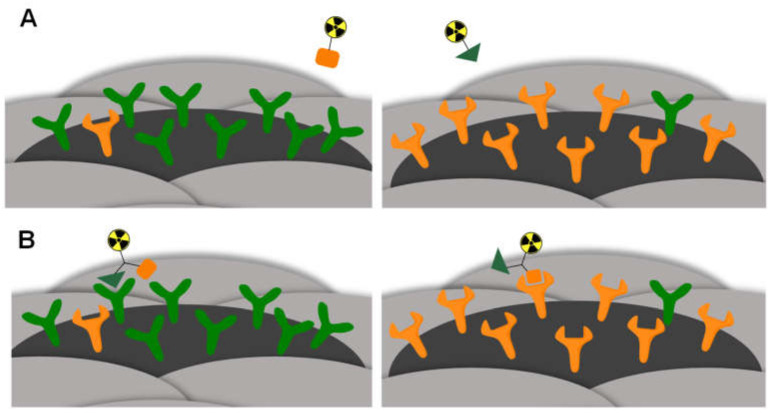
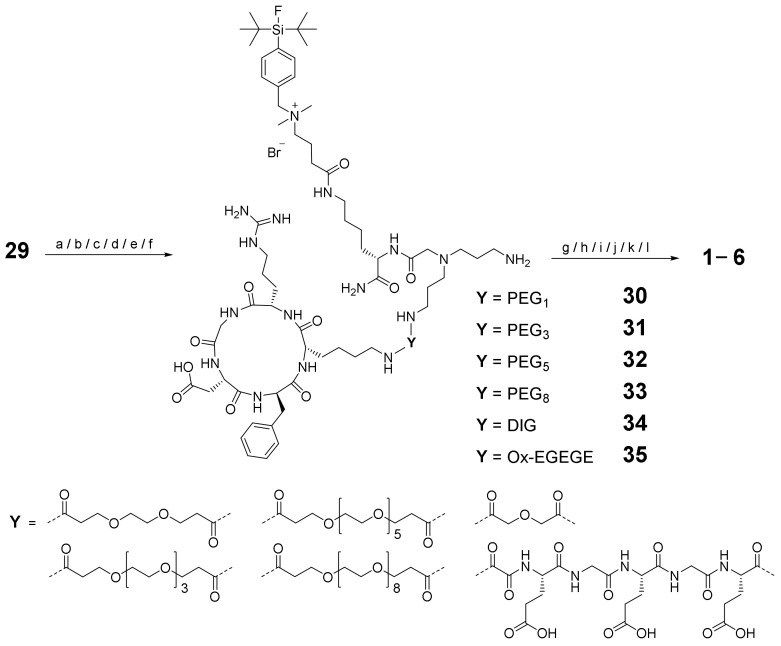
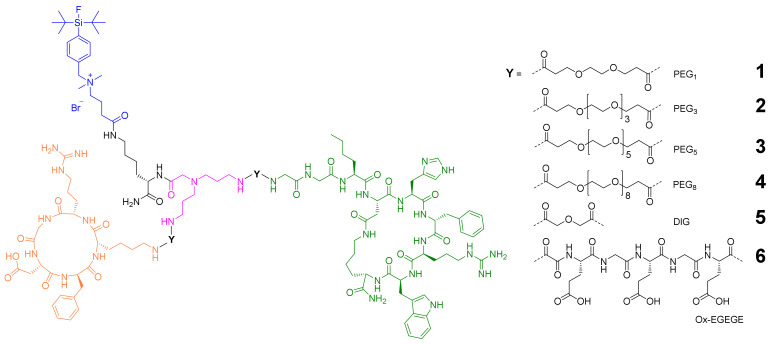
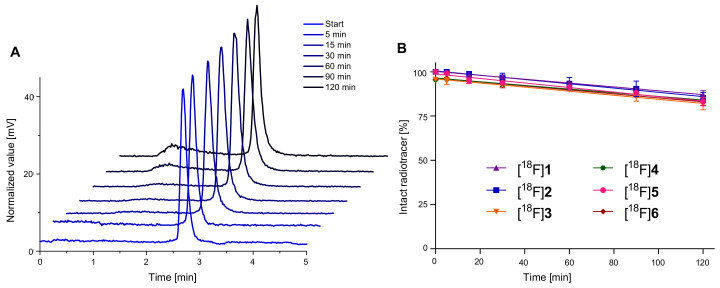
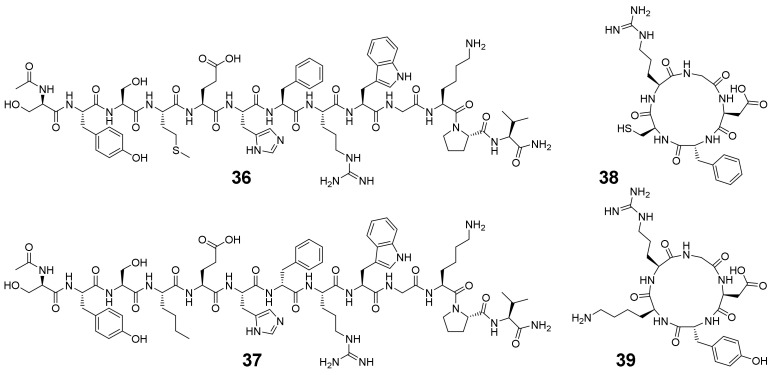
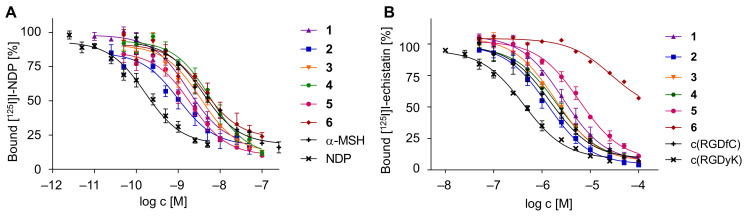
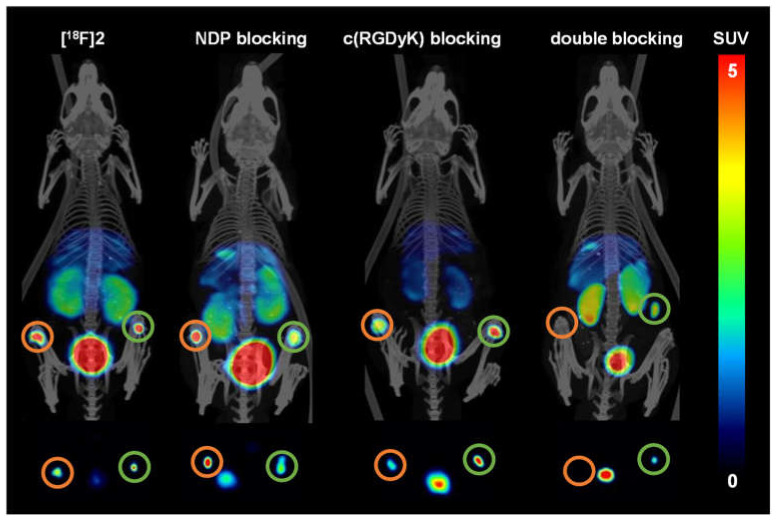
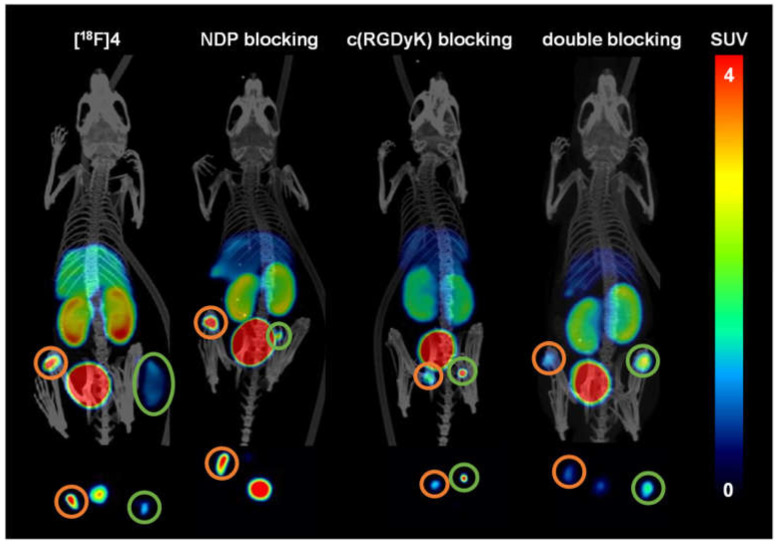
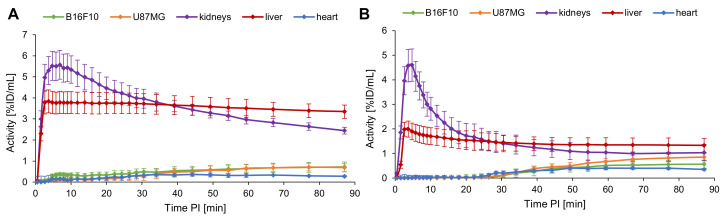
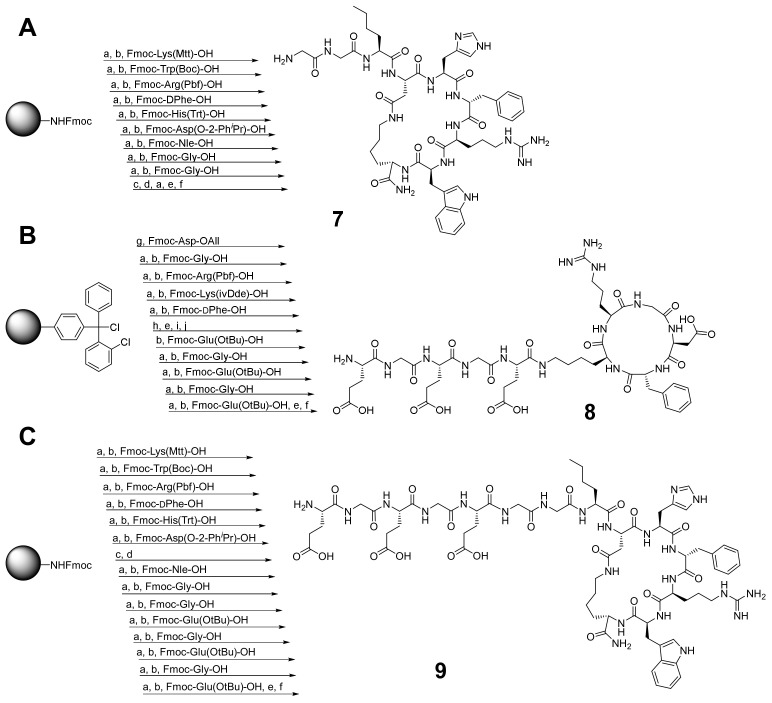
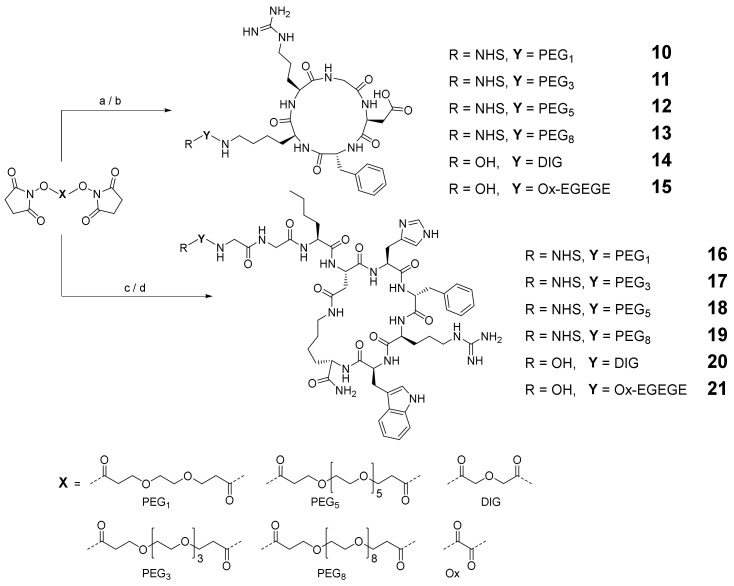
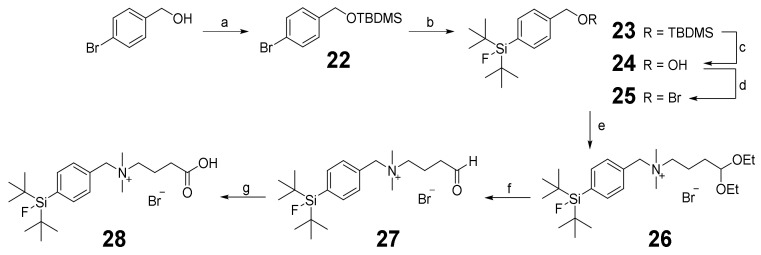
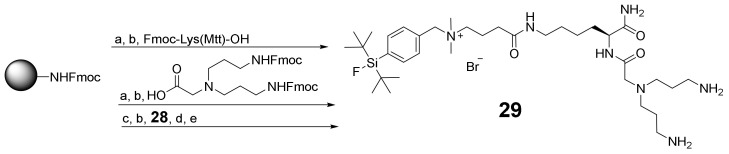
Combining two peptides addressing two different receptors to a heterobivalent peptidic ligand (HBPL) is thought to enable an improved tumor-targeting sensitivity and thus tumor visualization, compared to monovalent peptide ligands. In the case of melanoma, the Melanocortin-1 receptor (MC1R), which is stably overexpressed in the majority of primary malignant melanomas, and integrin αβ, which is involved in lymph node metastasis and therefore has an important role in the transition from local to metastatic disease, are important target receptors. Thus, if a radiolabeled HBPL could be developed that was able to bind to both receptor types, the early diagnosis and correct staging of the disease would be significantly increased. Here, we report on the design, synthesis, radiolabeling and in vitro and in vivo testing of different SiFA-modified HBPLs (SiFA = silicon fluoride acceptor), consisting of an MC1R-targeting (GG-Nle-c(DHfRWK)) and an integrin αβ-affine peptide (c(RGDfK)), being connected by a symmetrically branching framework including linkers of differing length and composition. Kit-like F-radiolabeling of the HBPLs - provided the labeled products [F]-[F] in radiochemical yields of 27-50%, radiochemical purities of ≥95% and non-optimized molar activities of 17-51 GBq/μmol within short preparation times of 25 min. Besides the evaluation of radiotracers regarding log and stability in human serum, the receptor affinities of the HBPLs were investigated in vitro on cell lines overexpressing integrin αβ (U87MG cells) or the MC1R (B16F10). Based on these results, the most promising compounds [F], showing the highest affinity to both target receptors (IC = 0.99 ± 0.11 nM, IC = 1300 ± 288 nM), and [F], exhibiting the highest hydrophilicity (log = -1.39 ± 0.03), were further investigated in vivo and ex vivo in a xenograft mouse model bearing both tumors. For both HBPLs, clear visualization of B16F10, as well as U87MG tumors, was feasible. Blocking studies using the respective monospecific peptides demonstrated both peptide binders of the HBPLs contributing to tumor uptake. Despite the somewhat lower target receptor affinities (IC = 6.00 ± 0.47 nM and IC = 2034 ± 323 nM) of [F], the tracer showed higher absolute tumor uptakes ([F]: 2.58 ± 0.86% ID/g in B16F10 tumors and 3.92 ± 1.31% ID/g in U87MG tumors; [F]: 2.32 ± 0.49% ID/g in B16F10 tumors and 2.33 ± 0.46% ID/g in U87MG tumors) as well as higher tumor-to-background ratios than [F]. Thus, [F] demonstrates to be a highly potent radiotracer for the sensitive and bispecific imaging of malignant melanoma by PET/CT imaging and impressively illustrates the suitability of the underlying concept to develop heterobivalent integrin αβ- and MC1R-bispecific radioligands for the sensitive and specific imaging of malignant melanoma by PET/CT.
与单价肽配体相比,将两种作用于不同受体的肽结合成一种异二价肽配体(HBPL)被认为能够提高肿瘤靶向敏感性,从而实现肿瘤可视化。在黑色素瘤的情况下,黑素皮质素-1受体(MC1R)在大多数原发性恶性黑色素瘤中稳定过度表达,而整合素αβ参与淋巴结转移,因此在从局部疾病向转移性疾病的转变中起重要作用,它们是重要的靶受体。因此,如果能够开发出一种放射性标记的HBPL,使其能够与两种受体类型结合,那么疾病的早期诊断和正确分期将显著提高。在此,我们报告了不同的SiFA修饰的HBPL(SiFA = 氟化硅受体)的设计、合成、放射性标记以及体外和体内测试,该HBPL由靶向MC1R的(GG-Nle-c(DHfRWK))和整合素αβ亲和肽(c(RGDfK))组成,通过包括不同长度和组成的连接子的对称分支框架连接。HBPL的试剂盒样F放射性标记 - 在25分钟的短制备时间内提供了放射性化学产率为27 - 50% 的标记产物[F]-[F],放射性化学纯度≥95%,非优化摩尔活度为17 - 51 GBq/μmol。除了评估放射性示踪剂在人血清中的对数和稳定性外,还在过表达整合素αβ(U87MG细胞)或MC1R(B16F10)的细胞系上体外研究了HBPL的受体亲和力。基于这些结果,对两种靶受体亲和力最高(IC = 0.99 ± 0.11 nM,IC = 1300 ± 288 nM)的最有前景的化合物[F]和亲水性最高(log = -1.39 ± 0.03)的[F],在携带两种肿瘤的异种移植小鼠模型中进行了进一步的体内和体外研究。对于这两种HBPL,清晰可视化B16F10以及U87MG肿瘤都是可行的。使用各自单特异性肽的阻断研究表明,HBPL的两种肽结合剂都有助于肿瘤摄取。尽管[F]的靶受体亲和力略低(IC = 6.00 ± 0.47 nM和IC = 2034 ± 323 nM),但该示踪剂显示出更高的绝对肿瘤摄取量([F]:在B16F10肿瘤中为2.58 ± 0.86% ID/g,在U87MG肿瘤中为3.92 ± 1.31% ID/g;[F]:在B16F10肿瘤中为2.32 ± 0.49% ID/g,在U87MG肿瘤中为2.33 ± 0.46% ID/g)以及比[F]更高的肿瘤与背景比值。因此,[F]被证明是一种用于通过PET/CT成像对恶性黑色素瘤进行敏感和双特异性成像的高效放射性示踪剂,并令人印象深刻地说明了开发用于通过PET/CT对恶性黑色素瘤进行敏感和特异性成像的异二价整合素αβ和MC1R双特异性放射性配体的基本概念的适用性。