Cluster of Excellence on Biodiversity-Based Economic and Society (B.BES-CMU), Chiang Mai University, Chiang Mai 50200, Thailand.
Department of Pharmaceutical Sciences, Faculty of Pharmacy, Chiang Mai University, Chiang Mai 50200, Thailand.
Molecules. 2021 Jun 10;26(12):3565. doi: 10.3390/molecules26123565.
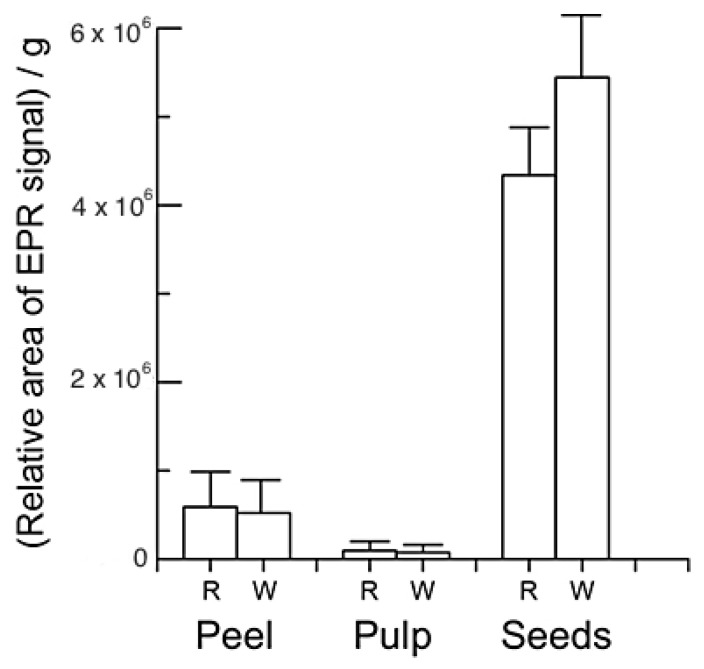
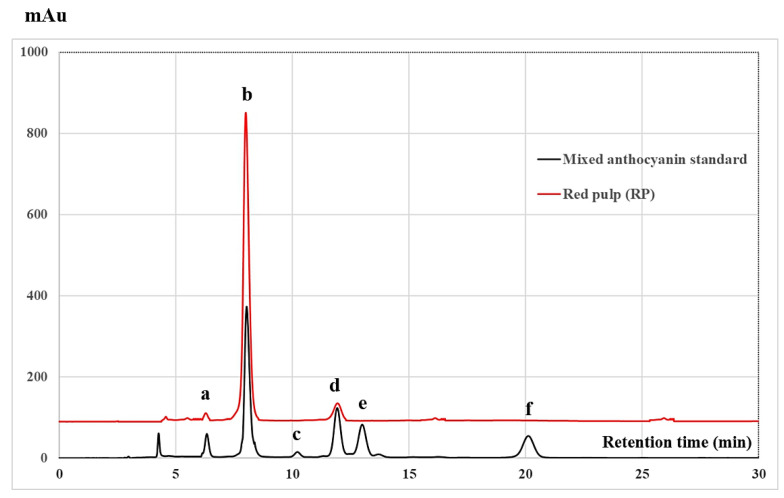
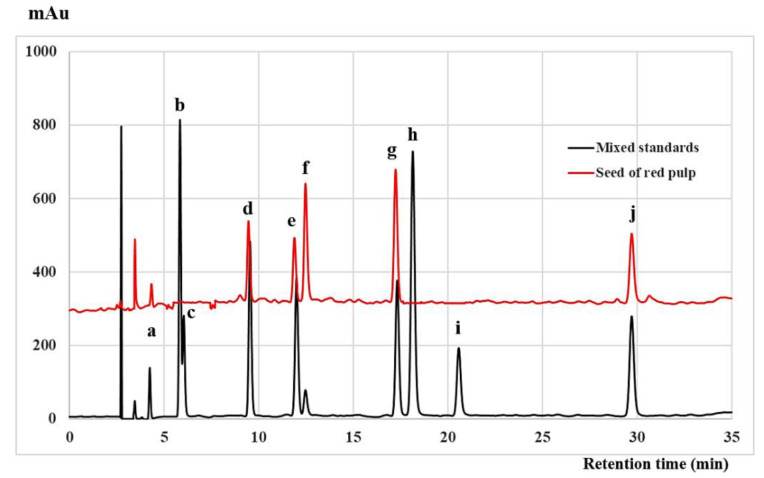
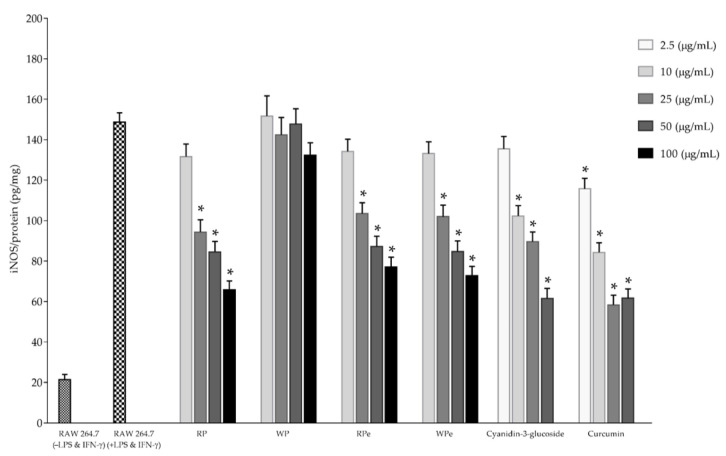
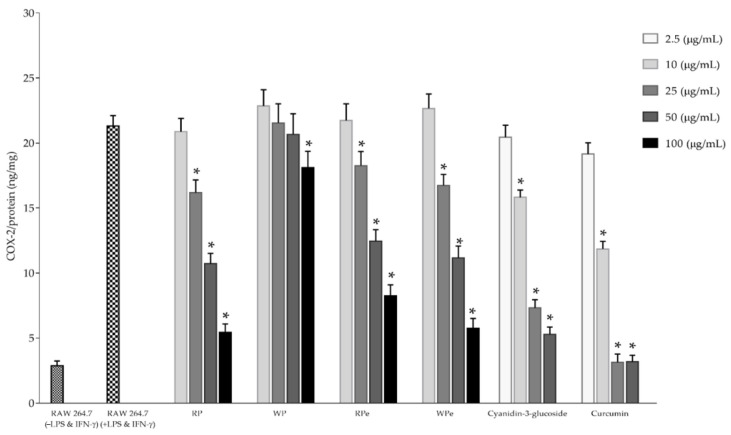
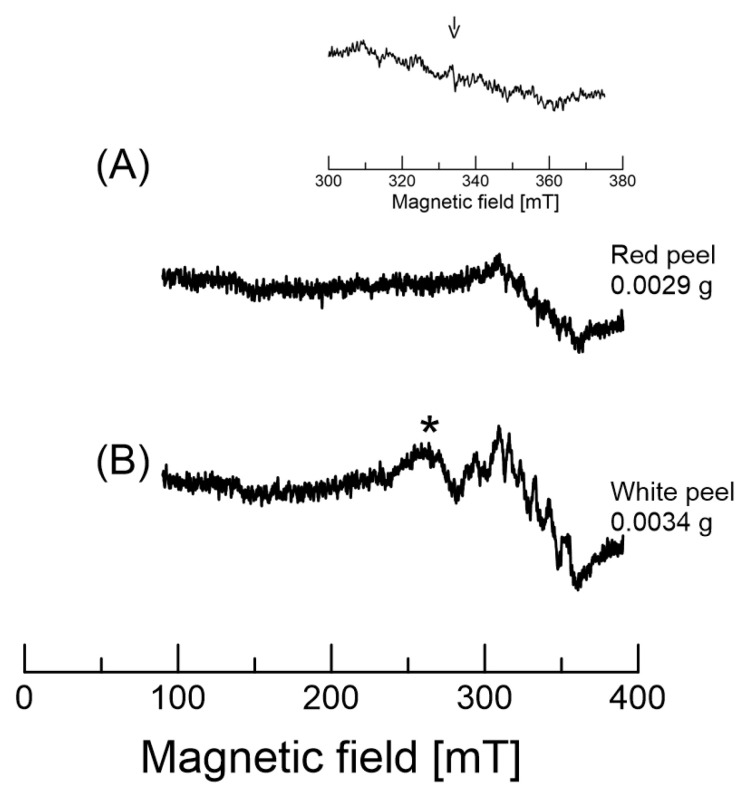
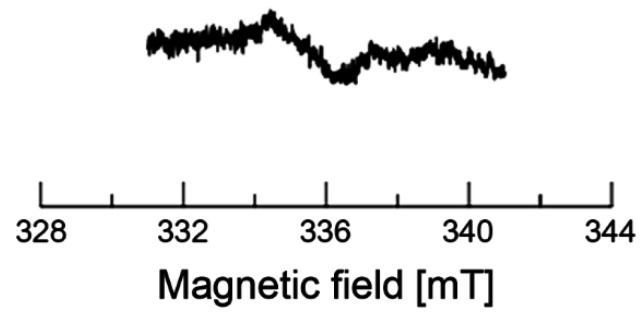
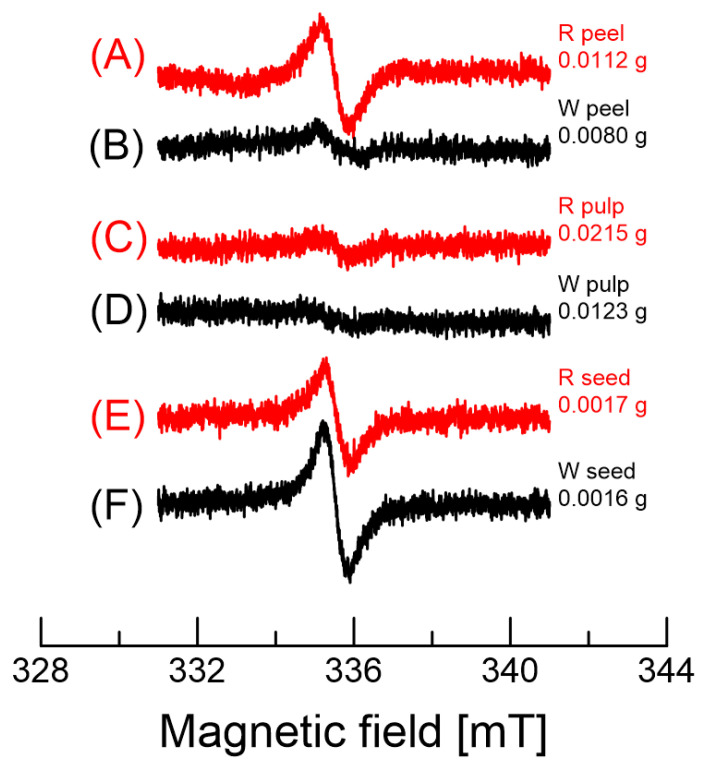
In this study, we investigated the antioxidant and anti-inflammatory phytochemicals and paramagnetic species in dragon fruit using high-performance liquid chromatography (HPLC) and electron paramagnetic resonance (EPR). HPLC analysis demonstrated that dragon fruit is enriched with bioactive phytochemicals, with significant variations between each part of the fruit. Anthocyanins namely, cyanidin 3-glucoside, delphinidin 3-glucoside, and pelargonidin 3-glucoside were detected in the dragon fruit peel and fresh red pulp. Epicatechin gallate, epigallocatechin, caffeine, and gallic acid were found in the dragon fruit seed. Additionally, 25-100 mg × L of dragon fruit pulp and peel extracts containing enrichment of cyanidin 3-glucoside were found to inhibit the production of reactive oxygen species (ROS), reactive nitrogen species (RNS), inducible nitric oxide synthase (iNOS), and cyclooxygenase-2 (COX-2) in cell-based studies without exerted cytotoxicity. EPR primarily detected two paramagnetic species in the red samples. These two different radical species were assigned as stable radicals and Mn (paramagnetic species) based on the g-values and hyperfine components. In addition, the broad EPR line width of the white peel can be correlated to a unique moiety in dragon fruit. Our EPR and HPLC results provide new insight regarding the phytochemicals and related stable intermediates found in various parts of dragon fruit. Thus, we suggest here that there is the potential to use dragon fruit peel, which contains anthocyanins, as a natural active pharmaceutical ingredient.
在这项研究中,我们使用高效液相色谱(HPLC)和电子顺磁共振(EPR)研究了火龙果中的抗氧化和抗炎植物化学物质和顺磁物质。HPLC 分析表明,火龙果富含生物活性植物化学物质,其不同部位之间存在显著差异。在火龙果果皮和新鲜红色果肉中检测到花色苷,即矢车菊素 3-葡萄糖苷、飞燕草素 3-葡萄糖苷和天竺葵素 3-葡萄糖苷。此外,在火龙果种子中发现了表儿茶素没食子酸酯、表没食子儿茶素、咖啡因和没食子酸。此外,发现火龙果果肉和果皮提取物中含有 25-100mg×L 的矢车菊素 3-葡萄糖苷,可抑制细胞内活性氧(ROS)、活性氮(RNS)、诱导型一氧化氮合酶(iNOS)和环氧化酶-2(COX-2)的产生,而没有细胞毒性。EPR 主要在红色样品中检测到两种顺磁物质。这两种不同的自由基物种基于 g 值和超精细分量被分配为稳定自由基和 Mn(顺磁物种)。此外,白色果皮的宽 EPR 线宽可与火龙果中独特的部分相关。我们的 EPR 和 HPLC 结果为火龙果不同部位发现的植物化学物质和相关稳定中间体提供了新的见解。因此,我们建议在这里使用含有花色苷的火龙果果皮作为天然活性药物成分。