Department of Biotechnology, University of Rijeka, Radmile Matejčić 2, 51000 Rijeka, Croatia.
Faculty of Medicine, University of Rijeka, Ul. Braće Branchetta 20/1, 51000 Rijeka, Croatia.
Int J Mol Sci. 2021 Jun 8;22(12):6174. doi: 10.3390/ijms22126174.
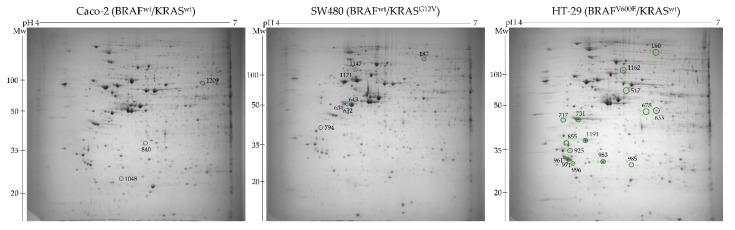
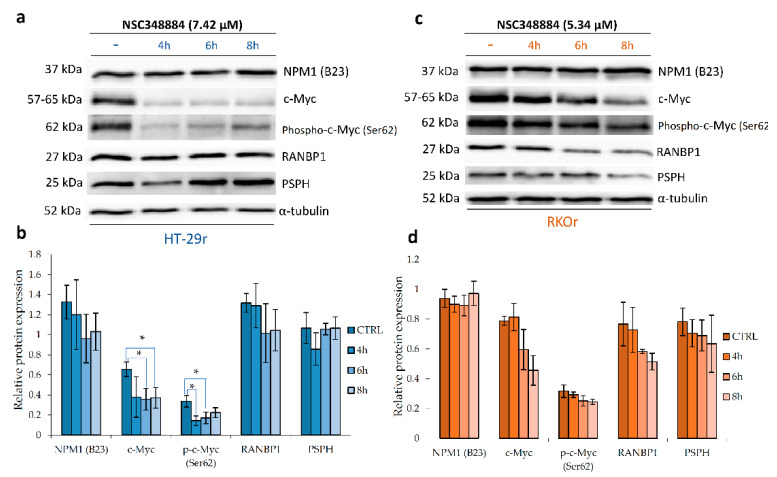
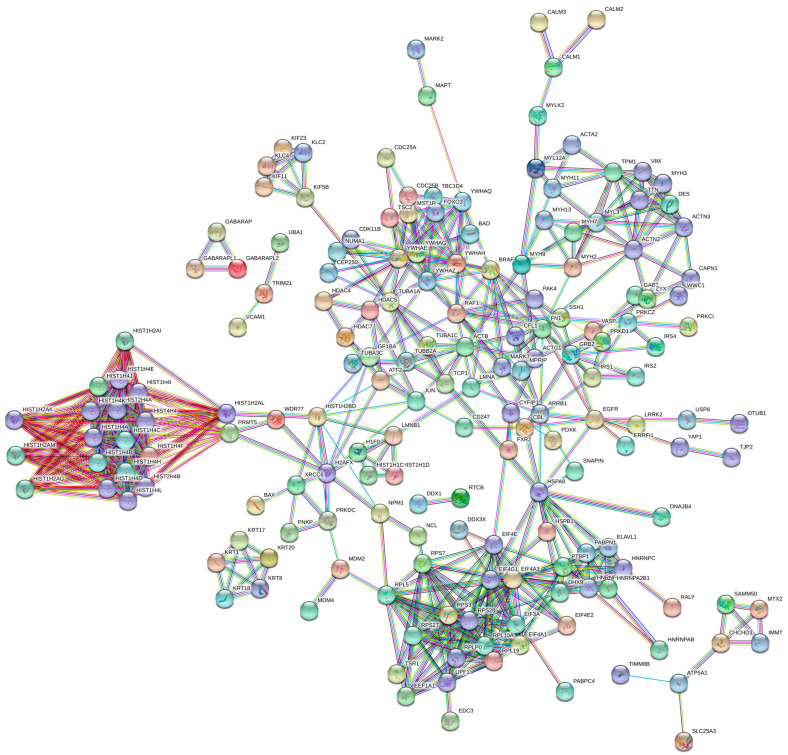
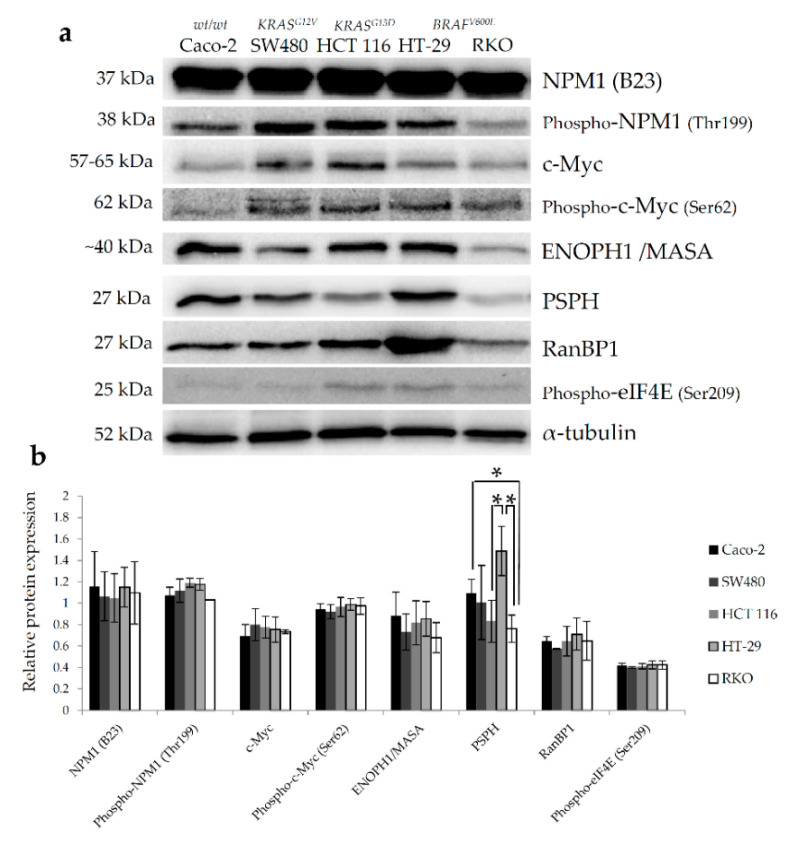
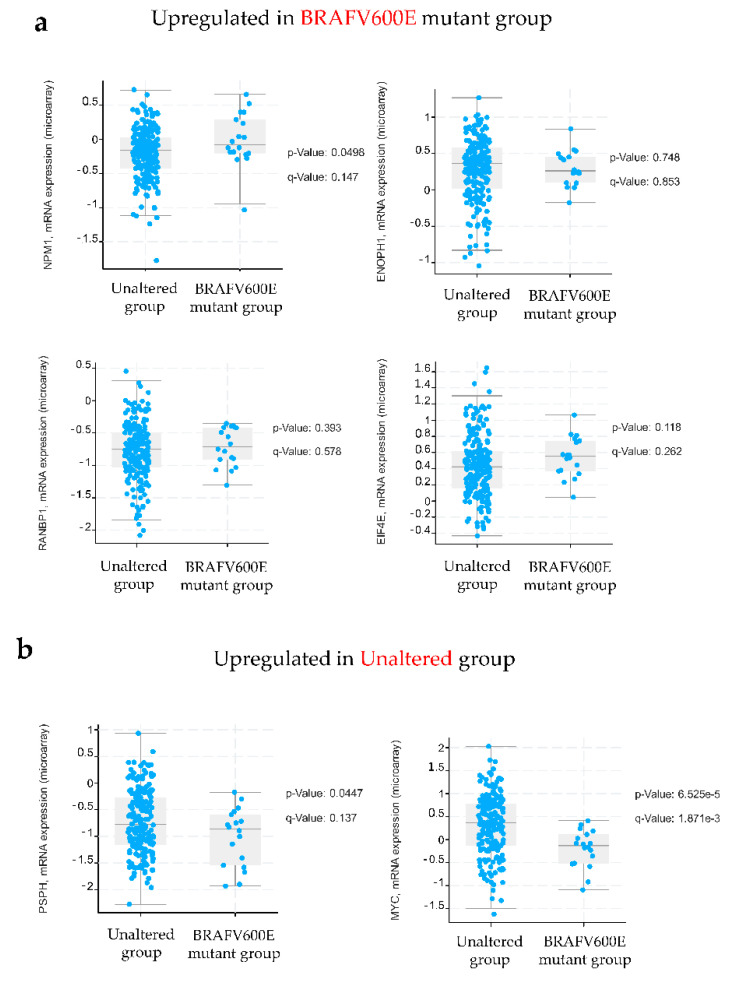
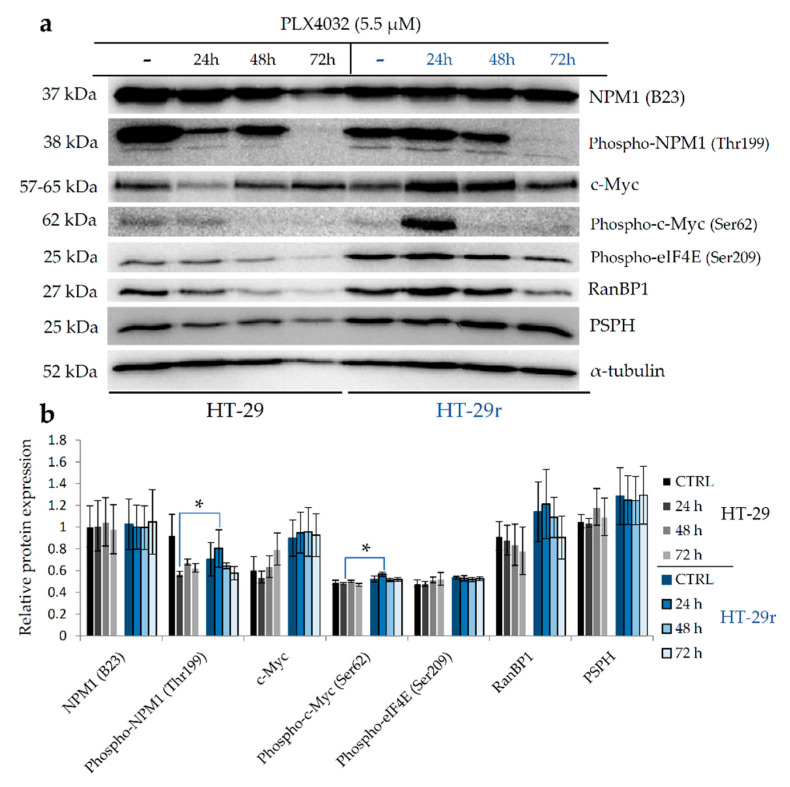
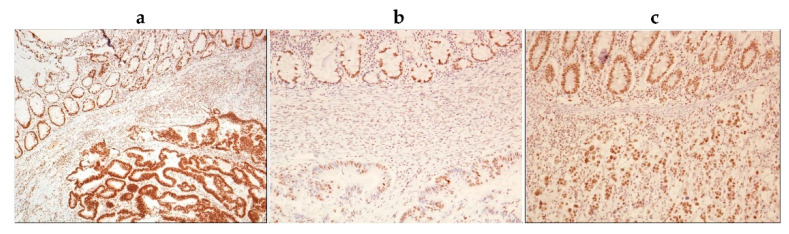
BRAFV600E mutations are found in approximately 10% of colorectal cancer patients and are associated with worse prognosis and poor outcomes with systemic therapies. The aim of this study was to identify novel druggable features of BRAFV600E-mutated colon cancer (CC) cells associated with the response and resistance to BRAFV600E inhibitor vemurafenib. Towards this aim, we carried out global proteomic profiling of BRAFV600E mutant vs. KRAS mutant/BRAF wild-type and double wild-type KRAS/BRAF CC cells followed by bioinformatics analyses. Validation of selected proteomic features was performed by immunohistochemistry and in silico using the TCGA database. We reveal an increased abundance and activity of nucleophosmin (NPM1) in BRAFV600E-mutated CC in vitro, in silico and in tumor tissues from colon adenocarcinoma patients and demonstrate the roles of NPM1 and its interaction partner c-Myc in conveying the resistance to vemurafenib. Pharmacological inhibition of NPM1 effectively restored the sensitivity of vemurafenib-resistant BRAF-mutated CC cells by down-regulating c-Myc expression and activity and consequently suppressing its transcriptional targets RanBP1 and phosphoserine phosphatase that regulate centrosome duplication and serine biosynthesis, respectively. Altogether, findings from this study suggest that the NPM1/c-Myc axis could represent a promising therapeutic target to thwart resistance to vemurafenib in BRAF-mutated CC.
BRAFV600E 突变约占结直肠癌患者的 10%,与预后不良和对系统治疗效果差有关。本研究旨在鉴定与 BRAFV600E 抑制剂vemurafenib 的反应和耐药性相关的 BRAFV600E 突变型结肠癌(CC)细胞的新可用药特征。为此,我们对 BRAFV600E 突变型与 KRAS 突变型/BRAF 野生型和双野生型 KRAS/BRAF CC 细胞进行了全局蛋白质组学分析,并进行了生物信息学分析。通过免疫组织化学和 TCGA 数据库的计算方法验证了所选蛋白质组学特征。我们在体外、计算中和结肠癌腺癌患者的肿瘤组织中发现,BRAFV600E 突变型 CC 中核仁磷酸蛋白(NPM1)的丰度和活性增加,并证明了 NPM1 及其相互作用伙伴 c-Myc 在传递对 vemurafenib 的耐药性中的作用。NPM1 的药理抑制通过下调 c-Myc 的表达和活性,有效恢复了 vemurafenib 耐药的 BRAF 突变型 CC 细胞的敏感性,从而抑制了其转录靶标 RanBP1 和磷酸丝氨酸磷酸酶,分别调节中心体复制和丝氨酸生物合成。总之,这项研究的结果表明,NPM1/c-Myc 轴可能代表一种有前途的治疗靶点,可以阻止 BRAF 突变型 CC 对 vemurafenib 的耐药性。