Molecular Preventive Medicine, University Medical Center and Faculty of Medicine, University of Freiburg, 79108 Freiburg, Germany.
Division Urban Plant Ecophysiology, Humboldt-Universität zu Berlin, 14195 Berlin, Germany.
Int J Mol Sci. 2021 Jun 23;22(13):6766. doi: 10.3390/ijms22136766.
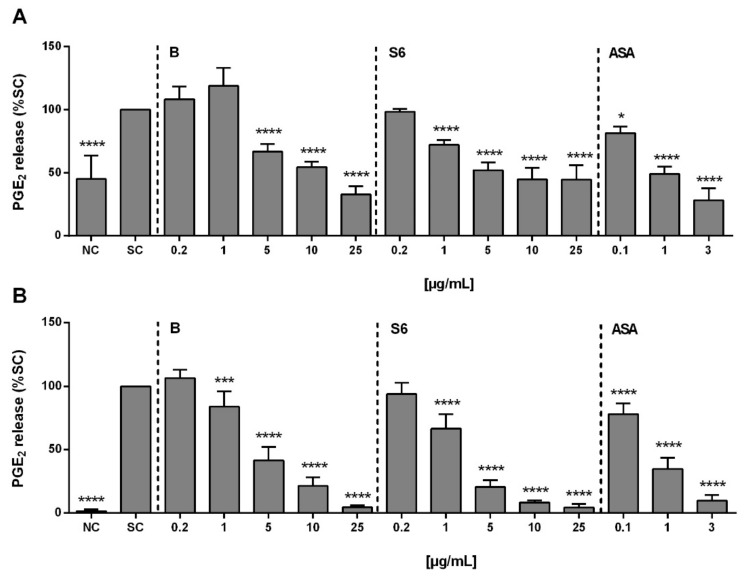
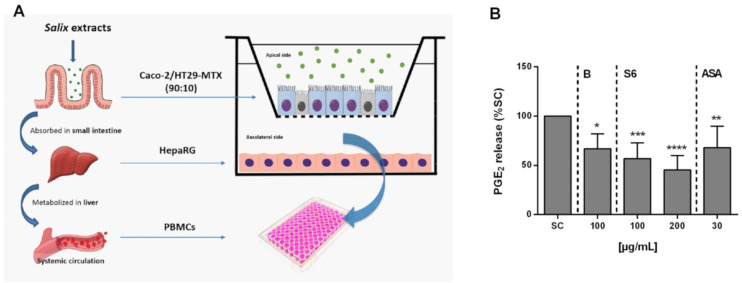
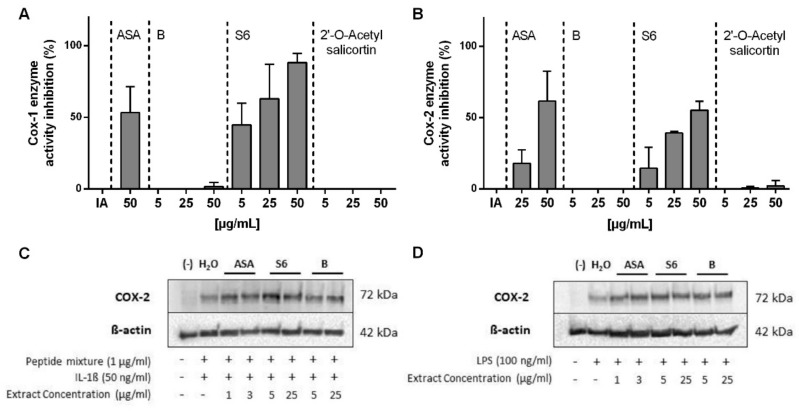
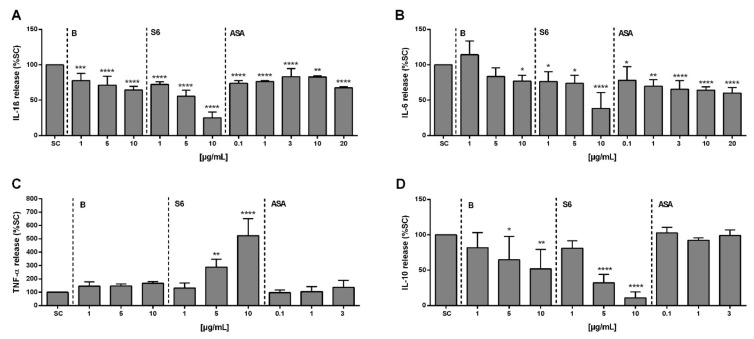
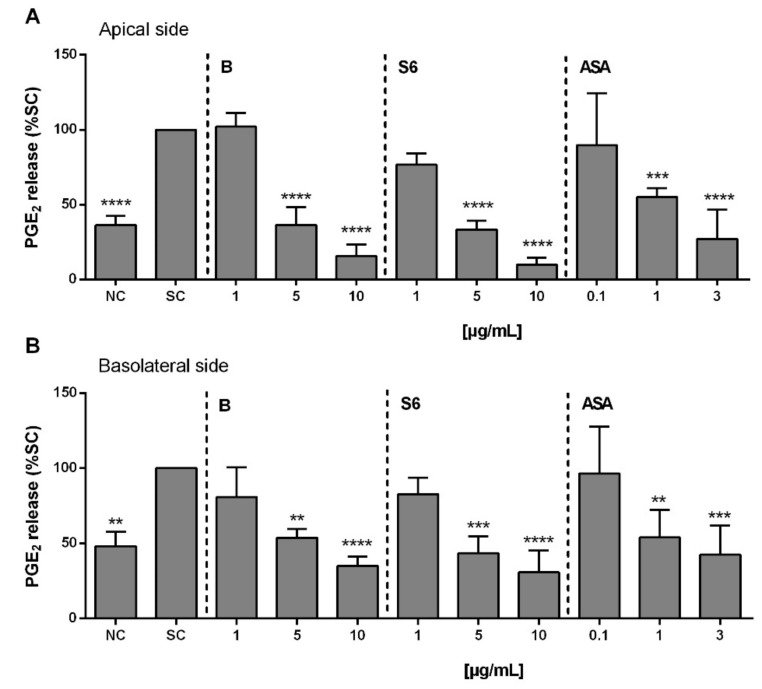
The usefulness of anti-inflammatory drugs as an adjunct therapy to improve outcomes in COVID-19 patients is intensely discussed in this paper. Willow bark ( cortex) has been used for centuries to relieve pain, inflammation, and fever. Its main active ingredient, salicin, is metabolized in the human body into salicylic acid, the precursor of the commonly used pain drug acetylsalicylic acid (ASA). Here, we report on the in vitro anti-inflammatory efficacy of two methanolic extracts, standardized to phenolic compounds, in comparison to ASA in the context of a SARS-CoV-2 peptide challenge. Using SARS-CoV-2 peptide/IL-1β- or LPS-activated human PBMCs and an inflammatory intestinal Caco-2/HT29-MTX co-culture, extracts, and ASA concentration-dependently suppressed prostaglandin E2 (PGE), a principal mediator of inflammation. The inhibition of COX-2 enzyme activity, but not protein expression was observed for ASA and one extract. In activated PBMCs, the suppression of relevant cytokines (i.e., IL-6, IL-1β, and IL-10) was seen for both extracts. The anti-inflammatory capacity of extracts was still retained after transepithelial passage and liver cell metabolism in an advanced co-culture model system consisting of intestinal Caco-2/HT29-MTX cells and differentiated hepatocyte-like HepaRG cells. Taken together, our in vitro data suggest that extracts might present an additional anti-inflammatory treatment option in the context of SARS-CoV-2 peptides challenge; however, more confirmatory data are needed.
本文深入探讨了抗炎药物作为辅助疗法改善 COVID-19 患者结局的效用。柳树皮(皮质)已被用于缓解疼痛、炎症和发热数百年。其主要活性成分水杨酸苷在人体内代谢为水杨酸,这是常用止痛药乙酰水杨酸(ASA)的前体。在这里,我们报告了两种甲醇提取物的体外抗炎功效,这些提取物以酚类化合物为标准,与 ASA 一起在 SARS-CoV-2 肽挑战的背景下进行比较。使用 SARS-CoV-2 肽/IL-1β-或 LPS 激活的人 PBMCs 和炎症性肠道 Caco-2/HT29-MTX 共培养物,提取物和 ASA 浓度依赖性地抑制前列腺素 E2(PGE),这是炎症的主要介质。观察到 ASA 和一种提取物抑制 COX-2 酶活性,但不抑制蛋白表达。在激活的 PBMCs 中,两种提取物均抑制相关细胞因子(即 IL-6、IL-1β 和 IL-10)的产生。在由肠 Caco-2/HT29-MTX 细胞和分化的肝样 HepaRG 细胞组成的先进共培养模型系统中,提取物的抗炎能力在跨上皮传递和肝细胞代谢后仍保留。总之,我们的体外数据表明,提取物可能是 SARS-CoV-2 肽挑战背景下的另一种抗炎治疗选择;然而,还需要更多的确认性数据。