Department of Radiation Oncology, Centre Leon Bérard, 69008 Lyon, France.
Poly(ADP-ribosyl)ation and Genome Integrity, Laboratoire d'Excellence Medalis, UMR7242, Centre Nationale de la Recherche Scientifique/Université de Strasbourg, Institut de Recherche de l'Ecole de Biotechnologie de Strasbourg, 300 bld. S. Brant, CS10413, 67412 Illkirch, France.
Int J Mol Sci. 2021 Jun 25;22(13):6825. doi: 10.3390/ijms22136825.
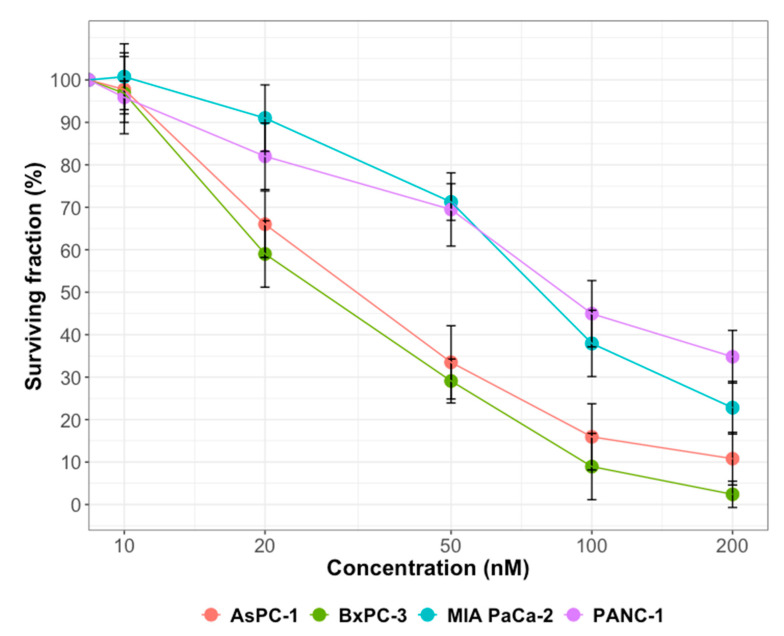
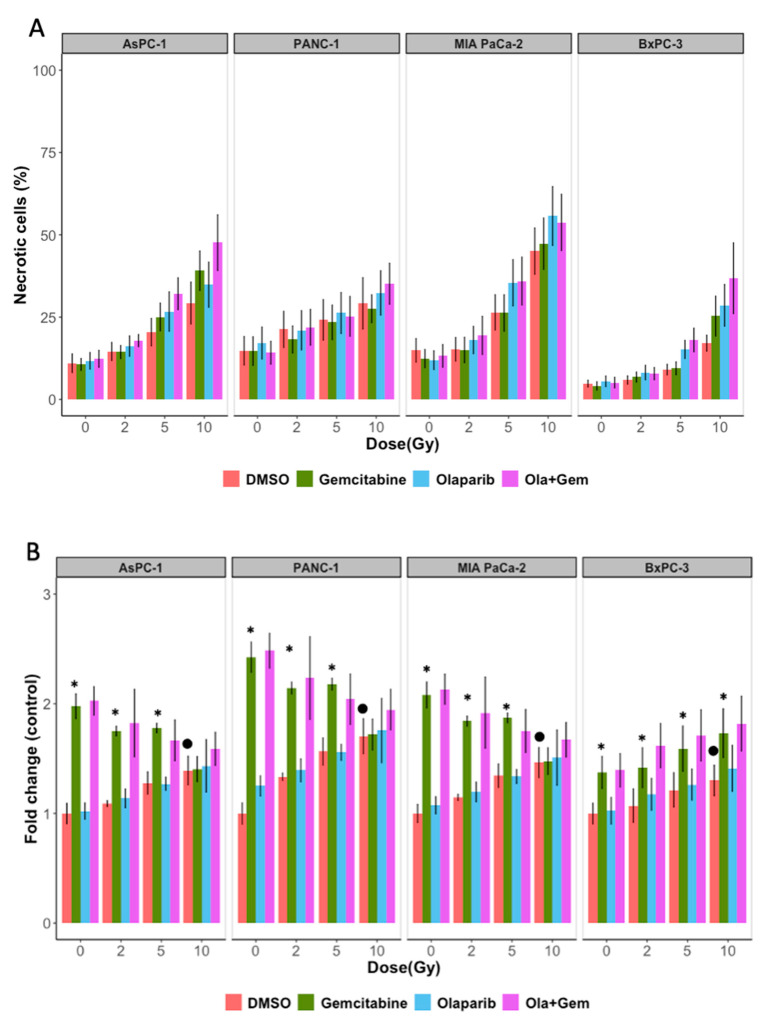
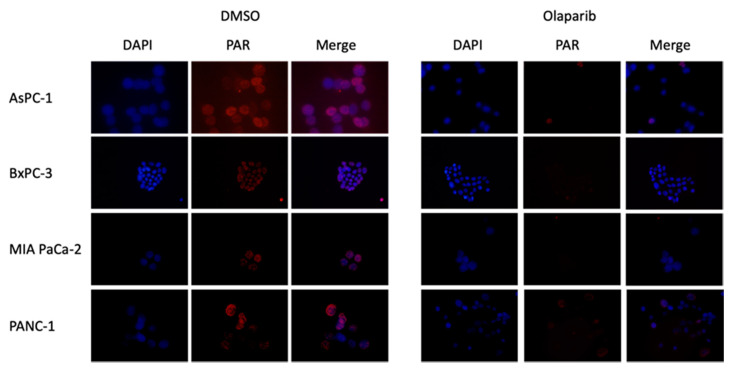
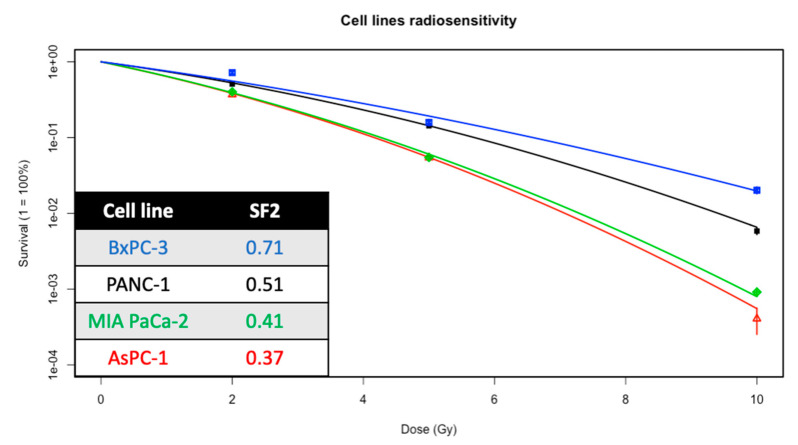
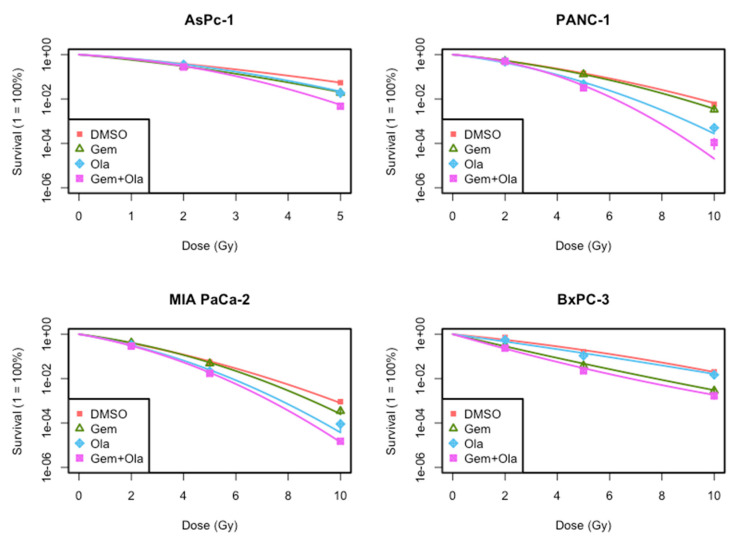
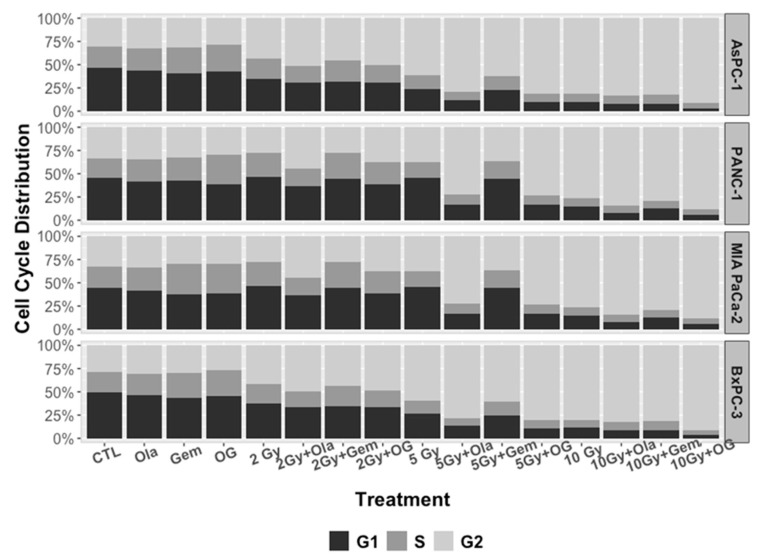
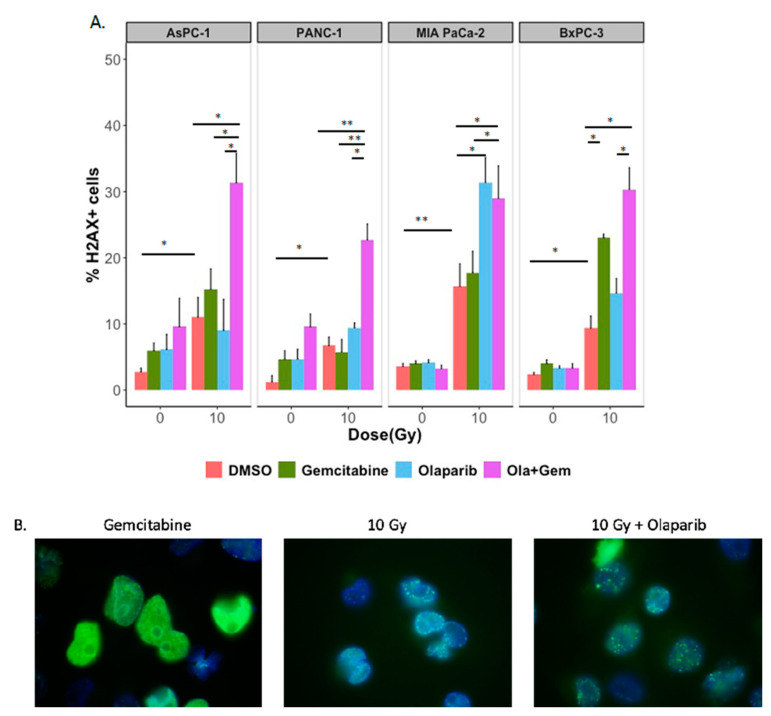
Pancreatic ductal adenocarcinoma is a devastating disease with a 5-year overall survival of 9% for all stages. Gemcitabine-based chemoradiotherapy for locally advanced pancreatic cancer is highly toxic. We conducted an in vitro study to determine whether poly(ADP-ribose) polymerase-1 inhibition radiosensitized gemcitabine-based chemotherapy. Human pancreatic cancer cell lines, MIA PaCa-2, AsPC-1, BxPC-3 and PANC-1 were treated with gemcitabine (10 nM) and/or olaparib (1 µM). Low-LET gamma single dose of 2, 5 and 10 Gy radiations were carried out. Clonogenic assay, PAR immunoblotting, cell cycle distribution, γH2Ax, necrotic and autophagic cell death quantifications were performed. Treatment with olaparib alone was not cytotoxic, but highly radiosensitized cell lines, particularly at high dose per fraction A non-cytotoxic concentration of gemcitabine radiosensitized cells, but less than olaparib. Interestingly, olaparib significantly enhanced gemcitabine-based radiosensitization in PDAC cell lines with synergistic effect in BxPC-3 cell line. All cell lines were radiosensitized by the combination of gemcitabine and olaparib, through an increase of unrepaired double-strand, a G2 phase block and cell death. Radiosensitization was increased with high dose of radiation. The combination of olaparib with gemcitabine-based chemoradiotherapy could lead to an enhancement of local control in vivo and an improvement in disease-free survival.
胰腺导管腺癌是一种毁灭性疾病,所有阶段的 5 年总生存率为 9%。局部晚期胰腺癌的吉西他滨为基础的放化疗毒性很高。我们进行了一项体外研究,以确定聚(ADP-核糖)聚合酶-1 抑制是否增敏吉西他滨为基础的化疗。人胰腺癌细胞系 MIA PaCa-2、AsPC-1、BxPC-3 和 PANC-1 用吉西他滨(10 nM)和/或奥拉帕利(1 µM)处理。进行低 LET γ单次剂量 2、5 和 10 Gy 照射。进行集落形成试验、PAR 免疫印迹、细胞周期分布、γH2Ax、坏死和自噬细胞死亡定量分析。奥拉帕利单独治疗没有细胞毒性,但高度增敏细胞系,特别是在高剂量分次时,非细胞毒性浓度的吉西他滨增敏细胞,但不如奥拉帕利。有趣的是,奥拉帕利在 BxPC-3 细胞系中显著增强了吉西他滨为基础的放化疗增敏作用,具有协同作用。所有细胞系均通过增加未修复的双链、G2 期阻滞和细胞死亡而被吉西他滨和奥拉帕利联合增敏。随着辐射剂量的增加,增敏作用增强。奥拉帕利与吉西他滨为基础的放化疗联合应用,可能会导致体内局部控制的提高和无病生存的改善。