Department of Process Engineering and Chemical Technology, Faculty of Chemistry, Gdańsk University of Technology, 80-233 Gdańsk, Poland.
Department of Chemistry, Technology and Biotechnology of Food, Faculty of Chemistry, Gdańsk University of Technology, 80-233 Gdańsk, Poland.
Int J Mol Sci. 2021 Jun 25;22(13):6840. doi: 10.3390/ijms22136840.
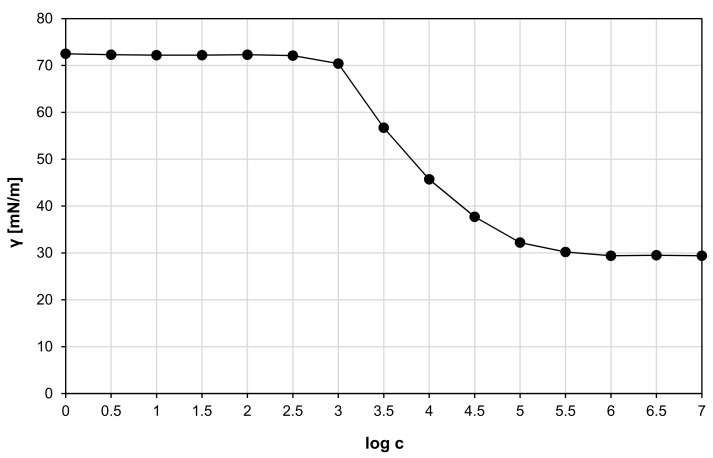
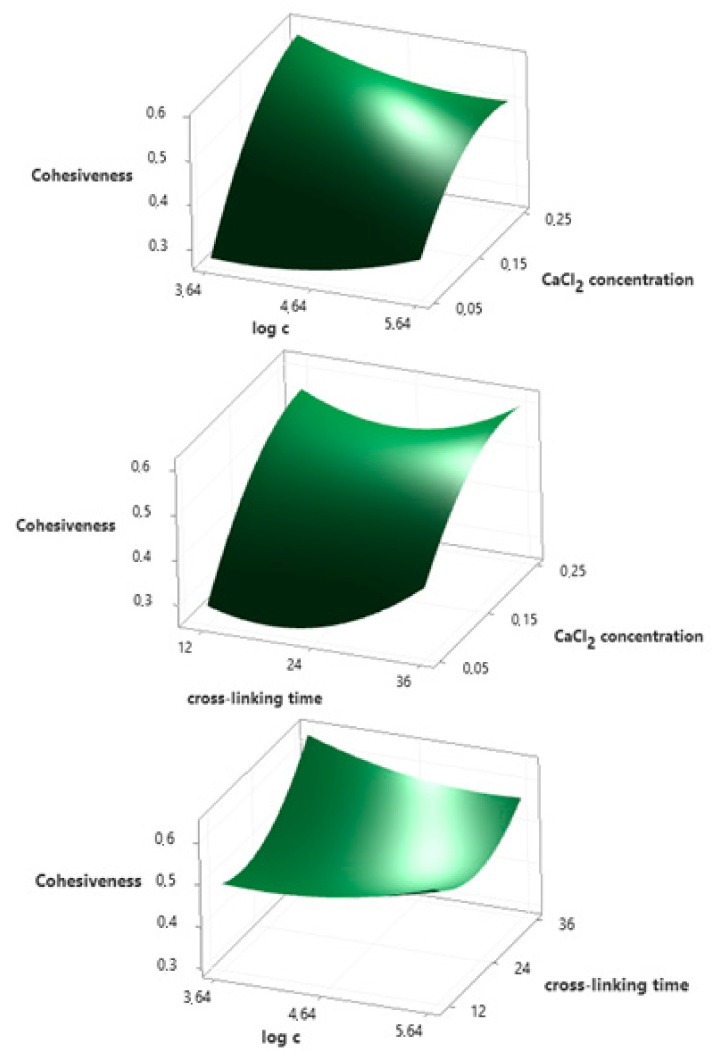
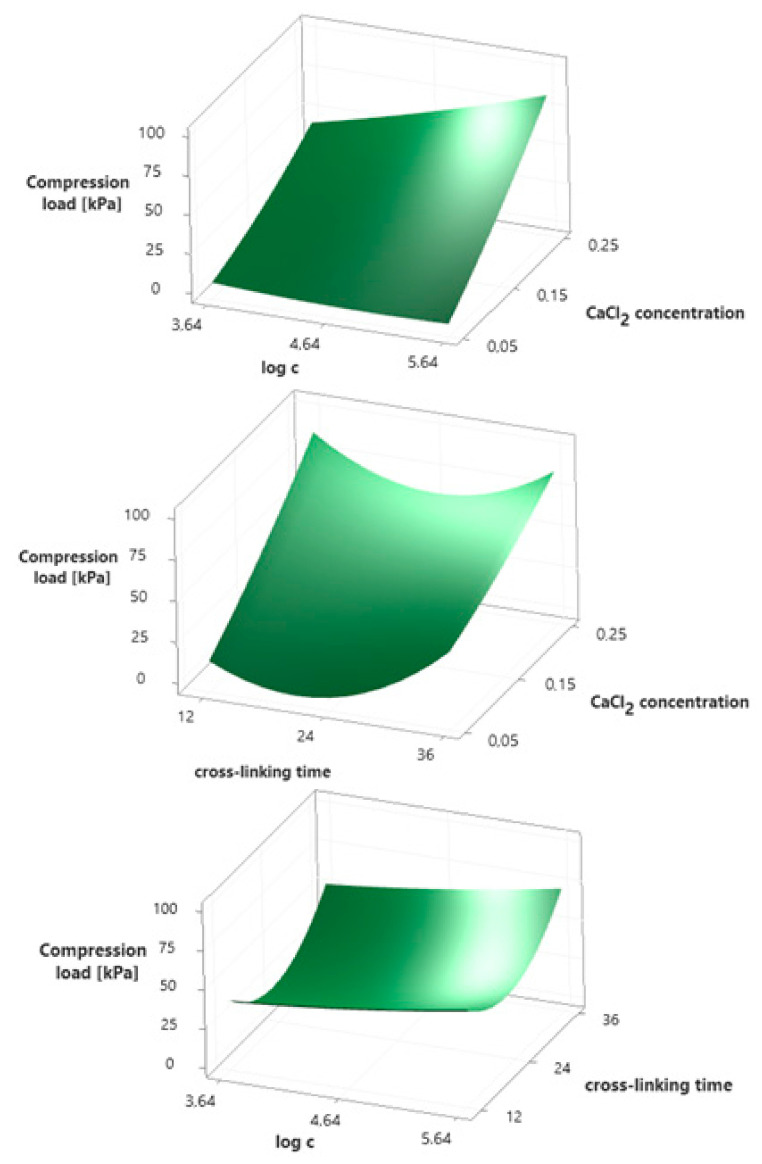
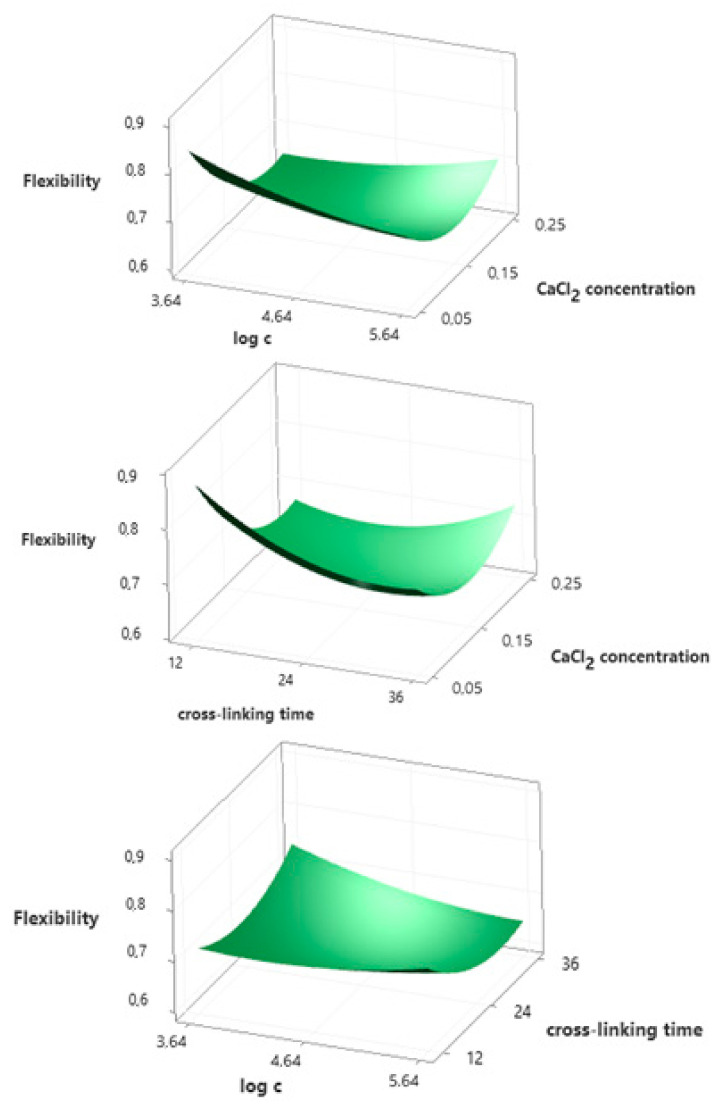
The literature indicates the existence of a relationship between rhamnolipids and bacterial biofilm, as well as the ability of selected bacteria to produce rhamnolipids and alginate. However, the influence of biosurfactant molecules on the mechanical properties of biofilms are still not fully understood. The aim of this research is to determine the effect of rhamnolipids concentration, CaCl concentration, and ionic cross-linking time on the mechanical properties of alginate hydrogels using a Box-Behnken design. The mechanical properties of cross-linked alginate hydrogels were characterized using a universal testing machine. It was assumed that the addition of rhamnolipids mainly affects the compression load, and the value of this parameter is lower for hydrogels produced with biosurfactant concentration below CMC than for hydrogels obtained in pure water. In contrast, the addition of rhamnolipids in an amount exceeding CMC causes an increase in compression load. In bacterial biofilms, the presence of rhamnolipid molecules does not exceed the CMC value, which may confirm the influence of this biosurfactant on the formation of the biofilm structure. Moreover, rhamnolipids interact with the hydrophobic part of the alginate copolymer chains, and then the hydrophilic groups of adsorbed biosurfactant molecules create additional calcium ion trapping sites.
文献表明鼠李糖脂与细菌生物膜之间存在关系,以及某些细菌产生鼠李糖脂和海藻酸盐的能力。然而,生物表面活性剂分子对生物膜机械性能的影响仍不完全清楚。本研究的目的是使用 Box-Behnken 设计确定鼠李糖脂浓度、CaCl2 浓度和离子交联时间对海藻酸钙水凝胶机械性能的影响。使用万能试验机对交联海藻酸钙水凝胶的机械性能进行了表征。假设添加鼠李糖脂主要影响压缩载荷,并且对于用低于 CMC 的生物表面活性剂浓度生产的水凝胶,该参数的值低于用纯水获得的水凝胶的值。相比之下,添加超过 CMC 的鼠李糖脂会导致压缩载荷增加。在细菌生物膜中,鼠李糖脂分子的存在不超过 CMC 值,这可能证实了这种生物表面活性剂对生物膜结构形成的影响。此外,鼠李糖脂与海藻酸盐共聚物链的疏水部分相互作用,然后吸附的生物表面活性剂分子的亲水基团形成额外的钙离子捕获位点。