Department of Food Engineering and Process Management, Institute of Food Sciences, Warsaw University of Life Sciences-SGGW, 159c Nowoursynowska St., 02-776 Warsaw, Poland.
Molecules. 2021 Jun 19;26(12):3738. doi: 10.3390/molecules26123738.
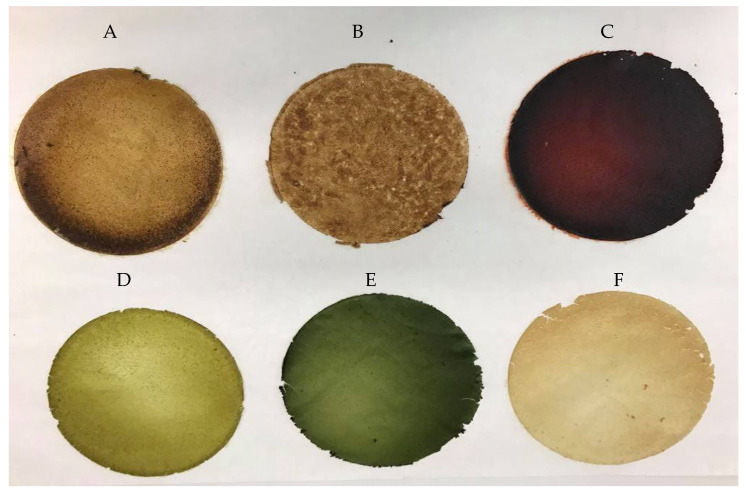
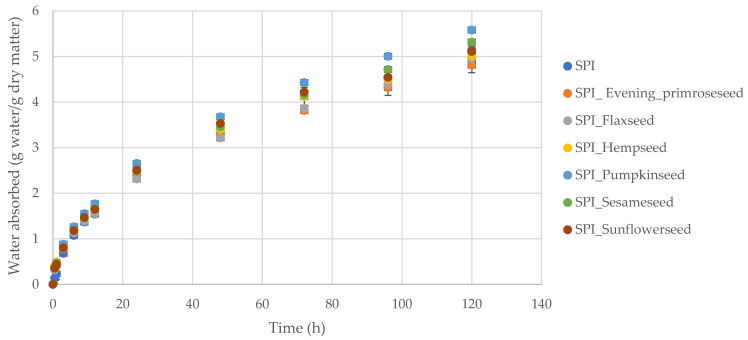
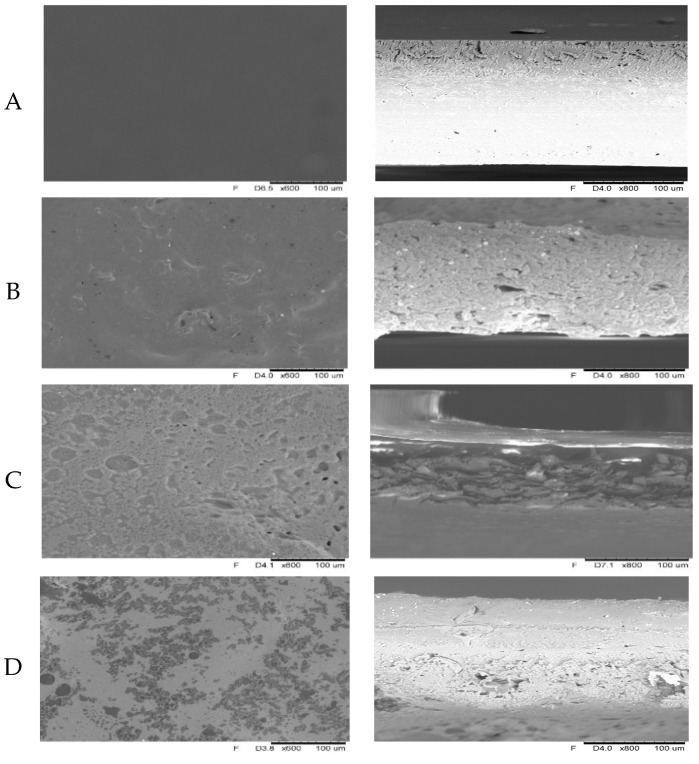
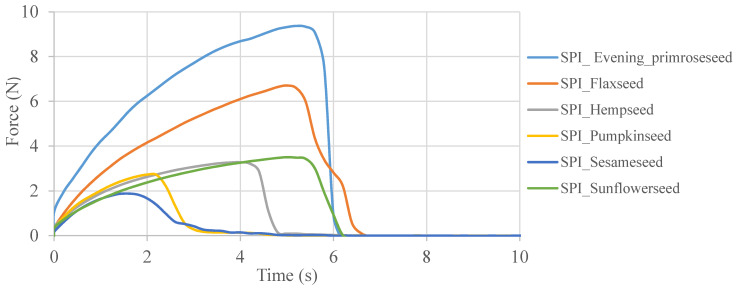
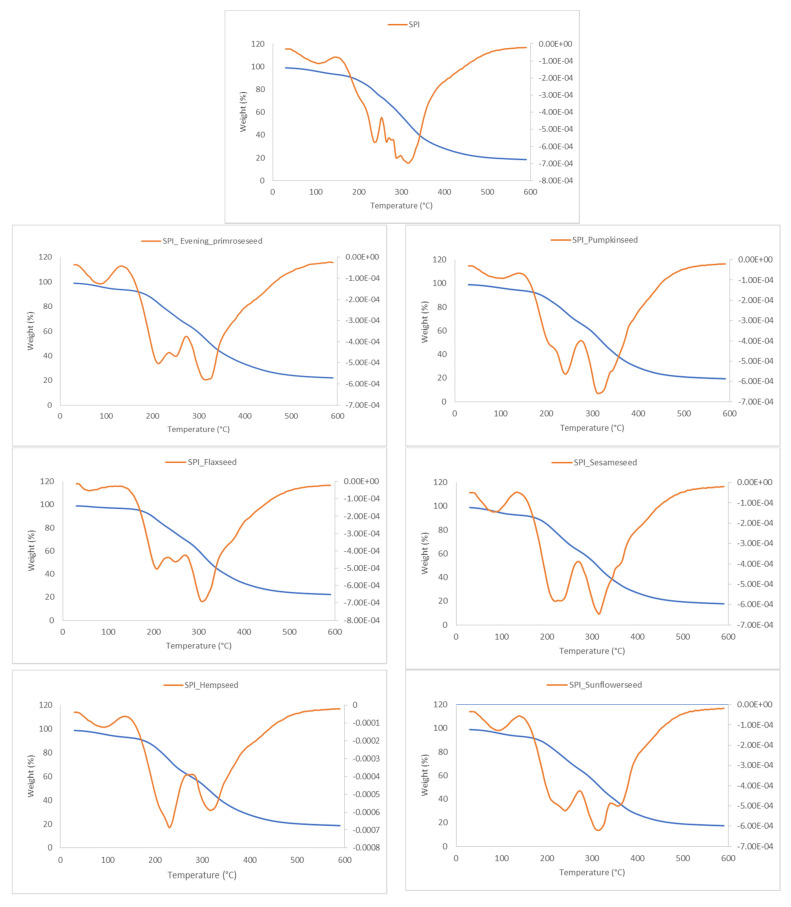
The possibility of using oilseed flours as a waste source for film-forming materials with a combination of soy protein isolate in preparation of edible films was evaluated. Physical, mechanical and barrier properties were determined as a function of the oilseed type: hemp, evening primrose, flax, pumpkin, sesame and sunflower. It was observed that the addition of oilseed flours increased the refraction and thus the opacity of the obtained films from 1.27 to 9.57 A mm. Depending on the type of flours used, the edible films took on various colors. Lightness (L*) was lowest for the evening primrose film (L* = 34.91) and highest for the soy protein film (L* = 91.84). Parameter a* was lowest for the sunflower film (a* = -5.13) and highest for the flax film (a* = 13.62). Edible films made of pumpkin seed flour had the highest value of the b* color parameter (b* = 34.40), while films made of evening primrose flour had the lowest value (b* = 1.35). All analyzed films had relatively low mechanical resistance, with tensile strength from 0.60 to 3.09 MPa. Films made of flour containing the highest amount of protein, pumpkin and sesame, had the highest water vapor permeability, 2.41 and 2.70 × 10 g·m s Pa, respectively. All the edible films obtained had high water swelling values from 131.10 to 362.16%, and the microstructure of the films changed after adding the flour, from homogeneous and smooth to rough. All blended soy protein isolate-oilseed flour films showed lower thermal stability which was better observed at the first and second stages of thermogravimetric analysis when degradation occurred at lower temperatures. The oilseed flours blended with soy protein isolate show the possibility of using them in the development of biodegradable films which can find practical application in the food industry.
评估了将油籽粉作为一种废物来源,与大豆分离蛋白结合,制备具有食用膜的成膜材料的可能性。物理、机械和阻隔性能是作为油籽类型的函数来确定的:大麻、月见草、亚麻、南瓜、芝麻和向日葵。结果表明,添加油籽粉增加了所得到的膜的折射率,从而增加了其不透明度,从 1.27 到 9.57 A mm。根据所用面粉的类型,可食用薄膜呈现出各种颜色。月见草膜的亮度(L*)最低(L* = 34.91),大豆蛋白膜的亮度最高(L* = 91.84)。葵花籽油薄膜的 a值最低(a = -5.13),亚麻籽油薄膜的 a值最高(a = 13.62)。南瓜籽油面粉制成的可食用薄膜具有最高的 b颜色参数值(b = 34.40),而由月见草粉制成的薄膜具有最低的 b值(b = 1.35)。所有分析的薄膜都具有相对较低的机械强度,拉伸强度从 0.60 到 3.09 MPa。含有最高量蛋白质的面粉制成的薄膜,即南瓜和芝麻,具有最高的水蒸气透过率,分别为 2.41 和 2.70 × 10 g·m s Pa。所有获得的可食用薄膜的水膨胀值均从 131.10 到 362.16%,并且在添加面粉后,薄膜的微观结构发生了变化,从均匀光滑变为粗糙。所有混合的大豆分离蛋白-油籽粉膜显示出较低的热稳定性,在热重分析的第一和第二阶段更好地观察到,在较低的温度下发生降解。与大豆分离蛋白混合的油籽粉具有在开发可生物降解薄膜中的应用潜力,这些薄膜在食品工业中具有实际应用。