Department of Marine Environmental Informatics and Center of Excellence for Ocean Engineering, National Taiwan Ocean University, Keelung 20224, Taiwan.
Sensors (Basel). 2021 Jun 18;21(12):4200. doi: 10.3390/s21124200.
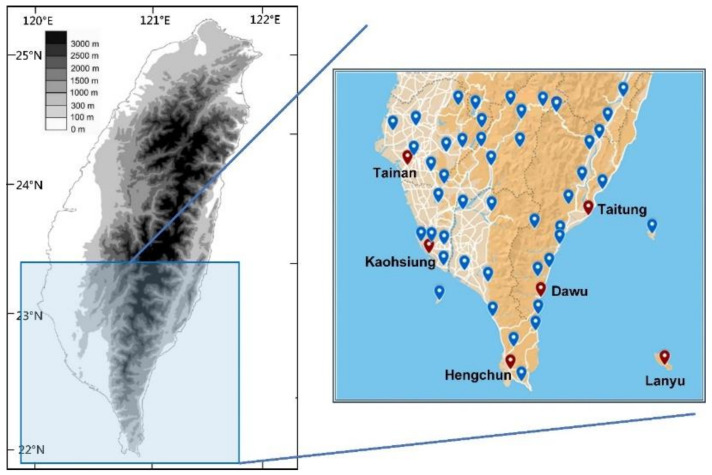
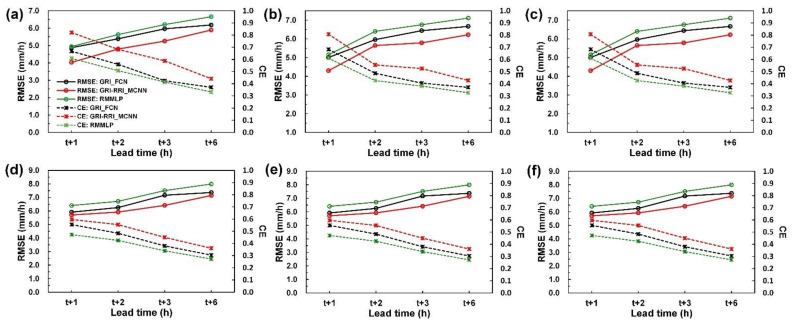
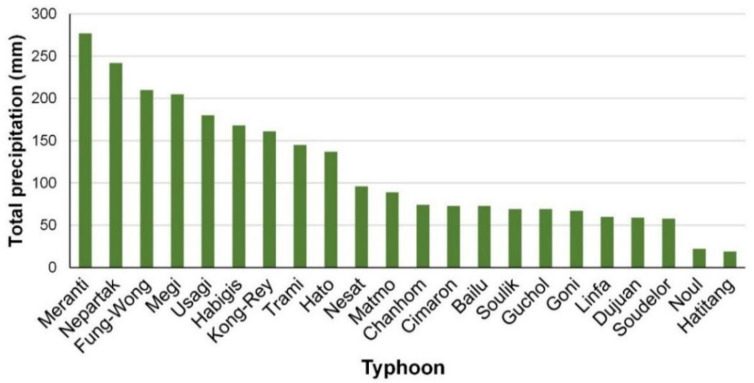
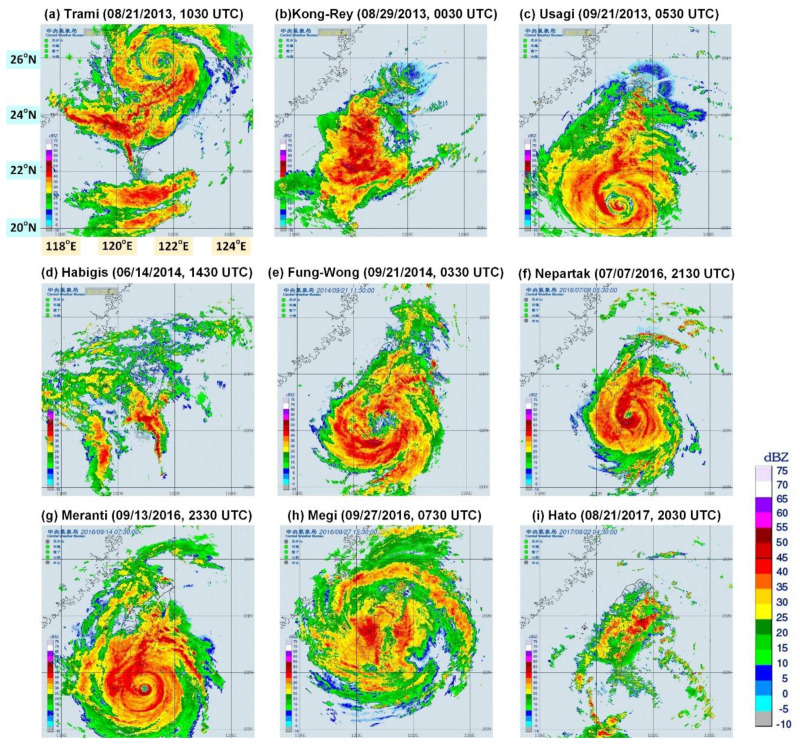
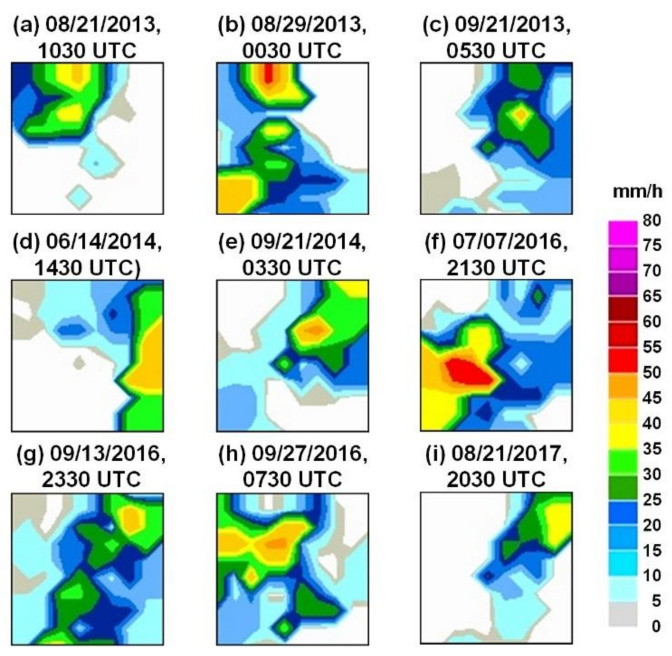
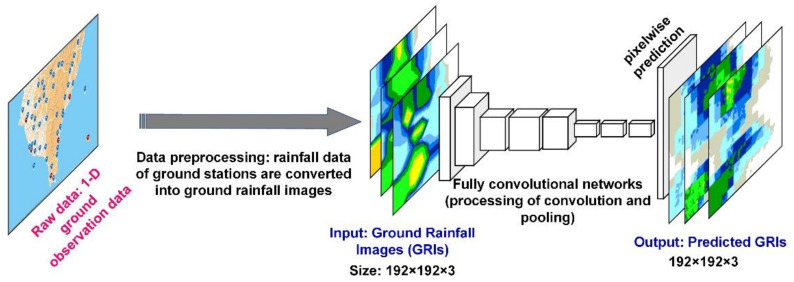
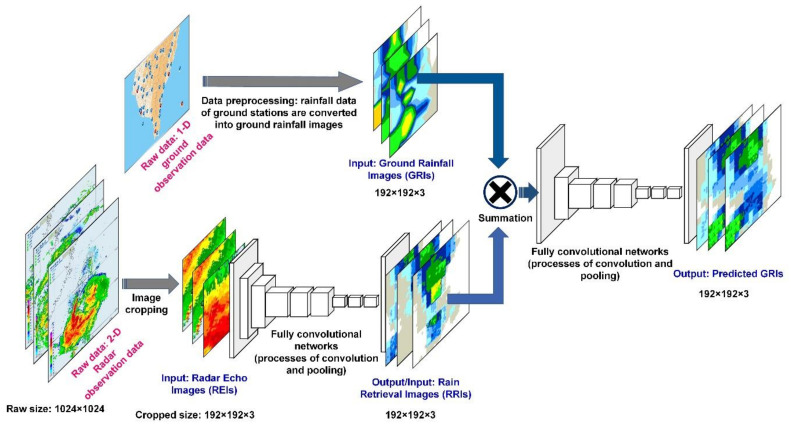
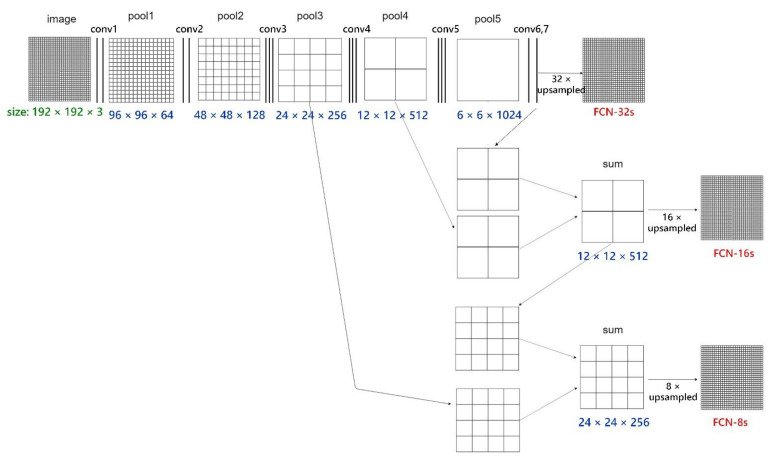
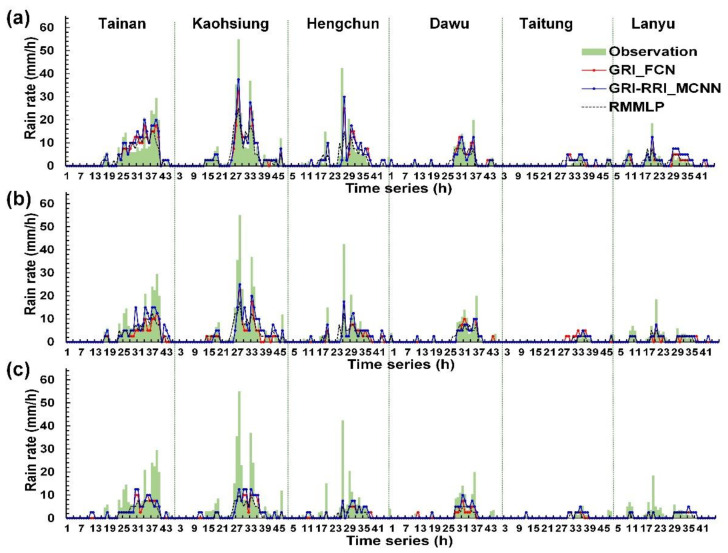
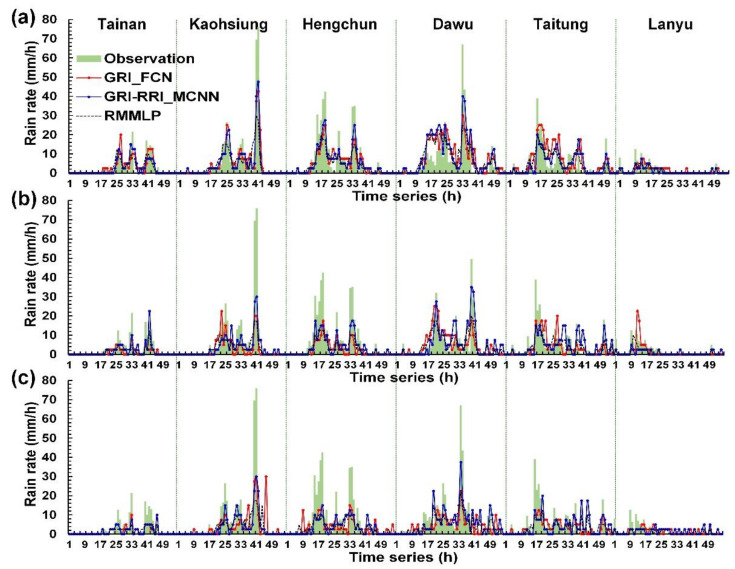
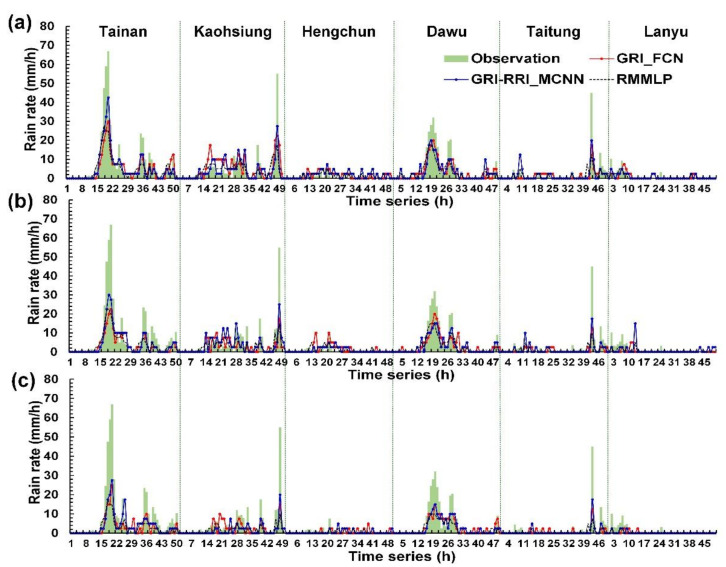
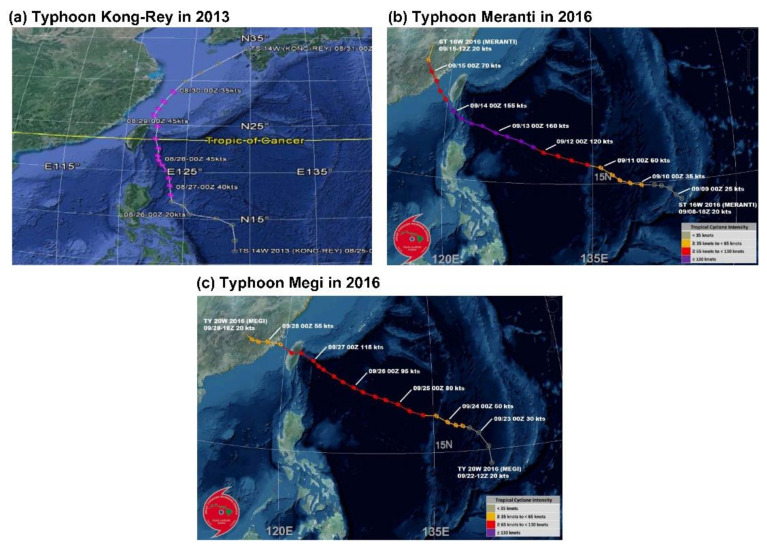
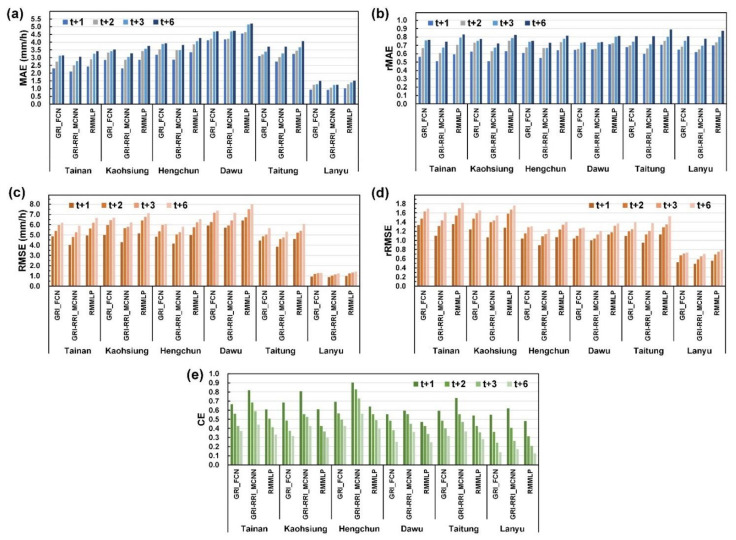
Taiwan is located at the edge of the northwestern Pacific Ocean and within a typhoon zone. After typhoons are generated, strong winds and heavy rains come to Taiwan and cause major natural disasters. This study employed fully convolutional networks (FCNs) to establish a forecast model for predicting the hourly rainfall data during the arrival of a typhoon. An FCN is an advanced technology that can be used to perform the deep learning of image recognition through semantic segmentation. FCNs deepen the neural net layers and perform upsampling on the feature map of the final convolution layer. This process enables FCN models to restore the size of the output results to that of the raw input image. In this manner, the classification of each raw pixel becomes feasible. The study data were radar echo images and ground station rainfall information for typhoon periods during 2013-2019 in southern Taiwan. Two model cases were designed. The ground rainfall image-based FCN (GRI_FCN) involved the use of the ground rain images to directly forecast the ground rainfall. The GRI combined with rain retrieval image-based modular convolutional neural network (GRI-RRI_MCNN) involved the use of radar echo images to determine the ground rainfall before the prediction of future ground rainfall. Moreover, the RMMLP, a conventional multilayer perceptron neural network, was used to a benchmark model. Forecast horizons varying from 1 to 6 h were evaluated. The results revealed that the GRI-RRI_MCNN model enabled a complete understanding of the future rainfall variation in southern Taiwan during typhoons and effectively improved the accuracy of rainfall forecasting during typhoons.
台湾位于西北太平洋边缘,处于台风带内。台风生成后,狂风暴雨会袭击台湾,造成重大自然灾害。本研究采用全卷积网络(FCN)建立台风来临时每小时降雨量的预测模型。FCN 是一种先进的技术,可以通过语义分割来实现图像识别的深度学习。FCN 加深神经网络的层数,并对最后卷积层的特征图进行上采样。这一过程使 FCN 模型能够将输出结果的大小恢复到原始输入图像的大小。这样,就可以对每个原始像素进行分类。本研究的数据是台湾南部 2013-2019 年台风期间的雷达回波图像和地面站降雨信息。设计了两个模型案例。基于地面降雨图像的 FCN(GRI_FCN)使用地面降雨图像直接预测地面降雨。GRI 与基于降雨反演图像的模块化卷积神经网络(GRI-RRI_MCNN)相结合,在预测未来地面降雨之前,使用雷达回波图像来确定地面降雨。此外,还使用传统的多层感知机神经网络 RMMLP 作为基准模型。评估了从 1 到 6 小时的预测时窗。结果表明,GRI-RRI_MCNN 模型能够全面了解台风期间台湾南部未来的降雨变化,有效提高了台风期间的降雨预测精度。