
步态康复的进展性多发性硬化症患者的运动皮质激活评估:一项由功能近红外光谱辅助的RAGTIME试验的二次分析
Motor Cortical Activation Assessment in Progressive Multiple Sclerosis Patients Enrolled in Gait Rehabilitation: A Secondary Analysis of the RAGTIME Trial Assisted by Functional Near-Infrared Spectroscopy.
作者信息
Lamberti Nicola, Manfredini Fabio, Baroni Andrea, Crepaldi Anna, Lavezzi Susanna, Basaglia Nino, Straudi Sofia
机构信息
Department of Neuroscience and Rehabilitation, University of Ferrara, 44121 Ferrara, Italy.
Unit of Rehabilitation Medicine, University Hospital of Ferrara, 44124 Ferrara, Italy.
出版信息
Diagnostics (Basel). 2021 Jun 9;11(6):1068. doi: 10.3390/diagnostics11061068.
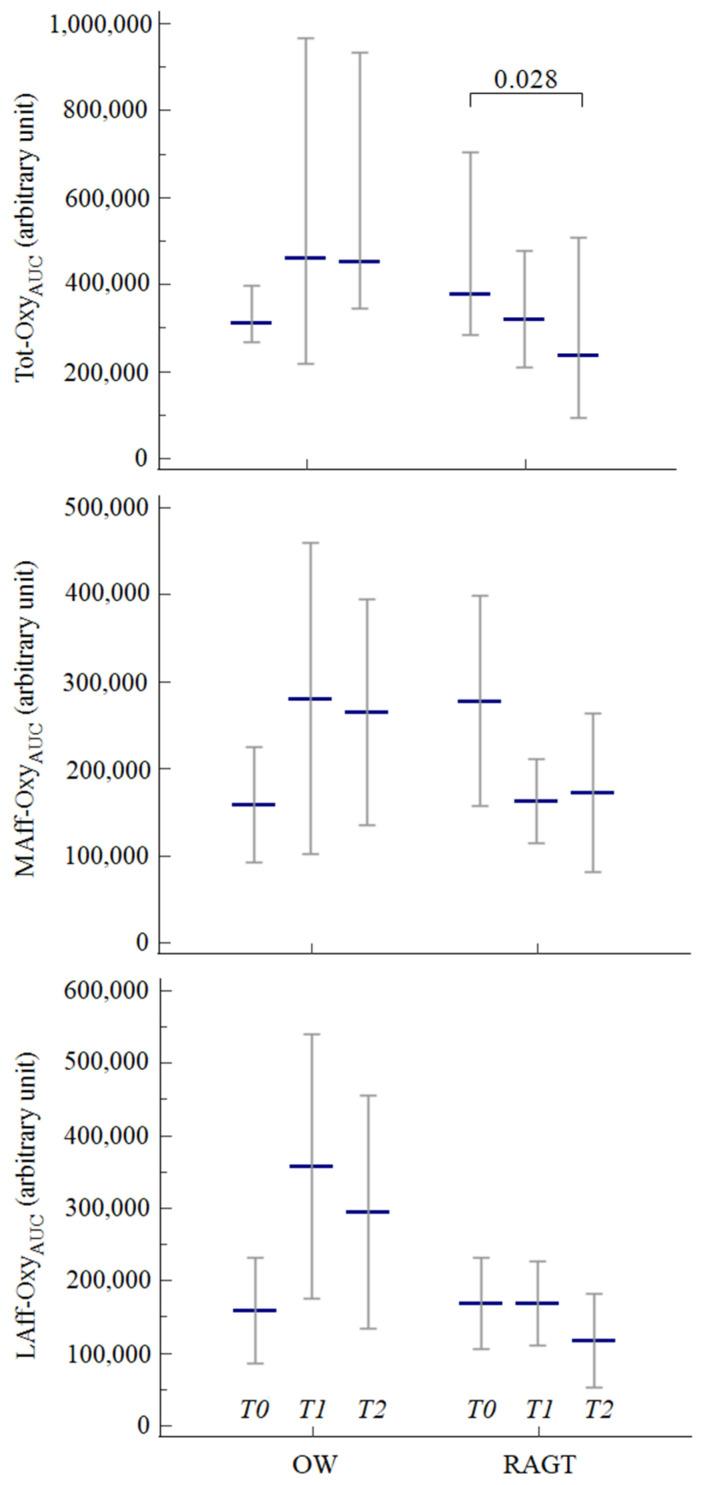
This study aimed to determine cortical activation responses to two different rehabilitative programs, as measured through functional near-infrared spectroscopy (fNIRS). As a secondary analysis of the RAGTIME trial, we studied 24 patients with progressive multiple sclerosis (MS) and severe disability who were randomized to a regimen of robot-assisted gait training (RAGT) or overground walking (OW). Cortical activation during a treadmill walking task, assessed through fNIRS recordings from the motor and premotor cortexes (M1/PM), was calculated as the area under the curve (AUC) of oxyhemoglobin for each hemisphere and the total area (Tot-Oxy). Gait speed, endurance, and balance were also measured, along with five healthy control subjects. At baseline, Tot-Oxy during walking was significantly increased in MS patients compared to healthy people and was significantly higher for those with more severe disabilities; it was also inversely correlated with physical performance. After rehabilitation, significant opposite variations in Tot-Oxy were observed, with activity levels being increased after OW and decreased after RAGT (+242,080 ± 361,902 and -157,031 ± 172,496 arbitrary units, respectively; = 0.002), particularly in patients who were trained at a lower speed. Greater reductions in the cortical activation of the more affected hemisphere were significantly related to improvements in gait speed ( = -0.42) and endurance ( = -0.44). Cortical activation, assessed through fNIRS, highlighted the brain activity in response to the type and intensity of rehabilitation.
本研究旨在通过功能近红外光谱技术(fNIRS)测定对两种不同康复方案的皮质激活反应。作为RAGTIME试验的二次分析,我们研究了24例进行性多发性硬化症(MS)且重度残疾的患者,他们被随机分为接受机器人辅助步态训练(RAGT)方案或地面行走(OW)方案。通过对运动皮层和运动前皮层(M1/PM)进行fNIRS记录来评估跑步机行走任务期间的皮质激活,计算为每个半球氧合血红蛋白的曲线下面积(AUC)以及总面积(Tot-Oxy)。还测量了步态速度、耐力和平衡,同时纳入了5名健康对照者。在基线时,与健康人相比,MS患者行走期间的Tot-Oxy显著增加,且在残疾程度更严重的患者中更高;它也与身体表现呈负相关。康复后,观察到Tot-Oxy出现显著相反的变化,OW后活动水平增加,RAGT后降低(分别为+242,080±361,902和 -157,031±172,496任意单位;P = 0.002),特别是在以较低速度训练的患者中。受影响更严重半球的皮质激活的更大降低与步态速度(P = -0.42)和耐力(P = -0.44)的改善显著相关。通过fNIRS评估的皮质激活突出了大脑对康复类型和强度的反应活动。




 Zotero 插件