Ghaderi Aram Morteza, Zanoli Massimiliano, Nordström Håkan, Toma-Dasu Iuliana, Blomgren Klas, Trefná Hana Dobšíček
Department of Electrical Engineering, Chalmers University of Technology, 412 96 Gothenburg, Sweden.
Elekta Instrument AB 113 57, 103 93 Stockholm, Sweden.
Cancers (Basel). 2021 Jun 30;13(13):3277. doi: 10.3390/cancers13133277.
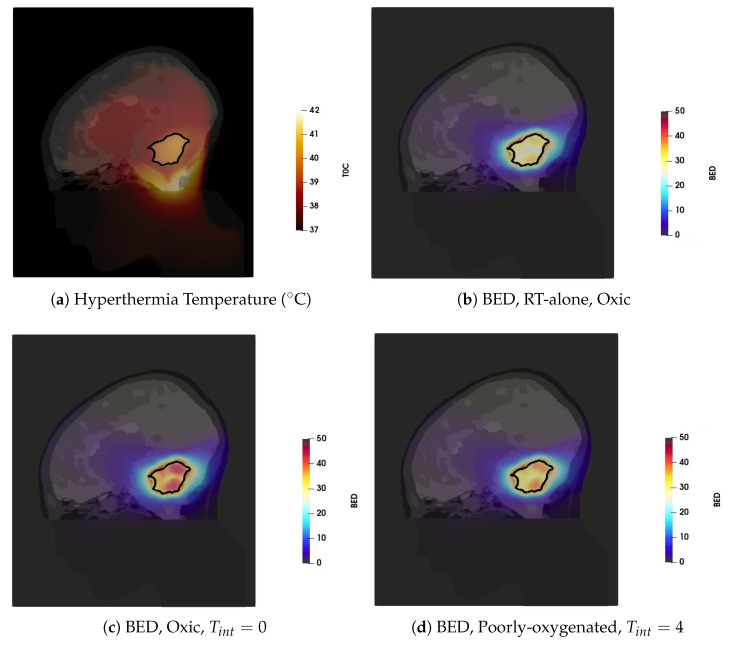
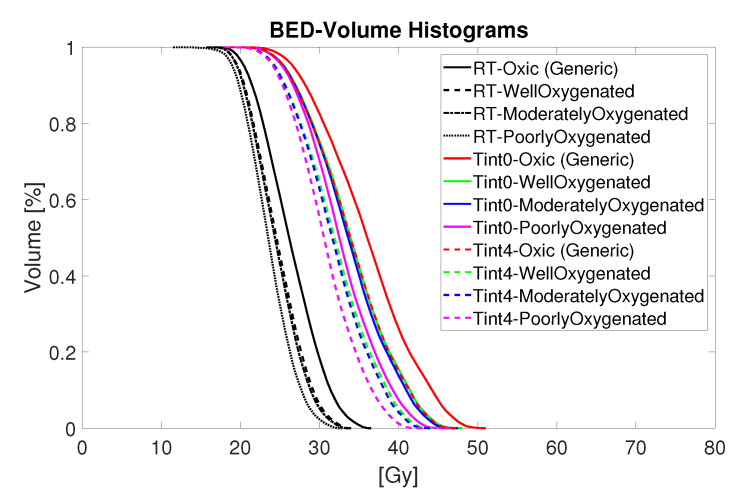
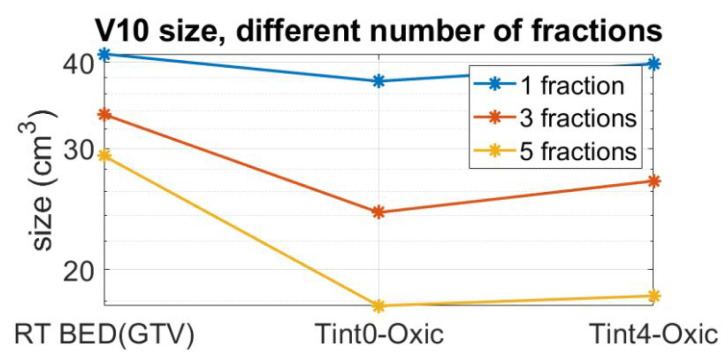
Combining radiotherapy (RT) with hyperthermia (HT) has been proven effective in the treatment of a wide range of tumours, but the combination of externally delivered, focused heat and stereotactic radiosurgery has never been investigated. We explore the potential of such treatment enhancement via radiobiological modelling, specifically via the linear-quadratic (LQ) model adapted to thermoradiotherapy through modulating the radiosensitivity of temperature-dependent parameters. We extend this well-established model by incorporating oxygenation effects. To illustrate the methodology, we present a clinically relevant application in pediatric oncology, which is novel in two ways. First, it deals with medulloblastoma, the most common malignant brain tumour in children, a type of brain tumour not previously reported in the literature of thermoradiotherapy studies. Second, it makes use of the Gamma Knife for the radiotherapy part, thereby being the first of its kind in this context. Quantitative metrics like the biologically effective dose (BED) and the tumour control probability (TCP) are used to assess the efficacy of the combined plan.
将放射疗法(RT)与热疗(HT)相结合已被证明在多种肿瘤的治疗中有效,但外部聚焦加热与立体定向放射外科手术的联合应用从未被研究过。我们通过放射生物学建模,特别是通过调整温度相关参数的放射敏感性,对适应热放疗的线性二次(LQ)模型,探索这种治疗增强的潜力。我们通过纳入氧合效应来扩展这个成熟的模型。为了说明该方法,我们展示了在儿科肿瘤学中的一个临床相关应用,它在两个方面具有创新性。首先,它涉及髓母细胞瘤,这是儿童中最常见的恶性脑肿瘤,是热放疗研究文献中此前未报道过的一种脑肿瘤类型。其次,它在放疗部分使用了伽玛刀,因此在这种情况下是首例。像生物等效剂量(BED)和肿瘤控制概率(TCP)这样的定量指标被用来评估联合方案的疗效。