
通过多喷射熔融对聚酰胺11和热塑性聚氨酯进行3D打印的综合研究。
A Comprehensive Investigation on 3D Printing of Polyamide 11 and Thermoplastic Polyurethane via Multi Jet Fusion.
作者信息
Tey Wei Shian, Cai Chao, Zhou Kun
机构信息
HP-NTU Digital Manufacturing Corporate Lab, School of Mechanical and Aerospace Engineering, Nanyang Technological University, Singapore 639798, Singapore.
State Key Laboratory of Materials Processing and Die & Mould Technology, Huazhong University of Science and Technology, Wuhan 430074, China.
出版信息
Polymers (Basel). 2021 Jun 29;13(13):2139. doi: 10.3390/polym13132139.
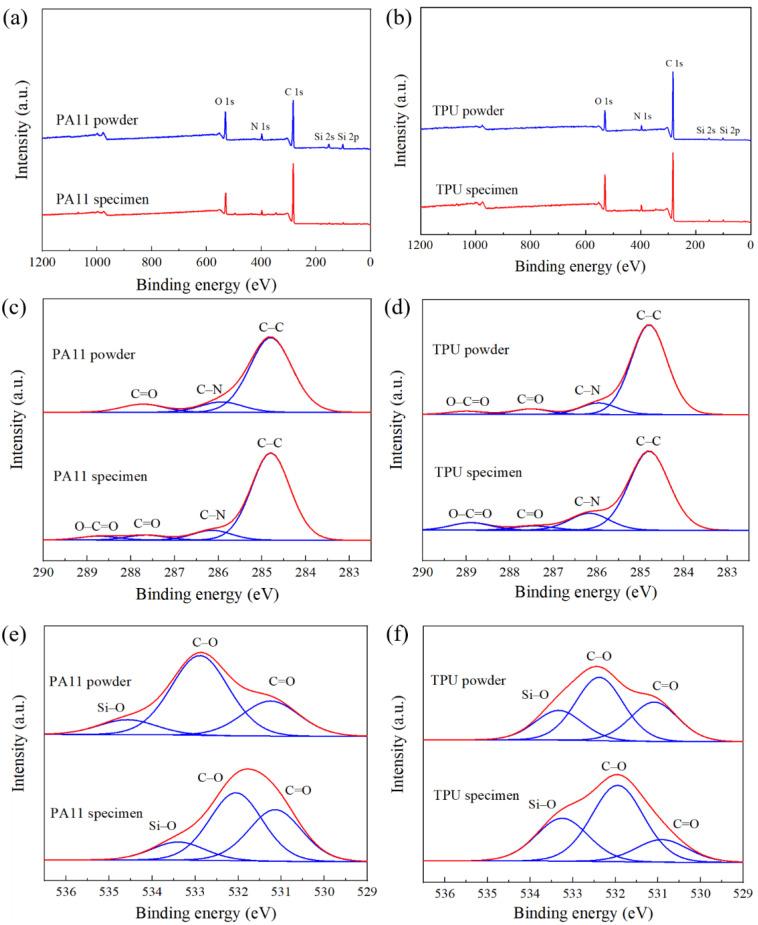
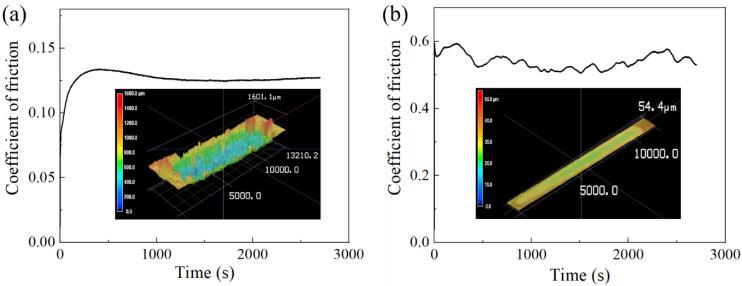
Multi Jet Fusion (MJF) is a recently developed polymeric powder bed fusion (PBF) additive manufacturing technique that has received considerable attention in the industrial and scientific community due to its ability to fabricate functional and complex polymeric parts efficiently. In this work, a systematic characterization of the physicochemical properties of MJF-certified polyamide 11 (PA11) and thermoplastic polyurethane (TPU) powder was conducted. The mechanical performance and print quality of the specimens printed using both powders were then evaluated. Both PA11 and TPU powders showed irregular morphology with sharp features and had broad particle size distribution, but such features did not impair their printability significantly. According to the DSC scans, the PA11 specimen exhibited two endothermic peaks, while the TPU specimen exhibited a broad endothermic peak (116-150 °C). The PA11 specimens possessed the highest tensile strength in the orientation, as opposed to the TPU specimens which possessed the lowest tensile strength along the same orientation. The flexural properties of the PA11 and TPU specimens displayed a similar anisotropy where the flexural strength was highest in the orientation and lowest in the orientation. The porosity values of both the PA11 and the TPU specimens were observed to be the lowest in the orientation and highest in the orientation, which was the opposite of the trend observed for the flexural strength of the specimens. The PA11 specimen possessed a low coefficient of friction (COF) of 0.13 and wear rate of 8.68 × 10 mm/Nm as compared to the TPU specimen, which had a COF of 0.55 and wear rate of 0.012 mm/Nm. The PA11 specimens generally had lower roughness values on their surfaces ( < 25 μm), while the TPU specimens had much rougher surfaces ( > 40 μm). This investigation aims to uncover and explain phenomena that are unique to the MJF process of PA11 and TPU while also serving as a benchmark against similar polymeric parts printed using other PBF processes.
多射流熔融(MJF)是一种最近开发的聚合物粉末床熔融(PBF)增材制造技术,由于其能够高效制造功能性和复杂的聚合物部件,在工业和科学界受到了广泛关注。在这项工作中,对经MJF认证的聚酰胺11(PA11)和热塑性聚氨酯(TPU)粉末的物理化学性质进行了系统表征。然后评估了使用这两种粉末打印的试样的机械性能和打印质量。PA11和TPU粉末均呈现出具有尖锐特征的不规则形态,且粒径分布较宽,但这些特征并未显著影响它们的可打印性。根据差示扫描量热法(DSC)扫描结果,PA11试样呈现出两个吸热峰,而TPU试样呈现出一个宽吸热峰(116 - 150°C)。PA11试样在取向方向上具有最高的拉伸强度,而TPU试样在相同取向上具有最低的拉伸强度。PA11和TPU试样的弯曲性能表现出类似的各向异性,其中弯曲强度在取向方向上最高,在取向方向上最低。观察到PA11和TPU试样的孔隙率值在取向方向上最低,在取向方向上最高,这与试样弯曲强度所观察到的趋势相反。与TPU试样相比,PA11试样的摩擦系数(COF)较低,为0.13,磨损率为8.68×10 mm/Nm,而TPU试样的COF为0.55,磨损率为0.012 mm/Nm。PA11试样表面的粗糙度值通常较低(<25μm),而TPU试样的表面粗糙度要高得多(>40μm)。本研究旨在揭示和解释PA11和TPU的MJF工艺所特有的现象,同时也作为使用其他PBF工艺打印的类似聚合物部件的基准。




 Zotero 插件