Center for Medical Genetics and Hunan Key Laboratory of Medical Genetics, School of Life Sciences, Central South University, Changsha, Hunan, China (mainland).
Department of Oral and Maxillofacial Surgery, Center of Stomatology, Xiangya Hospital Central South University, Changsha, Hunan, China (mainland).
Med Sci Monit. 2021 Jul 2;27:e931238. doi: 10.12659/MSM.931238.
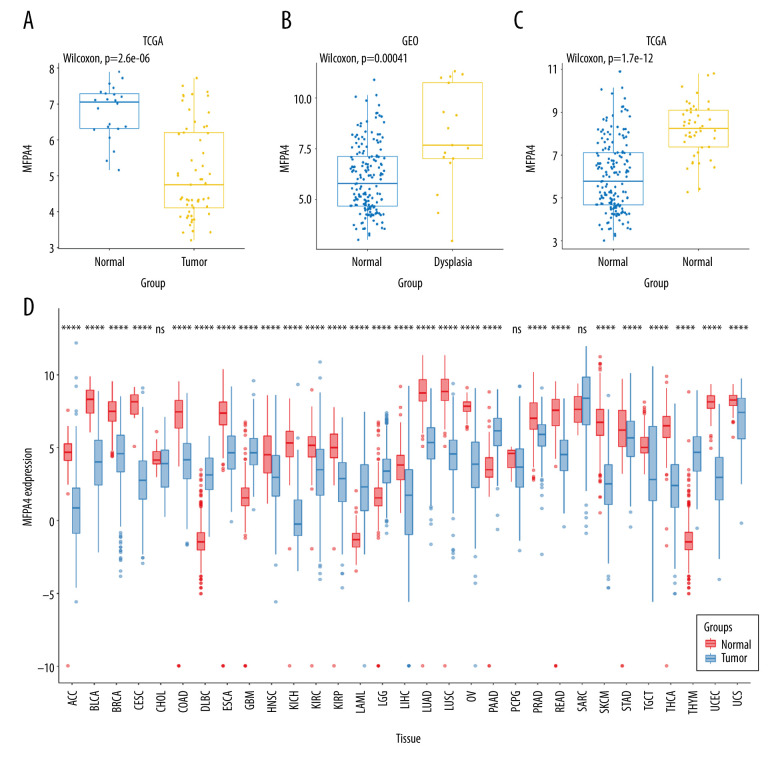
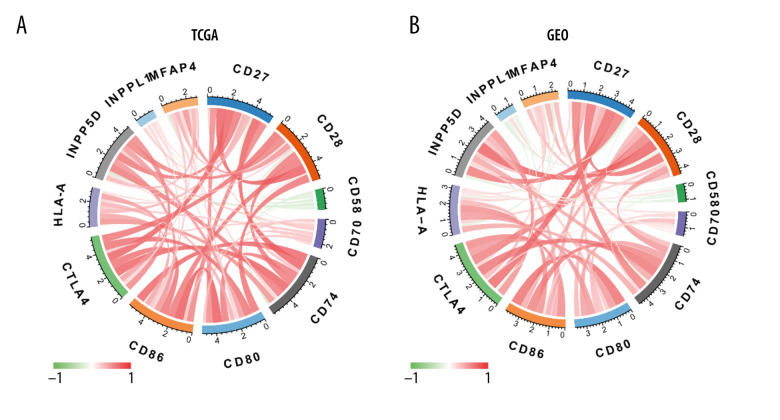
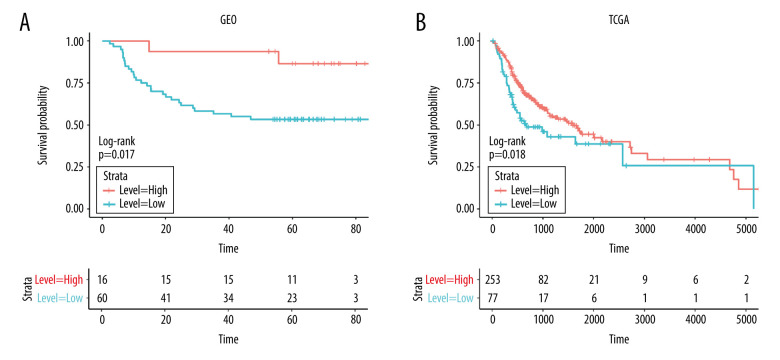
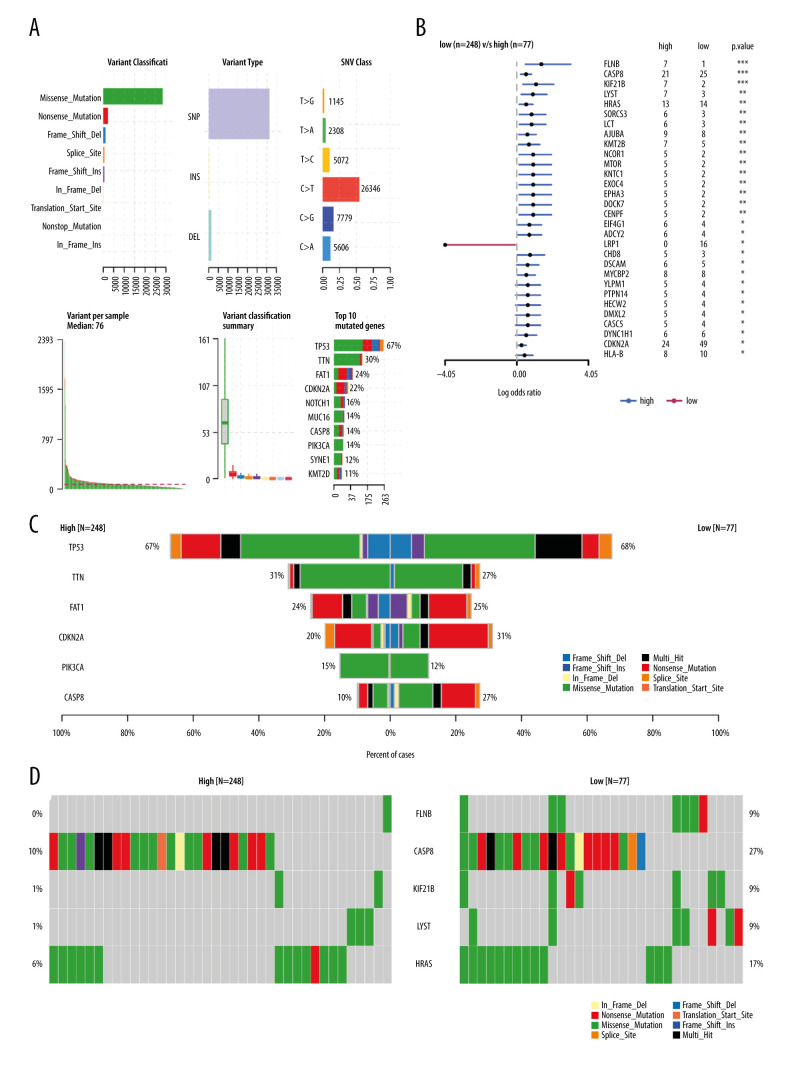
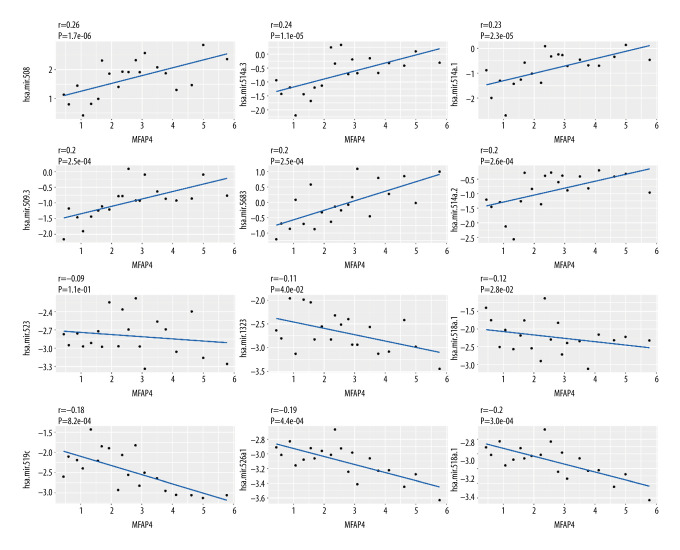
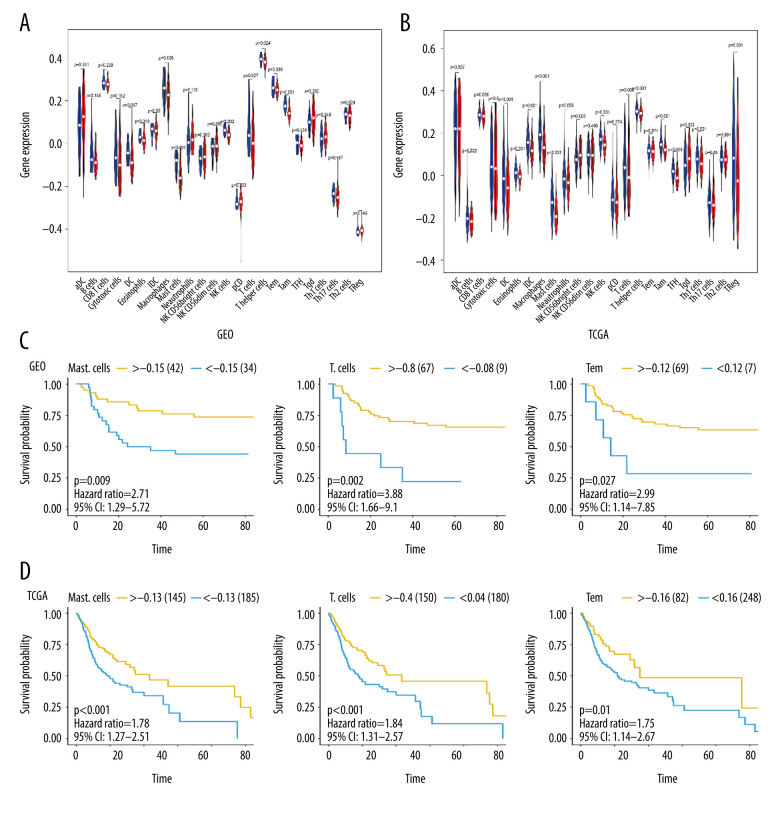
BACKGROUND Oral squamous cell carcinoma (OSCC) is a common tumor of the head and neck. Its treatment usually requires multiple modalities. Currently, there are no molecular biomarkers to guide these treatment strategies. Studies have shown that microfibril-associated protein 4 (MFAP4) is potentially useful for non-invasive assessment of various diseases; however, its biological function in tumors is still unknown. In this study, we propose that MFAP4 is a new prognostic target for OSCC. MATERIAL AND METHODS First, we collected OSCC data (GSE25099 and GSE30784 datasets) from the Gene Expression Omnibus (GEO) database and compared the differential expression of MFAP4 gene between the patients (tumor) and normal (control) groups. The comparison was done with University of California Santa Cruz Xena (https://xenabrowser.net/Datapages/), and we calculated the difference in MFAP4 gene expression between normal and tumor tissues in a pan-cancer analysis. Then, we compared the 2 groups with high and low expression of MFAP4 gene in terms of tumor mutation burden (TMB), miRNA regulation, and immune cell infiltration. RESULTS We found that the expression of MFAP4 gene was significantly decreased in tumors. Our research also showed that high expression of MFAP4 was related to better prognosis of patients and may be related to tumor gene mutation, miRNA regulation, and infiltration of different immune cells. CONCLUSIONS Our work provides evidence that expression of MFAP4 can be used as a prognostic biomarker for risk stratification of OSCC patients and elaborates on its relation with the regulation of TMB, miRNAs, and immune cell infiltration.
口腔鳞状细胞癌(OSCC)是头颈部常见的肿瘤。其治疗通常需要多种方法。目前,尚无分子生物标志物来指导这些治疗策略。研究表明,微纤维相关蛋白 4(MFAP4)在各种疾病的非侵入性评估中可能具有潜在的作用;然而,其在肿瘤中的生物学功能尚不清楚。在本研究中,我们提出 MFAP4 是 OSCC 的一个新的预后靶点。
首先,我们从基因表达综合数据库(GEO)中收集了 OSCC 数据(GSE25099 和 GSE30784 数据集),并比较了 MFAP4 基因在患者(肿瘤)和正常(对照)组之间的差异表达。使用加利福尼亚大学圣克鲁斯分校 Xena(https://xenabrowser.net/Datapages/)进行比较,并在泛癌分析中计算了正常和肿瘤组织中 MFAP4 基因表达的差异。然后,我们比较了 2 组 MFAP4 基因高表达和低表达患者的肿瘤突变负担(TMB)、miRNA 调控和免疫细胞浸润情况。
我们发现 MFAP4 基因的表达在肿瘤中显著降低。我们的研究还表明,MFAP4 高表达与患者的预后较好相关,可能与肿瘤基因突变、miRNA 调控和不同免疫细胞浸润有关。
我们的工作提供了证据表明 MFAP4 的表达可以作为 OSCC 患者风险分层的预后生物标志物,并阐述了其与 TMB、miRNAs 和免疫细胞浸润的调节之间的关系。