Department of Biophysics, University of Texas Southwestern Medical Center, Dallas, TX, USA.
Department of Cell Biology, University of Texas Southwestern Medical Center, Dallas, TX, USA.
Nat Commun. 2021 Jul 1;12(1):4074. doi: 10.1038/s41467-021-24367-3.
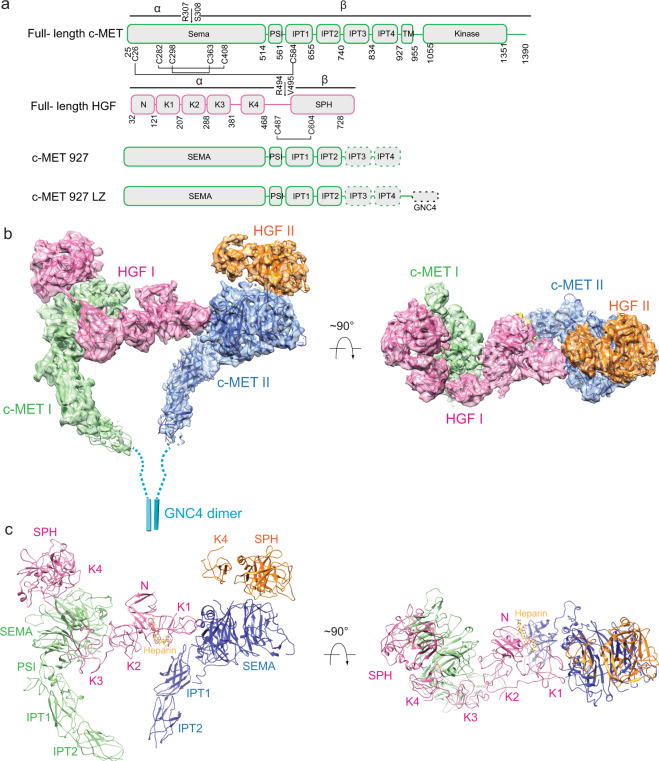
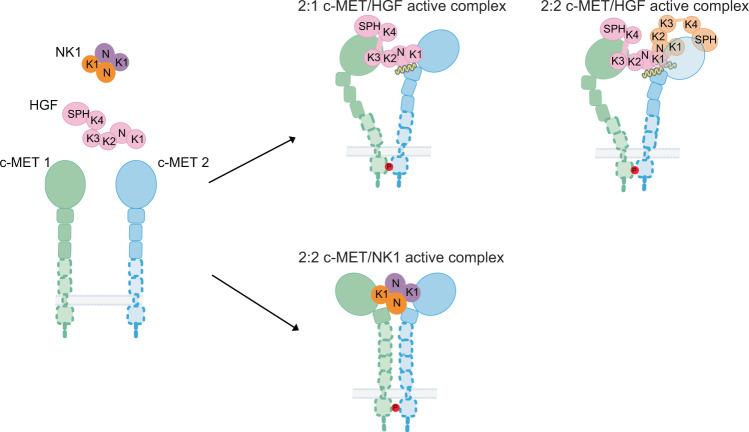
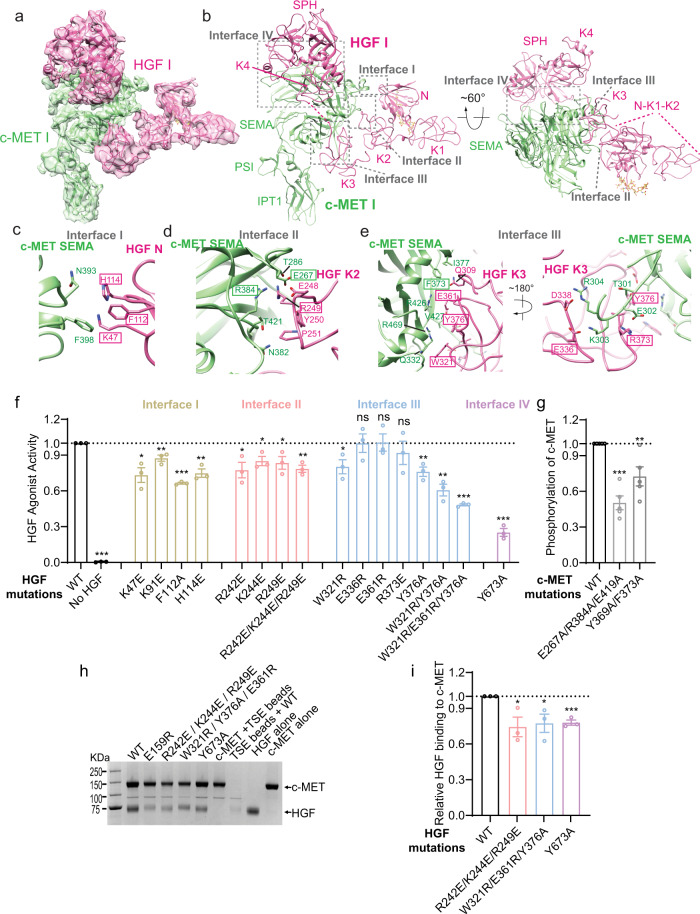
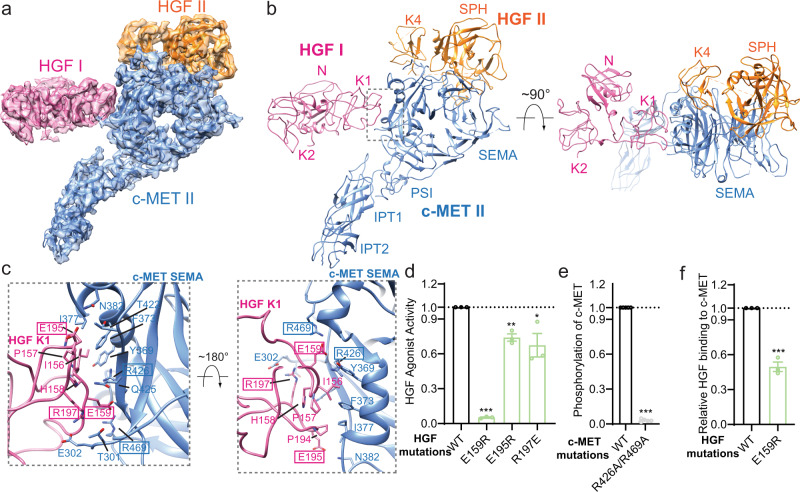
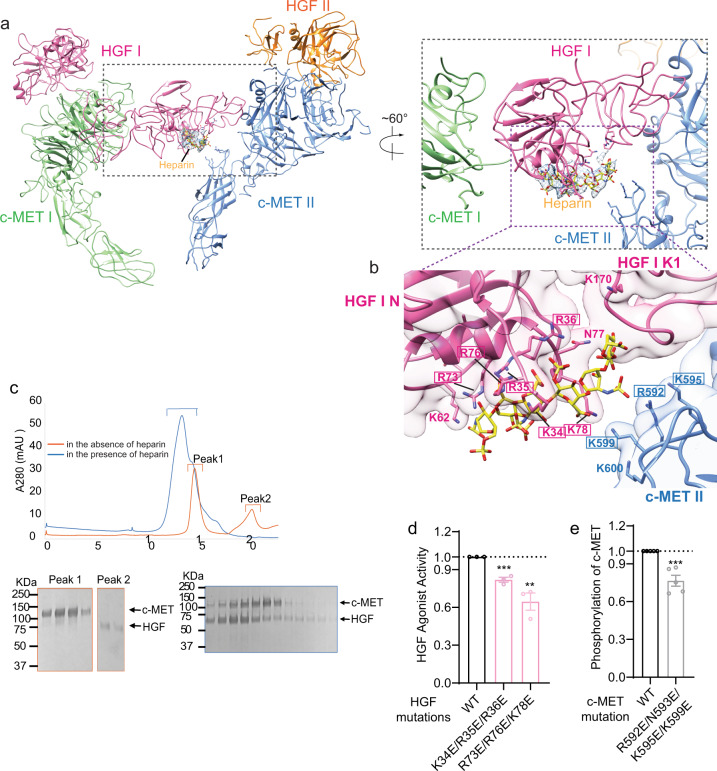
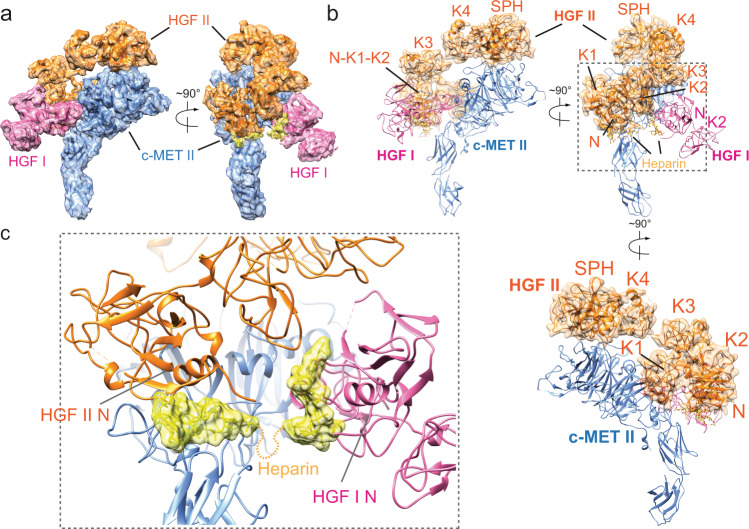
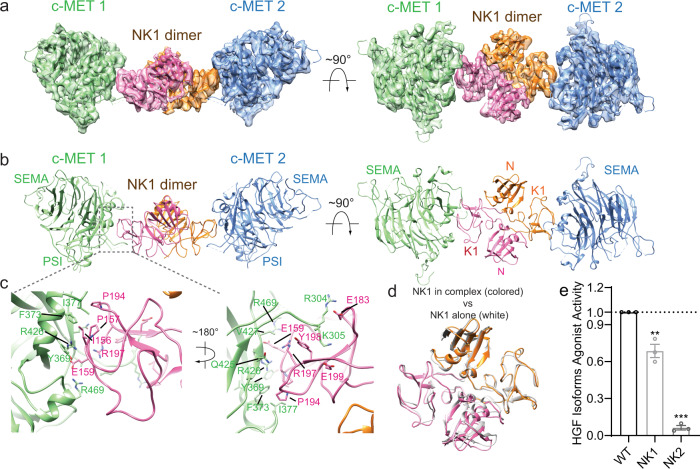
The c-MET receptor is a receptor tyrosine kinase (RTK) that plays essential roles in normal cell development and motility. Aberrant activation of c-MET can lead to both tumors growth and metastatic progression of cancer cells. C-MET can be activated by either hepatocyte growth factor (HGF), or its natural isoform NK1. Here, we report the cryo-EM structures of c-MET/HGF and c-MET/NK1 complexes in the active state. The c-MET/HGF complex structure reveals that, by utilizing two distinct interfaces, one HGF molecule is sufficient to induce a specific dimerization mode of c-MET for receptor activation. The binding of heparin as well as a second HGF to the 2:1 c-MET:HGF complex further stabilize this active conformation. Distinct to HGF, NK1 forms a stable dimer, and bridges two c-METs in a symmetrical manner for activation. Collectively, our studies provide structural insights into the activation mechanisms of c-MET, and reveal how two isoforms of the same ligand use dramatically different mechanisms to activate the receptor.
c-MET 受体是一种受体酪氨酸激酶(RTK),在正常细胞发育和运动中发挥着重要作用。c-MET 的异常激活可导致肿瘤生长和癌细胞的转移进展。c-MET 可被肝细胞生长因子(HGF)或其天然同工型 NK1 激活。在这里,我们报告了 c-MET/HGF 和 c-MET/NK1 复合物在活性状态下的冷冻电镜结构。c-MET/HGF 复合物结构揭示了,通过利用两个不同的界面,一个 HGF 分子足以诱导 c-MET 的特定二聚化模式以激活受体。肝素和第二个 HGF 与 2:1 c-MET:HGF 复合物的结合进一步稳定了这种活性构象。与 HGF 不同的是,NK1 形成稳定的二聚体,并以对称的方式桥接两个 c-MET 以激活它们。总之,我们的研究为 c-MET 的激活机制提供了结构见解,并揭示了同一配体的两种同工型如何使用截然不同的机制来激活受体。