Institute for Medical Microbiology and Hygiene, Philipps-University Marburg, Marburg, Germany.
Medizinische Klinik und Poliklinik II, Universitätsklinikum Würzburg, Würzburg, Germany.
Nat Commun. 2021 Jul 1;12(1):4077. doi: 10.1038/s41467-021-24331-1.
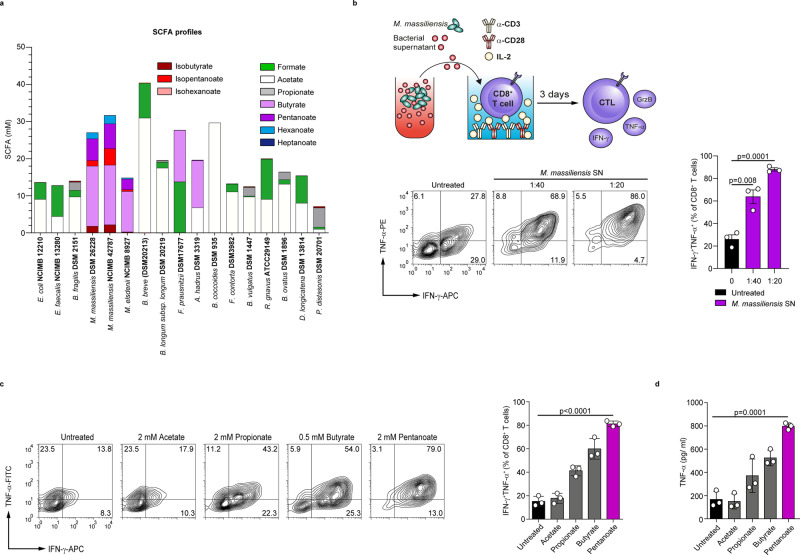
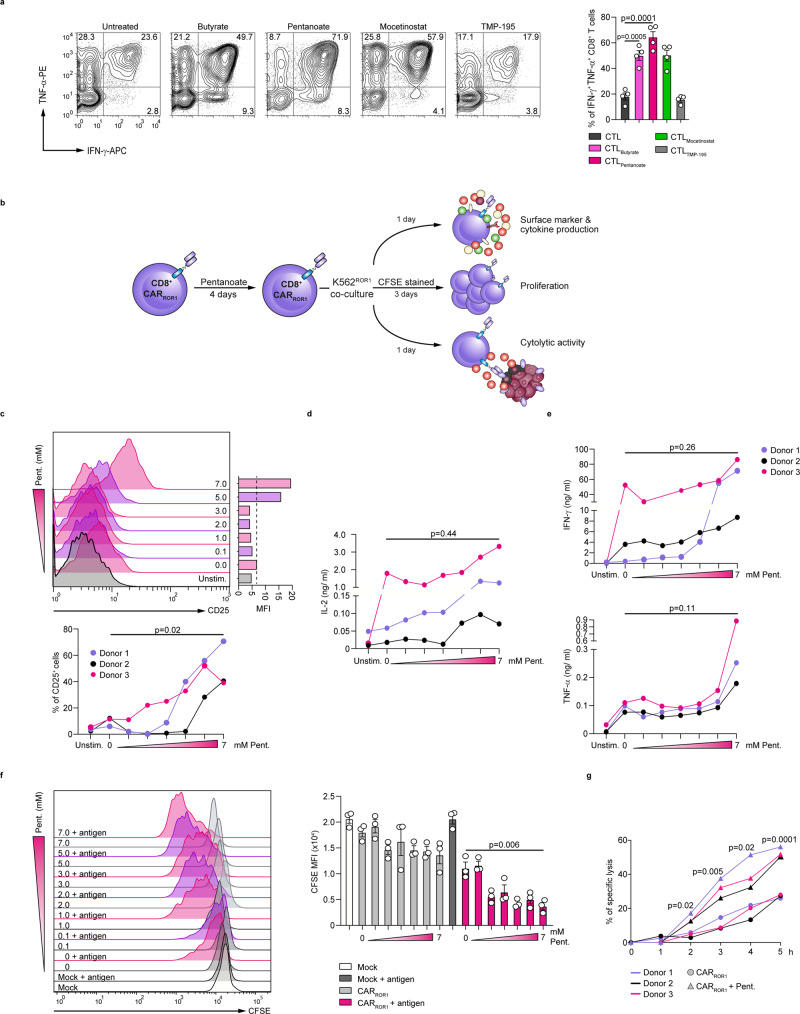
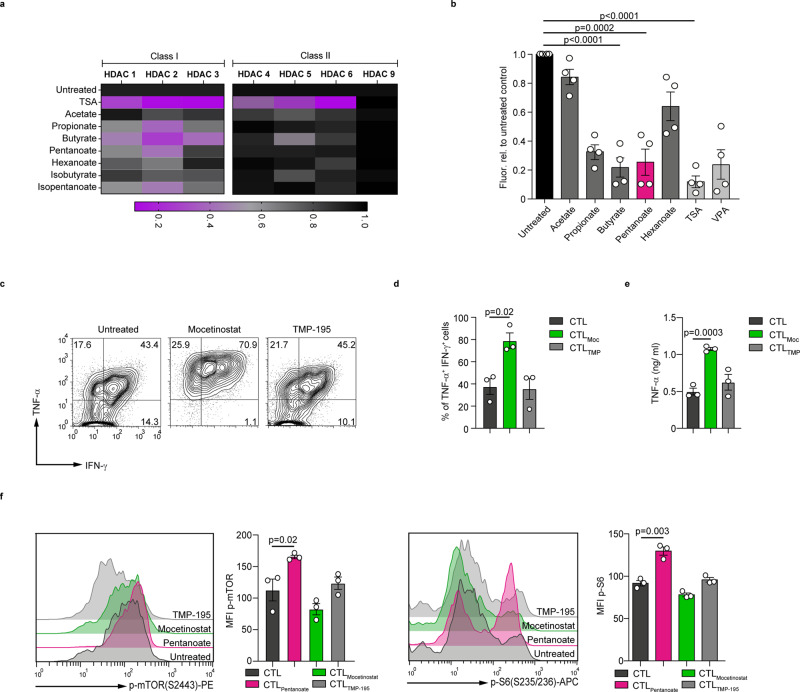
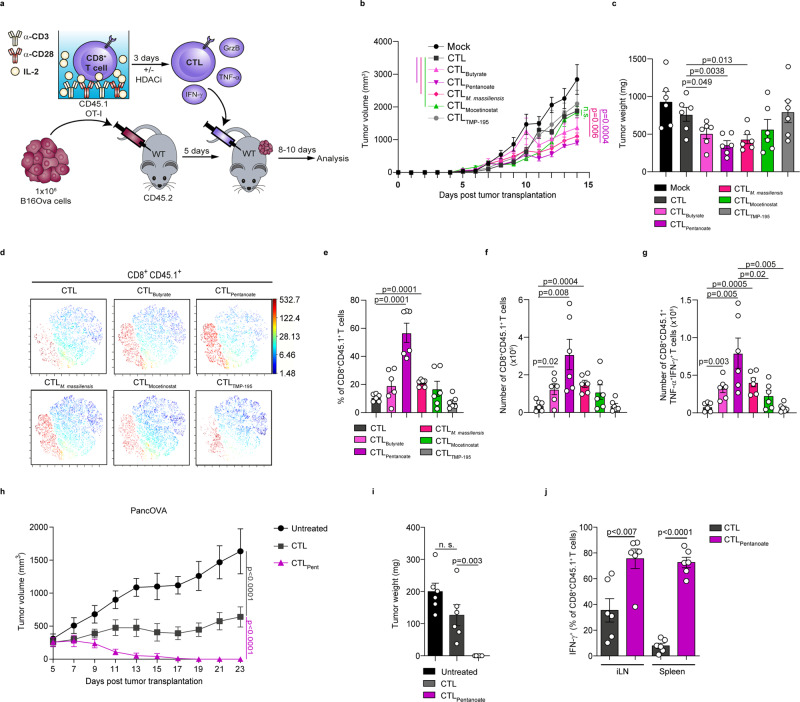
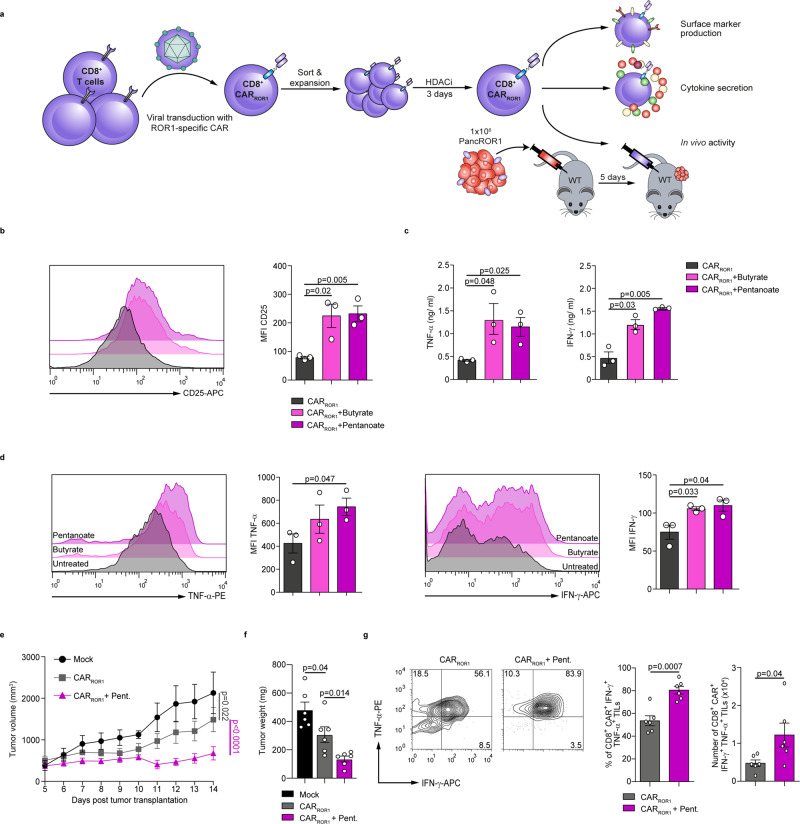
Emerging data demonstrate that the activity of immune cells can be modulated by microbial molecules. Here, we show that the short-chain fatty acids (SCFAs) pentanoate and butyrate enhance the anti-tumor activity of cytotoxic T lymphocytes (CTLs) and chimeric antigen receptor (CAR) T cells through metabolic and epigenetic reprograming. We show that in vitro treatment of CTLs and CAR T cells with pentanoate and butyrate increases the function of mTOR as a central cellular metabolic sensor, and inhibits class I histone deacetylase activity. This reprogramming results in elevated production of effector molecules such as CD25, IFN-γ and TNF-α, and significantly enhances the anti-tumor activity of antigen-specific CTLs and ROR1-targeting CAR T cells in syngeneic murine melanoma and pancreatic cancer models. Our data shed light onto microbial molecules that may be used for enhancing cellular anti-tumor immunity. Collectively, we identify pentanoate and butyrate as two SCFAs with therapeutic utility in the context of cellular cancer immunotherapy.
新出现的数据表明,免疫细胞的活性可以被微生物分子所调节。在这里,我们发现短链脂肪酸(SCFAs)戊酸和丁酸通过代谢和表观遗传重编程增强了细胞毒性 T 淋巴细胞(CTL)和嵌合抗原受体(CAR)T 细胞的抗肿瘤活性。我们发现,体外用戊酸和丁酸处理 CTL 和 CAR T 细胞可增加作为中央细胞代谢传感器的 mTOR 的功能,并抑制 I 类组蛋白去乙酰化酶的活性。这种重编程导致效应分子如 CD25、IFN-γ和 TNF-α的产生增加,并显著增强了抗原特异性 CTL 和 ROR1 靶向 CAR T 细胞在同种异体黑色素瘤和胰腺癌模型中的抗肿瘤活性。我们的数据揭示了可能用于增强细胞抗肿瘤免疫的微生物分子。总的来说,我们确定戊酸和丁酸是两种在细胞癌症免疫治疗中具有治疗用途的短链脂肪酸。