Dieu Ruthe Storgaard, Wais Vian, Sørensen Michael Zaucha, Marczynska Joanna, Dubik Magdalena, Kavan Stephanie, Thomassen Mads, Burton Mark, Kruse Torben, Khorooshi Reza, Owens Trevor
Department of Neurobiology Research, Institute of Molecular Medicine, University of Southern Denmark, Odense, Denmark.
Department of Clinical Genetics, Odense University Hospital, Institute of Clinical Research, University of Southern Denmark, Odense, Denmark.
Front Neurosci. 2021 Jun 15;15:685645. doi: 10.3389/fnins.2021.685645. eCollection 2021.
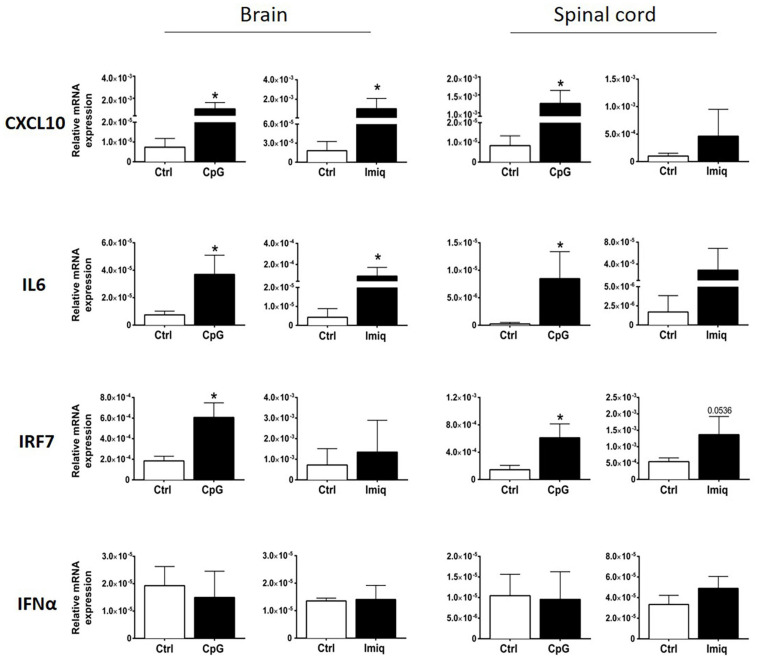
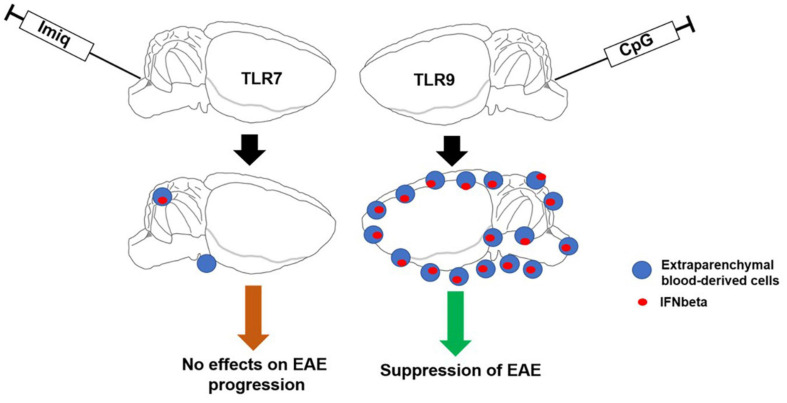
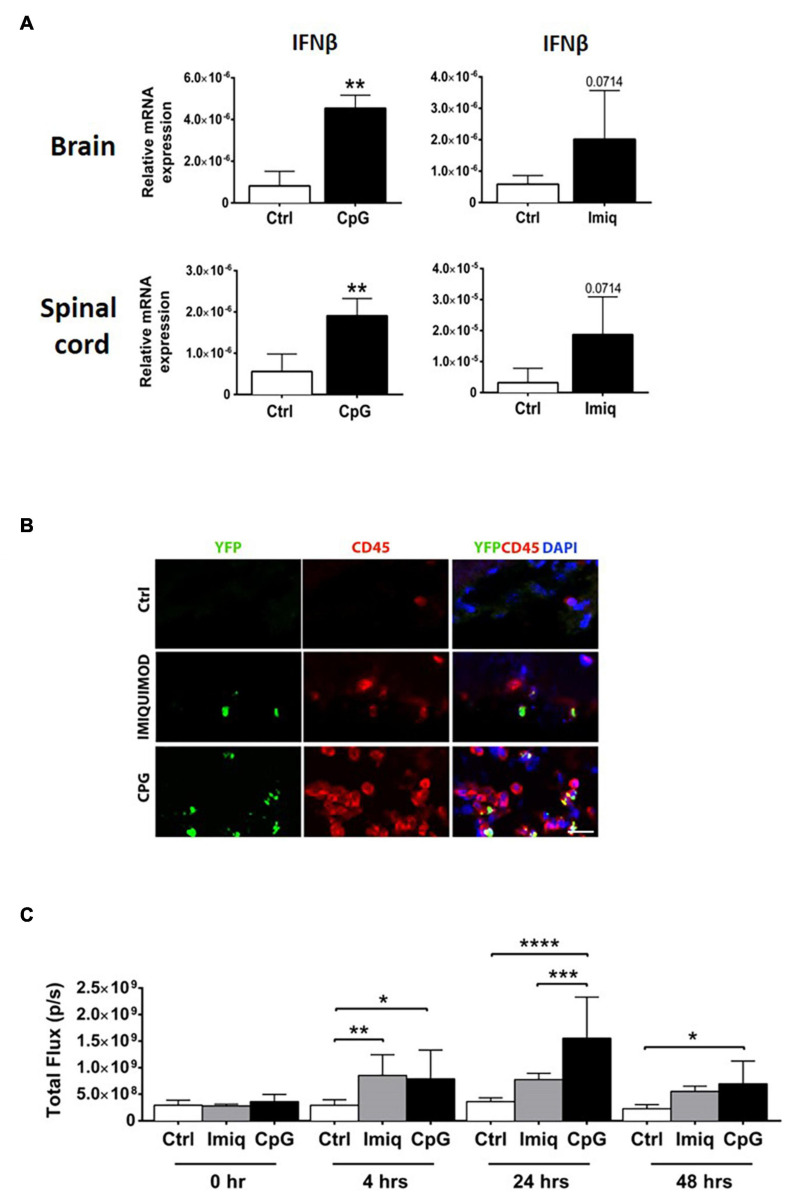
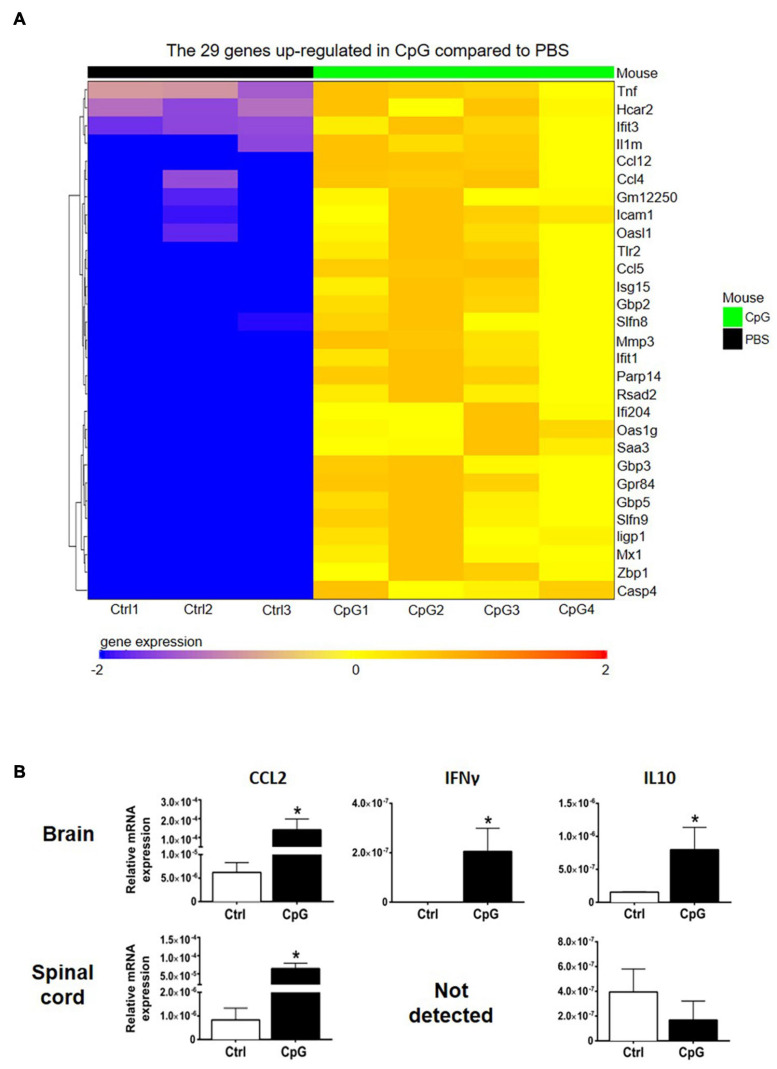
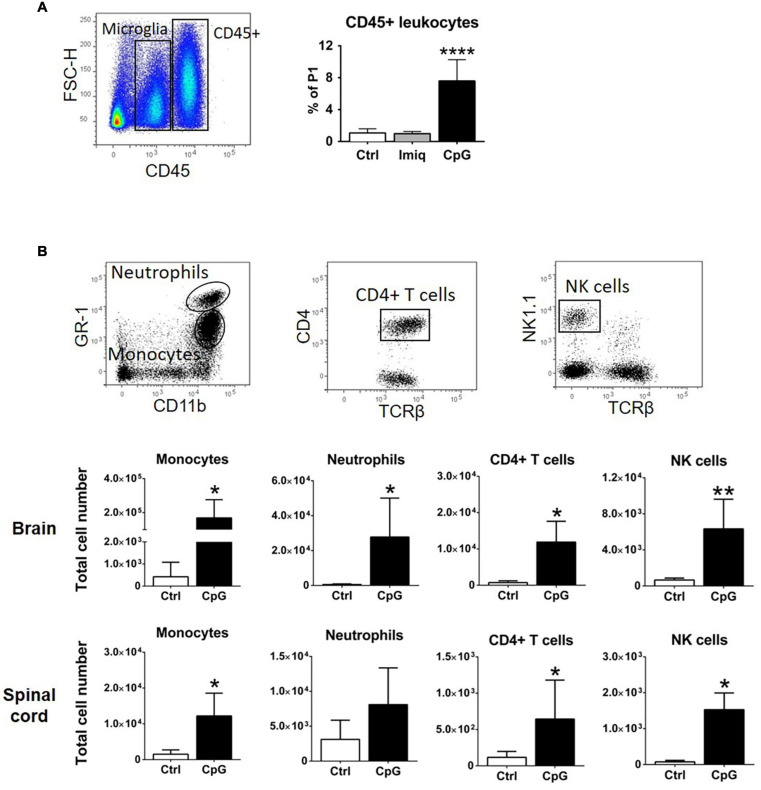
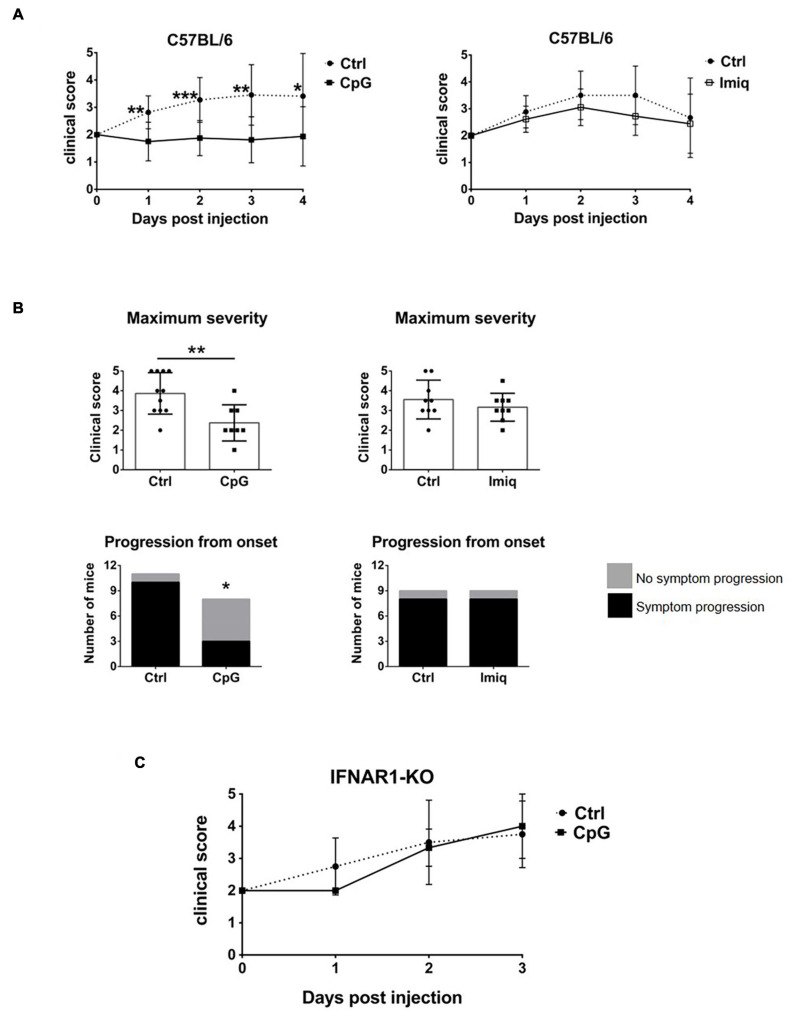
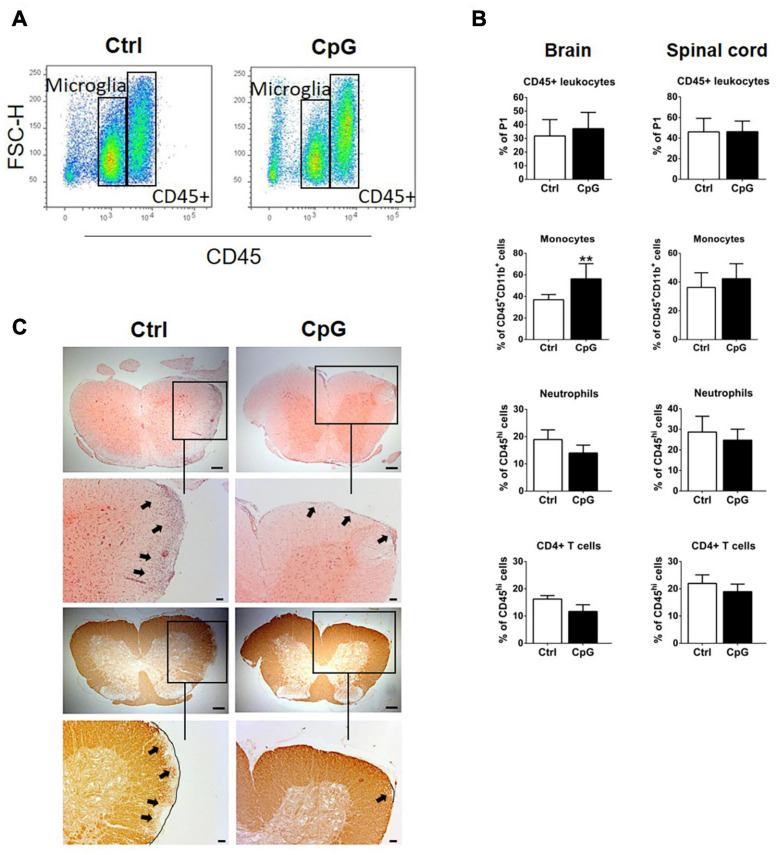
Innate receptors, including Toll like receptors (TLRs), are implicated in pathogenesis of CNS inflammatory diseases such as multiple sclerosis (MS) and its animal model experimental autoimmune encephalomyelitis (EAE). TLR response to pathogens or endogenous signals includes production of immunoregulatory mediators. One of these, interferon (IFN)β, a Type I IFN, plays a protective role in MS and EAE. We have previously shown that intrathecal administration of selected TLR ligands induced IFNβ and infiltration of blood-derived myeloid cells into the central nervous system (CNS), and suppressed EAE in mice. We have now extended these studies to evaluate a potential therapeutic role for CNS-endogenous TLR7 and TLR9. Intrathecal application of Imiquimod (TLR7 ligand) or CpG oligonucleotide (TLR9 ligand) into CNS of otherwise unmanipulated mice induced IFNβ expression, with greater magnitude in response to CpG. CD45+ cells in the meninges were identified as source of IFNβ. Intrathecal CpG induced infiltration of monocytes, neutrophils, CD4+ T cells and NK cells whereas Imiquimod did not recruit blood-derived CD45+ cells. CpG, but not Imiquimod, had a beneficial effect on EAE, when given at time of disease onset. This therapeutic effect of CpG on EAE was not seen in mice lacking the Type I IFN receptor. In mice with EAE treated with CpG, the proportion of monocytes was significantly increased in the CNS. Infiltrating cells were predominantly localized to spinal cord meninges and demyelination was significantly reduced compared to non-treated mice with EAE. Our findings show that TLR7 and TLR9 signaling induce distinct inflammatory responses in the CNS with different outcome in EAE and point to recruitment of blood-derived cells and IFNβ induction as possible mechanistic links between TLR9 stimulation and amelioration of EAE. The protective role of TLR9 signaling in the CNS may have application in treatment of diseases such as MS.
包括Toll样受体(TLR)在内的天然受体与中枢神经系统炎症性疾病如多发性硬化症(MS)及其动物模型实验性自身免疫性脑脊髓炎(EAE)的发病机制有关。TLR对病原体或内源性信号的反应包括免疫调节介质的产生。其中之一,I型干扰素β在MS和EAE中发挥保护作用。我们之前已经表明,鞘内注射选定的TLR配体可诱导干扰素β,并使血液来源的髓样细胞浸润到中枢神经系统(CNS)中,并抑制小鼠的EAE。我们现在扩展了这些研究,以评估中枢神经系统内源性TLR7和TLR9的潜在治疗作用。在未进行其他操作的小鼠的中枢神经系统中鞘内应用咪喹莫特(TLR7配体)或CpG寡核苷酸(TLR9配体)可诱导干扰素β表达,对CpG的反应程度更大。脑膜中的CD45 +细胞被确定为干扰素β 的来源。鞘内注射CpG可诱导单核细胞、中性粒细胞、CD4 + T细胞和NK细胞浸润,而咪喹莫特不会募集血液来源的CD45 +细胞。在疾病发作时给予CpG对EAE有有益作用,而咪喹莫特则没有。在缺乏I型干扰素受体的小鼠中未观察到CpG对EAE的这种治疗效果。在用CpG治疗的EAE小鼠中,中枢神经系统中单核细胞的比例显著增加。与未治疗的EAE小鼠相比,浸润细胞主要定位于脊髓脑膜,脱髓鞘明显减少。我们的研究结果表明,TLR7和TLR9信号在中枢神经系统中诱导不同的炎症反应,在EAE中有不同的结果,并指出血液来源细胞的募集和干扰素β的诱导是TLR9刺激与EAE改善之间可能的机制联系。TLR9信号在中枢神经系统中的保护作用可能在MS等疾病的治疗中具有应用价值。