Khorooshi Reza, Mørch Marlene Thorsen, Holm Thomas Hellesøe, Berg Carsten Tue, Dieu Ruthe Truong, Dræby Dina, Issazadeh-Navikas Shohreh, Weiss Siegfried, Lienenklaus Stefan, Owens Trevor
Department of Neurobiology Research, Institute of Molecular Medicine, University of Southern Denmark, J.B. Winsloewsvej 25, 5000, Odense C, Denmark.
Acta Neuropathol. 2015 Jul;130(1):107-18. doi: 10.1007/s00401-015-1418-z. Epub 2015 Apr 14.
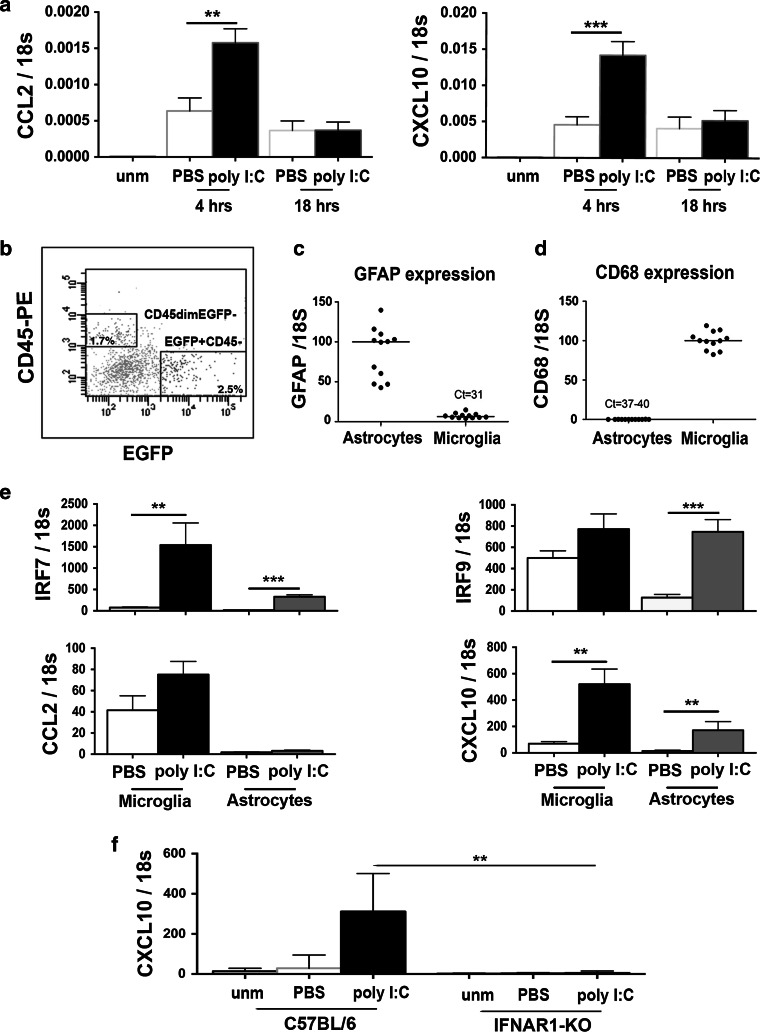
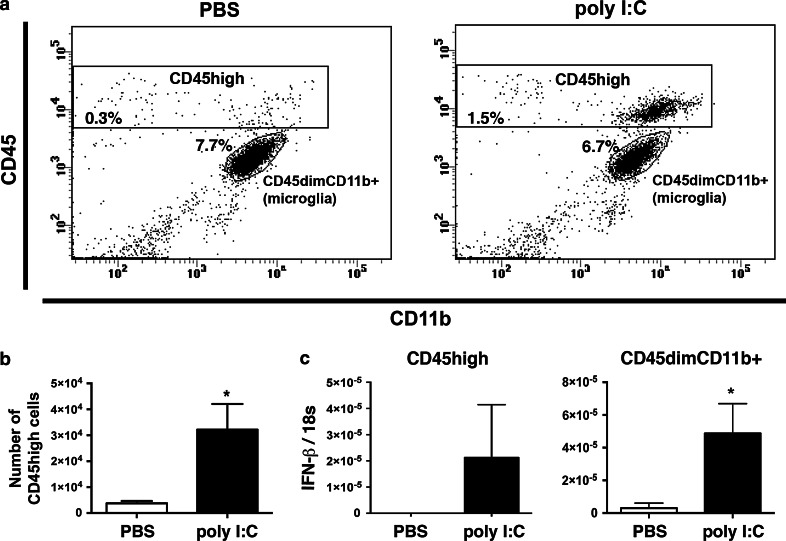
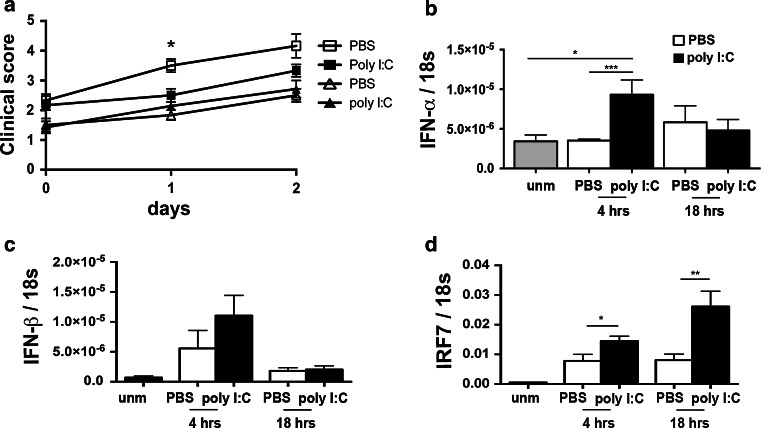
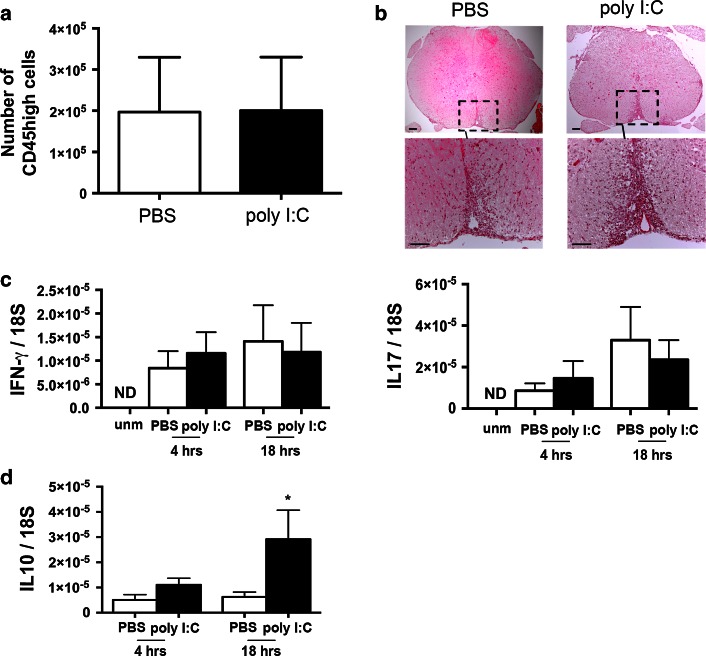
The Type I interferons (IFN), beta (IFN-β) and the alpha family (IFN-α), act through a common receptor and have anti-inflammatory effects. IFN-β is used to treat multiple sclerosis (MS) and is effective against experimental autoimmune encephalomyelitis (EAE), an animal model for MS. Mice with EAE show elevated levels of Type I IFNs in the central nervous system (CNS), suggesting a role for endogenous Type I IFN during inflammation. However, the therapeutic benefit of Type I IFN produced in the CNS remains to be established. The aim of this study was to examine whether experimentally induced CNS-endogenous Type I IFN influences EAE. Using IFN-β reporter mice, we showed that direct administration of polyinosinic-polycytidylic acid (poly I:C), a potent inducer of IFN-β, into the cerebrospinal fluid induced increased leukocyte numbers and transient upregulation of IFN-β in CD45/CD11b-positive cells located in the meninges and choroid plexus, as well as enhanced IFN-β expression by parenchymal microglial cells. Intrathecal injection of poly I:C to mice showing first symptoms of EAE substantially increased the normal disease-associated expression of IFN-α, IFN-β, interferon regulatory factor-7 and IL-10 in CNS, and disease worsening was prevented for as long as IFN-α/β was expressed. In contrast, there was no therapeutic effect on EAE in poly I:C-treated IFN receptor-deficient mice. IFN-dependent microglial and astrocyte response included production of the chemokine CXCL10. These results show that Type I IFN induced within the CNS can play a protective role in EAE and highlight the role of endogenous type I IFN in mediating neuroprotection.
I型干扰素(IFN),即β干扰素(IFN-β)和α干扰素家族(IFN-α),通过共同受体发挥作用,并具有抗炎作用。IFN-β用于治疗多发性硬化症(MS),对实验性自身免疫性脑脊髓炎(EAE,一种MS的动物模型)有效。患有EAE的小鼠中枢神经系统(CNS)中I型干扰素水平升高,提示内源性I型干扰素在炎症过程中发挥作用。然而,CNS中产生的I型干扰素的治疗益处仍有待确定。本研究的目的是检验实验诱导的CNS内源性I型干扰素是否影响EAE。使用IFN-β报告基因小鼠,我们发现将强效IFN-β诱导剂聚肌苷酸-聚胞苷酸(poly I:C)直接注入脑脊液会导致白细胞数量增加,以及位于脑膜和脉络丛的CD45/CD11b阳性细胞中IFN-β的短暂上调,同时实质小胶质细胞的IFN-β表达增强。向出现EAE首发症状的小鼠鞘内注射poly I:C,可显著增加CNS中与疾病相关的正常IFN-α、IFN-β、干扰素调节因子-7和IL-10的表达,并且只要IFN-α/β表达,疾病恶化就会得到预防。相比之下,poly I:C处理的IFN受体缺陷小鼠的EAE没有治疗效果。IFN依赖性小胶质细胞和星形胶质细胞反应包括趋化因子CXCL10的产生。这些结果表明,CNS内诱导产生的I型干扰素可在EAE中发挥保护作用,并突出了内源性I型干扰素在介导神经保护中的作用。