Wei Xing, Yang Hua, Huang Wentao
School of Computer Science and Information Technology, Guangxi Normal University, Guilin, China.
School of Computer Science and Engineering, Guilin University of Aerospace Technology, Guilin, China.
Front Neurorobot. 2021 Jun 15;15:697624. doi: 10.3389/fnbot.2021.697624. eCollection 2021.
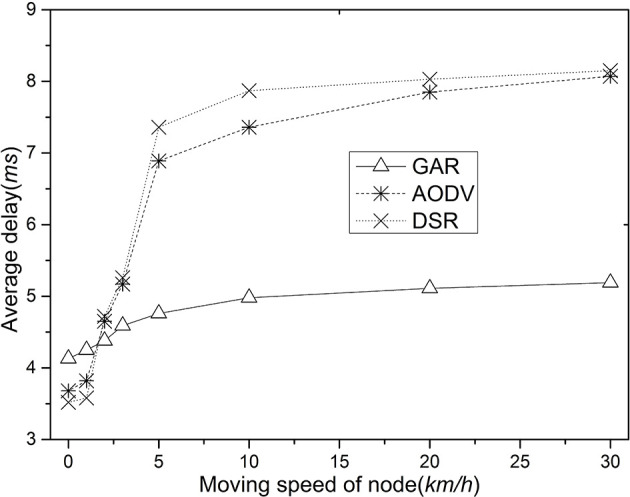
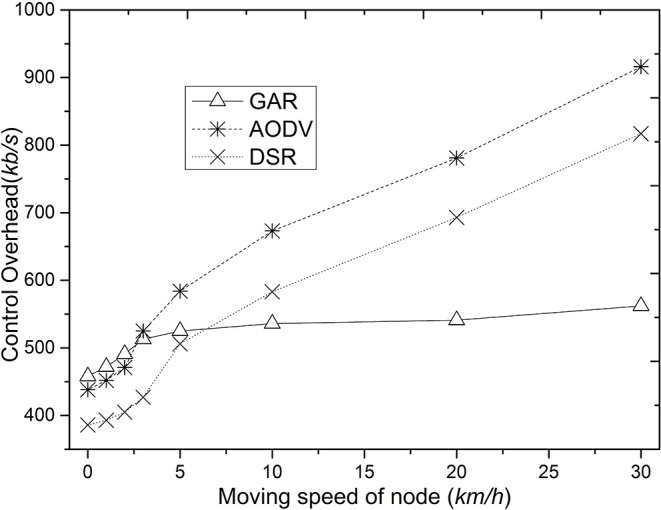
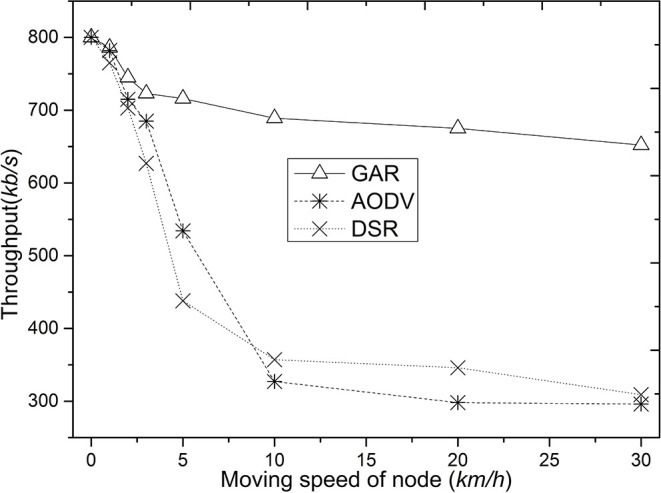
In view of the characteristics of high mobility of FANETs nodes, combined with the features of Topology-based class routing protocol on-demand search, a Genetic-algorithm-based routing (GAR) protocol is proposed for FANETs which based on improved genetic algorithm for FANETs route search, and it taking into account the link stability, link bandwidth, node energy, and other factors. GAR improves the selection, crossover, and variation operators of the genetic algorithm so that GAR can finally plan an optimized route from the communication initiating node to the destination node quickly using a smaller cost. The experimental results show that GAR can largely improve the throughput, reduce the delay and improve the stability of the network, which is more suitable for FANETs.
针对移动自组网(FANETs)节点高移动性的特点,结合基于拓扑的按需搜索类路由协议的特性,提出了一种基于遗传算法的FANETs路由(GAR)协议,该协议基于改进的遗传算法进行FANETs路由搜索,并考虑了链路稳定性、链路带宽、节点能量等因素。GAR改进了遗传算法的选择、交叉和变异算子,从而能够最终以较小的代价快速地从通信发起节点到目的节点规划出一条优化路由。实验结果表明,GAR能够大幅提高吞吐量,减少延迟并提高网络稳定性,更适合于FANETs。