Qiu Xian, Peng Tingting, Lin Zhengyu, Zhu Kaiwen, Wang Yuhan, Sun Bomin, Ashkan Keyoumars, Zhang Chencheng, Li Dianyou
Department of Nursing, Ruijin Hospital, Shanghai Jiao Tong University School of Medicine, Shanghai, China.
Department of Neurosurgery, Ruijin Hospital, Shanghai Jiao Tong University School of Medicine, Shanghai, China.
Front Neurol. 2021 Jun 15;12:668322. doi: 10.3389/fneur.2021.668322. eCollection 2021.
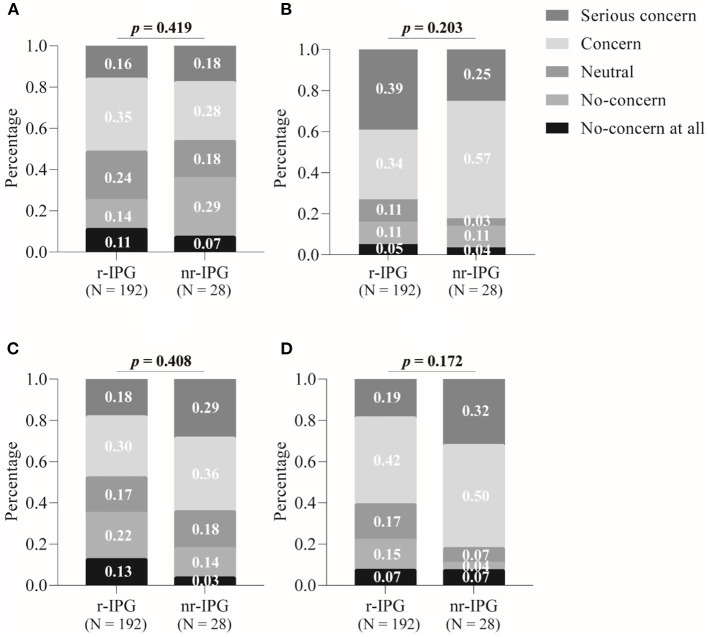
DBS is a widely used therapy for PD. There is now a choice between fixed-life implantable pulse generators (IPGs) and rechargeable IPGs, each having advantages and disadvantages. This study aimed to evaluate the preference and satisfaction of Chinese patients with Parkinson's disease (PD) who were treated with deep brain stimulation (DBS). Two hundred and twenty PD patients were treated with DBS and completed a self-reported questionnaire to assess their long-term satisfaction and experience with the type of battery they had chosen and the key factors affecting these choices. The survey was performed online and double-checked for completeness and accuracy. The median value of the postoperative duration was 18 months. The most popular way for patients to learn about DBS surgery was through media (79/220, 35.9%) including the Internet and television programs. In total, 87.3% of the DBS used rechargeable IPGs (r-IPG). The choice between rechargeable and non-rechargeable IPGs was significantly associated with affordability ( = 19.13, < 0.001). Interestingly, the feature of remote programming significantly affected patients' choices between domestic and imported brands ( = 16.81, < 0.001). 87.7% of the patients were satisfied with the stimulating effects as well as the implanted device itself. 40.6% of the patients with r-IPGs felt confident handling devices within 1 week after discharge. More than half of the patients checked their batteries every week. The mean interval for battery recharge was 4.3 days. 57.8% of the patients spent around 1 h recharging, and 71.4% of them recharged the battery independently. Most patients were satisfied with their choice of IPGs. The patients' economic status and the remote programming function of the device were the two most critical factors in their decision. The skill of recharging the IPG was easy to master for most patients.
脑深部电刺激术(DBS)是一种广泛应用于帕金森病(PD)的治疗方法。目前在使用期限固定的植入式脉冲发生器(IPG)和可充电IPG之间存在选择,二者各有优缺点。本研究旨在评估接受脑深部电刺激(DBS)治疗的中国帕金森病(PD)患者的偏好和满意度。220例PD患者接受了DBS治疗,并完成了一份自我报告问卷,以评估他们的长期满意度、对所选电池类型的体验以及影响这些选择的关键因素。该调查通过在线方式进行,并对完整性和准确性进行了双重检查。术后持续时间的中位数为18个月。患者了解DBS手术最常见的方式是通过媒体(79/220,35.9%),包括互联网和电视节目。总体而言,87.3%的DBS使用可充电IPG(r-IPG)。可充电和不可充电IPG之间的选择与可承受性显著相关( = 19.13, < 0.001)。有趣的是,远程程控功能显著影响患者在国产品牌和进口品牌之间的选择( = 16.81, < 0.001)。87.7%的患者对刺激效果以及植入设备本身感到满意。40.6%使用r-IPG的患者在出院后1周内对操作设备感到自信。超过一半的患者每周检查电池。电池充电的平均间隔时间为4.3天。57.8%的患者充电时间约为1小时,其中71.4%的患者独立进行电池充电。大多数患者对其IPG的选择感到满意。患者的经济状况和设备的远程程控功能是他们做出决定的两个最关键因素。对大多数患者来说,IPG充电技能很容易掌握。