Gao Huabin, Liang Jiangtao, Duan Jing, Chen Lin, Li Hui, Zhen Tiantian, Zhang Fenfen, Dong Yu, Shi Huijuan, Han Anjia
Department of Pathology, The First Affiliated Hospital, Sun Yat-Sen University, Guangzhou, China.
Front Oncol. 2021 Jun 15;11:638099. doi: 10.3389/fonc.2021.638099. eCollection 2021.
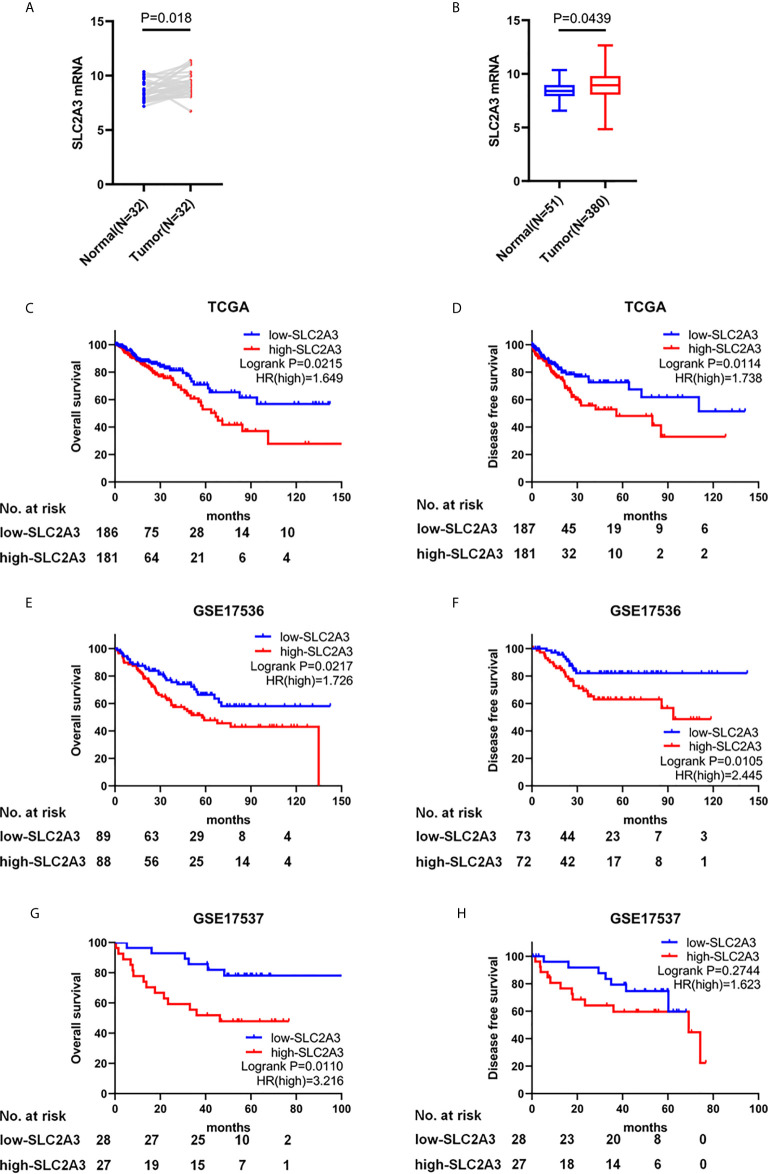
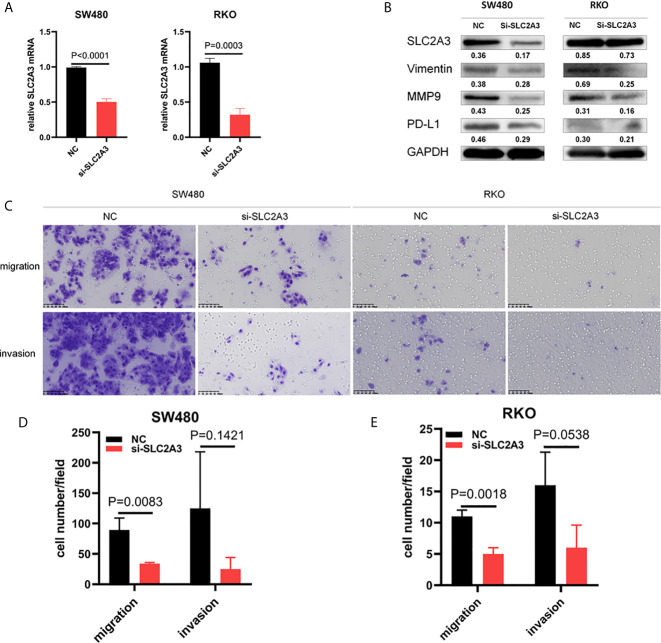
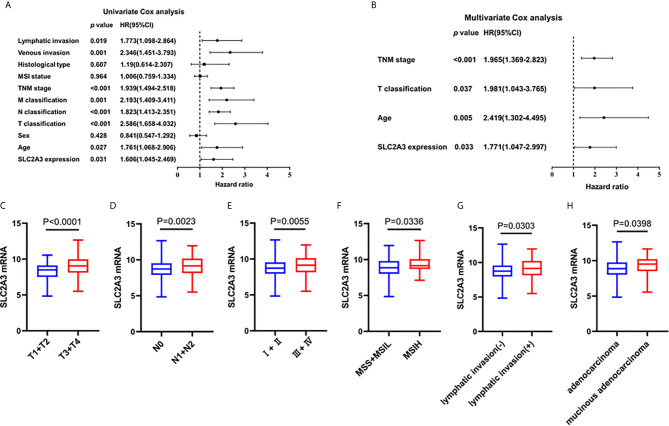
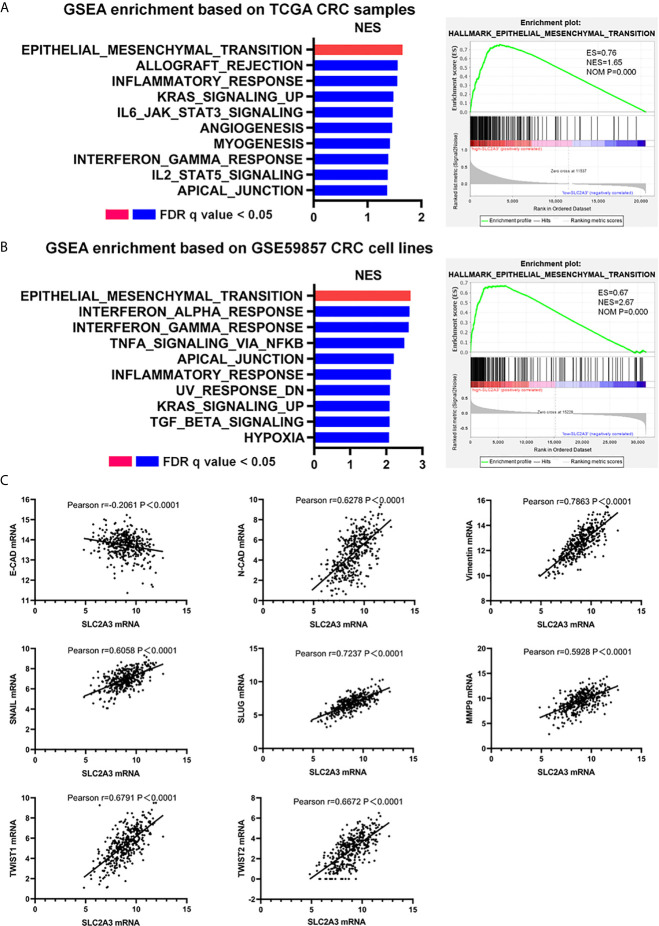
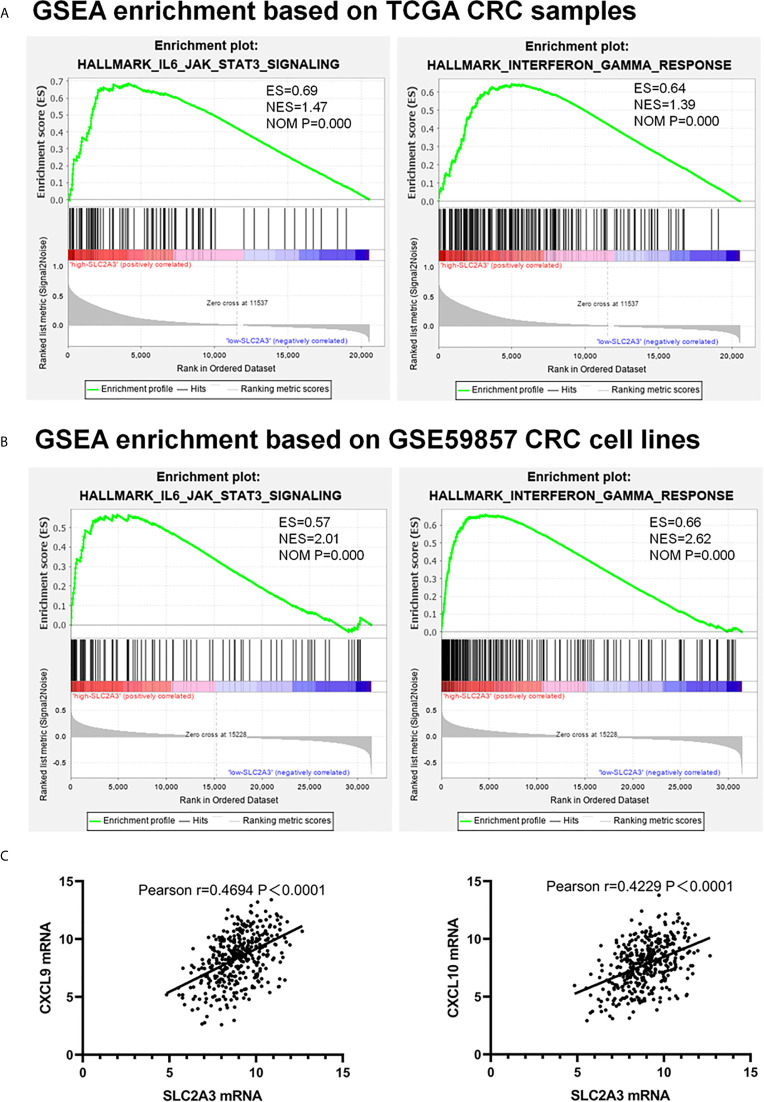
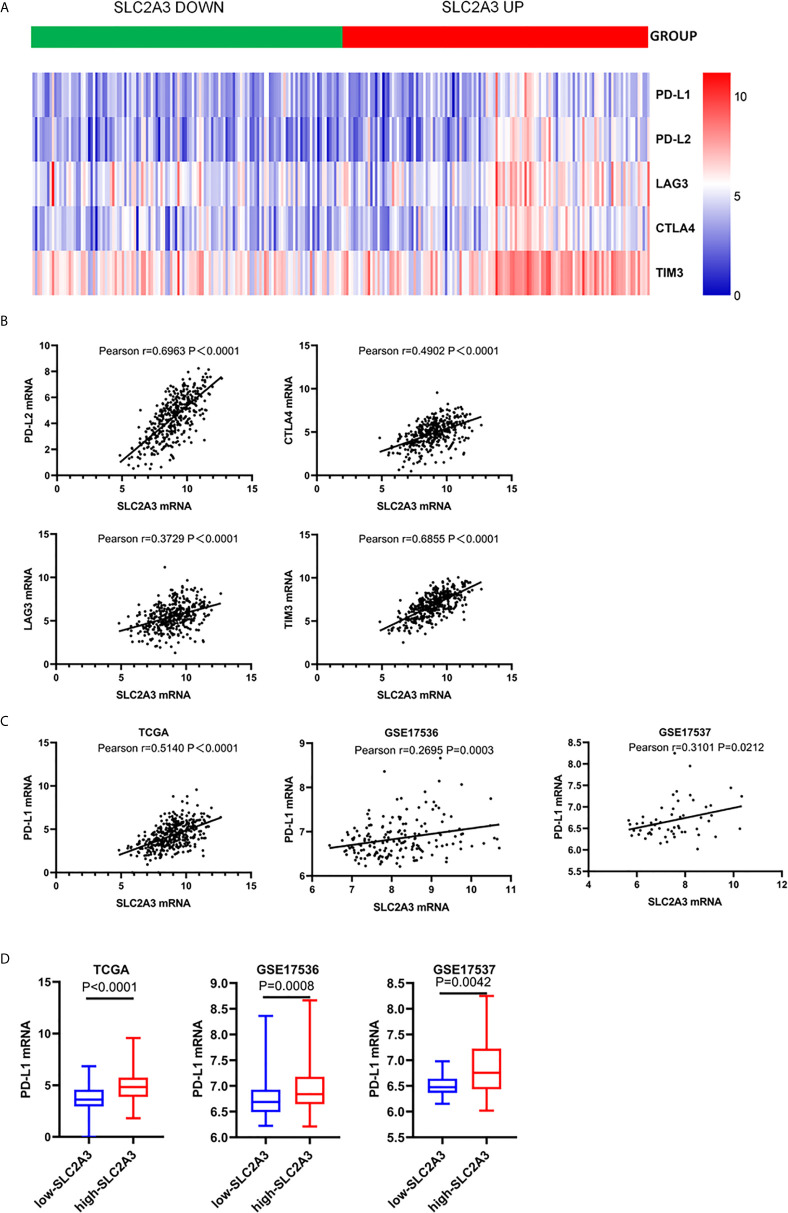
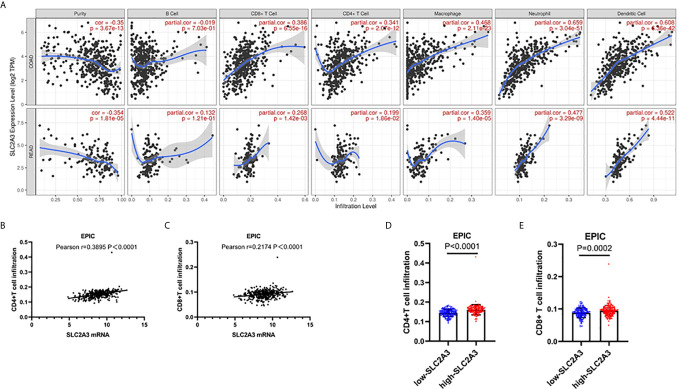
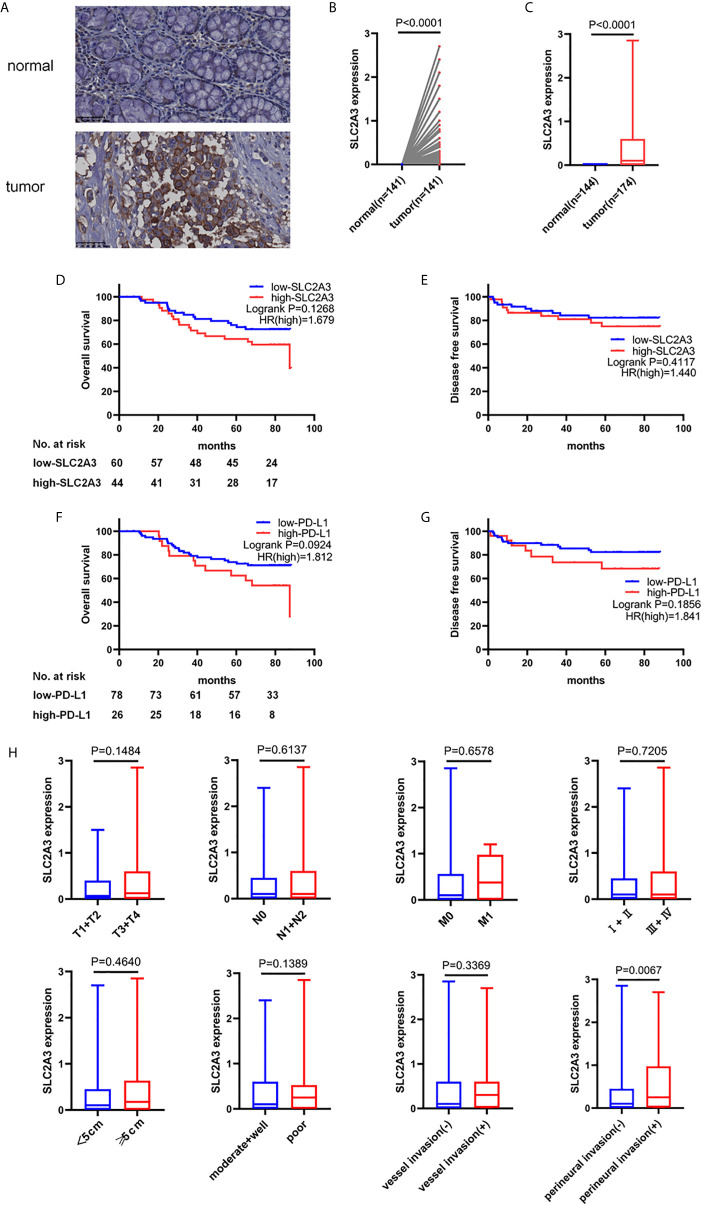
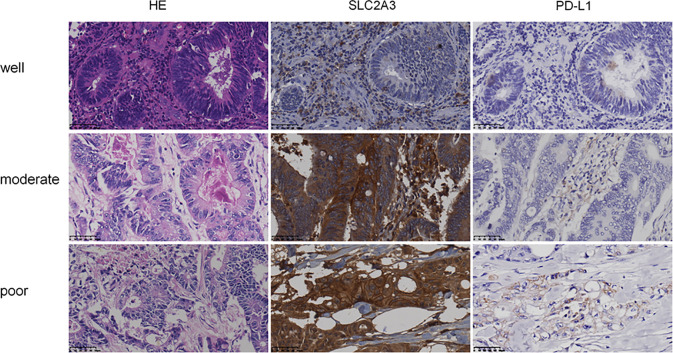
SLC2A3 is a membrane transporter that belongs to the solute carrier family, whose function includes transmembrane transport and glucose transmembrane transport activity. To clarify the expression and role of SLC2A3 in colorectal cancer (CRC), we analyzed the TCGA and GEO databases and found that SLC2A3 mRNA levels were significantly higher in CRC tissues than that in adjacent non-tumor tissues. Furthermore, high expression of SLC2A3 predicted poor overall survival and disease free survival for CRC patients. For validation, we collected 174 CRC samples and found that SLC2A3 expression was higher in CRC tissues than that in adjacent non-tumor colorectal mucosa tissues by immunohistochemistry staining. Further study showed that high expression of SLC2A3 was enriched in epithelial-mesenchymal transition (EMT) classical pathway, interferon-γ pathway by GSEA analysis enrichment, indicating that SLC2A3 may play a key role in the progression of CRC through EMT and immune response, which also has been validated by the global gene expression profiling of human CRC cell lines. The expression of SLC2A3 was positively correlated with CD4 and CD8+T cells by using TIMER and EPIC algorithm, respectively. SLC2A3 knockdown suppressed migration and inhibited the expression of Vimentin and MMP9 in CRC cell line SW480 and RKO. Meanwhile, PD-L1 expression was also significantly attenuated in SW480 and RKO cells transfected with SLC2A3 siRNA. The result suggests that SLC2A3 may be involved in the immune response of CRC by regulating PD-L1 immune checkpoint. In our series, SLC2A3 and PD-L1 positive expression was 74% (128/174) and 22% (39/174) of CRC, respectively. SLC2A3 expression was significantly associated with perineural invasion in CRC patients. In conclusion, SLC2A3 may play an important role in progression of CRC by regulating EMT and PD-L1 mediated immune responses.
SLC2A3是一种膜转运蛋白,属于溶质载体家族,其功能包括跨膜转运和葡萄糖跨膜转运活性。为了阐明SLC2A3在结直肠癌(CRC)中的表达及作用,我们分析了TCGA和GEO数据库,发现CRC组织中SLC2A3 mRNA水平显著高于相邻非肿瘤组织。此外,SLC2A3的高表达预示着CRC患者的总生存期和无病生存期较差。为进行验证,我们收集了174例CRC样本,通过免疫组织化学染色发现CRC组织中SLC2A3的表达高于相邻非肿瘤结直肠黏膜组织。进一步研究表明,通过基因集富集分析(GSEA),SLC2A3的高表达在上皮-间质转化(EMT)经典通路、干扰素-γ通路中富集,表明SLC2A3可能通过EMT和免疫反应在CRC进展中起关键作用,这也已通过人CRC细胞系的全基因表达谱得到验证。分别使用TIMER和EPIC算法,SLC2A3的表达与CD4和CD8 + T细胞呈正相关。SLC2A3基因敲低抑制了CRC细胞系SW480和RKO的迁移,并抑制了波形蛋白和基质金属蛋白酶9的表达。同时,在用SLC2A3小干扰RNA转染的SW480和RKO细胞中,程序性死亡受体配体1(PD-L1)的表达也显著减弱。结果表明,SLC2A3可能通过调节PD-L1免疫检查点参与CRC的免疫反应。在我们的研究系列中,CRC中SLC2A3和PD-L1的阳性表达分别为74%(128/174)和22%(39/174)。SLC2A3的表达与CRC患者的神经周围侵犯显著相关。总之,SLC2A3可能通过调节EMT和PD-L1介导的免疫反应在CRC进展中发挥重要作用。