Department of Pediatrics, Washington University in St Louis, St Louis, Missouri, USA.
Department of Internal Medicine, Endocrinology, Metabolism and Lipid research Division, Washington University in St Louis, St Louis, Missouri, USA.
Diabetes Obes Metab. 2021 Nov;23(11):2455-2465. doi: 10.1111/dom.14486. Epub 2021 Aug 2.
Type 1 diabetes (T1D) has a strong genetic predisposition and requires an environmental trigger to initiate the beta-cell autoimmune destruction. The rate of childhood obesity has risen in parallel to the proportion of T1D, suggesting high-fat diet (HFD)/obesity as potential environmental triggers for autoimmune diabetes. To explore this, non-obese diabetic (NOD) mice were subjected to HFD and monitored for the development of diabetes, insulitis and beta-cell stress.
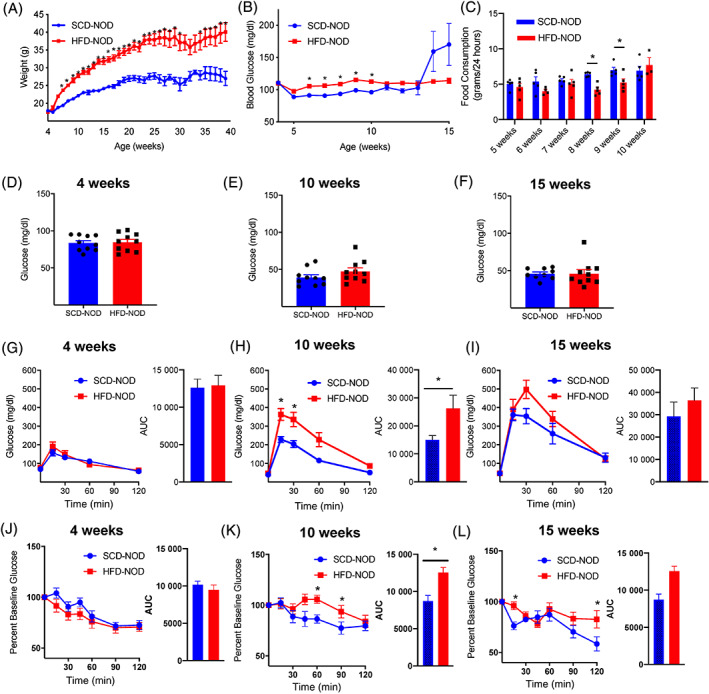
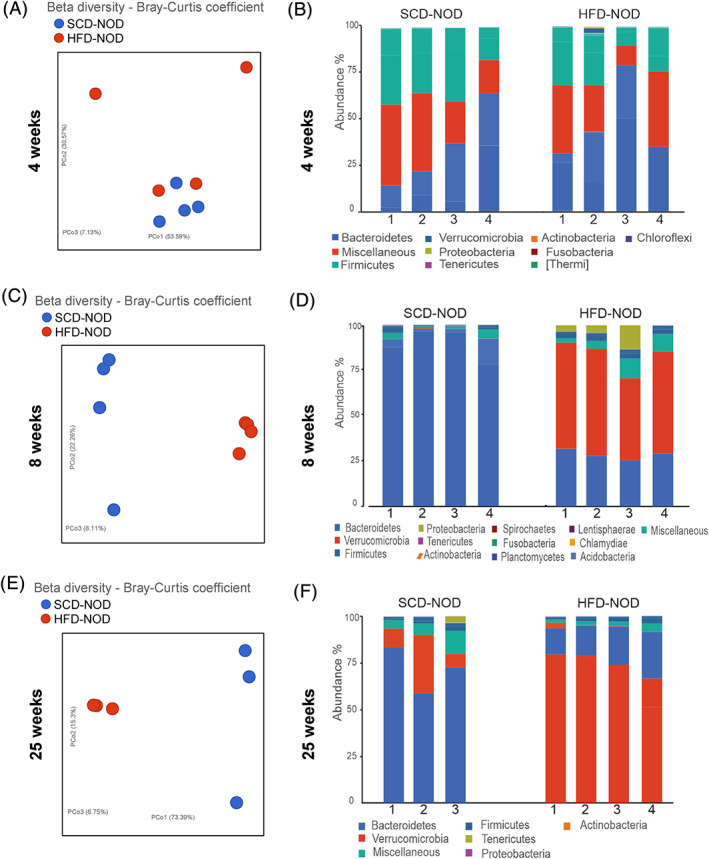
Four-week-old female NOD mice were placed on HFD (HFD-NOD) or standard chow-diet. Blood glucose was monitored weekly up to 40 weeks of age, and glucose- and insulin-tolerance tests performed at 4, 10 and 15 weeks. Pancreata and islets were analysed for insulin secretion, beta-cell mass, inflammation, insulitis and endoplasmic reticulum stress markers. Immune cell levels were measured in islets and spleens. Stool microbiome was analysed at age 4, 8 and 25 weeks.
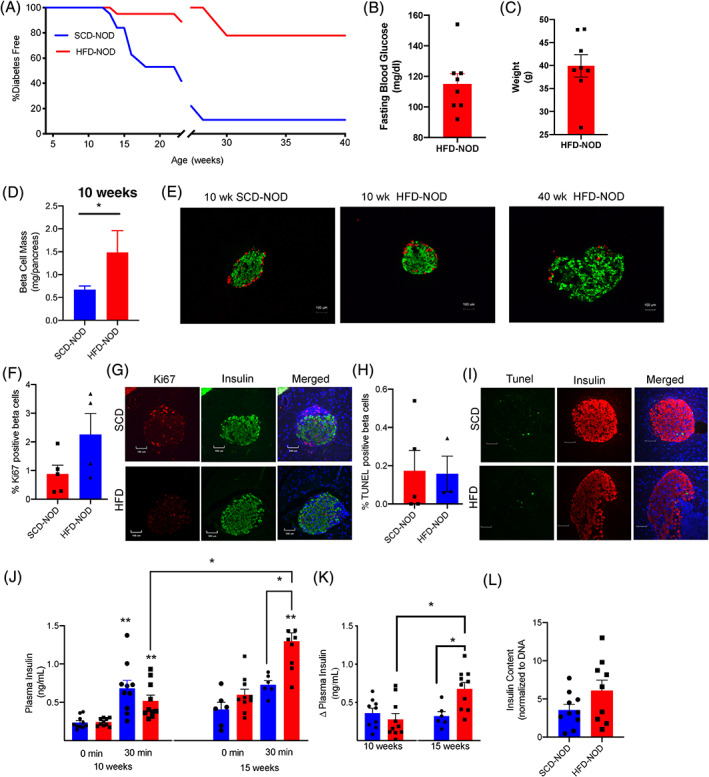
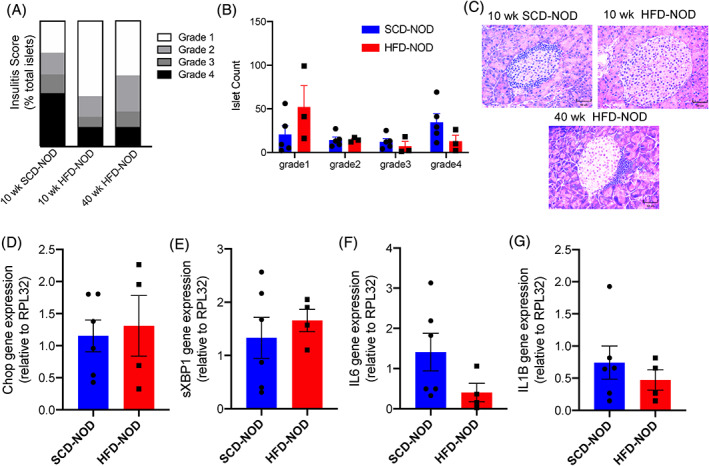
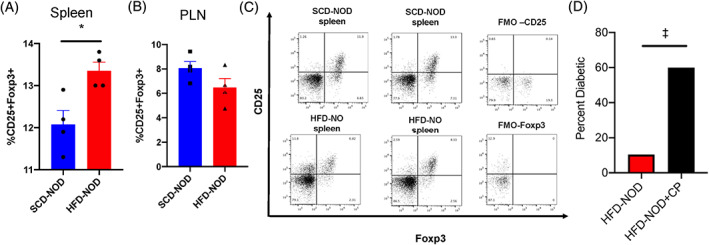
At early ages, HFD-NOD mice showed a significant increase in body weight, glucose intolerance and insulin resistance; but paradoxically, they were protected from developing diabetes. This was accompanied by increased insulin secretion and beta-cell mass, decreased insulitis, increased splenic T-regulatory cells and altered stool microbiome.
This study shows that HFD protects NOD mice from autoimmune diabetes and preserves beta-cell mass and function through alterations in gut microbiome, increased T-regulatory cells and decreased insulitis. Further studies into the exact mechanism of HFD-mediated prevention of diabetes in NOD mice could potentially lead to interventions to prevent or delay T1D development in humans.
1 型糖尿病(T1D)具有很强的遗传易感性,需要环境触发因素来启动β细胞自身免疫破坏。儿童肥胖率与 T1D 的比例同步上升,这表明高脂肪饮食(HFD)/肥胖可能是自身免疫性糖尿病的潜在环境触发因素。为了探索这一点,非肥胖型糖尿病(NOD)小鼠接受 HFD 喂养,并监测其糖尿病、胰岛炎和β细胞应激的发展情况。
4 周龄雌性 NOD 小鼠被置于 HFD(HFD-NOD)或标准饲料饮食中。在 40 周龄之前每周监测血糖,在 4、10 和 15 周时进行葡萄糖和胰岛素耐量试验。分析胰腺和胰岛的胰岛素分泌、β细胞质量、炎症、胰岛炎和内质网应激标志物。测量胰岛和脾脏中的免疫细胞水平。在 4、8 和 25 周时分析粪便微生物组。
在早期,HFD-NOD 小鼠体重明显增加,出现葡萄糖不耐受和胰岛素抵抗;但矛盾的是,它们免受糖尿病的发展。这伴随着胰岛素分泌和β细胞质量增加、胰岛炎减少、脾脏 T 调节细胞增加和粪便微生物组改变。
这项研究表明,HFD 通过改变肠道微生物组、增加 T 调节细胞和减少胰岛炎来保护 NOD 小鼠免受自身免疫性糖尿病的侵害,并保护β细胞的质量和功能。进一步研究 HFD 介导的 NOD 小鼠糖尿病预防的确切机制,可能会导致干预措施的出现,以预防或延迟人类 T1D 的发展。