Disease area Oncology, Novartis Institute for Biomedical Research, CH-4002 Basel, Switzerland.
Biotech Research and Innovation Centre (BRIC), The Finsen Laboratory, Rigshospitalet, University of Copenhagen, Copenhagen, Denmark.
Sci Adv. 2021 Jul 2;7(27). doi: 10.1126/sciadv.abf5733. Print 2021 Jul.
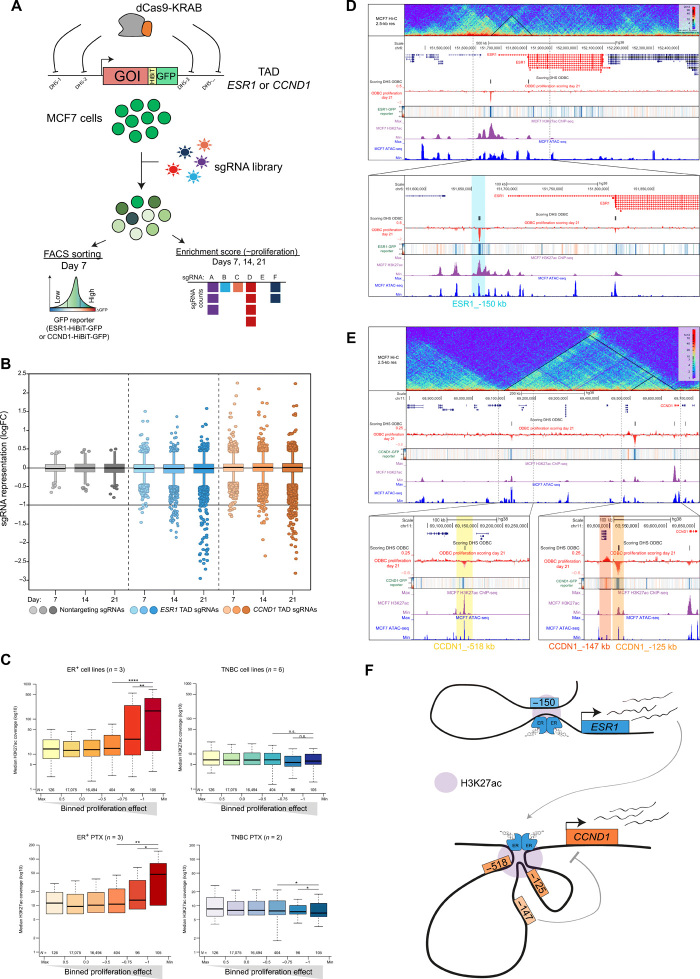
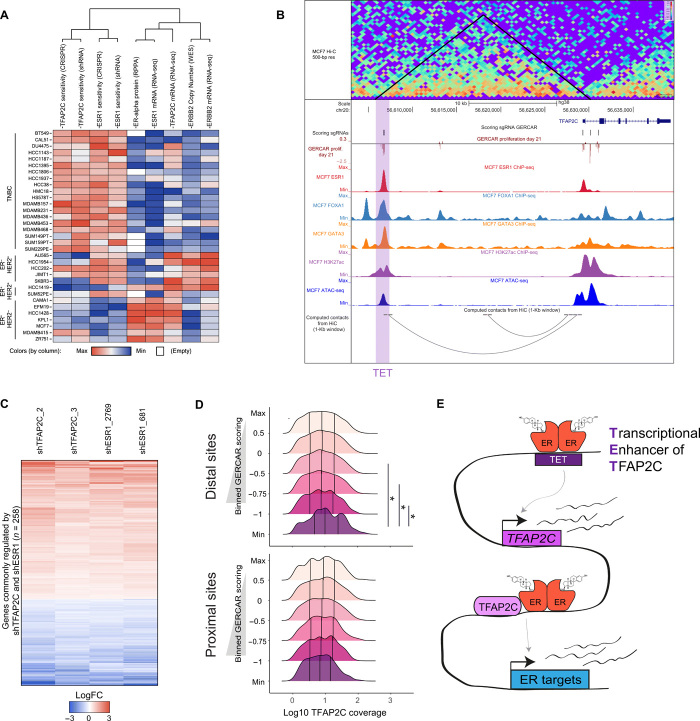
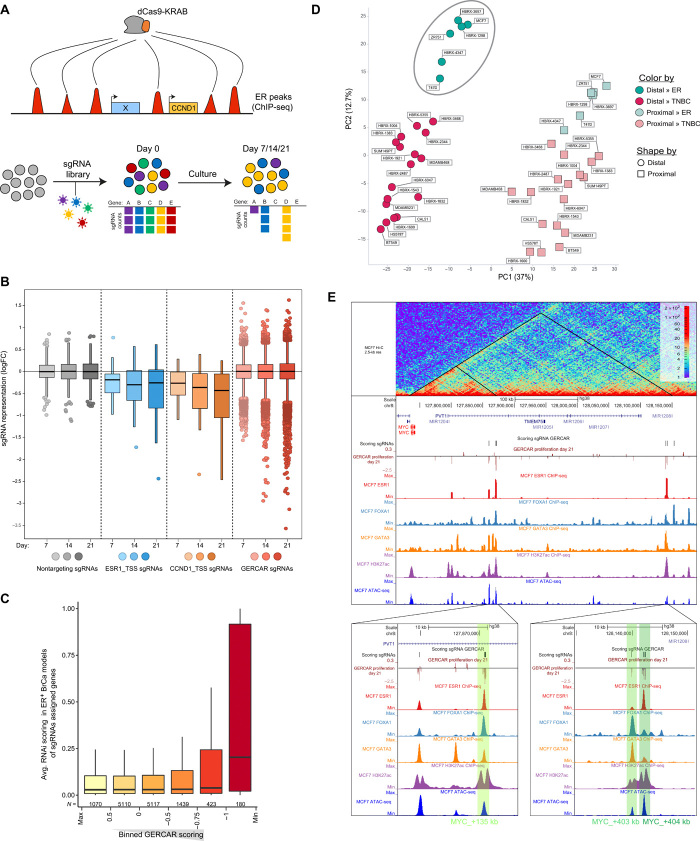
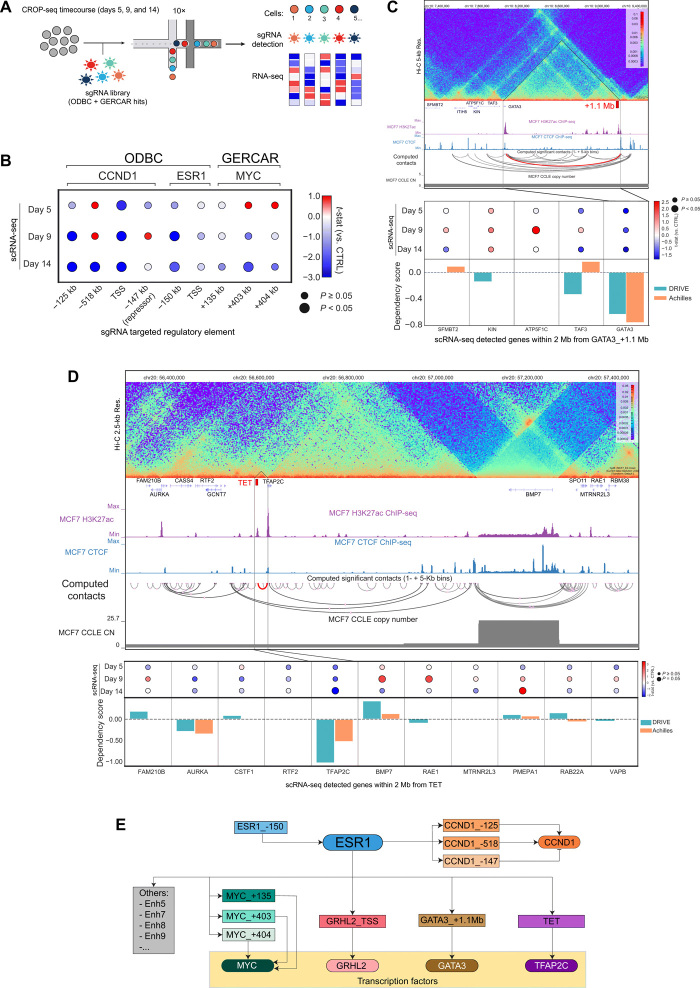
Millions of putative transcriptional regulatory elements (TREs) have been cataloged in the human genome, yet their functional relevance in specific pathophysiological settings remains to be determined. This is critical to understand how oncogenic transcription factors (TFs) engage specific TREs to impose transcriptional programs underlying malignant phenotypes. Here, we combine cutting edge CRISPR screens and epigenomic profiling to functionally survey ≈15,000 TREs engaged by estrogen receptor (ER). We show that ER exerts its oncogenic role in breast cancer by engaging TREs enriched in GATA3, TFAP2C, and H3K27Ac signal. These TREs control critical downstream TFs, among which TFAP2C plays an essential role in ER-driven cell proliferation. Together, our work reveals novel insights into a critical oncogenic transcription program and provides a framework to map regulatory networks, enabling to dissect the function of the noncoding genome of cancer cells.
数以百万计的假定转录调控元件(TREs)已在人类基因组中进行了编目,但它们在特定病理生理环境中的功能相关性仍有待确定。这对于了解致癌转录因子(TFs)如何与特定的 TRE 结合,从而施加恶性表型背后的转录程序至关重要。在这里,我们结合最先进的 CRISPR 筛选和表观基因组分析,对雌激素受体(ER)结合的约 15000 个 TRE 进行功能调查。我们表明,ER 通过结合富含 GATA3、TFAP2C 和 H3K27Ac 信号的 TRE,发挥其在乳腺癌中的致癌作用。这些 TRE 控制着关键的下游 TF,其中 TFAP2C 在 ER 驱动的细胞增殖中起着至关重要的作用。总之,我们的工作揭示了一个关键的致癌转录程序的新见解,并提供了一个绘制调控网络的框架,能够剖析癌细胞的非编码基因组的功能。