Department of Energy and Environmental Biotechnology, National Institute of Genetic Engineering and Biotechnology (NIGEB), Tehran, Iran.
Sci Rep. 2021 Jul 2;11(1):13731. doi: 10.1038/s41598-021-92627-9.
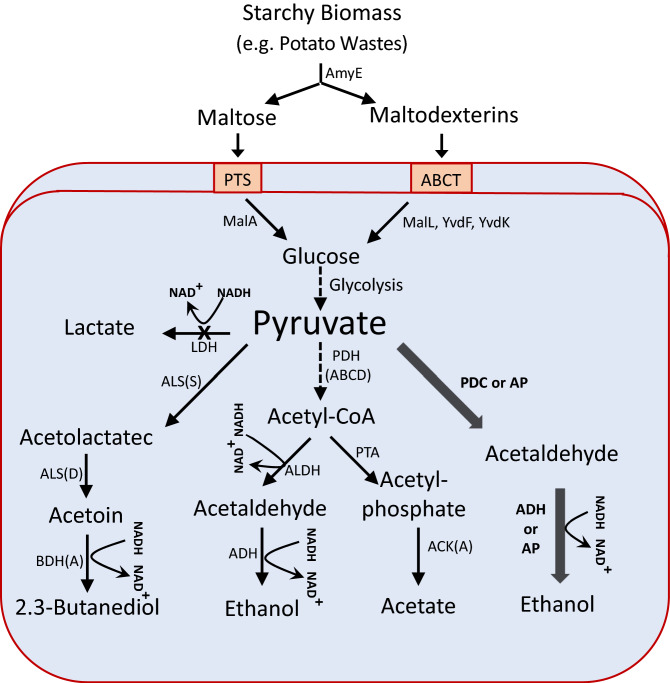
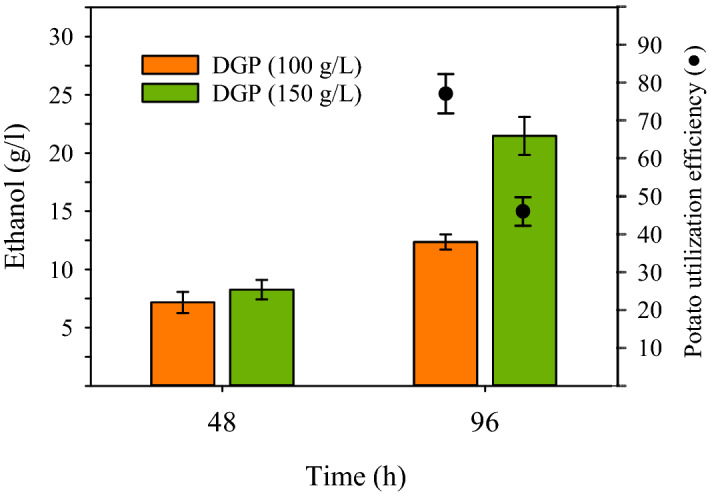
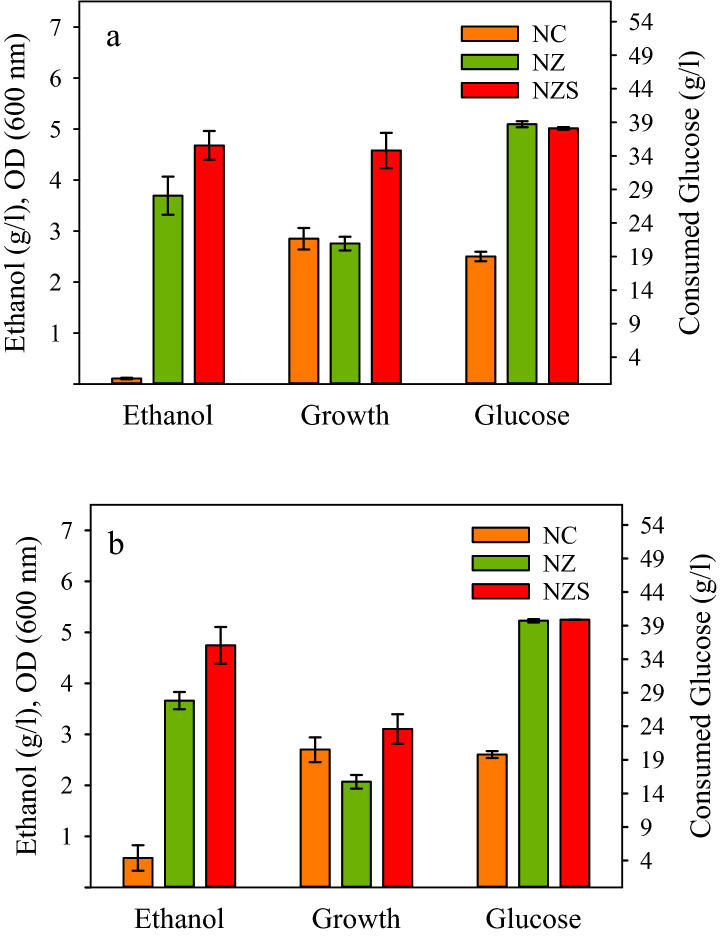
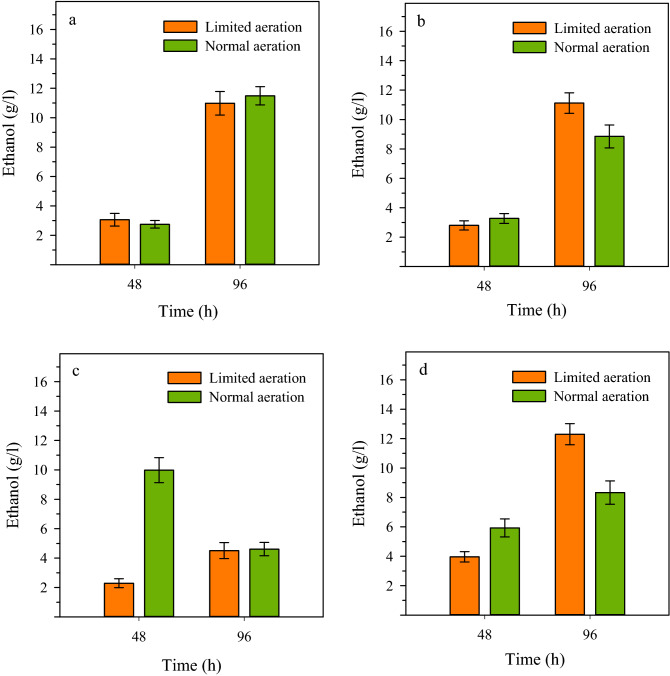
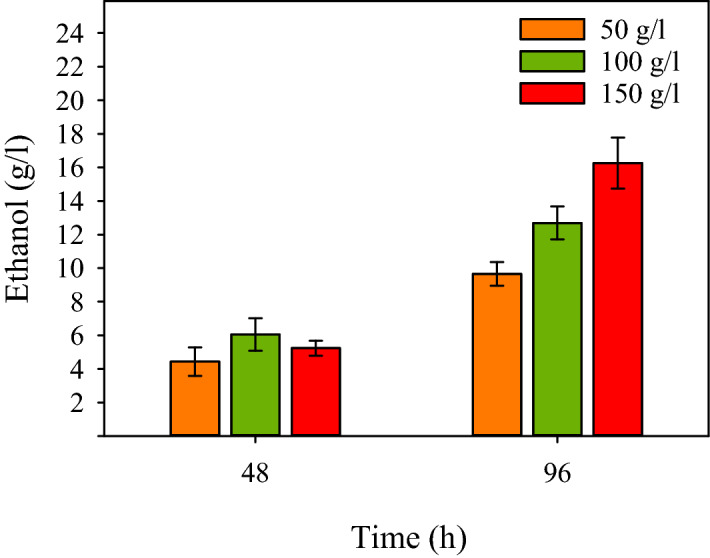
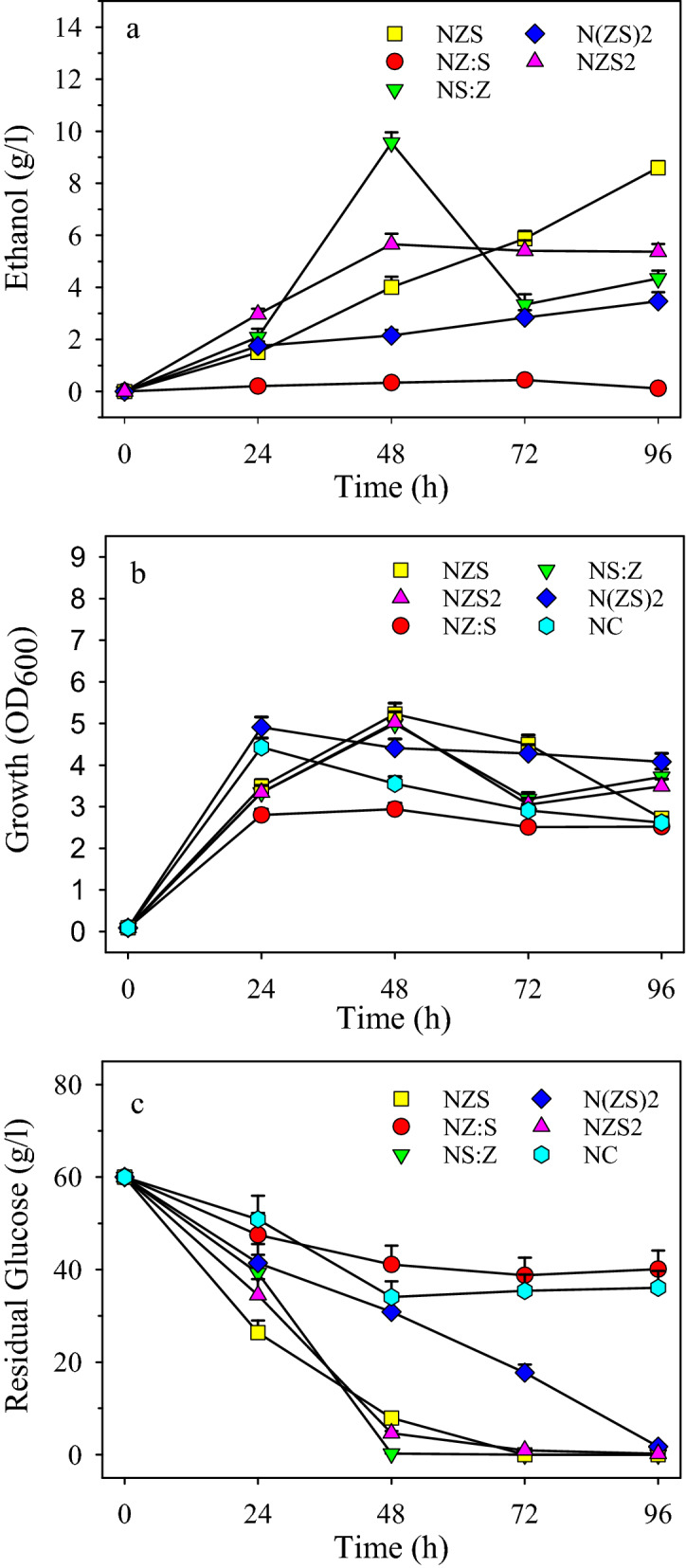
Bioethanol produced by fermentative microorganisms is regarded as an alternative to fossil fuel. Bioethanol to be used as a viable energy source must be produced cost-effectively by removing expense-intensive steps such as the enzymatic hydrolysis of substrate. Consolidated bioprocessing (CBP) is believed to be a practical solution combining saccharification and fermentation in a single step catalyzed by a microorganism. Bacillus subtills with innate ability to grow on a diversity of carbohydrates seems promising for affordable CBP bioethanol production using renewable plant biomass and wastes. In this study, the genes encoding alcohol dehydrogenase from Z. mobilis (adh) and S. cerevisiae (adh) were each used with Z. mobilis pyruvate decarboxylase gene (pdc) to create ethanologenic operons in a lactate-deficient (Δldh) B. subtilis resulting in NZ and NZS strains, respectively. The S. cerevisiae adh caused significantly more ethanol production by NZS and therefore was used to make two other operons including one with double copies of both pdc and adh and the other with a single pdc but double adh genes expressed in N(ZS)2 and NZS2 strains, respectively. In addition, two fusion genes were constructed with pdc and adh in alternate orientations and used for ethanol production by the harboring strains namely NZ:S and NS:Z, respectively. While the increase of gene dosage was not associated with elevated carbon flow for ethanol production, the fusion gene adh:pdc resulted in a more than two times increase of productivity by strain NS:Z as compared with NZS during 48 h fermentation. The CBP ethanol production by NZS and NS:Z using potatoes resulted in 16.3 g/L and 21.5 g/L ethanol during 96 h fermentation, respectively. For the first time in this study, B. subtilis was successfully used for CBP ethanol production with S. cerevisiae alcohol dehydrogenase. The results of the study provide insights on the potentials of B. subtilis for affordable bioethanol production from inexpensive plant biomass and wastes. However, the potentials need to be improved by metabolic and process engineering for higher yields of ethanol production and plant biomass utilization.
由发酵微生物生产的生物乙醇被视为化石燃料的替代品。要将生物乙醇用作可行的能源,必须通过去除酶解底物等昂贵的步骤来经济有效地生产。整合生物加工(CBP)被认为是一种实用的解决方案,它可以将糖化和发酵在一个由微生物催化的单一步骤中结合起来。枯草芽孢杆菌具有在多种碳水化合物上生长的固有能力,似乎有望利用可再生植物生物质和废物以较低的成本生产 CBP 生物乙醇。在这项研究中,分别使用运动发酵单胞菌(Z. mobilis)的醇脱氢酶(adh)和酿酒酵母(adh)的基因,与枯草芽孢杆菌的丙酮酸脱羧酶基因(pdc)一起,在缺乏乳酸脱氢酶(Δldh)的枯草芽孢杆菌中创建了乙醇生成操纵子,分别导致 NZ 和 NZS 菌株的产生。酿酒酵母 adh 显著增加了 NZS 的乙醇产量,因此用于构建另外两个操纵子,包括一个包含 pdc 和 adh 的双拷贝,另一个包含一个 pdc 但有两个 adh 基因的单拷贝,分别在 N(ZS)2 和 NZS2 菌株中表达。此外,构建了两个带有 pdc 和 adh 的融合基因,它们以交替的方向表达,并用于携带菌株即 NZ:S 和 NS:Z 的乙醇生产。虽然基因剂量的增加与乙醇生产的碳流增加无关,但融合基因 adh:pdc 使 NS:Z 菌株在 48 小时发酵过程中的生产力比 NZS 菌株提高了两倍多。使用土豆进行的 NZS 和 NS:Z 的 CBP 乙醇生产在 96 小时发酵过程中分别产生了 16.3 g/L 和 21.5 g/L 的乙醇。在这项研究中,枯草芽孢杆菌首次成功地与酿酒酵母醇脱氢酶一起用于 CBP 乙醇生产。该研究结果提供了关于枯草芽孢杆菌从廉价的植物生物质和废物中生产经济实惠的生物乙醇的潜力的见解。然而,为了提高乙醇产量和植物生物质利用率,需要通过代谢和过程工程来提高潜力。