Xia Leiming, Yang Fan, Wu Xiao, Li Suzhi, Kan Chen, Zheng Hong, Wang Siying
Basic College of Medicine, Anhui Medical University, 81 Meishan road, Hefei, Anhui, China.
Department of Hematology, The Third affiliated hospital of Anhui Medical University, Hefei, China.
Cancer Cell Int. 2021 Jul 3;21(1):337. doi: 10.1186/s12935-021-02056-x.
Additional epidermal growth factor receptor (EGFR) mutations confer the drug resistance to generations of EGFR targeted tyrosine kinase inhibitor (EGFR-TKI), posing a major challenge to developing effective treatment of lung adenocarcinoma (LUAD). The strategy of combining EGFR-TKI with other synergistic or sensitizing therapeutic agents are considered a promising approach in the era of precision medicine. Moreover, the role and mechanism of SHP2, which is involved in cell proliferation, cytokine production, stemness maintenance and drug resistance, has not been carefully explored in lung adenocarcinoma (LUAD).
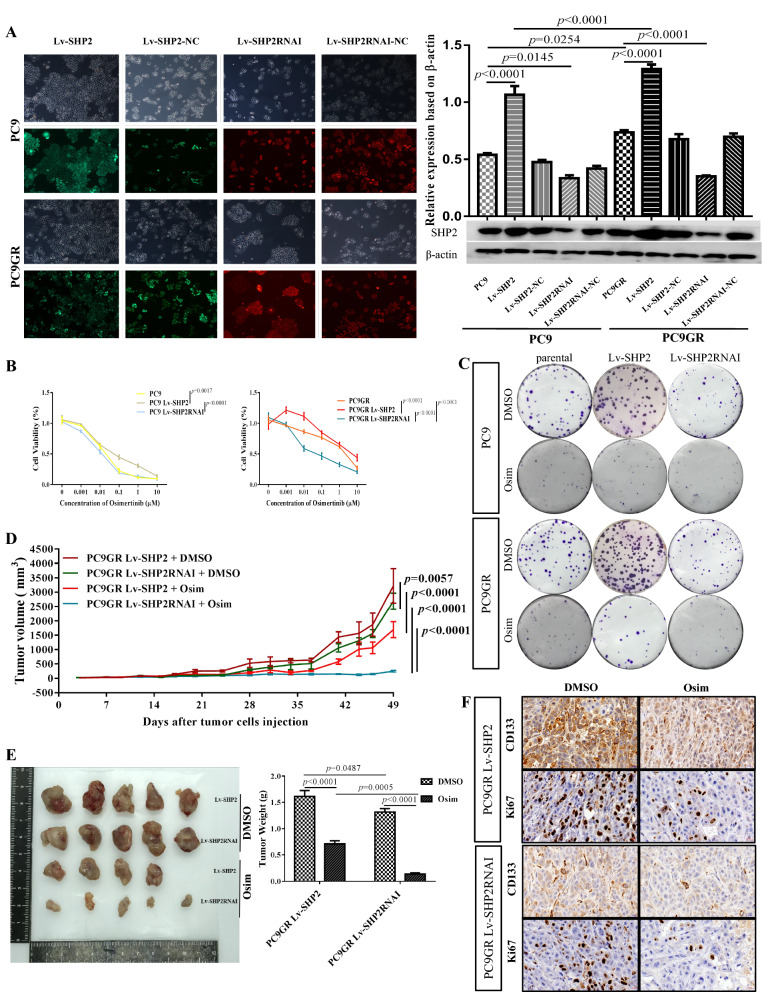
To evaluate the impact of SHP2 on the efficacy of EGFR T790M mutant LUAD cells to Osimertinib, SHP2 inhibition was tested in Osimertinib treated LUAD cells. Cell proliferation and stemness were tested in SHP2 modified LUAD cells. RNA sequencing was performed to explore the mechanism of SHP2 promoted stemness.
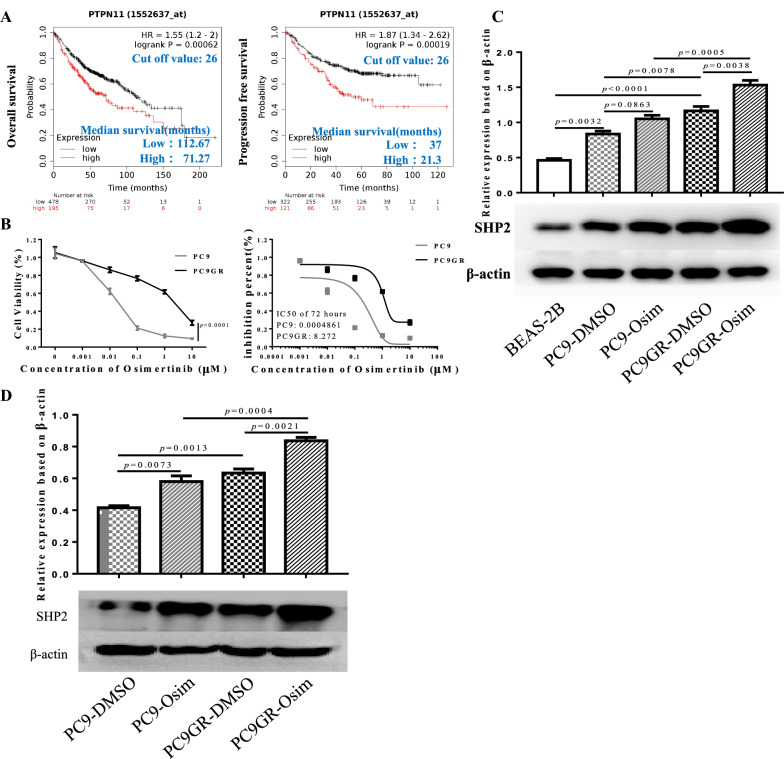
This study demonstrated that high SHP2 expression level correlates with poor outcome of LUAD patients, and SHP2 expression is enriched in Osimertinib resistant LUAD cells. SHP2 inhibition suppressed the cell proliferation and damaged the stemness of EGFR T790M mutant LUAD. SHP2 facilitates the secretion of CXCL8 cytokine from the EGFR T790M mutant LUAD cells, through a CXCL8-CXCR1/2 positive feedback loop that promotes stemness and tumorigenesis. Our results further show that SHP2 mediates CXCL8-CXCR1/2 feedback loop through ERK-AKT-NFκB and GSK3β-β-Catenin signaling in EGFR T790M mutant LUAD cells.
Our data revealed that SHP2 inhibition enhances the anti-cancer effect of Osimertinib in EGFR T790M mutant LUAD by blocking CXCL8-CXCR1/2 loop mediated stemness, which may help provide an alternative therapeutic option to enhance the clinical efficacy of osimertinib in EGFR T790M mutant LUAD patients.
额外的表皮生长因子受体(EGFR)突变赋予了对几代EGFR靶向酪氨酸激酶抑制剂(EGFR-TKI)的耐药性,这对开发有效的肺腺癌(LUAD)治疗方法构成了重大挑战。在精准医学时代,将EGFR-TKI与其他协同或增敏治疗药物联合使用的策略被认为是一种有前景的方法。此外,参与细胞增殖、细胞因子产生、干性维持和耐药性的SHP2在肺腺癌(LUAD)中的作用和机制尚未得到深入研究。
为了评估SHP2对EGFR T790M突变型LUAD细胞对奥希替尼疗效的影响,在奥希替尼处理的LUAD细胞中测试了SHP2抑制作用。在SHP2修饰的LUAD细胞中测试细胞增殖和干性。进行RNA测序以探索SHP2促进干性的机制。
本研究表明,SHP2高表达水平与LUAD患者的不良预后相关,且SHP2表达在奥希替尼耐药的LUAD细胞中富集。SHP2抑制抑制了EGFR T790M突变型LUAD的细胞增殖并破坏了其干性。SHP2通过促进干性和肿瘤发生的CXCL8-CXCR1/2正反馈环促进EGFR T790M突变型LUAD细胞分泌CXCL8细胞因子。我们的结果进一步表明,SHP2在EGFR T790M突变型LUAD细胞中通过ERK-AKT-NFκB和GSK3β-β-连环蛋白信号传导介导CXCL8-CXCR1/2反馈环。
我们的数据表明,SHP2抑制通过阻断CXCL8-CXCR1/2环介导的干性增强了奥希替尼对EGFR T790M突变型LUAD的抗癌作用,这可能有助于提供一种替代治疗选择,以提高奥希替尼在EGFR T790M突变型LUAD患者中的临床疗效。