EpiVax, Inc., Providence, RI, United States.
Center for Vaccines and Immunology, College of Veterinary Medicine, University of Georgia, Athens, GA, United States.
Front Immunol. 2021 Jun 16;12:636731. doi: 10.3389/fimmu.2021.636731. eCollection 2021.
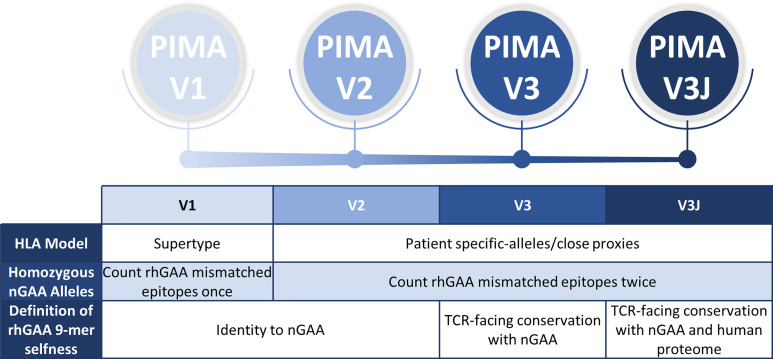
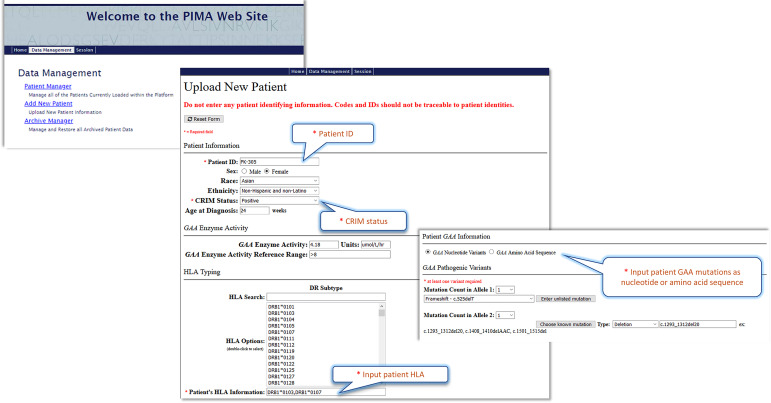
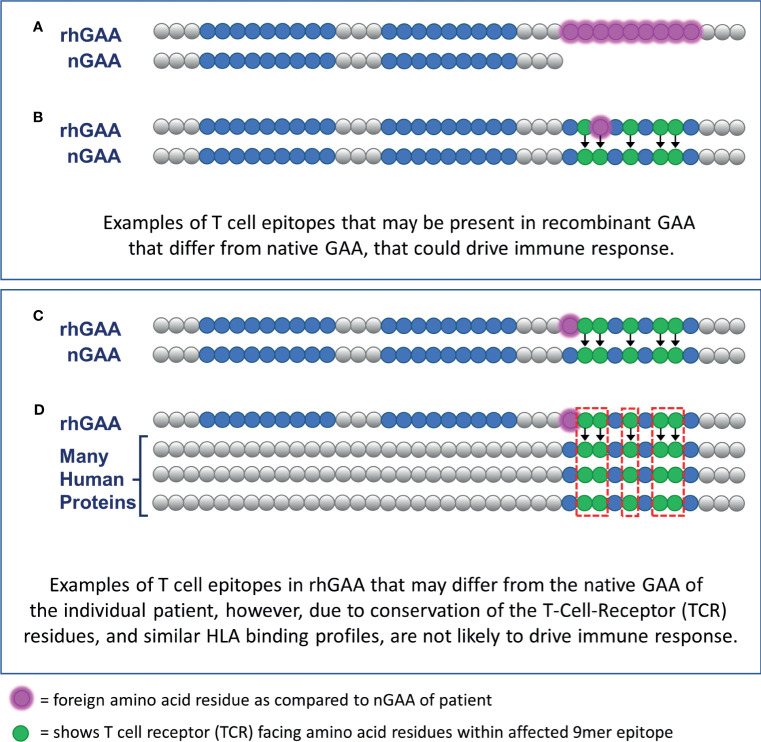
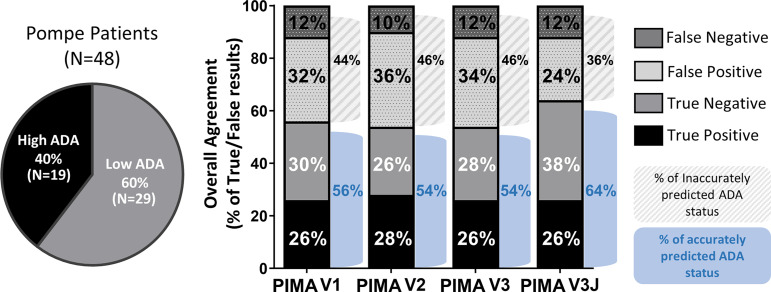
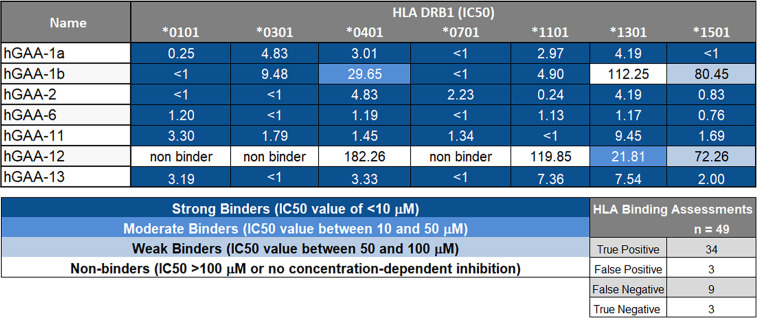
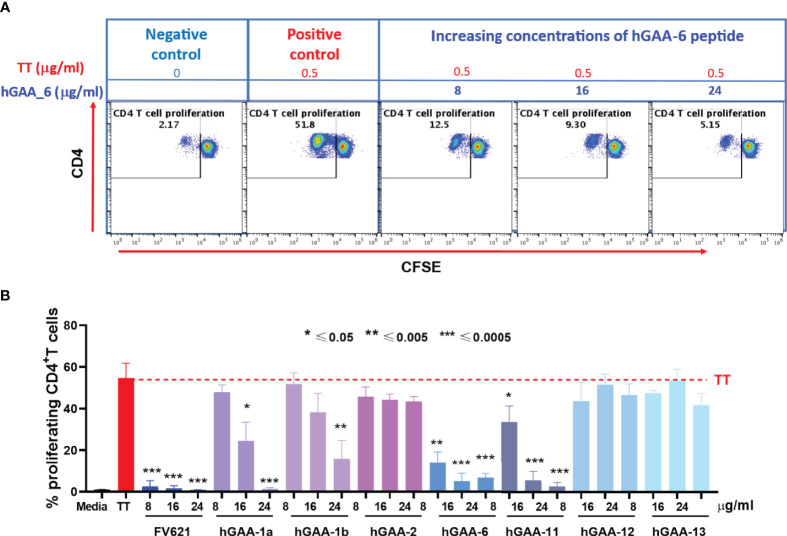
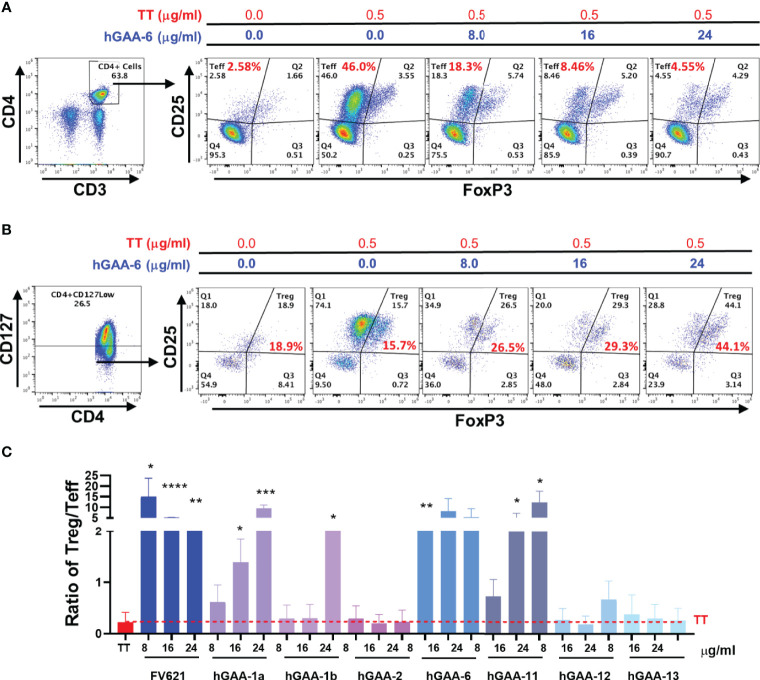
Infantile-onset Pompe disease (IOPD) is a glycogen storage disease caused by a deficiency of acid alpha-glucosidase (GAA). Treatment with recombinant human GAA (rhGAA, alglucosidase alfa) enzyme replacement therapy (ERT) significantly improves clinical outcomes; however, many IOPD children treated with rhGAA develop anti-drug antibodies (ADA) that render the therapy ineffective. Antibodies to rhGAA are driven by T cell responses to sequences in rhGAA that differ from the individuals' native (nGAA). The goal of this study was to develop a tool for personalized immunogenicity risk assessment (PIMA) that quantifies T cell epitopes that differ between nGAA and rhGAA using information about an individual's native GAA gene and their HLA DR haplotype, and to use this information to predict the risk of developing ADA. Four versions of PIMA have been developed. They use EpiMatrix, a computational tool for T cell epitope identification, combined with an HLA-restricted epitope-specific scoring feature (iTEM), to assess ADA risk. One version of PIMA also integrates JanusMatrix, a Treg epitope prediction tool to identify putative immunomodulatory (regulatory) T cell epitopes in self-proteins. Using the JanusMatrix-adjusted version of PIMA in a logistic regression model with data from 48 cross-reactive immunological material (CRIM)-positive IOPD subjects, those with scores greater than 10 were 4-fold more likely to develop ADA (p<0.03) than those that had scores less than 10. We also confirmed the hypothesis that some GAA epitopes are immunomodulatory. Twenty-one epitopes were tested, of which four were determined to have an immunomodulatory effect on T effector response . The implementation of PIMA V3J on a secure-access website would allow clinicians to input the individual HLA DR haplotype of their IOPD patient and the GAA pathogenic variants associated with each GAA allele to calculate the patient's relative risk of developing ADA, enhancing clinical decision-making prior to initiating treatment with ERT. A better understanding of immunogenicity risk will allow the implementation of targeted immunomodulatory approaches in ERT-naïve settings, especially in CRIM-positive patients, which may in turn improve the overall clinical outcomes by minimizing the development of ADA. The PIMA approach may also be useful for other types of enzyme or factor replacement therapies.
婴儿型庞贝病(IOPD)是一种由酸性α-葡萄糖苷酶(GAA)缺乏引起的糖原贮积病。重组人 GAA(rhGAA,阿糖苷酶 alfa)酶替代疗法(ERT)的治疗显著改善了临床结局;然而,许多接受 rhGAA 治疗的 IOPD 儿童会产生抗药物抗体(ADA),从而使治疗无效。针对 rhGAA 的抗体是由 T 细胞对 rhGAA 中与个体自身(nGAA)不同的序列的反应驱动的。本研究的目的是开发一种用于个性化免疫原性风险评估(PIMA)的工具,该工具使用个体自身 GAA 基因和 HLA-DR 单倍型的信息来量化 nGAA 和 rhGAA 之间不同的 T 细胞表位,并利用这些信息来预测产生 ADA 的风险。已经开发了四个版本的 PIMA。它们使用 EpiMatrix,一种用于 T 细胞表位鉴定的计算工具,结合 HLA 限制性表位特异性评分特征(iTEM),评估 ADA 风险。PIMA 的一个版本还集成了 JanusMatrix,一种 Treg 表位预测工具,用于鉴定自身蛋白中的潜在免疫调节(调节)T 细胞表位。在使用来自 48 名交叉反应免疫物质(CRIM)阳性 IOPD 受试者的数据的逻辑回归模型中使用带有 JanusMatrix 调整的 PIMA 版本,评分大于 10 的患者比评分小于 10 的患者发生 ADA 的可能性高 4 倍(p<0.03)。我们还验证了某些 GAA 表位具有免疫调节作用的假设。测试了 21 个表位,其中 4 个表位被确定对 T 效应器反应具有免疫调节作用。在安全访问网站上实施 PIMA V3J 将允许临床医生输入他们的 IOPD 患者的个体 HLA-DR 单倍型和与每个 GAA 等位基因相关的 GAA 致病性变体,以计算患者发生 ADA 的相对风险,从而在开始 ERT 治疗之前增强临床决策。更好地了解免疫原性风险将允许在 ERT 初治环境中实施靶向免疫调节方法,特别是在 CRIM 阳性患者中,这反过来又可以通过最小化 ADA 的发展来改善整体临床结局。PIMA 方法也可能对其他类型的酶或因子替代疗法有用。