Hann Alexander, Gruss Sascha, Goetze Sebastian, Mehlhase Niklas, Frisch Stephan, Walter Benjamin, Walter Steffen
Department of Internal Medicine II, Gastroenterology, University Hospital Wurzburg, Wurzburg, Germany.
Department of Internal Medicine I, University Hospital Ulm, Ulm, Germany.
Front Med (Lausanne). 2021 Jun 16;8:643158. doi: 10.3389/fmed.2021.643158. eCollection 2021.
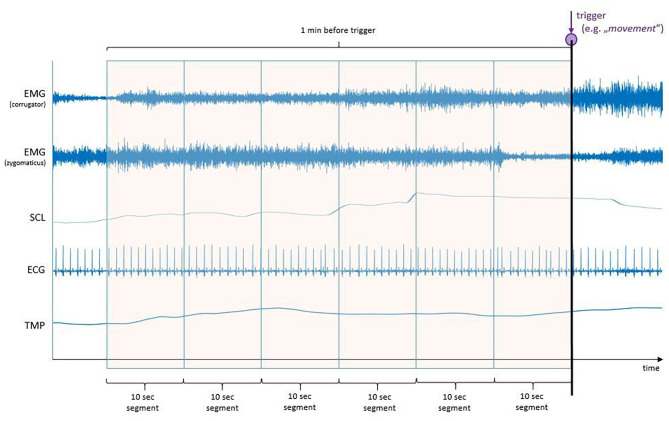
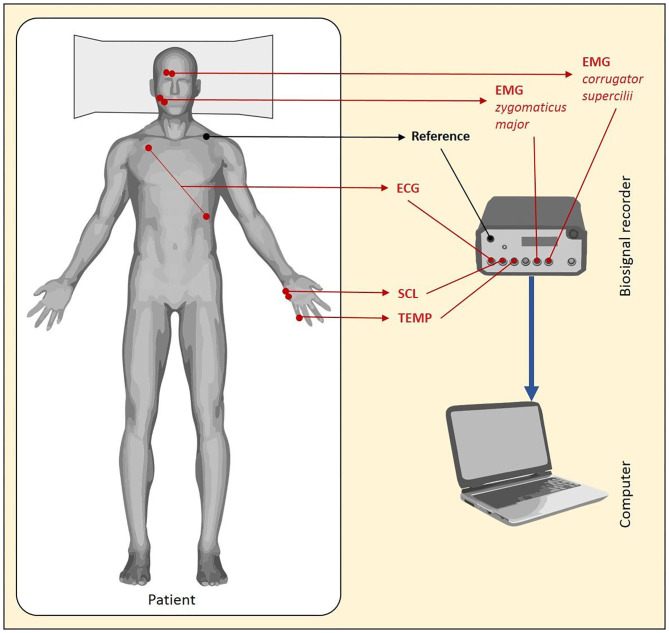
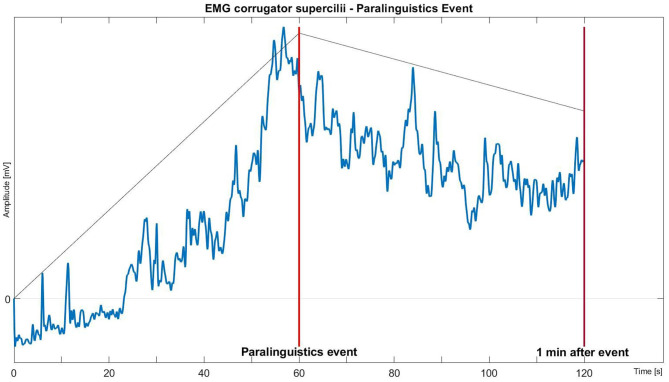
Nurse assisted propofol sedation (NAPS) is a common method used for colonoscopies. It is safe and widely accepted by patients. Little is known, however, about the satisfaction of clinicians performing colonoscopies with NAPS and the factors that negatively influence this perception such as observer-reported pain events. In this study, we aimed to correlate observer-reported pain events with the clinicians' satisfaction with the procedure. Additionally, we aimed to identify patient biosignals from the autonomic nervous system (B-ANS) during an endoscopy that correlate with those pain events. Consecutive patients scheduled for a colonoscopy with NAPS were prospectively recruited. During the procedure, observer-reported pain events, which included movements and paralinguistic sounds, were simultaneously recorded with different B-ANS (facial electromyogram (EMG), skin conductance level, body temperature and electrocardiogram). After the procedure, the examiners filled out the Clinician Satisfaction with Sedation Instrument (CSSI). The primary endpoint was the correlation between CSSI and observer-reported pain events. The second primary endpoint was the identification of B-ANS that make it possible to predict those events. Secondary endpoints included the correlation between CSSI and sedation depth, the frequency and dose of sedative use, polyps resected, resection time, the duration of the procedure, the time it took to reach the coecum and the experience of the nurse performing the NAPS. ClinicalTrials.gov: NCT03860779. 112 patients with 98 (88.5%) available B-ANS recordings were prospectively recruited. There was a significant correlation between an increased number of observer-reported pain events during an endoscopy with NAPS and a lower CSSI ( = -0.318, = 0.001). Additionally, the EMG-signal from facial muscles correlated best with the event time points, and the signal significantly exceeded the baseline 30 s prior to the occurrence of paralinguistic sounds. The secondary endpoints showed that the propofol dose relative to the procedure time, the cecal intubation time, the time spent on polyp removal and the individual nurse performing the NAPS significantly correlated with CSSI. This study shows that movements and paralinguistic sounds during an endoscopy negatively correlate with the satisfaction of the examiner measured with the CSSI. Additionally, an EMG of the facial muscles makes it possible to identify such events and potentially predict their occurrence.
护士辅助丙泊酚镇静(NAPS)是结肠镜检查常用的方法。它安全且被患者广泛接受。然而,对于实施结肠镜检查的临床医生对NAPS的满意度以及诸如观察者报告的疼痛事件等对这种认知产生负面影响的因素知之甚少。在本研究中,我们旨在将观察者报告的疼痛事件与临床医生对该操作的满意度相关联。此外,我们旨在识别在内镜检查期间来自自主神经系统(B-ANS)的与这些疼痛事件相关的患者生物信号。前瞻性招募了计划接受NAPS结肠镜检查的连续患者。在操作过程中,观察者报告的疼痛事件,包括动作和副语言声音,与不同的B-ANS(面部肌电图(EMG)、皮肤电导水平、体温和心电图)同时记录。操作结束后,检查人员填写镇静临床医生满意度量表(CSSI)。主要终点是CSSI与观察者报告的疼痛事件之间的相关性。第二个主要终点是识别能够预测这些事件的B-ANS。次要终点包括CSSI与镇静深度、镇静剂使用频率和剂量、切除的息肉、切除时间、操作持续时间以及到达盲肠所需时间和实施NAPS的护士经验之间的相关性。ClinicalTrials.gov:NCT03860779。前瞻性招募了112例患者,其中98例(88.5%)有可用的B-ANS记录。在内镜检查期间,NAPS中观察者报告的疼痛事件数量增加与较低的CSSI之间存在显著相关性(r = -0.318,P = 0.001)。此外,面部肌肉的EMG信号与事件时间点相关性最佳,并且该信号在副语言声音出现前30秒显著超过基线。次要终点表明,相对于操作时间的丙泊酚剂量、盲肠插管时间、息肉切除时间以及实施NAPS的个体护士与CSSI显著相关。本研究表明,内镜检查期间的动作和副语言声音与通过CSSI测量的检查人员满意度呈负相关。此外,面部肌肉的EMG能够识别此类事件并有可能预测其发生。