Lyngby Rasmus Meyer, Händel Mina Nicole, Christensen Anne Mielke, Nikoletou Dimitra, Folke Fredrik, Christensen Helle Collatz, Barfod Charlotte, Quinn Tom
Copenhagen Emergency Medical Services, Telegrafvej 5, 2750 Ballerup, Denmark.
Kingston University & St George's, University of London, Cranmer Terrace, Tooting, London SW17 0RE, United Kingdom.
Resusc Plus. 2021 Mar 12;6:100101. doi: 10.1016/j.resplu.2021.100101. eCollection 2021 Jun.
A systematic review to determine if cardiopulmonary resuscitation (CPR) guided by either real-time or post-event feedback could improve CPR quality or patient outcome compared to unguided CPR in out-of-hospital cardiac arrest (OHCA).
Four databases were searched; PubMed, Embase, CINAHL, and Cochrane Library in August 2020 for post 2010 literature on OHCA in adults. Critical outcomes were chest compression depth, rate and fraction. Important outcomes were any return of spontaneous circulation, survival to hospital and survival to discharge.
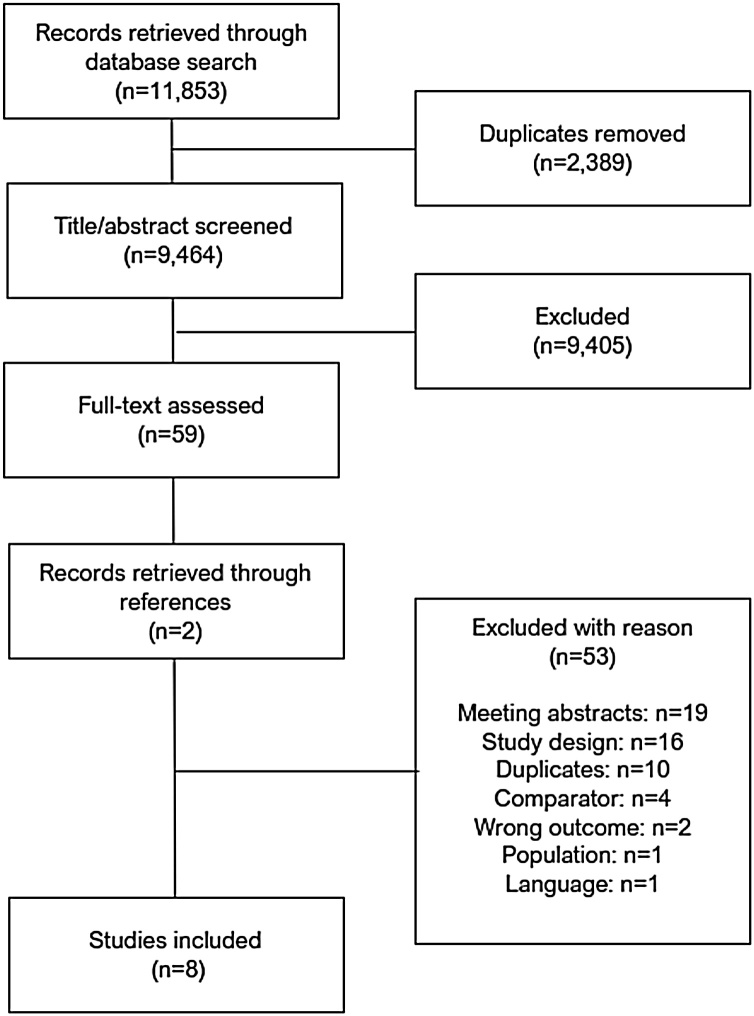
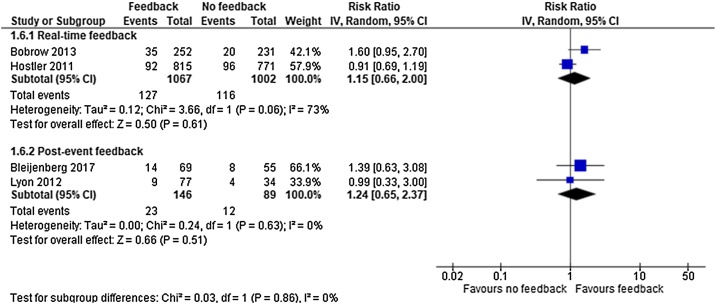
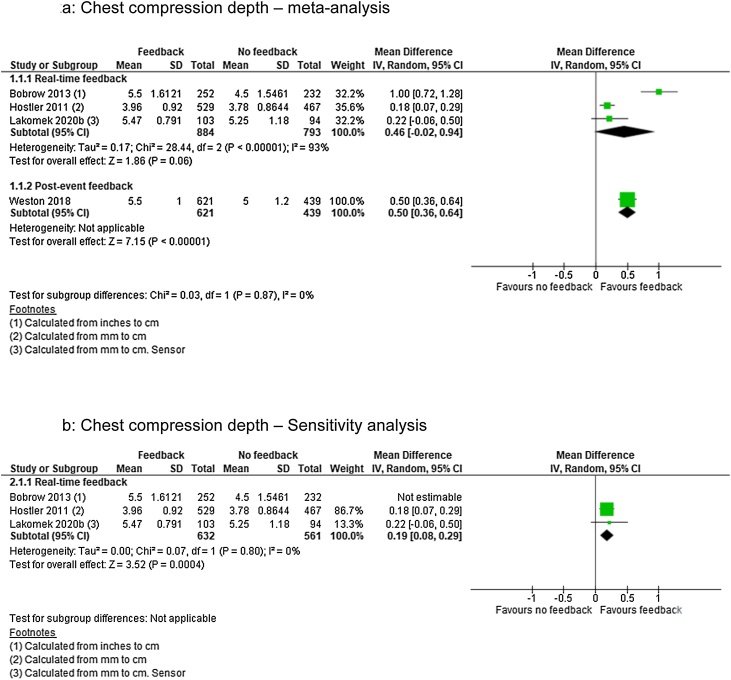
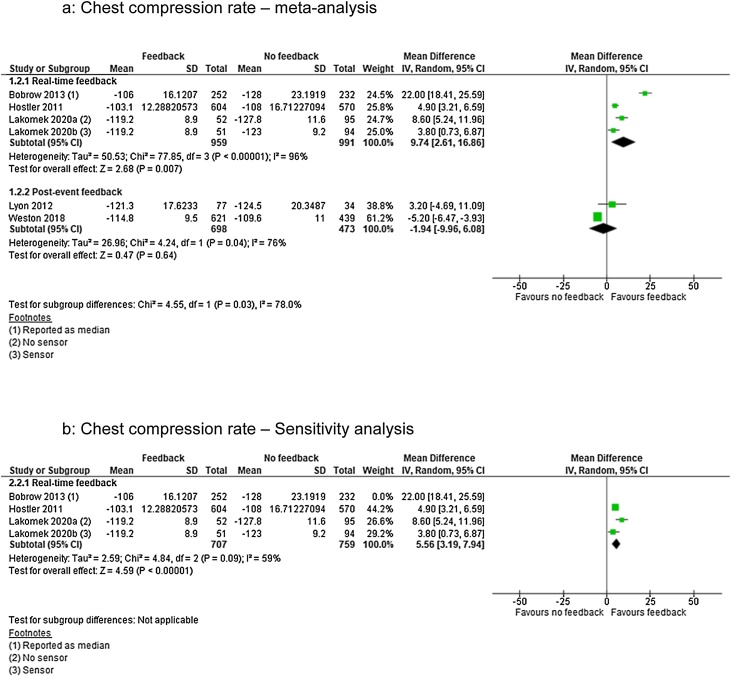
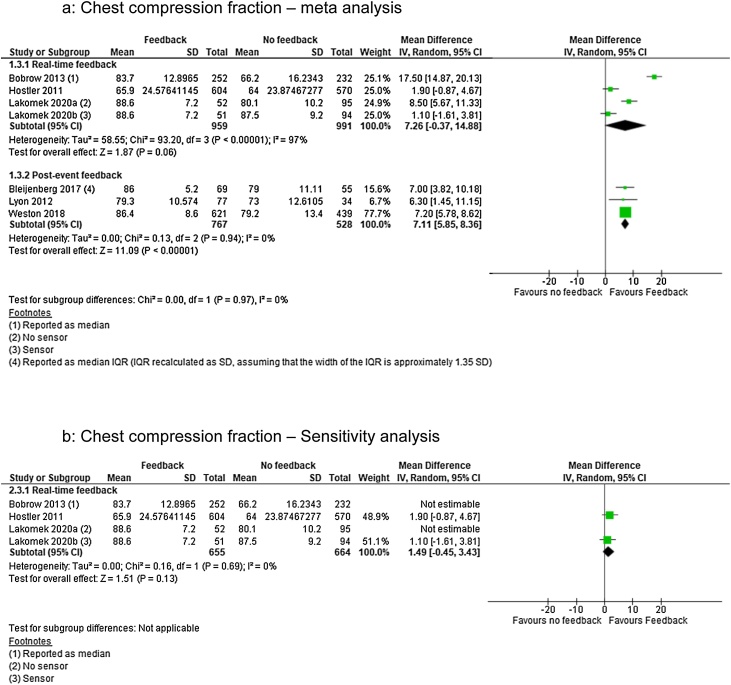
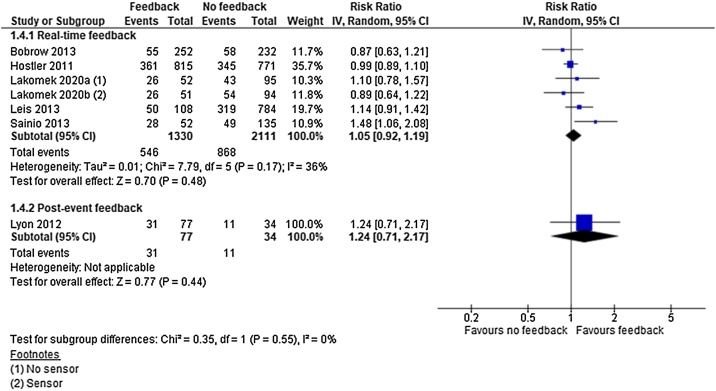
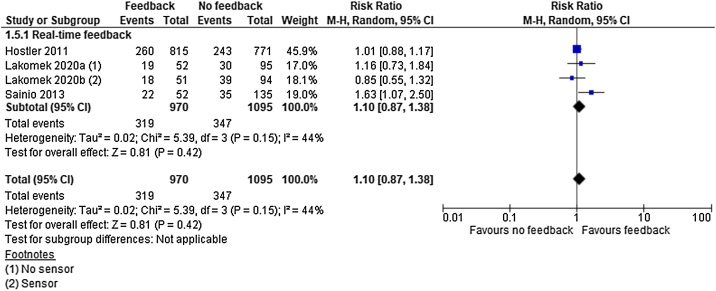
A total of 9464 studies were identified with 61 eligibility for full text screening. A total of eight studies was included in the meta-analysis. Five studies investigated real-time feedback and three investigated post-event feedback. Meta-analysis revealed that real-time feedback statistically improves compression depth and rate while post-event feedback improved depth and fraction. Feedback did not statistically improve patient outcome but an improvement in absolute numbers revealed a clinical effect of feedback. Heterogenity varied from "might not be important" to "considerable".
To significantly improve CPR quality real-time and post-event feedback should be combined. Neither real-time nor post event feedback could statistically be associated with patient outcome however, a clinical effect was detected. The conclusions reached were based on few studies of low to very low quality.
CRD42019133881.
进行一项系统评价,以确定与院外心脏骤停(OHCA)时无指导的心肺复苏(CPR)相比,实时或事后反馈指导的CPR是否能改善CPR质量或患者预后。
检索了四个数据库;2020年8月在PubMed、Embase、CINAHL和Cochrane图书馆中检索2010年后关于成人OHCA的文献。关键结局为胸外按压深度、速率和比例。重要结局为任何自主循环恢复、存活至医院和存活至出院。
共识别出9464项研究,其中61项符合全文筛选条件。荟萃分析共纳入八项研究。五项研究调查了实时反馈,三项研究调查了事后反馈。荟萃分析显示,实时反馈在统计学上改善了按压深度和速率,而事后反馈改善了深度和比例。反馈在统计学上未改善患者预后,但绝对数量的改善显示出反馈的临床效果。异质性从“可能不重要”到“相当大”不等。
为显著提高CPR质量,应将实时反馈和事后反馈相结合。实时反馈和事后反馈在统计学上均与患者预后无关,然而,检测到了临床效果。得出的结论基于少数质量低至极低的研究。
PROSPERO注册编号:CRD42019133881。