Andrews Elyse, Hayes Amelia, Cerulli Laura, Miller Elissa G, Slamon Nicholas
Thomas Jefferson University Pediatrics Residency Program, Nemours/Alfred I. duPont Hospital for Children, Wilmington, Delaware, USA.
Division of Palliative Medicine, Department of Pediatrics, Nemours/Alfred I. duPont Hospital for Children, Wilmington, Delaware, USA.
Palliat Med Rep. 2020 Aug 6;1(1):149-155. doi: 10.1089/pmr.2020.0028. eCollection 2020.
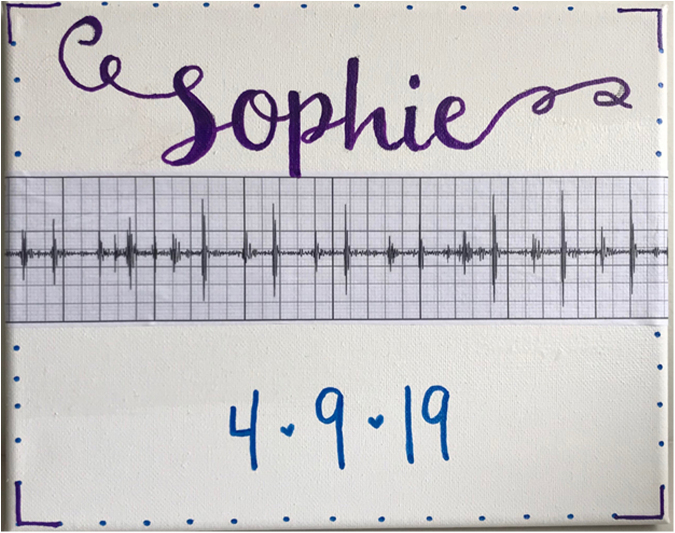
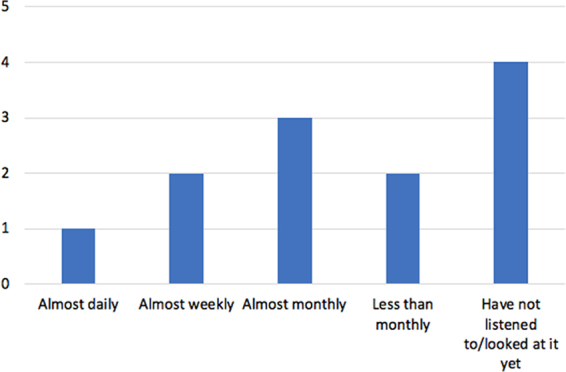
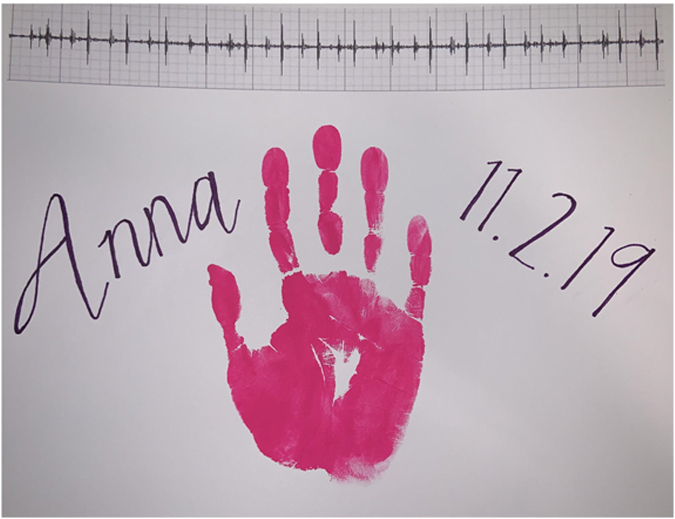
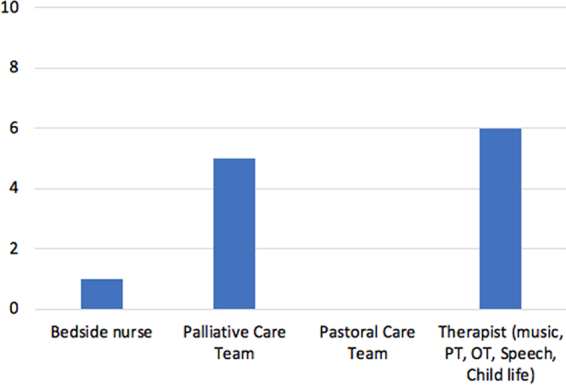
Legacy making has been the focus of recent literature; however, few studies examine how legacy making affects bereaved parents. To better understand legacy making's effect on bereaved parents, this study examined (1) the presentation of legacy making to parents, (2) parent satisfaction, and (3) parent utilization of the project. Eko CORE (Eko Devices, Inc., Berkeley, CA), a digital stethoscope that generates a phonocardiogram, a graphical representation of S1 and S2 heart sounds, was used to record children's heartbeats as they approached end of life. The heartbeat was then overlaid to a song or voice recording or kept as a stand-alone file. An artistic embellishment of the phonocardiogram was also created. Parents were surveyed about their experience with the Music Therapy Heart Sounds (MTHS) program. Twelve parents completed the survey. Tertiary care children's hospital. The subjects were bereaved parents. Five-question survey. Institutional Review Board review exempt. All respondents would recommend the MTHS program to other families experiencing end-of-life decision making. Forty-two percent ( = 5) heard about the program from pediatric palliative physicians, and 50% ( = 6) heard about it from therapists such as music or child life. The respondents varied in how often they utilized their child's heartbeat recordings: 25% ( = 3) viewed or listened monthly, 33% ( = 4) not at all, 17% ( = 2) almost weekly, 17% less than monthly, and 8% ( = 1) daily. The MTHS program is an easy-to-implement and cost-effective way to perform legacy making that bereaved parents recommend for other families.
留下遗产一直是近期文献关注的焦点;然而,很少有研究探讨留下遗产对失去亲人的父母有何影响。为了更好地理解留下遗产对失去亲人的父母的影响,本研究考察了:(1)向父母介绍留下遗产的方式;(2)父母的满意度;(3)父母对该项目的使用情况。Eko CORE(Eko Devices公司,加利福尼亚州伯克利)是一种数字听诊器,能生成心音图,即S1和S2心音的图形表示,用于在儿童临终时记录他们的心跳。然后将心跳叠加到一首歌曲或语音记录上,或者作为一个独立文件保存。还对心音图进行了艺术修饰。对父母进行了关于他们参与音乐治疗心音(MTHS)项目体验的调查。12位父母完成了调查。三级护理儿童医院。受试者为失去亲人的父母。采用五问题调查问卷。无需机构审查委员会审查。所有受访者都愿意向其他面临临终决策的家庭推荐MTHS项目。42%(n = 5)是从儿科姑息治疗医生那里听说该项目的,50%(n = 6)是从音乐或儿童生活等治疗师那里听说的。受访者使用孩子心跳记录的频率各不相同:25%(n = 3)每月查看或聆听,33%(n = 4)根本不使用,17%(n = 2)几乎每周使用,17%使用频率低于每月一次, 8%(n = 1)每天使用。MTHS项目是一种易于实施且经济高效的留下遗产的方式,失去亲人的父母向其他家庭推荐该项目。