Charité - Universitätsmedizin Berlin, corporate member of Freie Universität BerlinHumboldt-Universität zu BerlinInstitute of PharmacologyCenter for Cardiovascular Research Berlin Germany.
DZHK (German Centre for Cardiovascular Research), partner site Berlin Berlin Germany.
J Am Heart Assoc. 2021 Jul 20;10(14):e019473. doi: 10.1161/JAHA.120.019473. Epub 2021 Jul 6.
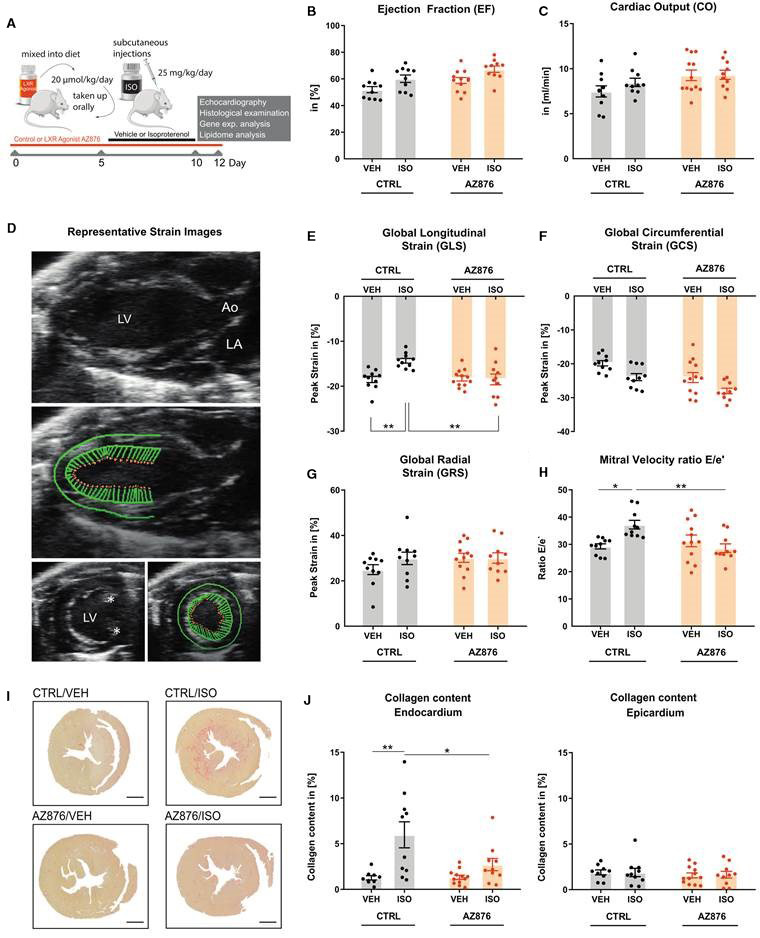
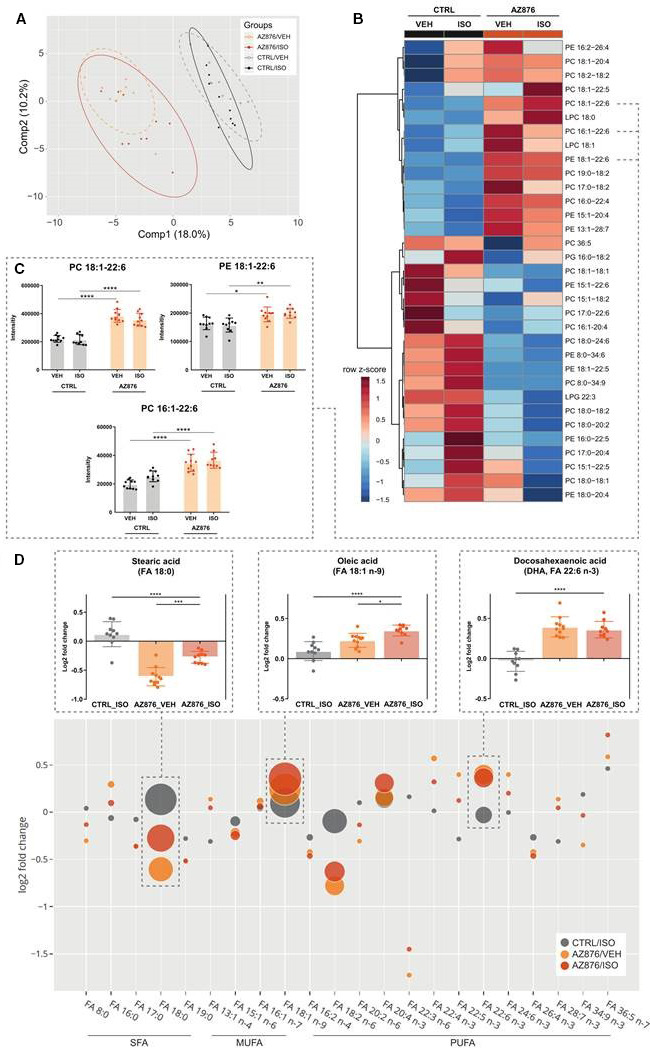
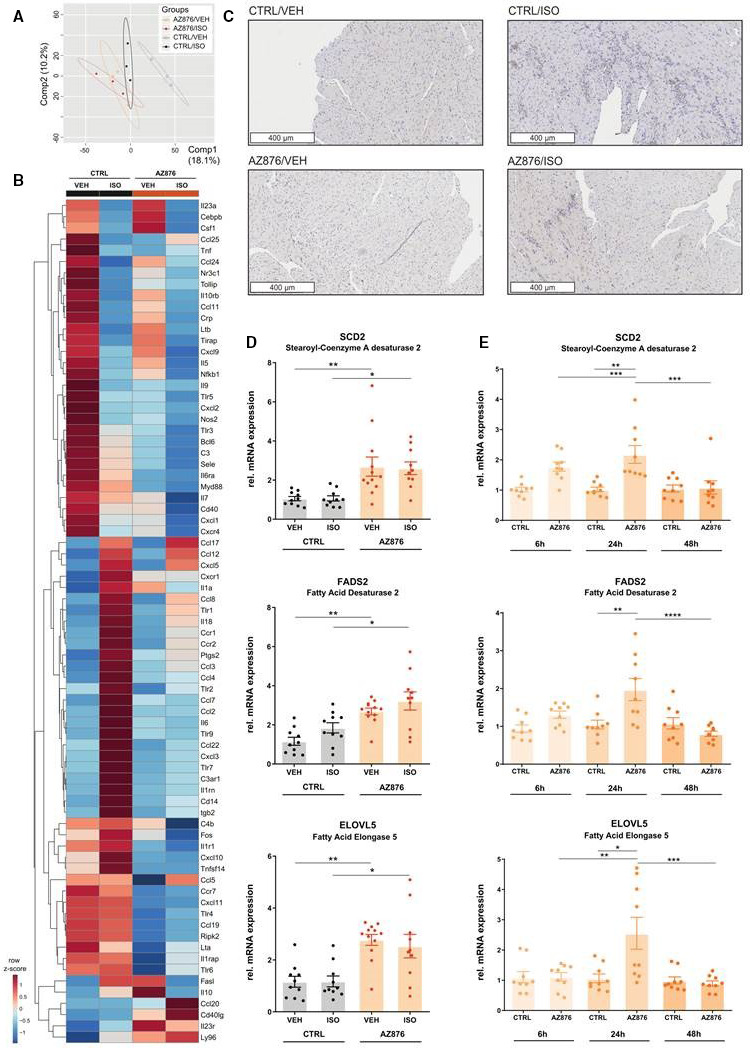
Background It is known that dietary intake of polyunsaturated fatty acids may improve cardiac function. However, relatively high daily doses are required to achieve sufficient cardiac concentrations of beneficial omega-3 fatty acids. The liver X receptor (LXR) is a nuclear hormone receptor and a crucial regulator of lipid homeostasis in mammals. LXR activation has been shown to endogenously reprogram cellular lipid profiles toward increased polyunsaturated fatty acids levels. Here we studied whether LXR lipid reprogramming occurs in cardiac tissue and exerts cardioprotective actions. Methods and Results Male 129SV mice were treated with the LXR agonist AZ876 (20 µmol/kg per day) for 11 days. From day 6, the mice were injected with the nonselective β-agonist isoproterenol for 4 consecutive days to induce diastolic dysfunction and subendocardial fibrosis while maintaining systolic function. Treatment with isoproterenol led to a marked impairment of global longitudinal strain and the E/e' ratio of transmitral flow to mitral annular velocity, which were both significantly improved by the LXR agonist. Histological examination showed a significant reduction in isoproterenol-induced subendocardial fibrosis by AZ876. Analysis of the cardiac lipid composition by liquid chromatography-high resolution mass spectrometry revealed a significant increase in cardiac polyunsaturated fatty acids levels and a significant reduction in saturated fatty acids by AZ876. Conclusions The present study provides evidence that the LXR agonist AZ876 prevents subendocardial damage, improves global longitudinal strain and E/e' in a mouse model of isoproterenol-induced cardiac damage, accompanied by an upregulation of cardiac polyunsaturated fatty acids levels. Cardiac LXR activation and beneficial endogenous cardiac lipid reprogramming may provide a new therapeutic strategy in cardiac disease with diastolic dysfunction.
已知多不饱和脂肪酸的饮食摄入可以改善心脏功能。然而,需要相对较高的每日剂量才能使有益的ω-3 脂肪酸在心脏中达到足够的浓度。肝 X 受体 (LXR) 是一种核激素受体,是哺乳动物脂质稳态的关键调节因子。已经表明,LXR 的激活可以使细胞内的脂质谱重新编程,增加多不饱和脂肪酸的水平。在这里,我们研究了 LXR 脂质重编程是否发生在心脏组织中并发挥心脏保护作用。
雄性 129SV 小鼠用 LXR 激动剂 AZ876(每天 20µmol/kg)处理 11 天。从第 6 天开始,小鼠连续 4 天注射非选择性β-激动剂异丙肾上腺素,以诱导舒张功能障碍和心内膜下纤维化,同时保持收缩功能。异丙肾上腺素的治疗导致整体纵向应变和二尖瓣血流向二尖瓣环速度的 E/e'比值明显受损,而 LXR 激动剂则明显改善了这些指标。组织学检查显示,AZ876 显著减少了异丙肾上腺素诱导的心内膜下纤维化。通过液相色谱-高分辨率质谱分析心脏脂质组成发现,AZ876 显著增加了心脏多不饱和脂肪酸水平,并显著降低了饱和脂肪酸水平。
本研究提供了证据表明,LXR 激动剂 AZ876 可预防异丙肾上腺素诱导的心脏损伤小鼠模型中的心内膜下损伤,改善整体纵向应变和 E/e',同时增加心脏多不饱和脂肪酸水平。心脏 LXR 的激活和有益的内源性心脏脂质重编程可能为舒张功能障碍性心脏病提供一种新的治疗策略。