Department of Critical Care Medicine, Hunan Provincial People's Hospital (The First Affiliated Hospital of Hunan Normal University), Changsha, Hunan Province, China.
Department of Critical Care Medicine, Zibo Central Hospital, Zibo, Shandong Province, China.
Bioengineered. 2021 Dec;12(1):2459-2468. doi: 10.1080/21655979.2021.1935136.
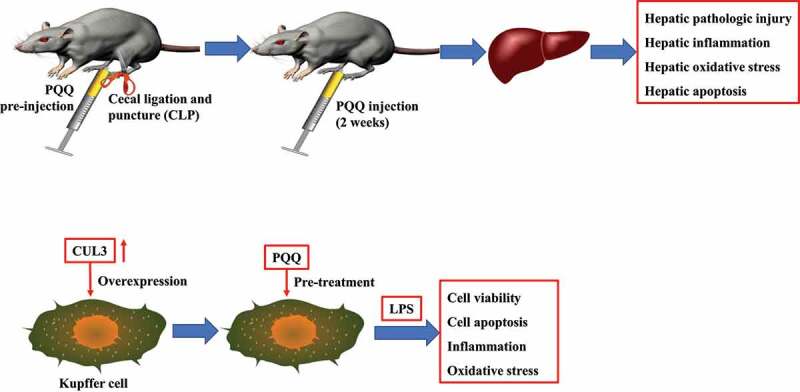
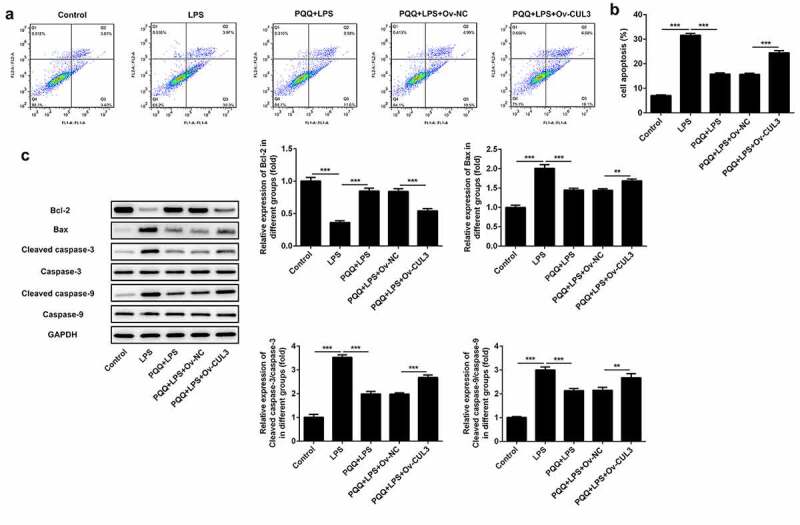
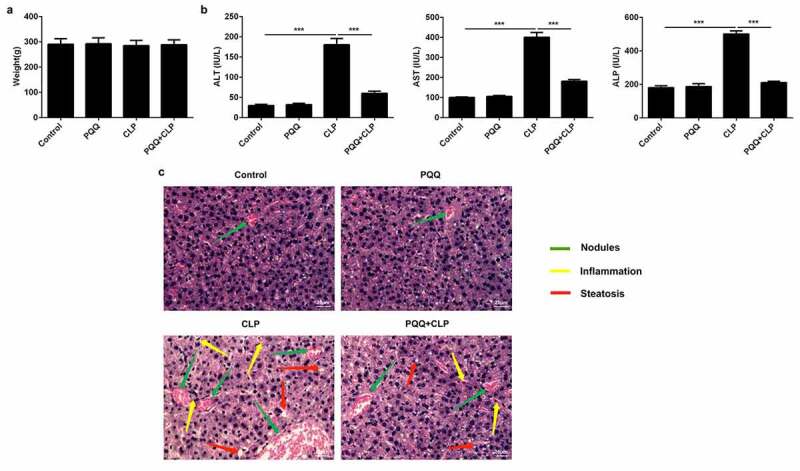
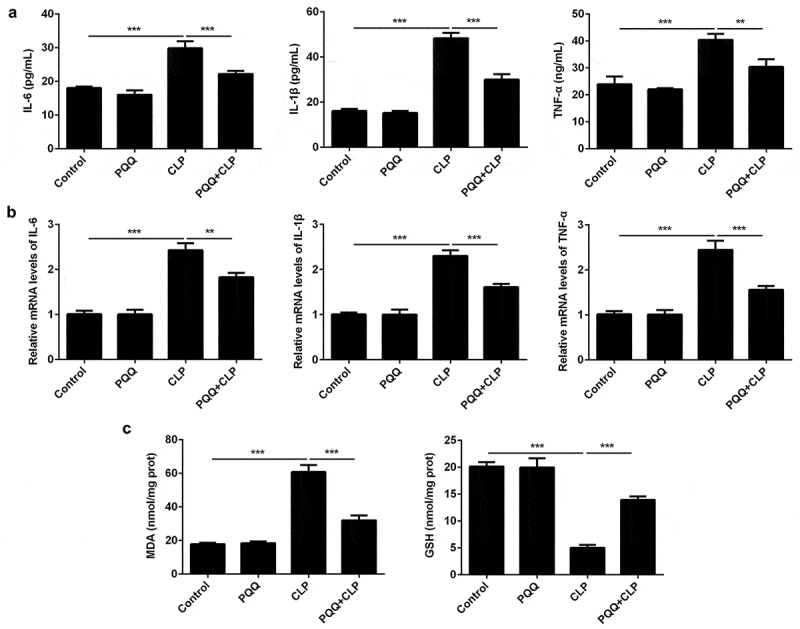
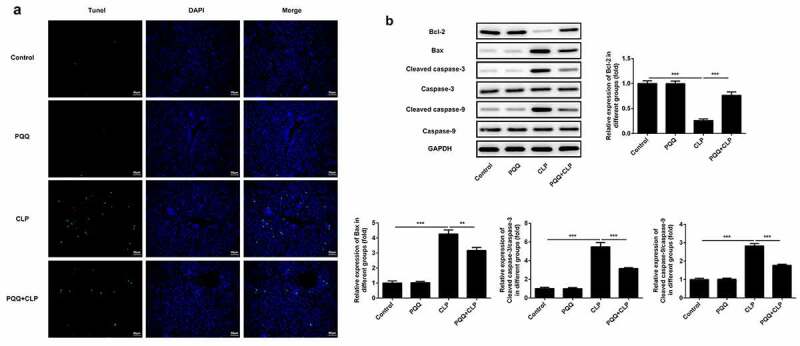
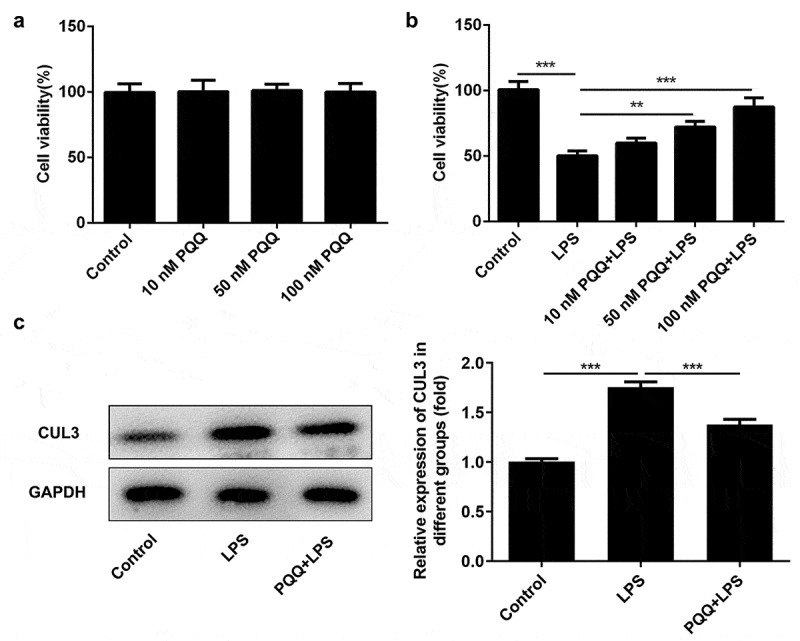
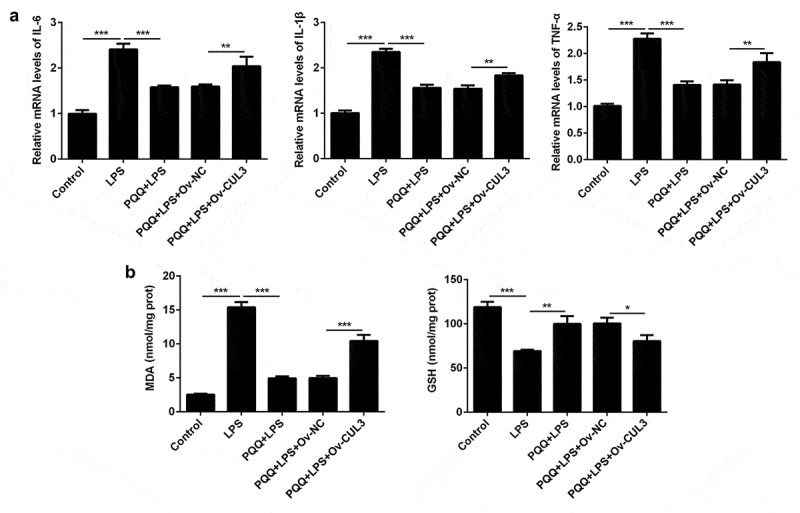
PQQ has anti-inflammatory and anti-oxidant effects. PQQ can relieve high glucose-induced renal cell damage by suppressing Keap1 expression. Keap1 can interact with CUL3. Upregulation of CUL3 facilitates the apoptosis of LPS-induced podocytes. Based on knowledge above, this current work was designed to explore the role of PQQ in sepsis and determine the molecular function of CUL3 in the pathogenesis of sepsis. Rats received CLP surgery to establish sepsis models in vivo. Kupffer cells were pretreated with PQQ (10, 50 and 100 nmol/L) for 2 h and then treated with 100 ng/mL LPS for 24 h, simulating sepsis-induced acute liver injury in vitro. H&E staining was performed to evaluate liver injury of SD rats. Levels of inflammatory factors and oxidative stress markers were detected to assess inflammatory response and oxidative stress. Moreover, TUNEL staining, flow cytometric analysis and western blot were applied to determine cell apoptosis. It was confirmed that PQQ treatment relieved acute liver injury, inflammatory and oxidative stress damage and apoptosis of liver tissue cells in sepsis rats. In addition, PQQ therapy could alleviate inflammation, oxidative stress and apoptosis in LPS-induced Kupffer cells. Notably, LPS stimulation enhanced CUL3 expression and PQQ repressed CUL3 expression in Kupffer cells suffered from LPS. Overall, CUL3 overexpression weakened the remission effects of PQQ on LPS-induced inflammatory and oxidative damage and apoptosis of Kupffer cells. Mechanistically, PQQ treatment may mitigate sepsis-induced acute liver injury through downregulating CUL3 expression.
吡咯喹啉醌(PQQ)具有抗炎和抗氧化作用。PQQ 可以通过抑制 Keap1 表达来减轻高葡萄糖诱导的肾细胞损伤。Keap1 可以与 CUL3 相互作用。CUL3 的上调促进 LPS 诱导的足细胞凋亡。基于以上知识,本研究旨在探讨 PQQ 在脓毒症中的作用,并确定 CUL3 在脓毒症发病机制中的分子功能。大鼠接受 CLP 手术建立体内脓毒症模型。Kupffer 细胞用 PQQ(10、50 和 100 nmol/L)预处理 2 h,然后用 100 ng/mL LPS 处理 24 h,模拟脓毒症诱导的急性肝损伤体外。进行 H&E 染色评估 SD 大鼠的肝损伤。检测炎症因子和氧化应激标志物水平,评估炎症反应和氧化应激。此外,应用 TUNEL 染色、流式细胞术分析和 Western blot 检测细胞凋亡。证实 PQQ 治疗可缓解脓毒症大鼠的急性肝损伤、炎症和氧化应激损伤以及肝组织细胞凋亡。此外,PQQ 治疗可减轻 LPS 诱导的 Kupffer 细胞中的炎症、氧化应激和细胞凋亡。值得注意的是,LPS 刺激增强了 Kupffer 细胞中 CUL3 的表达,而 PQQ 抑制了 LPS 诱导的 Kupffer 细胞中 CUL3 的表达。总体而言,CUL3 的过表达削弱了 PQQ 对 LPS 诱导的 Kupffer 细胞炎症、氧化损伤和凋亡的缓解作用。机制上,PQQ 治疗可能通过下调 CUL3 表达减轻脓毒症引起的急性肝损伤。