Guillot Charlene, Djeffal Yannis, Michaut Arthur, Rabe Brian, Pourquié Olivier
Department of Pathology, Brigham and Women's Hospital, Boston, United States.
Department of Genetics, Harvard Medical School, Boston, United States.
Elife. 2021 Jul 6;10:e64819. doi: 10.7554/eLife.64819.
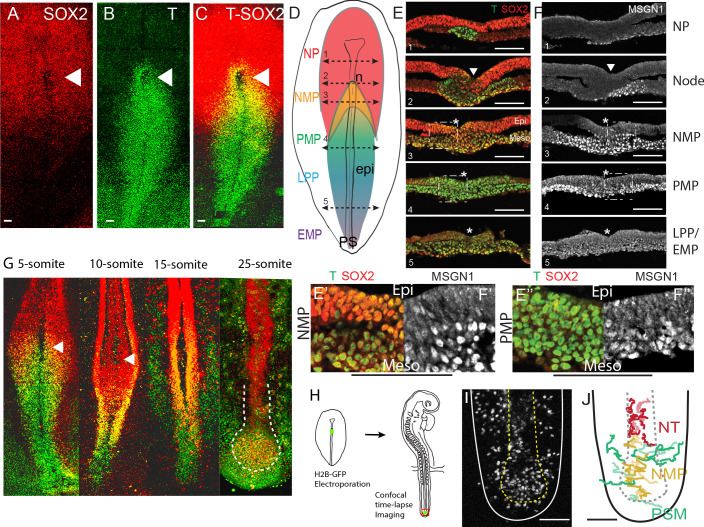
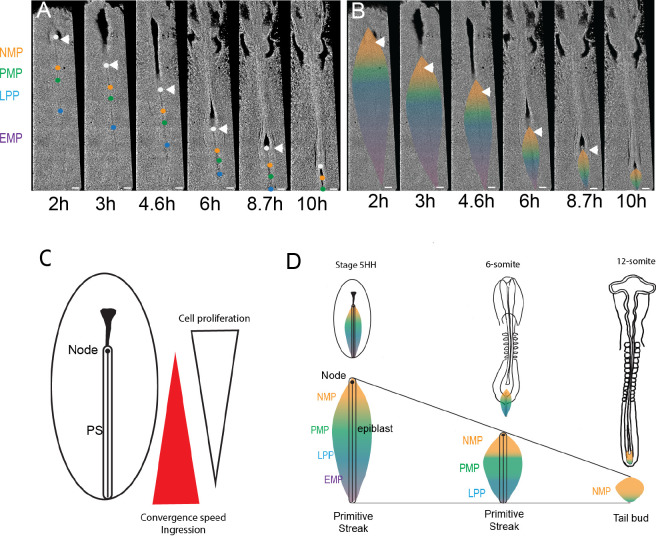
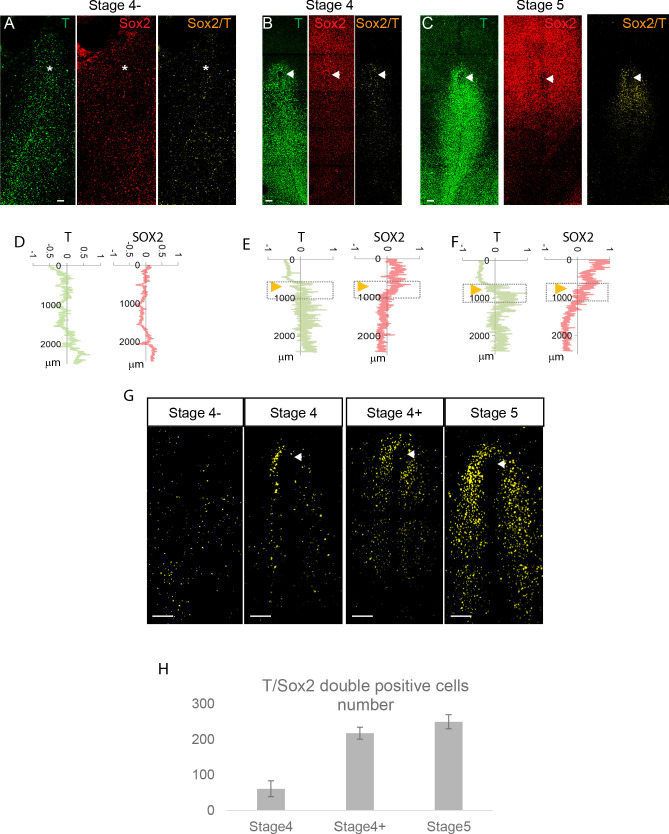
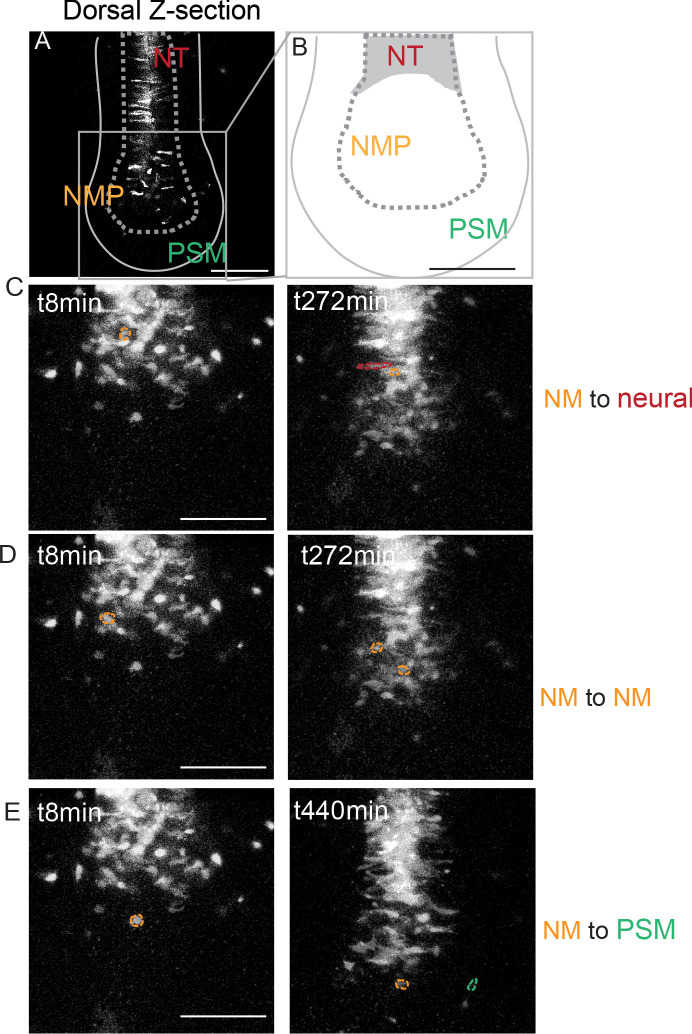
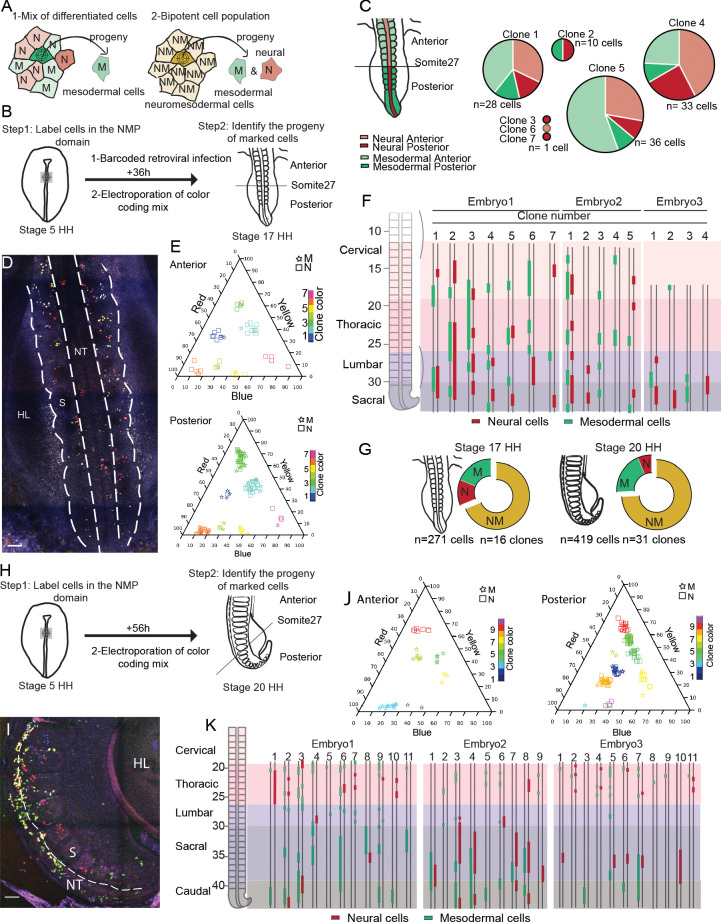
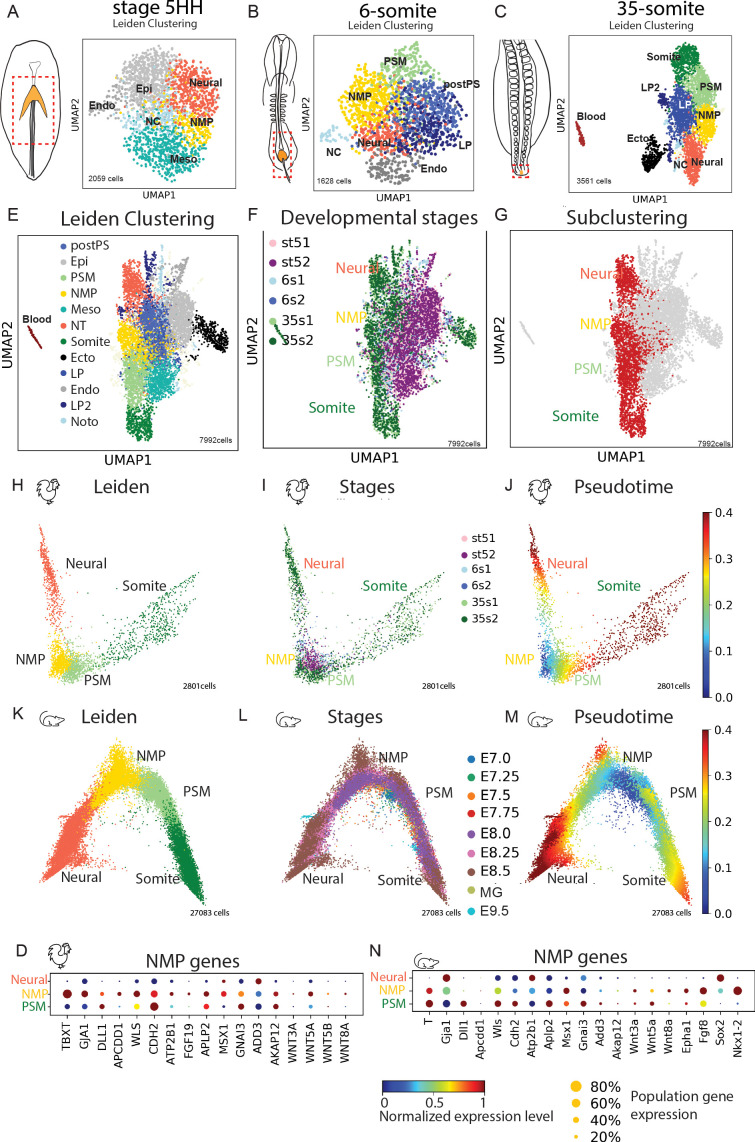
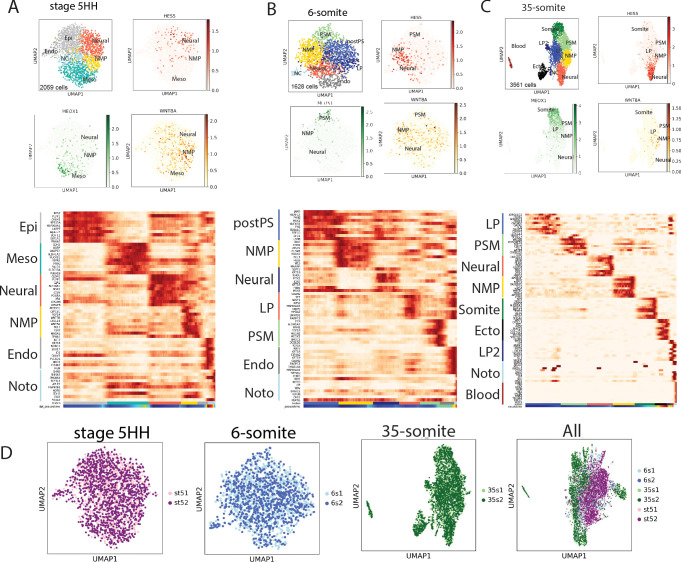
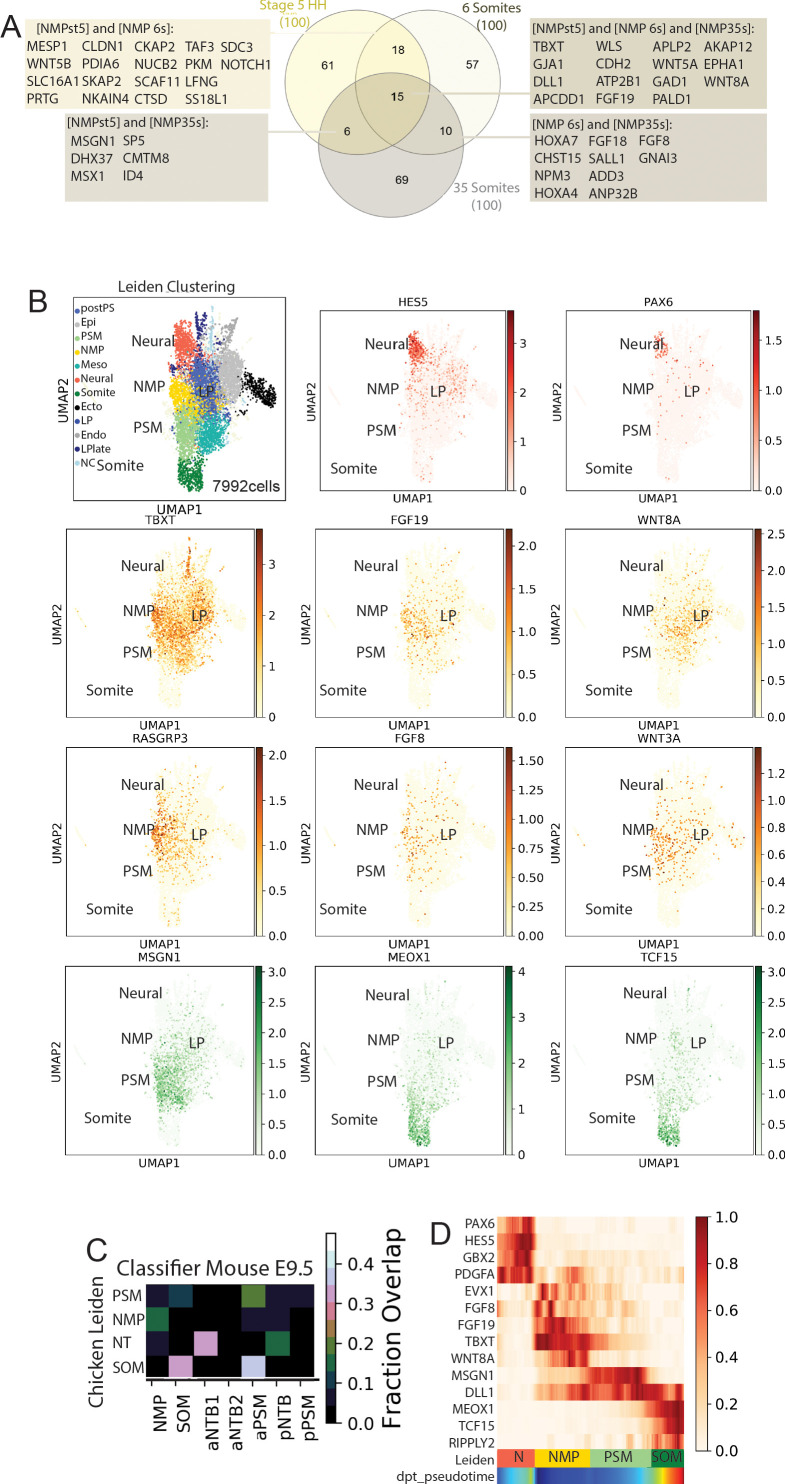
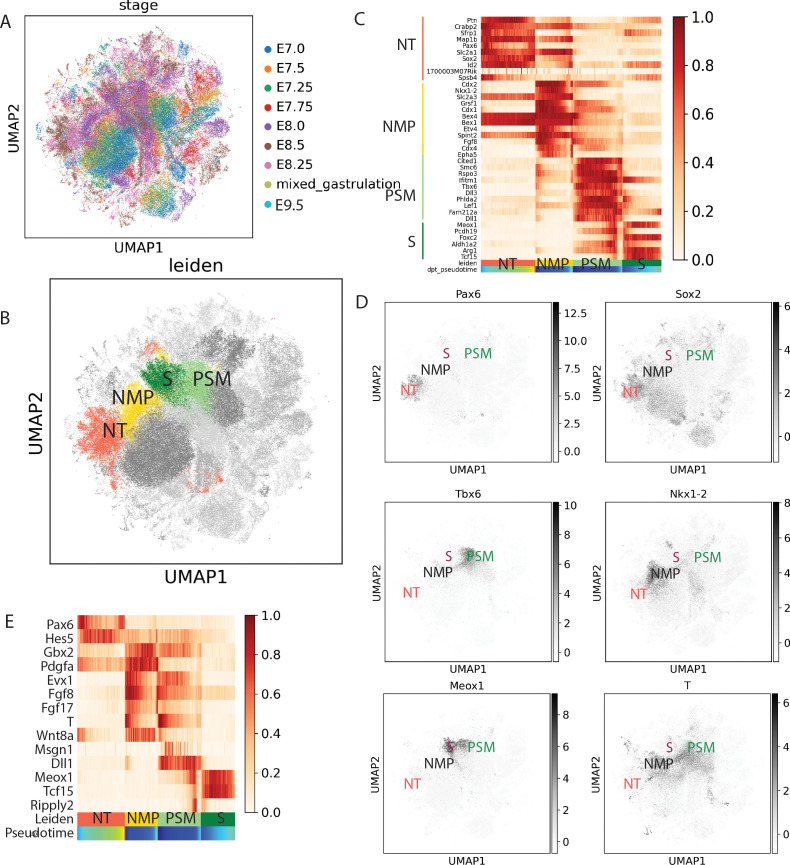
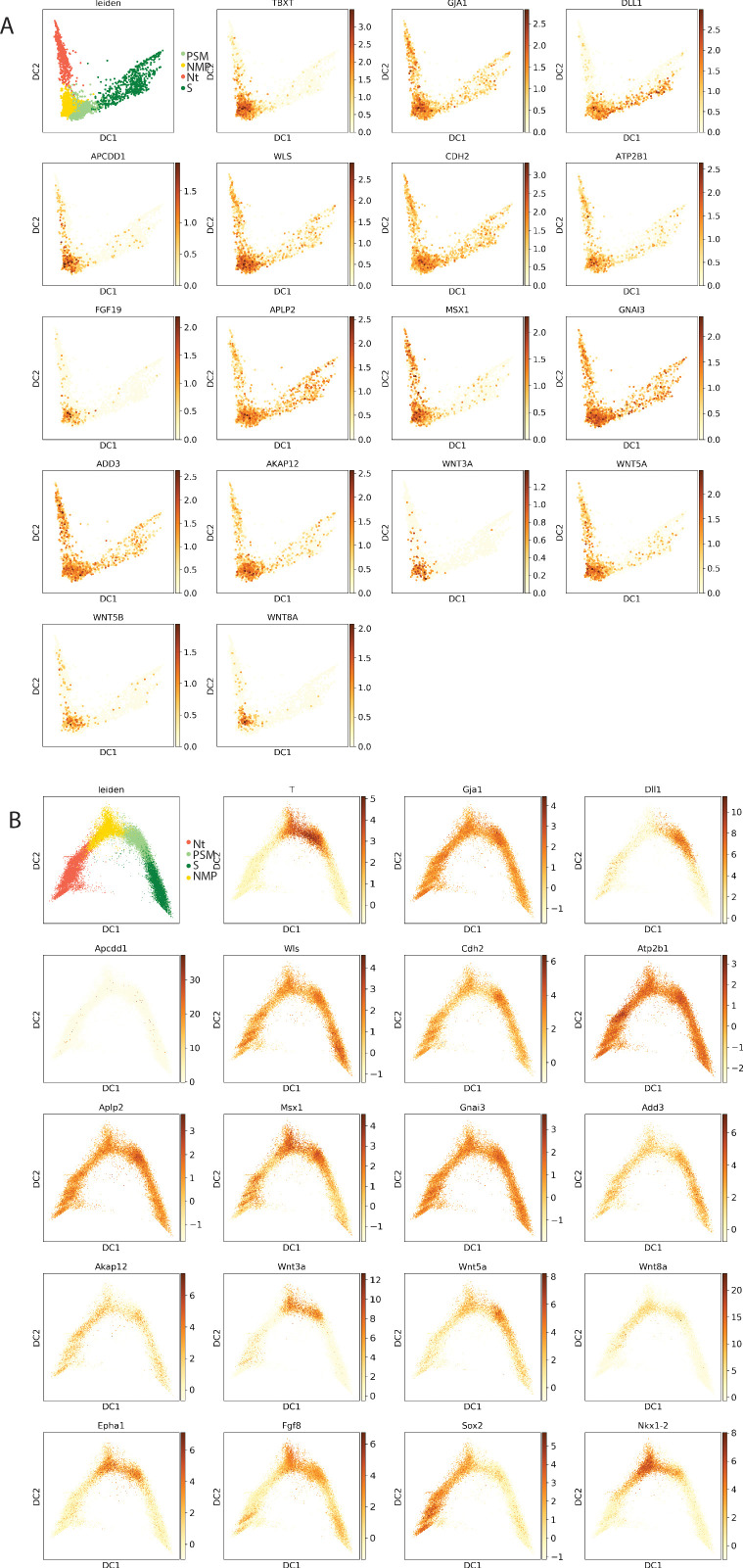
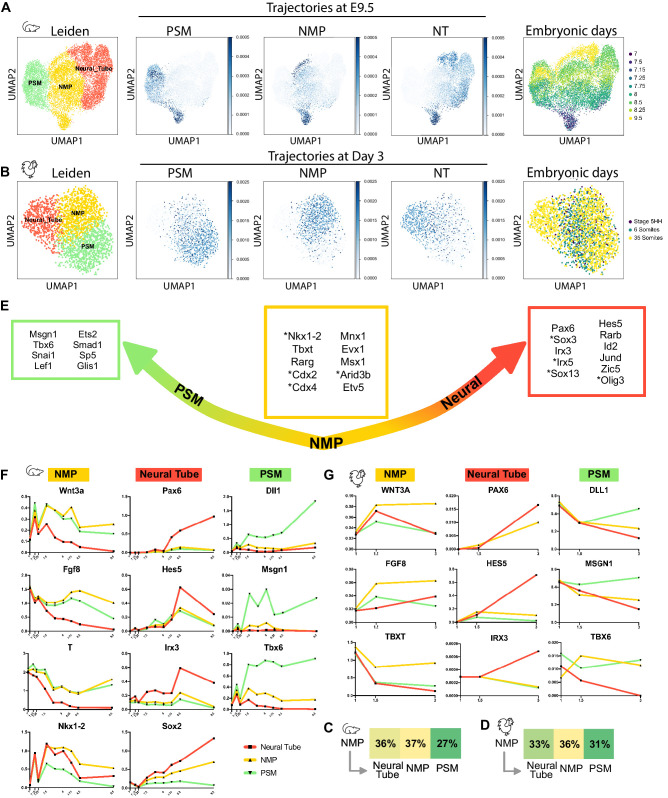
In classical descriptions of vertebrate development, the segregation of the three embryonic germ layers completes by the end of gastrulation. Body formation then proceeds in a head to tail fashion by progressive deposition of lineage-committed progenitors during regression of the primitive streak (PS) and tail bud (TB). The identification by retrospective clonal analysis of a population of neuromesodermal progenitors (NMPs) contributing to both musculoskeletal precursors (paraxial mesoderm) and spinal cord during axis formation challenged these notions. However, classical fate mapping studies of the PS region in amniotes have so far failed to provide direct evidence for such bipotential cells at the single-cell level. Here, using lineage tracing and single-cell RNA sequencing in the chicken embryo, we identify a resident cell population of the anterior PS epiblast, which contributes to neural and mesodermal lineages in trunk and tail. These cells initially behave as monopotent progenitors as classically described and only acquire a bipotential fate later, in more posterior regions. We show that NMPs exhibit a conserved transcriptomic signature during axis elongation but lose their epithelial characteristicsin the TB. Posterior to anterior gradients of convergence speed and ingression along the PS lead to asymmetric exhaustion of PS mesodermal precursor territories. Through limited ingression and increased proliferation, NMPs are maintained and amplified as a cell population which constitute the main progenitors in the TB. Together, our studies provide a novel understanding of the PS and TB contribution through the NMPs to the formation of the body of amniote embryos.
在脊椎动物发育的经典描述中,三个胚胎胚层的分离在原肠胚形成结束时完成。随后,在原条(PS)和尾芽(TB)退化期间,通过逐步沉积定向分化的祖细胞,身体以从头到尾的方式形成。通过回顾性克隆分析鉴定出一群在轴形成过程中对肌肉骨骼前体(近轴中胚层)和脊髓都有贡献的神经中胚层祖细胞(NMPs),这对这些概念提出了挑战。然而,迄今为止,羊膜动物中PS区域的经典命运图谱研究未能在单细胞水平上为这种双能细胞提供直接证据。在这里,我们利用鸡胚中的谱系追踪和单细胞RNA测序,鉴定出前PS外胚层的一个驻留细胞群,它对躯干和尾部的神经和中胚层谱系有贡献。这些细胞最初表现为经典描述的单能祖细胞,只是在更靠后的区域后来才获得双能命运。我们表明,NMPs在轴伸长过程中表现出保守的转录组特征,但在TB中失去其上皮特征。沿着PS的前后收敛速度和内陷梯度导致PS中胚层前体区域的不对称耗尽。通过有限的内陷和增加的增殖,NMPs作为一个细胞群得以维持和扩增,构成了TB中的主要祖细胞。总之,我们的研究为PS和TB通过NMPs对羊膜动物胚胎身体形成的贡献提供了新的理解。