Dipartimento di Scienze Matematiche, Fisiche e Informatiche, Università di Parma, I-43124 Parma, Italy.
UdR Parma, INSTM, I-43124 Parma, Italy.
J Phys Chem Lett. 2021 Jul 15;12(27):6341-6347. doi: 10.1021/acs.jpclett.1c01447. Epub 2021 Jul 6.
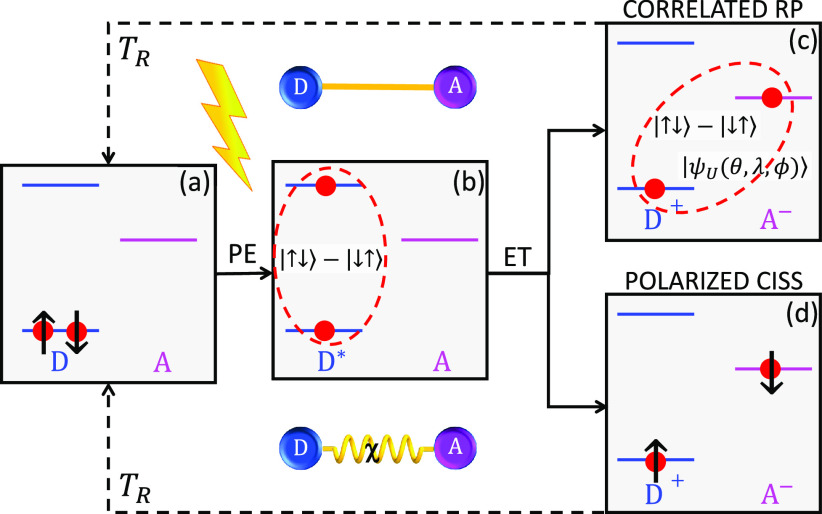
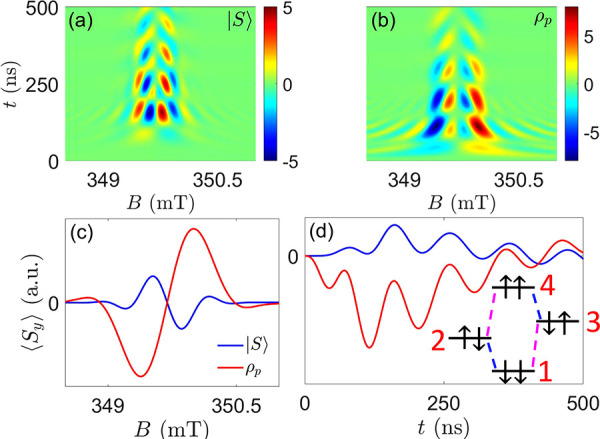
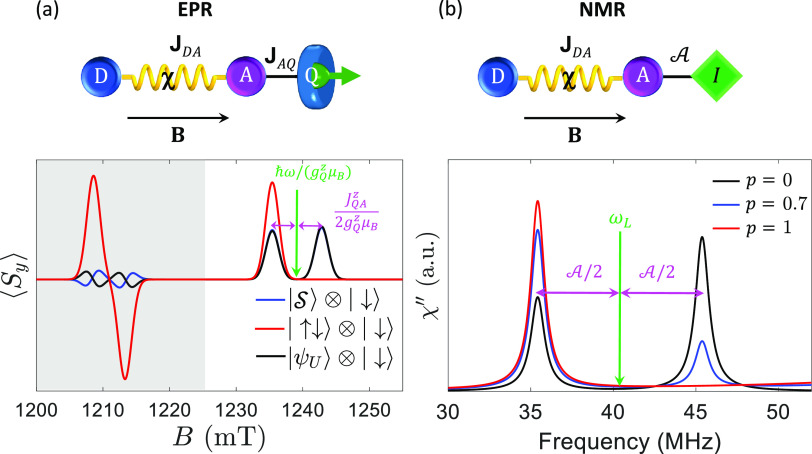
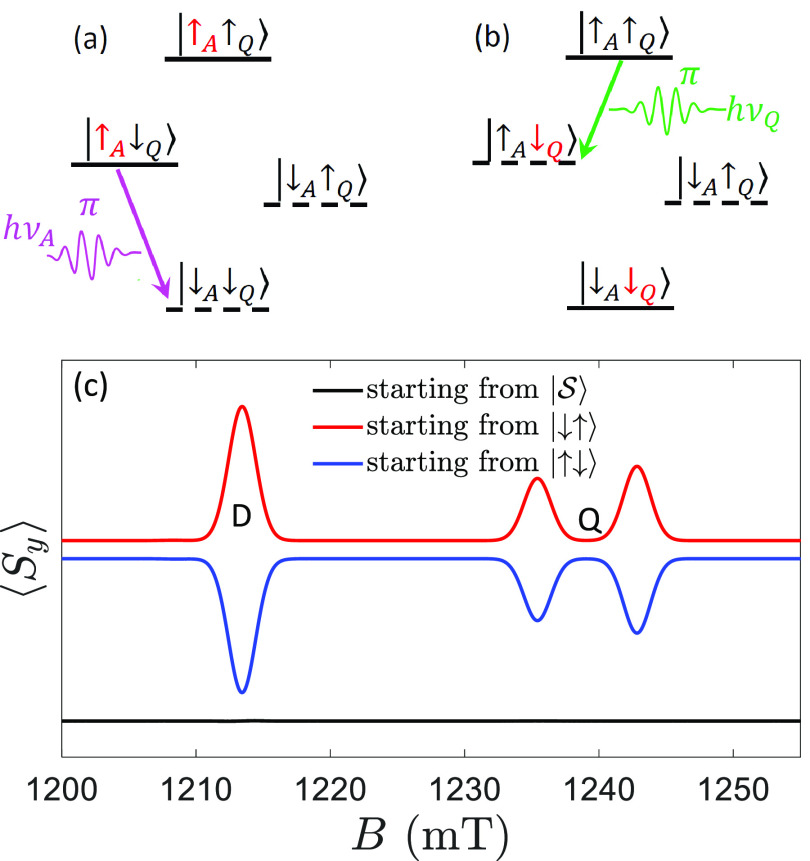
Understanding chiral-induced spin selectivity (CISS), resulting from charge transport through helical systems, has recently inspired many experimental and theoretical efforts but is still the object of intense debate. In order to assess the nature of CISS, we propose to focus on electron-transfer processes occurring at the single-molecule level. We design simple magnetic resonance experiments, exploiting a qubit as a highly sensitive and coherent magnetic sensor, to provide clear signatures of the acceptor polarization. Moreover, we show that information could even be obtained from time-resolved electron paramagnetic resonance experiments on a randomly oriented solution of molecules. The proposed experiments will unveil the role of chiral linkers in electron transfer and could also be exploited for quantum computing applications.
理解手性诱导自旋选择性(CISS),它是通过螺旋系统传输电荷而产生的,最近激发了许多实验和理论研究,但仍存在激烈的争论。为了评估 CISS 的性质,我们建议专注于单分子水平上发生的电子转移过程。我们设计了简单的磁共振实验,利用量子位作为高度灵敏和相干的磁传感器,提供受体极化的明确特征。此外,我们还表明,即使从随机取向的分子溶液的时间分辨电子顺磁共振实验中也可以获得信息。所提出的实验将揭示手性连接物在电子转移中的作用,并且还可用于量子计算应用。