Department of First Clinical Medical College, Zhejiang Chinese Medical University, Hangzhou.
Department of Integrated Chinese and Western Medicine, The First People's Hospital of Jiashan, Jiaxing, Zhejiang, China.
Medicine (Baltimore). 2021 Jul 9;100(27):e26554. doi: 10.1097/MD.0000000000026554.
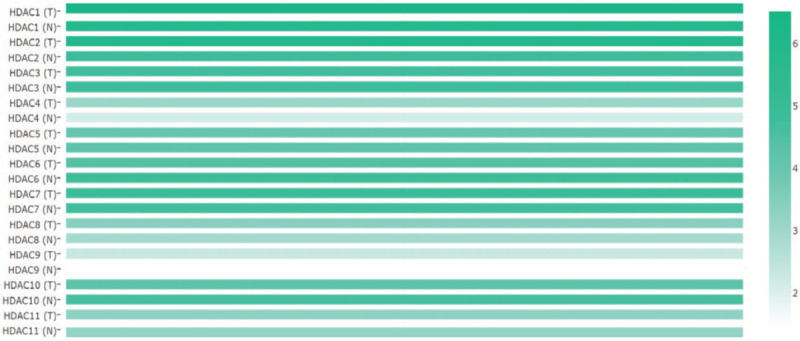
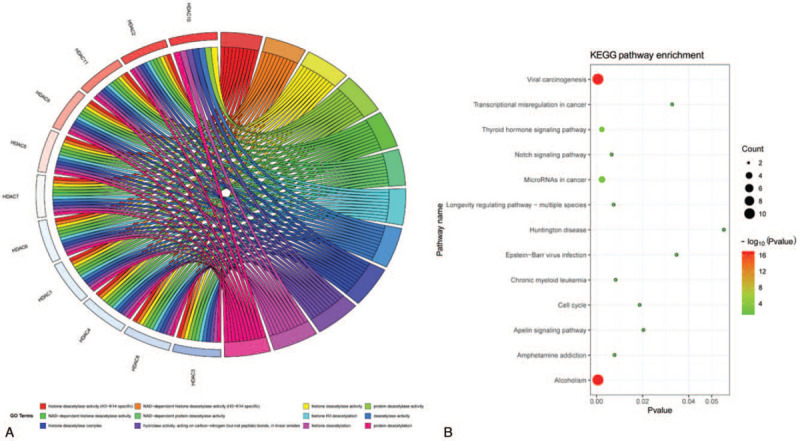
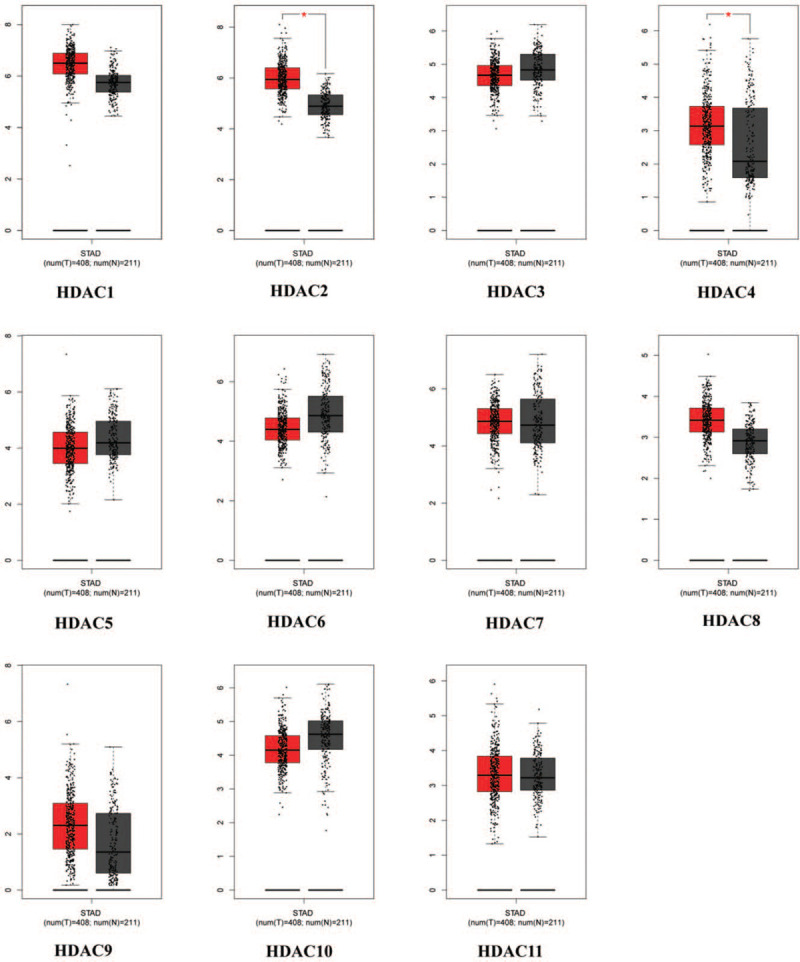
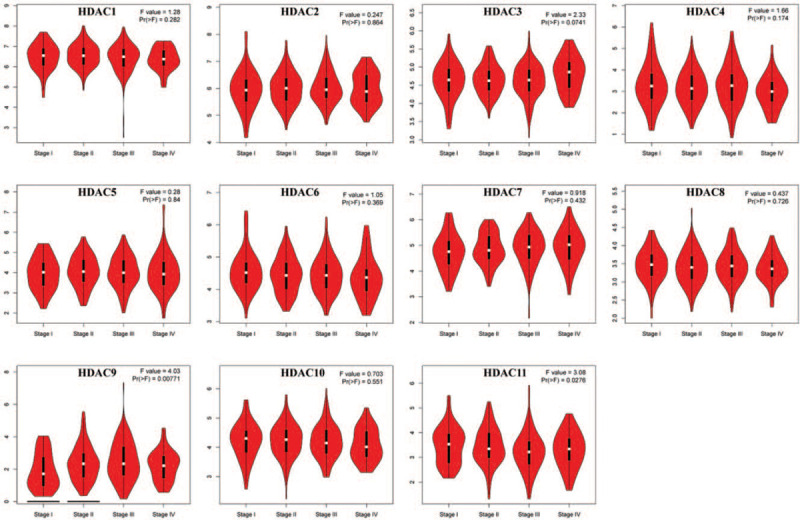
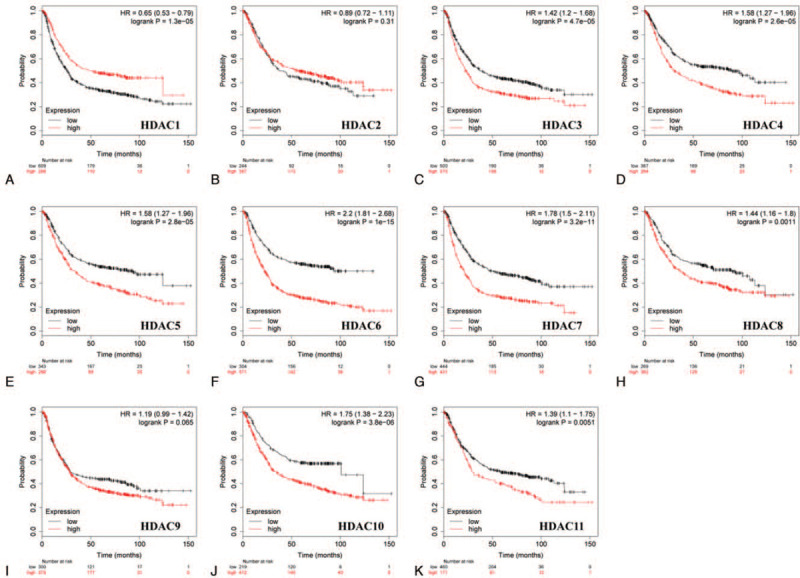
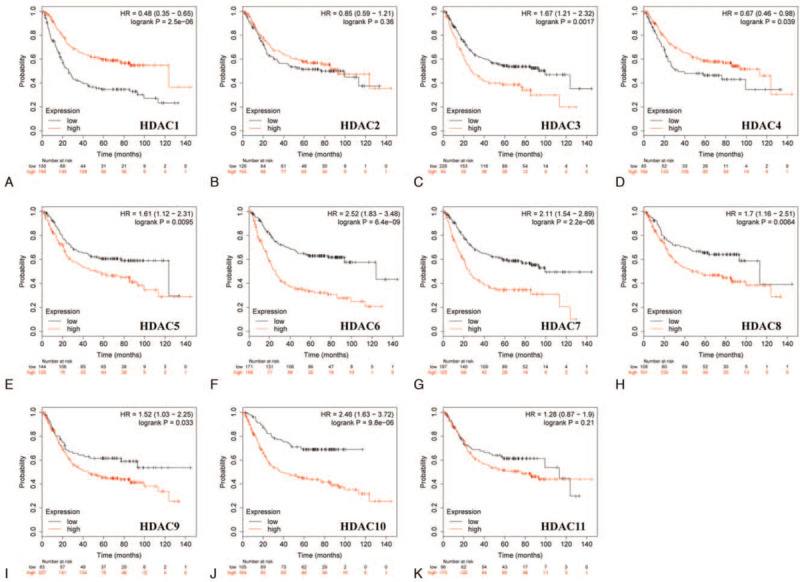
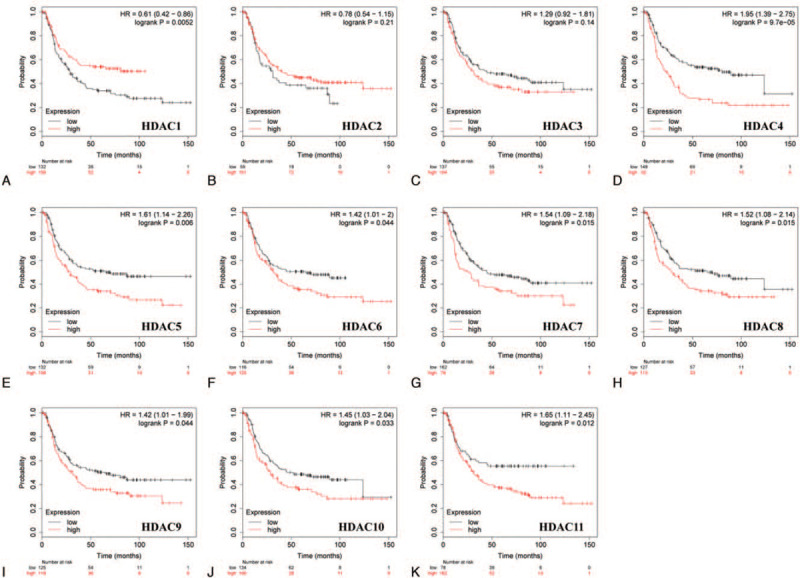
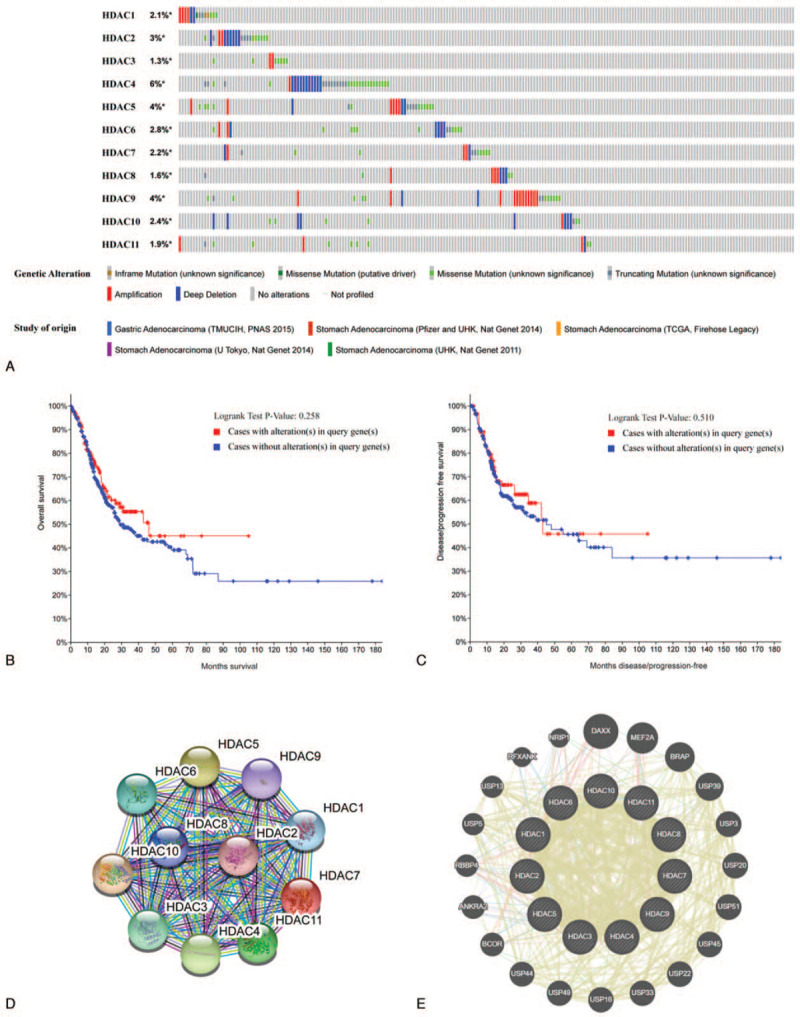
Gastric cancer (GC) is a common cancerous tumor, and is the third leading cause of cancer mortality worldwide. Although comprehensive therapies of GC have been widely used in clinical set ups, advanced gastric cancer carries is characterized by poor prognosis, probably due to lack of effective prognostic biomarkers. Mammalian histone deacetylase family, histone deacetylases (HDACs), play significant roles in initiation and progression of tumors. Aberrant expression of HDACs is reported in many cancer types including gastric cancer, and may serve as candidate biomarkers or therapeutic targets for GC patients.Gene Expression Profiling Interactive Analysis was used to explore mRNA levels of HDACs in GC. Kaplan-Meier plotter was used to determine the prognostic value of HDACs mRNA expression in GC. Genomic profiles including mutations of HDACs were retrieved from cBioPortal webserver. A protein-protein interaction network was constructed using STRING database. GeneMANIA was used to retrieve additional genes or proteins related to HDACs. R software was used for functional enrichment analyses.Analysis of mRNA levels of HDAC1/2/4/8/9 showed that they were upregulated in GC tissues, whereas HDAC6/10 was downregulated in GC tissues. Aberrant expression of HDAC1/3/4/5/6/7/8/10/11 was all correlated with prognosis in GC. In addition, expression levels of HDACs were correlated with different Lauren classifications, and clinical stages, lymph node status, treatment, and human epidermal growth factor receptor 2 status in GC.The findings of this study showed that HDAC members are potential biomarkers for diagnosis or prognosis of gastric cancer. However, further studies should be conducted to validate these findings.
胃癌(GC)是一种常见的癌性肿瘤,是全球癌症死亡的第三大主要原因。尽管 GC 的综合治疗已广泛应用于临床环境中,但晚期 GC 的特征是预后不良,这可能是由于缺乏有效的预后生物标志物。哺乳动物组蛋白去乙酰化酶家族,组蛋白去乙酰化酶(HDACs),在肿瘤的发生和发展中发挥着重要作用。在包括胃癌在内的许多癌症类型中,都报道了 HDACs 的异常表达,并且可能作为 GC 患者的候选生物标志物或治疗靶点。基因表达谱交互分析用于探索 GC 中 HDACs 的 mRNA 水平。Kaplan-Meier 绘图器用于确定 HDACs mRNA 表达在 GC 中的预后价值。从 cBioPortal 网络服务器检索包括 HDACs 突变在内的基因组谱。使用 STRING 数据库构建蛋白质-蛋白质相互作用网络。使用 GeneMANIA 检索与 HDACs 相关的其他基因或蛋白质。R 软件用于功能富集分析。分析 HDAC1/2/4/8/9 的 mRNA 水平表明,它们在 GC 组织中上调,而在 GC 组织中下调 HDAC6/10。HDAC1/3/4/5/6/7/8/10/11 的异常表达在 GC 中均与预后相关。此外,HDACs 的表达水平与不同的 Lauren 分类、GC 的临床分期、淋巴结状态、治疗和人表皮生长因子受体 2 状态相关。本研究的结果表明,HDAC 成员是诊断或预测胃癌的潜在生物标志物。然而,需要进一步的研究来验证这些发现。