Caron Marjolein M J, Eveque Maxime, Cillero-Pastor Berta, Heeren Ron M A, Housmans Bas, Derks Kasper, Cremers Andy, Peffers Mandy J, van Rhijn Lodewijk W, van den Akker Guus, Welting Tim J M
Laboratory for Experimental Orthopedics, Department of Orthopedic Surgery, CAPHRI Care and Public Health Research Institute, Maastricht University Medical Center, Maastricht, Netherlands.
Maastricht MultiModal Molecular Imaging Institute (M4I), Division of Imaging Mass Spectrometry, Maastricht University Medical Center, Maastricht, Netherlands.
Front Cell Dev Biol. 2021 Jun 21;9:686096. doi: 10.3389/fcell.2021.686096. eCollection 2021.
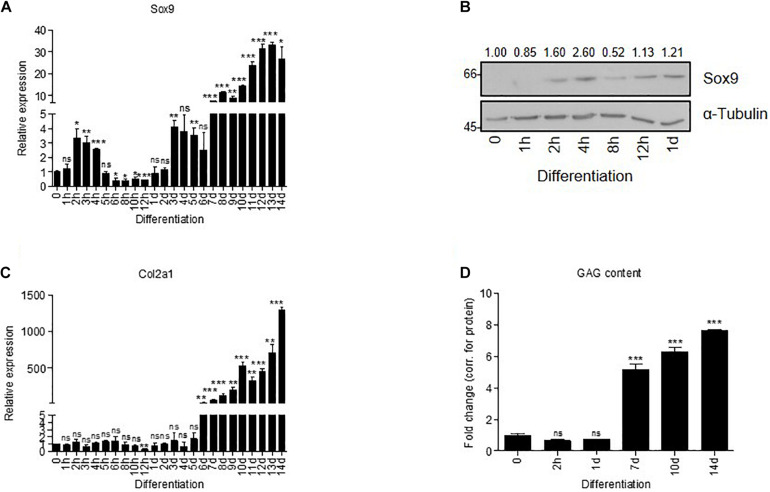
In addition to the well-known cartilage extracellular matrix-related expression of Sox9, we demonstrated that chondrogenic differentiation of progenitor cells is driven by a sharply defined bi-phasic expression of Sox9: an immediate early and a late (extracellular matrix associated) phase expression. In this study, we aimed to determine what biological processes are driven by Sox9 during this early phase of chondrogenic differentiation.
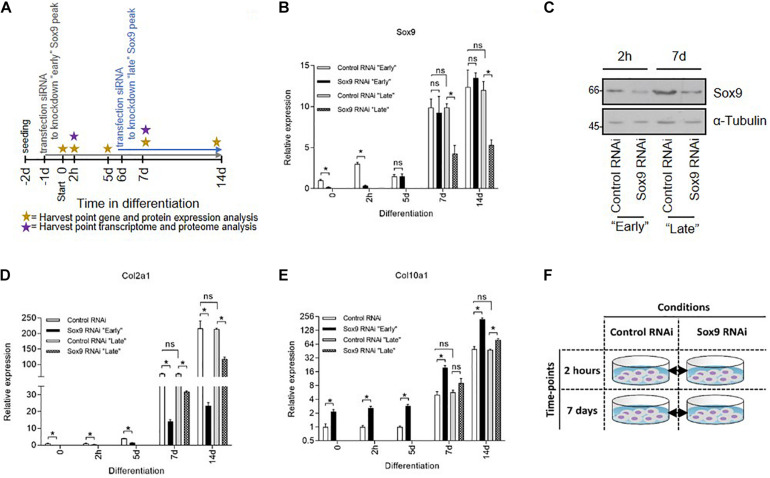
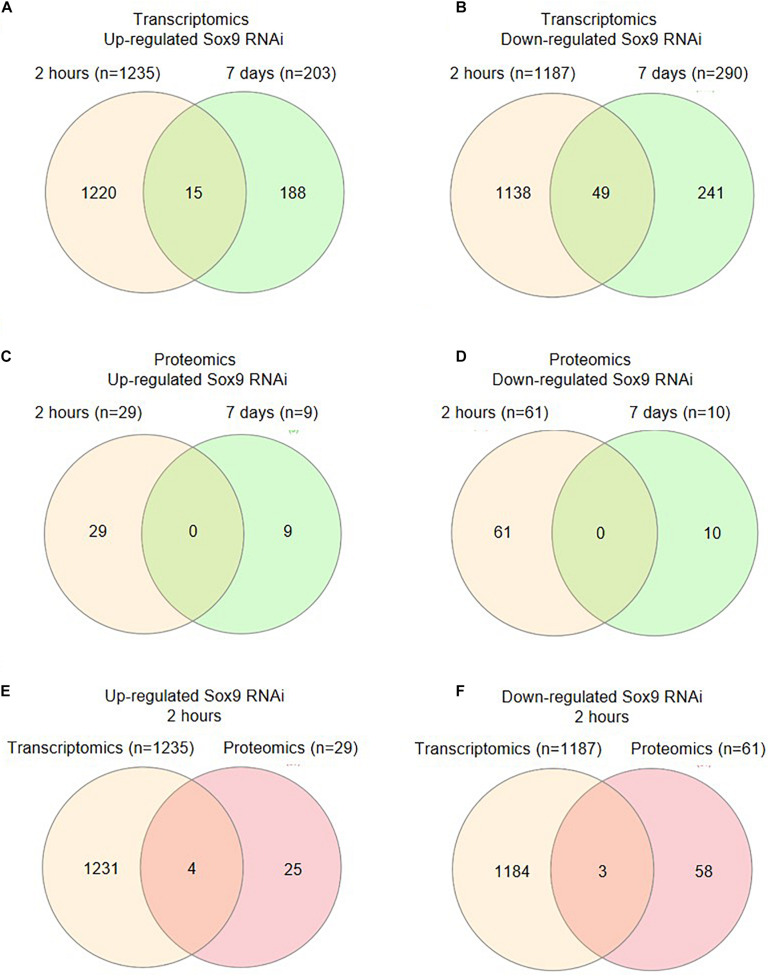
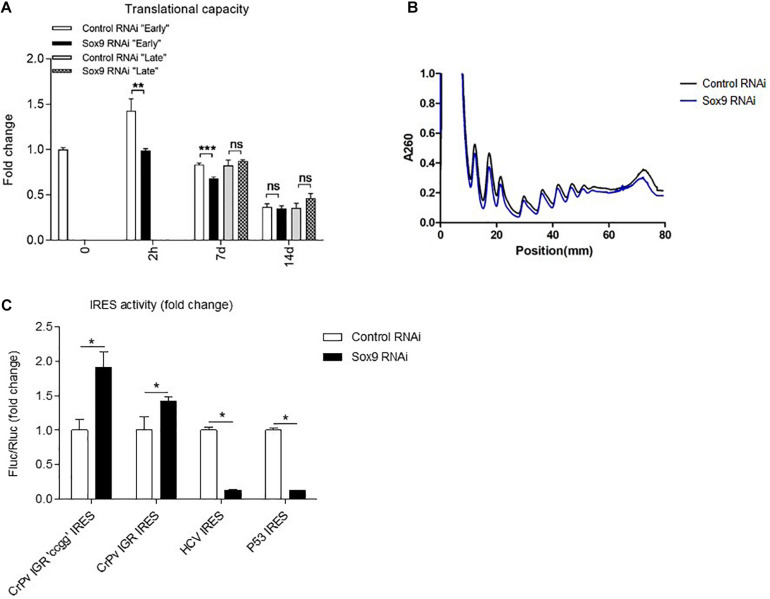
Sox9 expression in ATDC5 cells was knocked down by siRNA transfection at the day before chondrogenic differentiation or at day 6 of differentiation. Samples were harvested at 2 h and 7 days of differentiation. The transcriptomes (RNA-seq approach) and proteomes (Label-free proteomics approach) were compared using pathway and network analyses. Total protein translational capacity was evaluated with the SuNSET assay, active ribosomes were evaluated with polysome profiling, and ribosome modus was evaluated with bicistronic reporter assays.
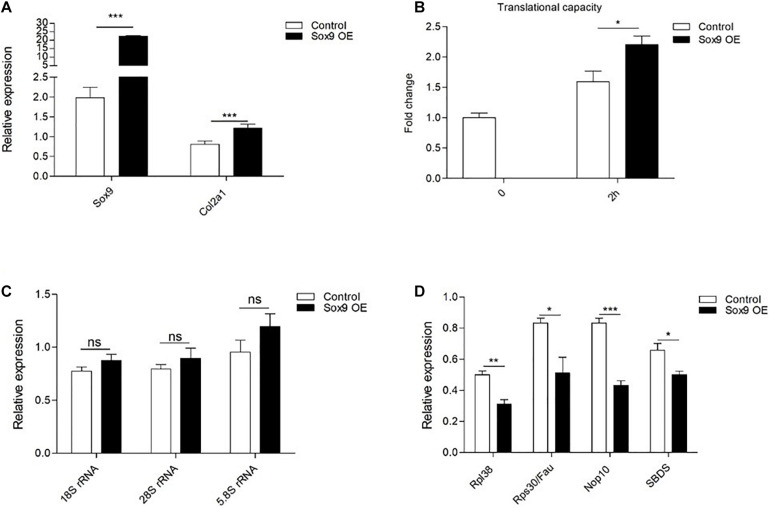
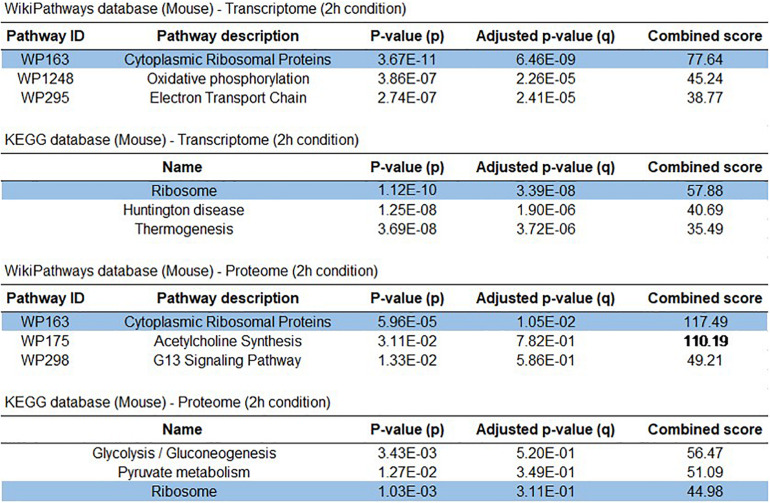
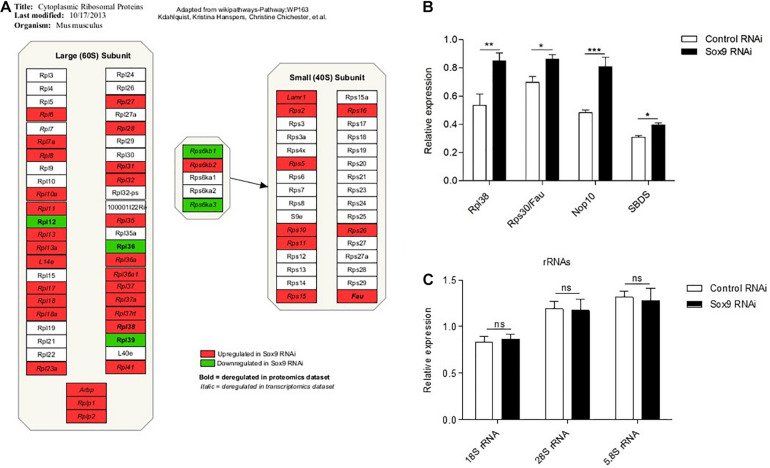
Early Sox9 knockdown severely inhibited chondrogenic differentiation weeks later. Sox9 expression during the immediate early phase of ATDC5 chondrogenic differentiation regulated the expression of ribosome biogenesis factors and ribosomal protein subunits. This was accompanied by decreased translational capacity following Sox9 knockdown, and this correlated to lower amounts of active mono- and polysomes. Moreover, cap- versus IRES-mediated translation was altered by Sox9 knockdown. Sox9 overexpression was able to induce reciprocal effects to the Sox9 knockdown.
Here, we identified an essential new function for Sox9 during early chondrogenic differentiation. A role for Sox9 in regulation of ribosome amount, activity, and/or composition may be crucial in preparation for the demanding proliferative phase and subsequent cartilage extracellular matrix production of chondroprogenitors in the growth plate .
除了众所周知的与软骨细胞外基质相关的Sox9表达外,我们还证明了祖细胞的软骨形成分化是由Sox9明确的双相表达驱动的:即立即早期和晚期(与细胞外基质相关)阶段表达。在本研究中,我们旨在确定在软骨形成分化的早期阶段,Sox9驱动哪些生物学过程。
在软骨形成分化前一天或分化第6天,通过siRNA转染敲低ATDC5细胞中的Sox9表达。在分化的2小时和7天收获样本。使用通路和网络分析比较转录组(RNA测序方法)和蛋白质组(无标记蛋白质组学方法)。用SuNSET试验评估总蛋白翻译能力,用多核糖体谱分析评估活性核糖体,用双顺反子报告试验评估核糖体模式。
早期敲低Sox9在数周后严重抑制软骨形成分化。ATDC5软骨形成分化立即早期阶段的Sox9表达调节核糖体生物发生因子和核糖体蛋白亚基的表达。这伴随着Sox9敲低后翻译能力的下降,这与活性单核糖体和多核糖体数量的减少相关。此外,Sox9敲低改变了帽依赖性与内部核糖体进入位点(IRES)介导的翻译。Sox9过表达能够诱导与Sox9敲低相反的效应。
在此,我们确定了Sox9在早期软骨形成分化中的一项重要新功能。Sox9在调节核糖体数量、活性和/或组成方面的作用,对于生长板中软骨祖细胞为要求苛刻的增殖阶段及随后的软骨细胞外基质产生做准备可能至关重要。