Department of Cardiology and Cardiovascular Interventions, University Hospital, Krakow, Poland.
Collegium Medicum, Jan Kochanowski University, Kielce, Poland.
Cardiol J. 2023;30(5):734-746. doi: 10.5603/CJ.a2021.0074. Epub 2021 Jul 9.
Based on the clinical outcomes of patients with ST-segment elevation myocardial infarction (STEMI) and non-ST-segment elevation myocardial infarction (NSTEMI), treated with primary percutaneous coronary intervention (pPCI), this study intended to assess mortality and major adverse cardiac and cerebrovascular event (MACCE) rates according to duration of pain-to-balloon (PTB) time and type of MI.
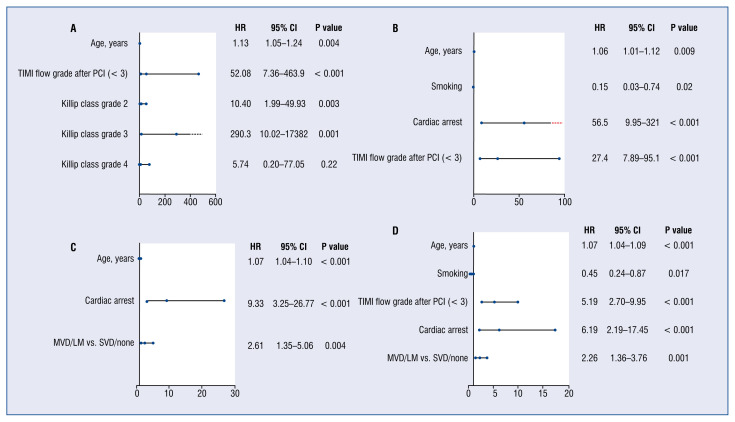
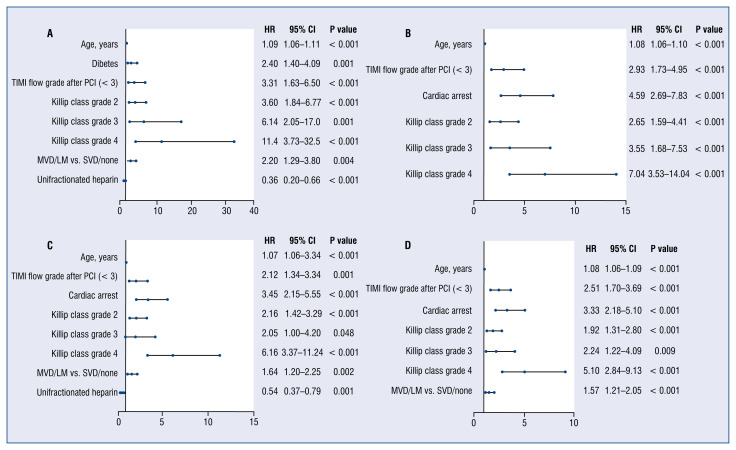
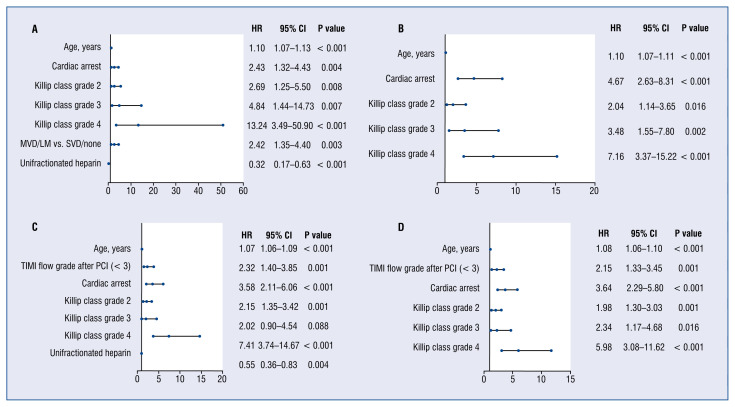
This is a retrospective cohort study based on the prospectively collected ORPKI registry which covers PCIs performed in Poland chosen between January 2014 and December 2017. Under assessment were 1,994 STEMI and 923 NSTEMI patients. Study endpoints included mortality and MACCE rates (in-hospital, 30-day, 12- and 36-month). Predictors of all-cause mortality in the overall group, STEMI and NSTEMI were assessed by multivariable analysis.
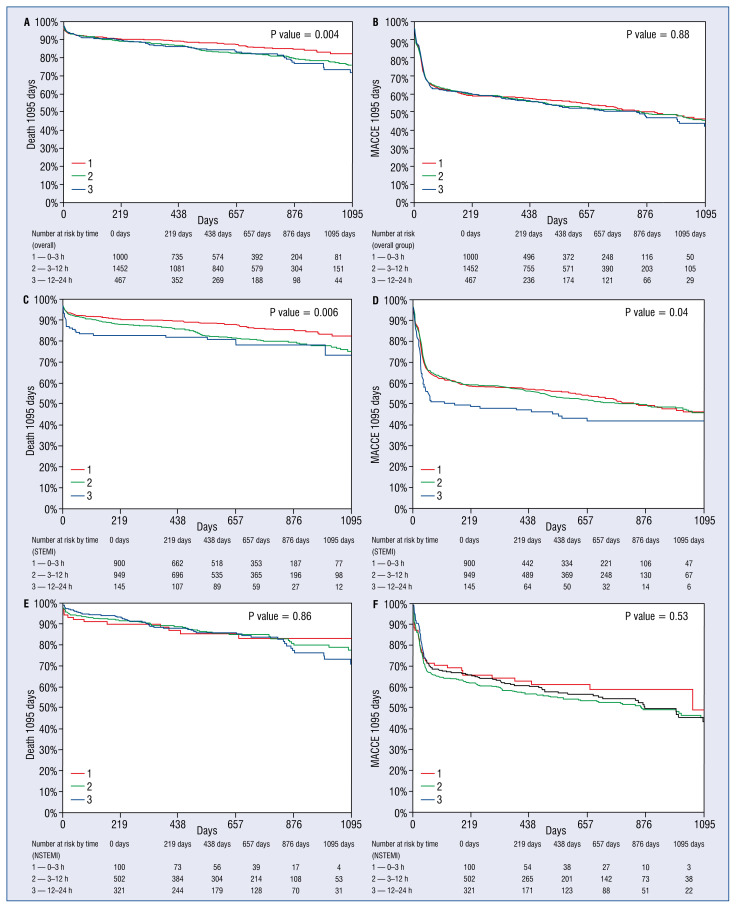
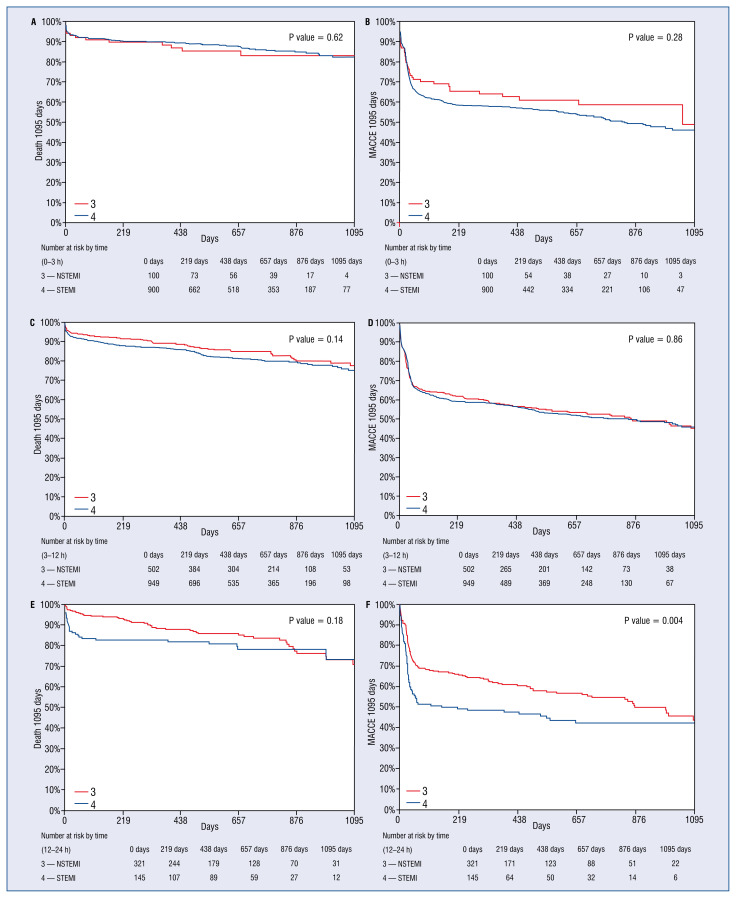
Kaplan-Meier survival curve analysis did not reveal significant differences between the STEMI and NSTEMI group for all-cause mortality or MACCE at the 36-month follow-up. While in the long PTB time group, MACCE rate was significantly greater in STEMI patients when compared to NSTEMI (p = 0.004). Among STEMI patients, the short, medium and long PTB time groups differed significantly in the rate of all-cause mortality (p = 0.006) and MACCE (p = 0.04) at 1,095 days of follow-up, which were the greatest in the long PTB time group.
Before considering the length of PTB time, there were no statistically significant differences in mortality or MACCE frequency between the STEMI and NSTEMI group at 36-month follow-up. Longer PTB times are related to significantly greater mortality at the 36-month follow-up in the STEMI, but not in the NSTEMI group.
本研究旨在根据初次经皮冠状动脉介入治疗(pPCI)的 ST 段抬高型心肌梗死(STEMI)和非 ST 段抬高型心肌梗死(NSTEMI)患者的临床转归,评估根据胸痛至球囊扩张(PTB)时间和心肌梗死类型的不同,死亡率和主要心脏不良和脑血管事件(MACCE)发生率。
这是一项回顾性队列研究,基于前瞻性收集的 ORPKI 注册数据库,涵盖了 2014 年 1 月至 2017 年 12 月期间在波兰进行的 PCI。评估了 1994 例 STEMI 和 923 例 NSTEMI 患者。研究终点包括死亡率和 MACCE 发生率(住院期间、30 天、12 个月和 36 个月)。通过多变量分析评估了全因死亡率的预测因素,在总体组、STEMI 和 NSTEMI 中。
Kaplan-Meier 生存曲线分析显示,36 个月随访时,STEMI 组和 NSTEMI 组在全因死亡率或 MACCE 方面无显著差异。而在 PTB 时间较长的组中,STEMI 患者的 MACCE 发生率明显高于 NSTEMI(p = 0.004)。在 STEMI 患者中,短、中、长 PTB 时间组在全因死亡率(p = 0.006)和 MACCE(p = 0.04)方面在 1095 天随访时存在显著差异,其中 PTB 时间最长的组最大。
在考虑 PTB 时间长短之前,36 个月随访时 STEMI 和 NSTEMI 组之间的死亡率或 MACCE 频率无统计学差异。较长的 PTB 时间与 STEMI 患者在 36 个月随访时的死亡率显著增加相关,但在 NSTEMI 患者中则不然。