Department of Hepatobiliary & Pancreatic Surgery, Zhongnan Hospital of Wuhan University, Wuhan, 430062, Hubei, People's Republic of China.
Clinical Medicine Research Center for Minimally Invasive Procedure of Hepatobiliary & Pancreatic Diseases of Hubei Province, Wuhan, 430062, Hubei, People's Republic of China.
Cell Death Dis. 2021 Jul 9;12(7):691. doi: 10.1038/s41419-021-03973-5.
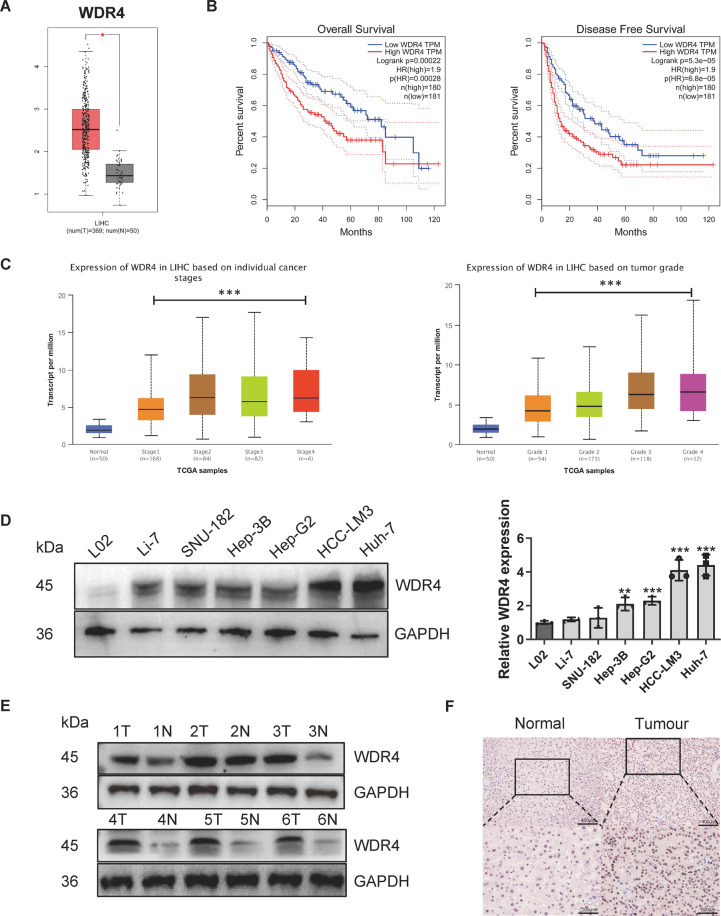
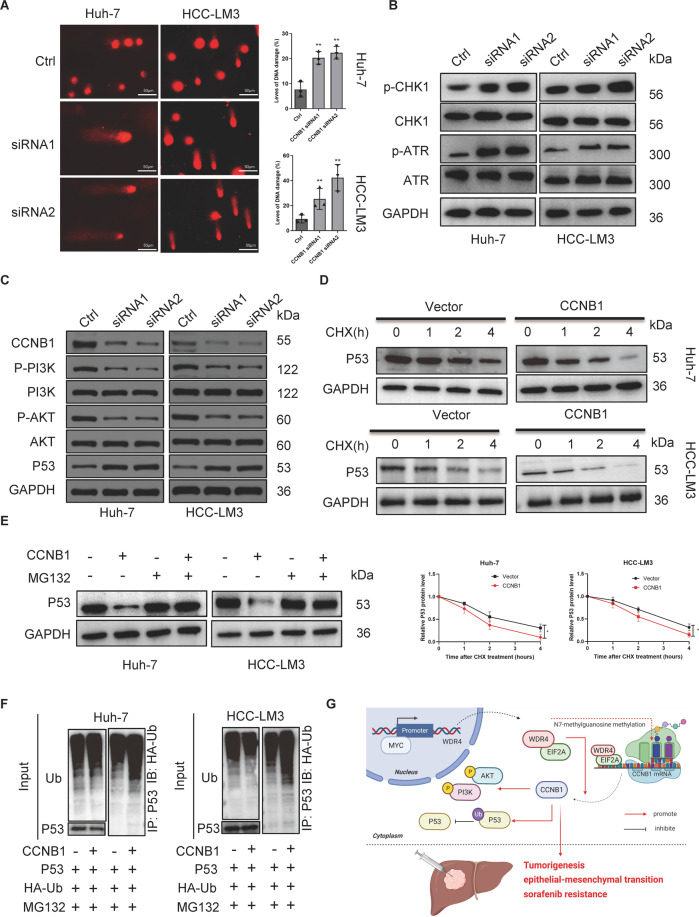
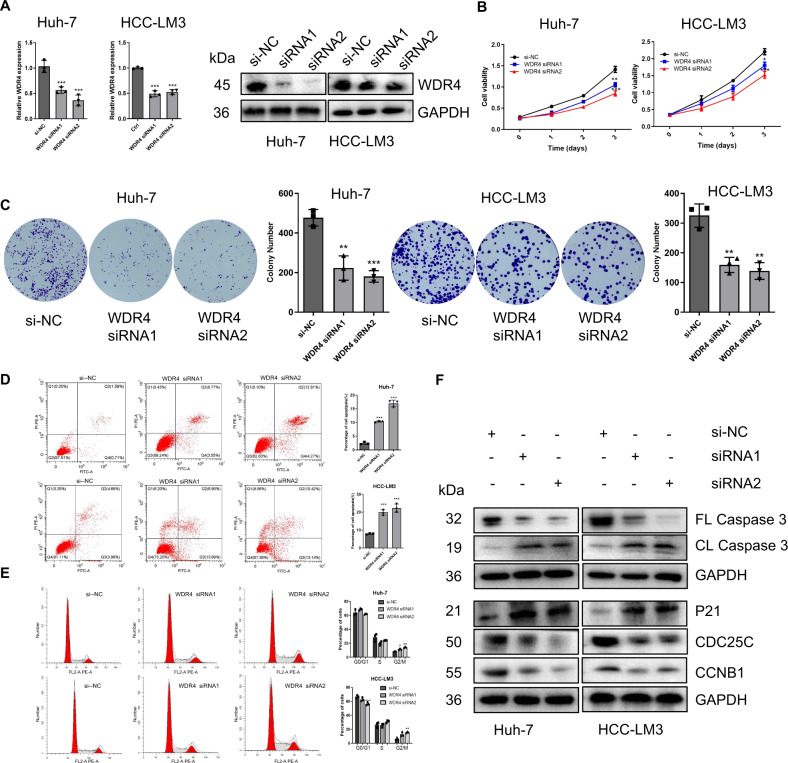
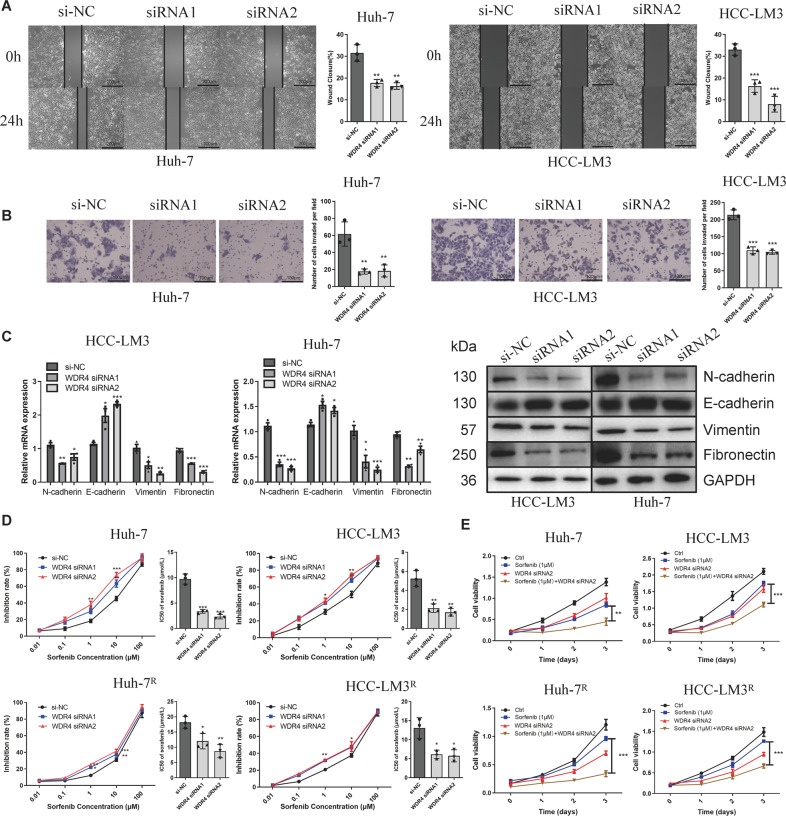
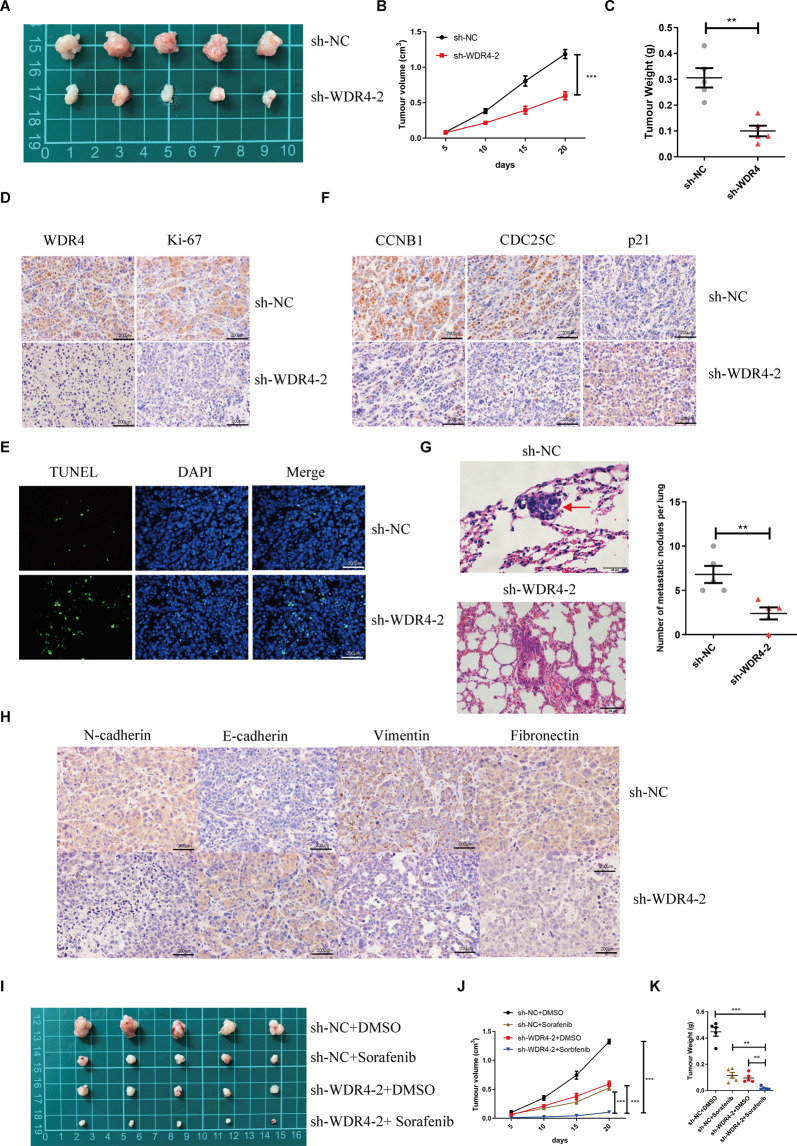
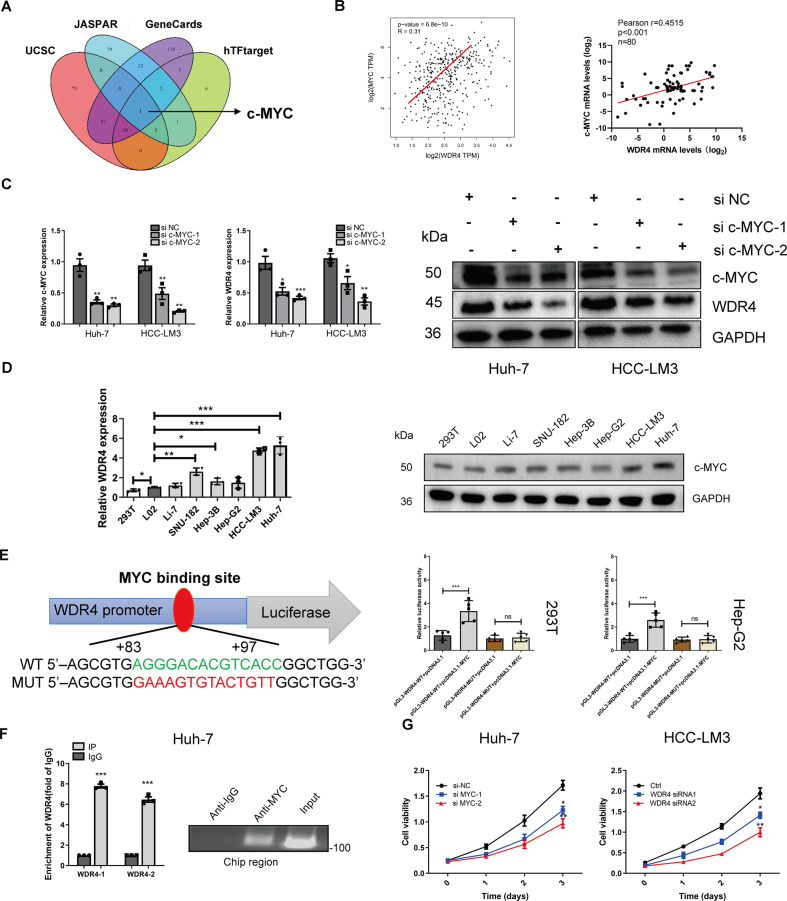
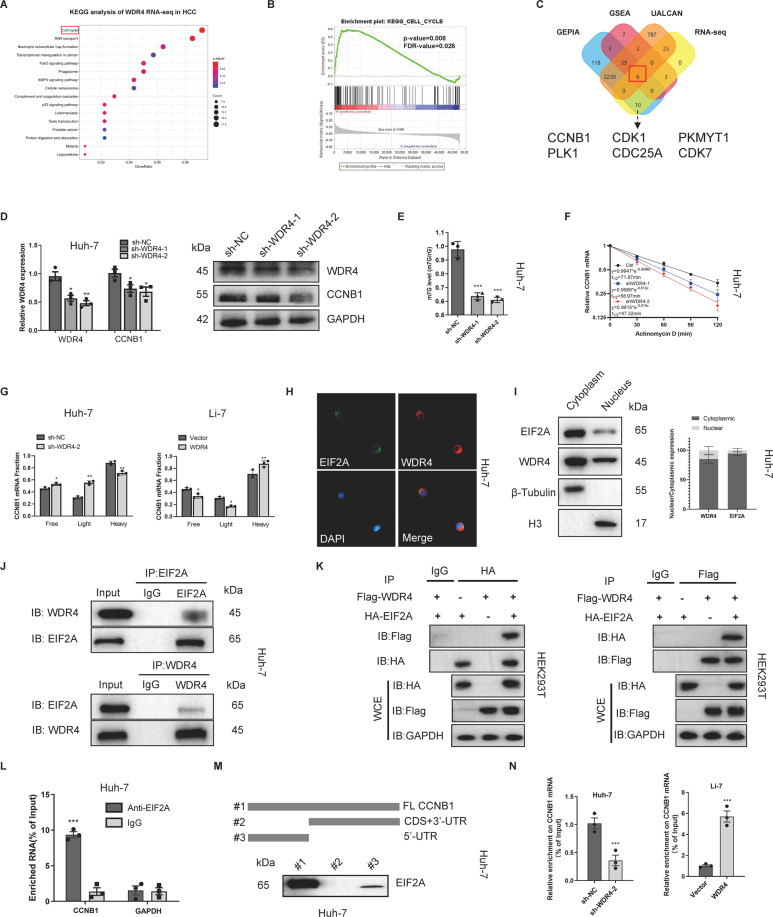
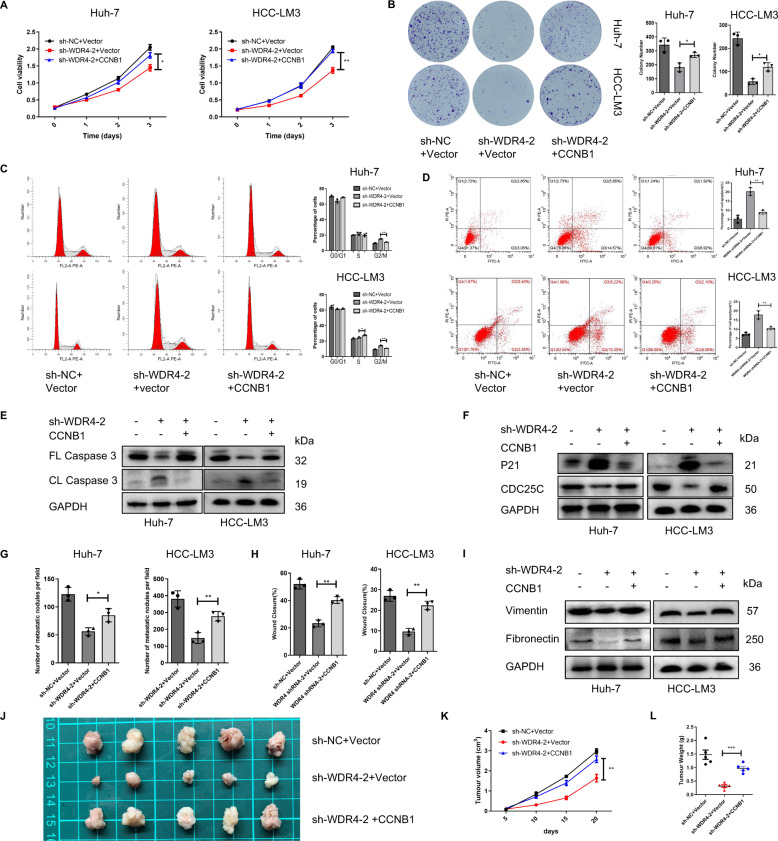
Hepatocellular carcinoma (HCC) is one of the most common malignancies worldwide. However, there still remains a lack of effective diagnostic and therapeutic targets for this disease. Increasing evidence demonstrates that RNA modifications play an important role in the progression of HCC, but the role of the N7-methylguanosine (m7G) methylation modification in HCC has not been properly evaluated. Thus, the goal of the present study was to investigate the function and mechanism of the m7G methyltransferase WD repeat domain 4 (WDR4) in HCC as well as its clinical relevance and potential value. We first verified the high expression of WDR4 in HCC and observed that upregulated WDR4 expression increased the m7G methylation level in HCC. WDR4 promoted HCC cell proliferation by inducing the G2/M cell cycle transition and inhibiting apoptosis in addition to enhancing metastasis and sorafenib resistance through epithelial-mesenchymal transition (EMT). Furthermore, we observed that c-MYC (MYC) can activate WDR4 transcription and that WDR4 promotes CCNB1 mRNA stability and translation to enhance HCC progression. Mechanistically, we determined that WDR4 enhances CCNB1 translation by promoting the binding of EIF2A to CCNB1 mRNA. Furthermore, CCNB1 was observed to promote PI3K and AKT phosphorylation in HCC and reduce P53 protein expression by promoting P53 ubiquitination. In summary, we elucidated the MYC/WDR4/CCNB1 signalling pathway and its impact on PI3K/AKT and P53. Furthermore, the result showed that the m7G methyltransferase WDR4 is a tumour promoter in the development and progression of HCC and may act as a candidate therapeutic target in HCC treatment.
肝细胞癌(HCC)是全球最常见的恶性肿瘤之一。然而,对于这种疾病仍然缺乏有效的诊断和治疗靶点。越来越多的证据表明,RNA 修饰在 HCC 的进展中发挥着重要作用,但 N7-甲基鸟苷(m7G)甲基化修饰在 HCC 中的作用尚未得到充分评估。因此,本研究旨在探讨 m7G 甲基转移酶 WD 重复域蛋白 4(WDR4)在 HCC 中的功能和作用机制及其临床意义和潜在价值。我们首先验证了 WDR4 在 HCC 中的高表达,并观察到上调的 WDR4 表达增加了 HCC 中的 m7G 甲基化水平。WDR4 通过诱导 G2/M 细胞周期过渡和抑制凋亡,以及通过上皮-间充质转化(EMT)增强转移和索拉非尼耐药性,促进 HCC 细胞增殖。此外,我们观察到 c-MYC(MYC)可以激活 WDR4 的转录,WDR4 促进 CCNB1 mRNA 的稳定性和翻译,从而增强 HCC 的进展。从机制上讲,我们确定 WDR4 通过促进 EIF2A 与 CCNB1 mRNA 的结合来增强 CCNB1 翻译。此外,观察到 CCNB1 通过促进 P53 泛素化来促进 HCC 中 PI3K 和 AKT 的磷酸化并降低 P53 蛋白表达。总之,我们阐明了 MYC/WDR4/CCNB1 信号通路及其对 PI3K/AKT 和 P53 的影响。此外,结果表明 m7G 甲基转移酶 WDR4 是 HCC 发生和发展中的肿瘤促进剂,可能作为 HCC 治疗的候选治疗靶点。