Center for Translational Immunology (CTI), University Medical Center Utrecht, Utrecht, Netherlands.
Department of Trauma Surgery, University Medical Center Utrecht, Utrecht, Netherlands.
Front Immunol. 2021 Jun 24;12:674079. doi: 10.3389/fimmu.2021.674079. eCollection 2021.
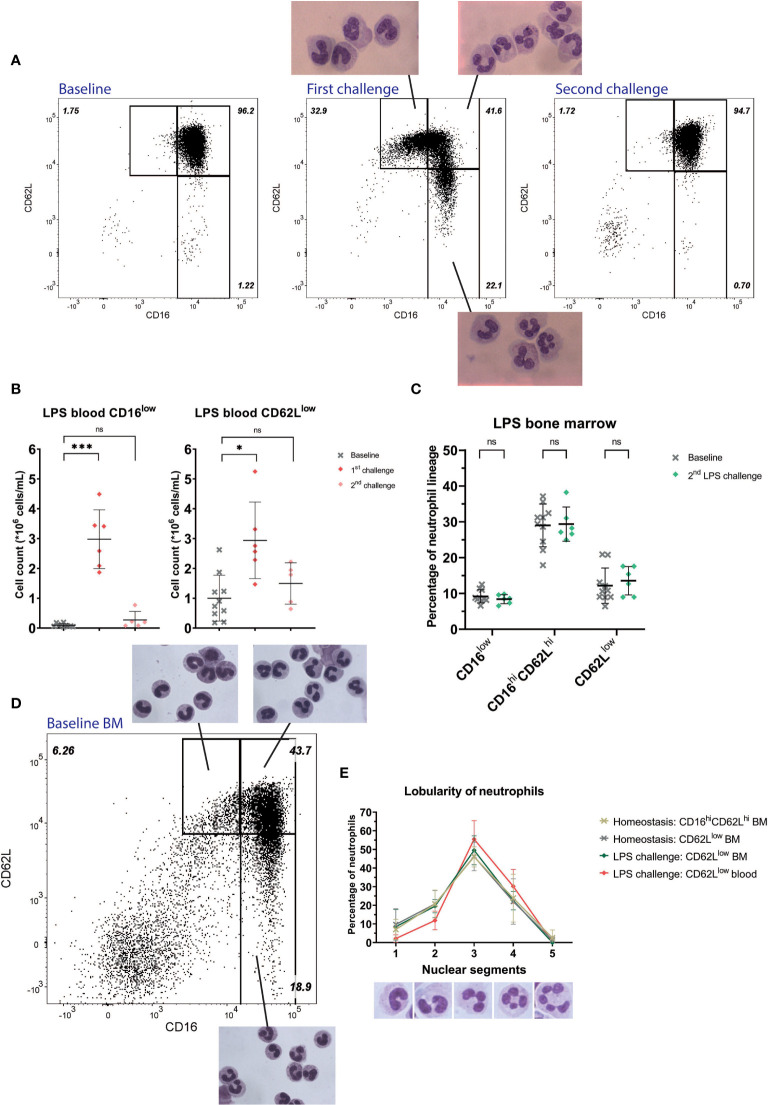
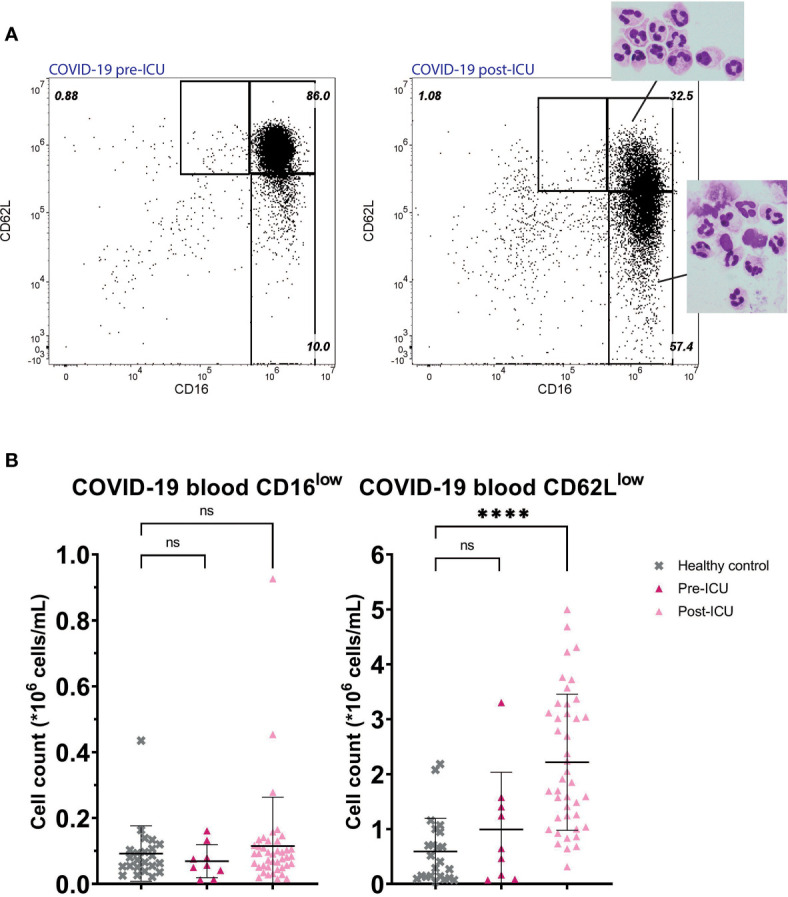
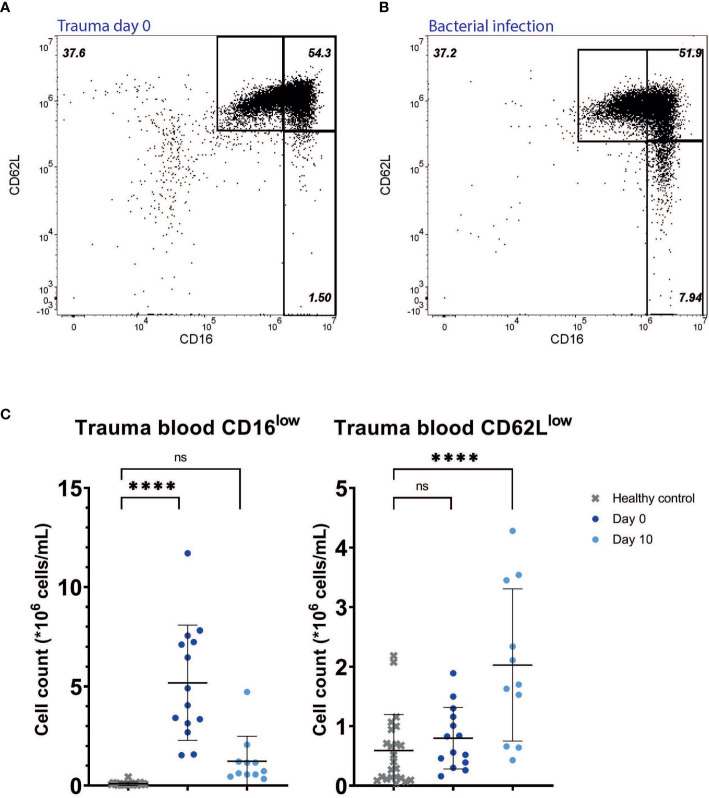
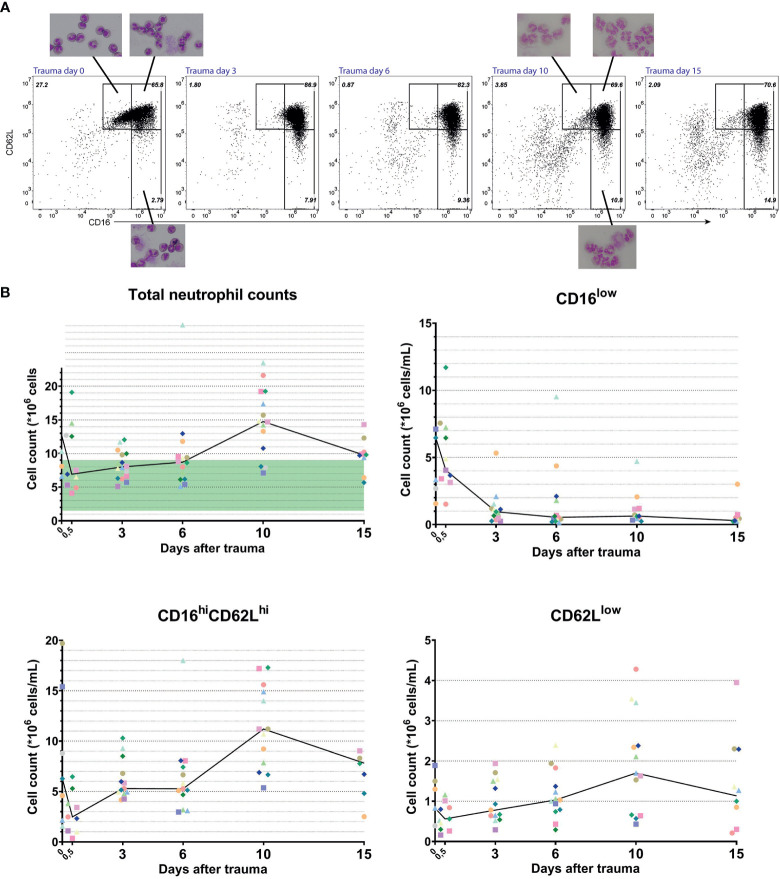
At homeostasis the vast majority of neutrophils in the circulation expresses CD16 and CD62L within a narrow expression range, but this quickly changes in disease. Little is known regarding the changes in kinetics of neutrophils phenotypes in inflammatory conditions. During acute inflammation more heterogeneity was found, characterized by an increase in CD16 banded neutrophils. These cells were probably released from the bone marrow (left shift). Acute inflammation induced by human experimental endotoxemia (LPS model) was additionally accompanied by an immediate increase in a CD62L neutrophil population, which was not as explicit after injury/trauma induced acute inflammation. The situation in sub-acute inflammation was more complex. CD62L neutrophils appeared in the peripheral blood several days (>3 days) after trauma with a peak after 10 days. A similar situation was found in the blood of COVID-19 patients returning from the ICU. Sorted CD16 and CD62L subsets from trauma and COVID-19 patients displayed the same nuclear characteristics as found after experimental endotoxemia. In diseases associated with chronic inflammation (stable COPD and treatment naive HIV) no increases in CD16 or CD62L neutrophils were found in the peripheral blood. All neutrophil subsets were present in the bone marrow during homeostasis. After LPS rechallenge, these subsets failed to appear in the circulation, but continued to be present in the bone marrow, suggesting the absence of recruitment signals. Because the subsets were reported to have different functionalities, these results on the kinetics of neutrophil subsets in a range of inflammatory conditions contribute to our understanding on the role of neutrophils in health and disease.
在体内平衡状态下,循环中的绝大多数中性粒细胞在狭窄的表达范围内表达 CD16 和 CD62L,但在疾病状态下,这种情况很快就会发生变化。关于炎症状态下中性粒细胞表型动力学变化的知识还很少。在急性炎症中,发现了更多的异质性,表现为 CD16 带型中性粒细胞的增加。这些细胞可能是从骨髓中释放出来的(左移)。由人类实验性内毒素血症(LPS 模型)引起的急性炎症还伴随着 CD62L 中性粒细胞群体的立即增加,而在损伤/创伤引起的急性炎症后,这种情况并不明显。亚急性炎症的情况更为复杂。创伤后数天(>3 天)外周血中出现 CD62L 中性粒细胞,第 10 天达到峰值。COVID-19 患者从 ICU 回来后的血液中也出现了类似的情况。从创伤和 COVID-19 患者中分离出的 CD16 和 CD62L 亚群显示出与实验性内毒素血症后相同的核特征。在与慢性炎症相关的疾病(稳定的 COPD 和未经治疗的 HIV)中,外周血中未发现 CD16 或 CD62L 中性粒细胞增加。在体内平衡状态下,所有中性粒细胞亚群都存在于骨髓中。在 LPS 再挑战后,这些亚群未能出现在循环中,但继续存在于骨髓中,表明缺乏招募信号。由于这些亚群被报道具有不同的功能,这些关于一系列炎症条件下中性粒细胞亚群动力学的结果有助于我们理解中性粒细胞在健康和疾病中的作用。