Wang Zhaohai, Wang Qiang, Wei Lingxia, Shi Yan, Li Ting, Hu KeKe, Liu Shuai, Zhong Hua, Liao Jianglin, Li Yangsheng, Zhang Hongyu, Huang Yingjin
Key Laboratory of Crop Physiology, Ecology and Genetic Breeding, Jiangxi Agricultural University, Ministry of Education of the People's Republic of China, Nanchang, China.
Key Laboratory of Agriculture Responding to Climate Change, Jiangxi Agricultural University, Nanchang, China.
Front Plant Sci. 2021 Jun 24;12:685102. doi: 10.3389/fpls.2021.685102. eCollection 2021.
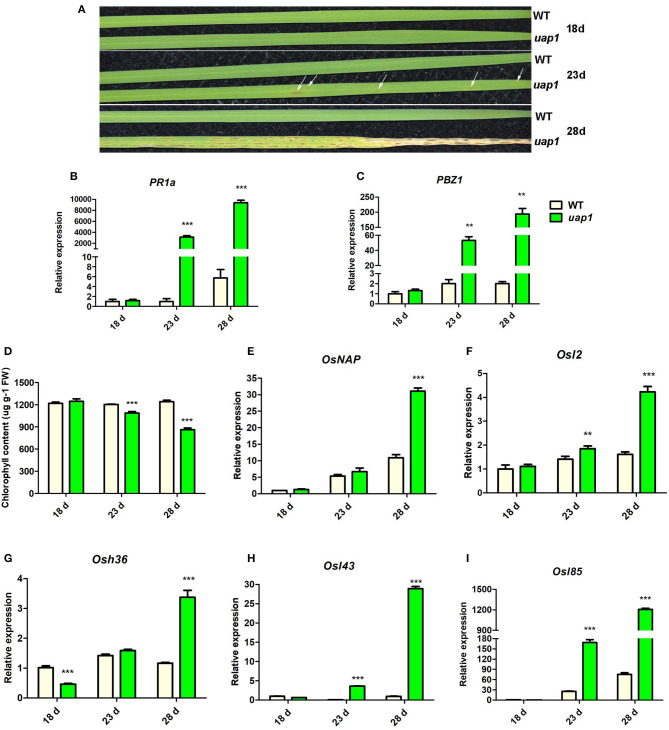
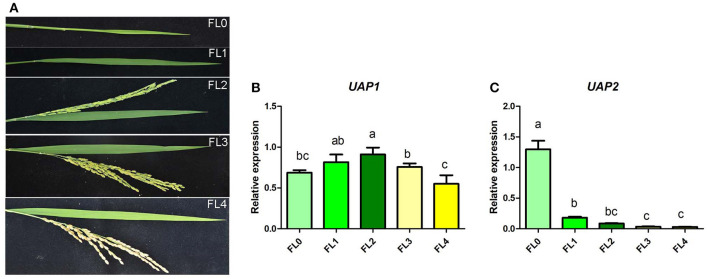
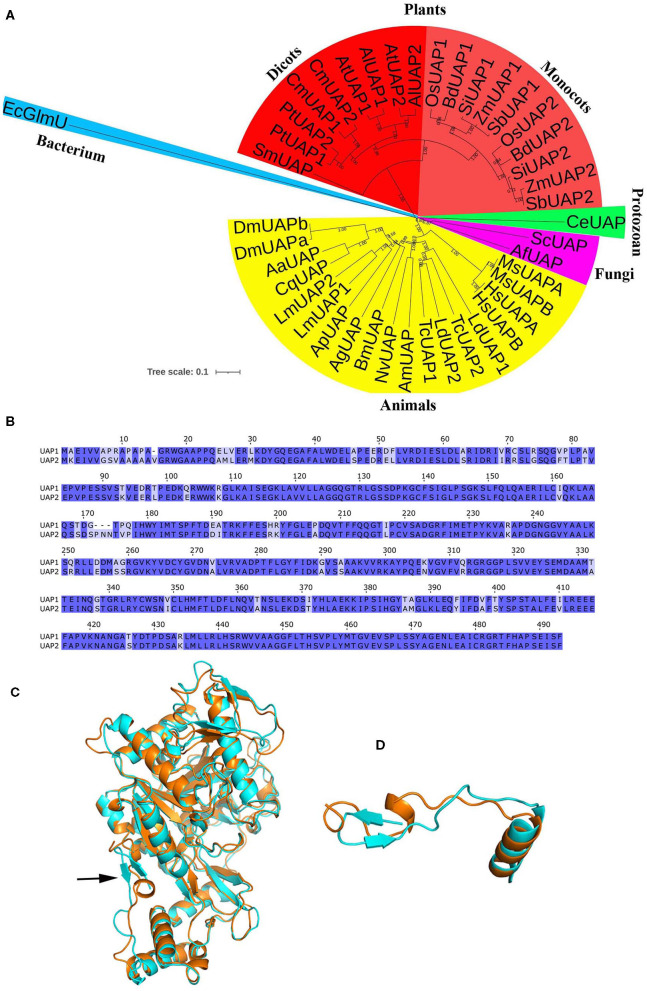
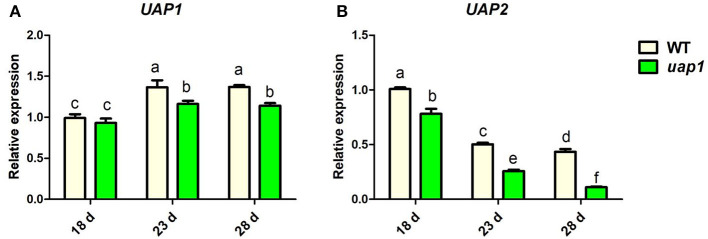
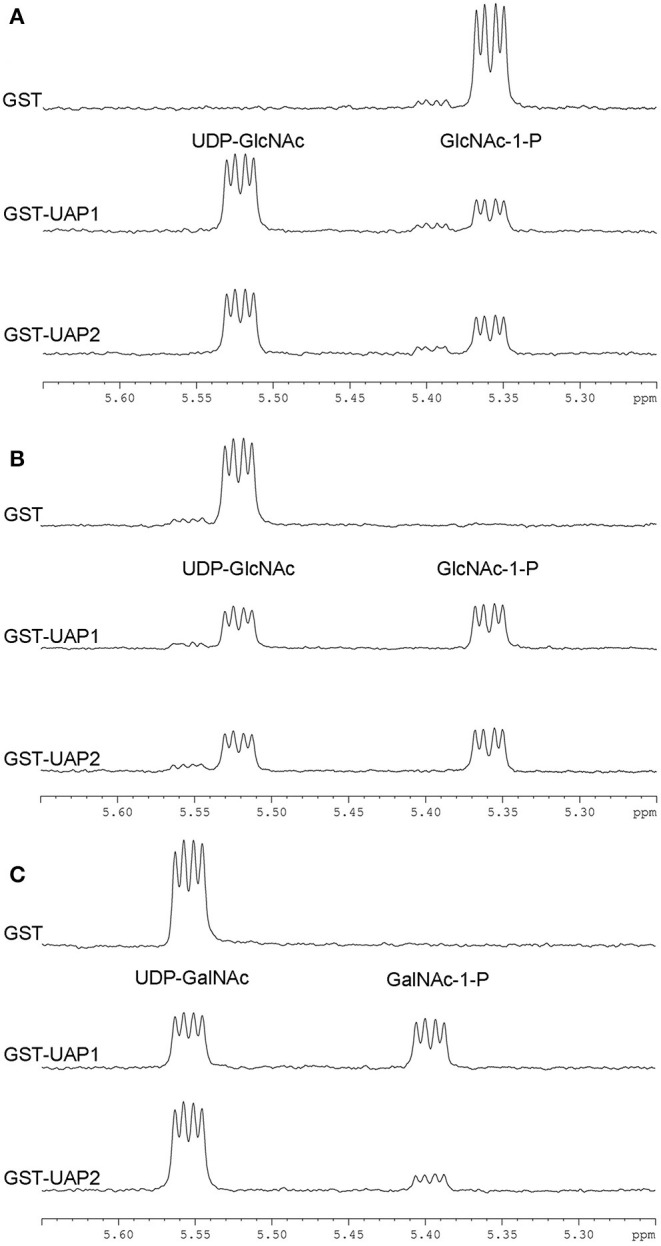
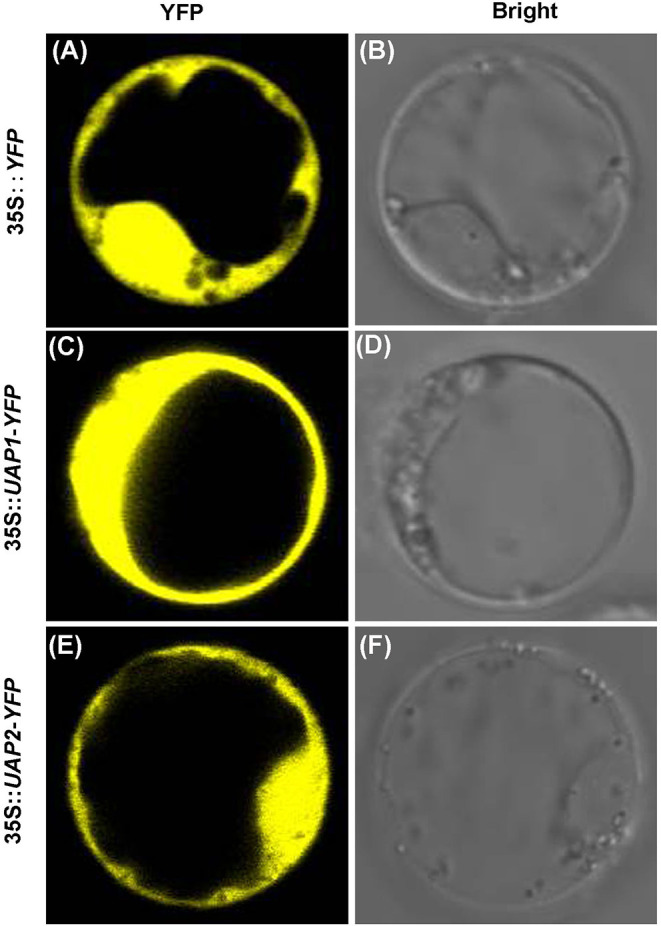
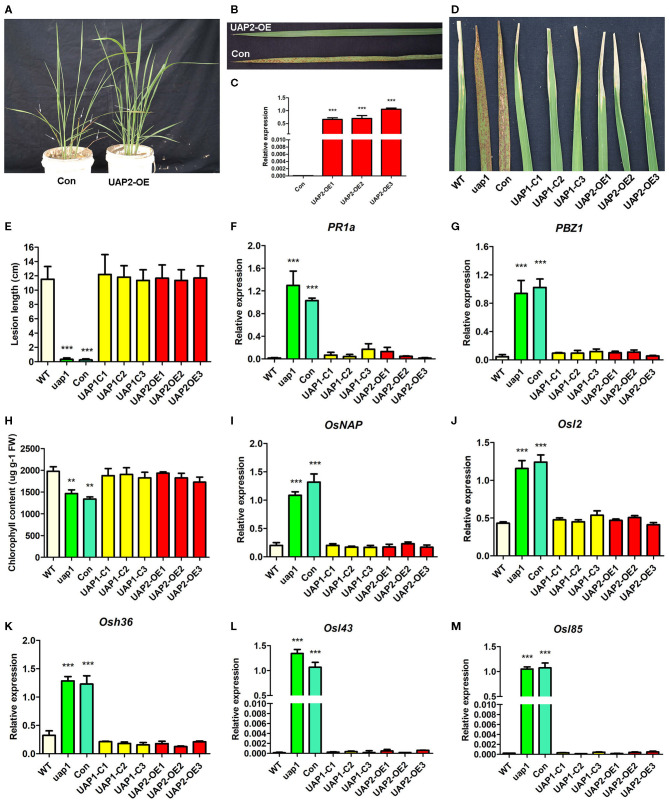
Functional inactivation of UDP--acetylglucosamine pyrophosphorylase 1 (UAP1) induces defense response-related lesion-mimic spots and subsequent early senescence in every newly grown leaf of the rice mutant after a short period's normal growth. However, the molecular mechanism of these leaves sustaining the short period's survival is still unknown. Phenotypic and molecular studies show that defense response-related lesion-mimic spots and early leaf senescence appear on the normally grown leaf and aggravate with the growth time. Bioinformatic analysis reveals that UAP proteins are evolutionarily conserved among eukaryotes, and there exists UAP2 protein except UAP1 protein in many higher organisms, including rice. Rice UAP2 and UAP1 proteins present high sequence identities and very similar predicted 3D structures. Transcriptional expression profile of the gene decreases with the appearance and aggravating of leaf spots and early senescence of , implying the role of the gene in maintaining the initial normal growth of leaves. Enzymatic experiments verified that the UAP2 protein performs highly similar UAP enzymatic activity with the UAP1 protein, catalyzing the biosynthesis of UDP-GlcNAc. And these two UAP proteins are found to have the same subcellular localization in the cytoplasm, where they most presumably perform their functions. Overexpression of the gene in plants succeeds to rescue their leaf mutant phenotype to normal, providing direct evidence for the similar function of the gene as the gene. The gene is mainly expressed in the young leaf stage for functions, while the gene is highly expressed during the whole leaf developmental stages. Based on these findings, it is suggested that and play key roles in rice leaf survival during its development in a synergetic manner, protecting the leaf from early senescence.
UDP-N-乙酰葡糖胺焦磷酸化酶1(UAP1)的功能失活会在水稻突变体正常生长短时间后,诱导每个新长出叶片上出现与防御反应相关的类病斑,并随后出现早期衰老。然而,这些叶片维持短时间存活的分子机制仍不清楚。表型和分子研究表明,与防御反应相关的类病斑和叶片早期衰老出现在正常生长的叶片上,并随生长时间而加重。生物信息学分析表明,UAP蛋白在真核生物中进化保守,在包括水稻在内的许多高等生物中,除UAP1蛋白外还存在UAP2蛋白。水稻UAP2和UAP1蛋白具有高度的序列同一性和非常相似的预测三维结构。该基因的转录表达谱随着叶片斑点的出现和加重以及叶片的早期衰老而降低,这意味着该基因在维持叶片的初始正常生长中发挥作用。酶学实验证实,UAP2蛋白与UAP1蛋白具有高度相似的UAP酶活性,催化UDP-GlcNAc的生物合成。并且发现这两种UAP蛋白在细胞质中具有相同的亚细胞定位,它们很可能在那里发挥功能。在植物中过表达该基因成功地将其叶片突变体表型恢复正常,为该基因与该基因功能相似提供了直接证据。该基因主要在幼叶阶段表达以发挥功能,而该基因在叶片发育的整个阶段都高度表达。基于这些发现,表明和在水稻叶片发育过程中的存活中以协同方式发挥关键作用,保护叶片免于早期衰老。