Presgraves Daven C, Meiklejohn Colin D
Department of Biology, University of Rochester, Rochester, NY, United States.
School of Biological Sciences, University of Nebraska, Lincoln, NE, United States.
Front Genet. 2021 Jun 23;12:669045. doi: 10.3389/fgene.2021.669045. eCollection 2021.
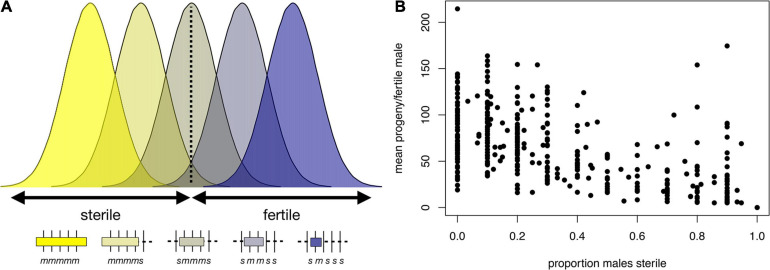
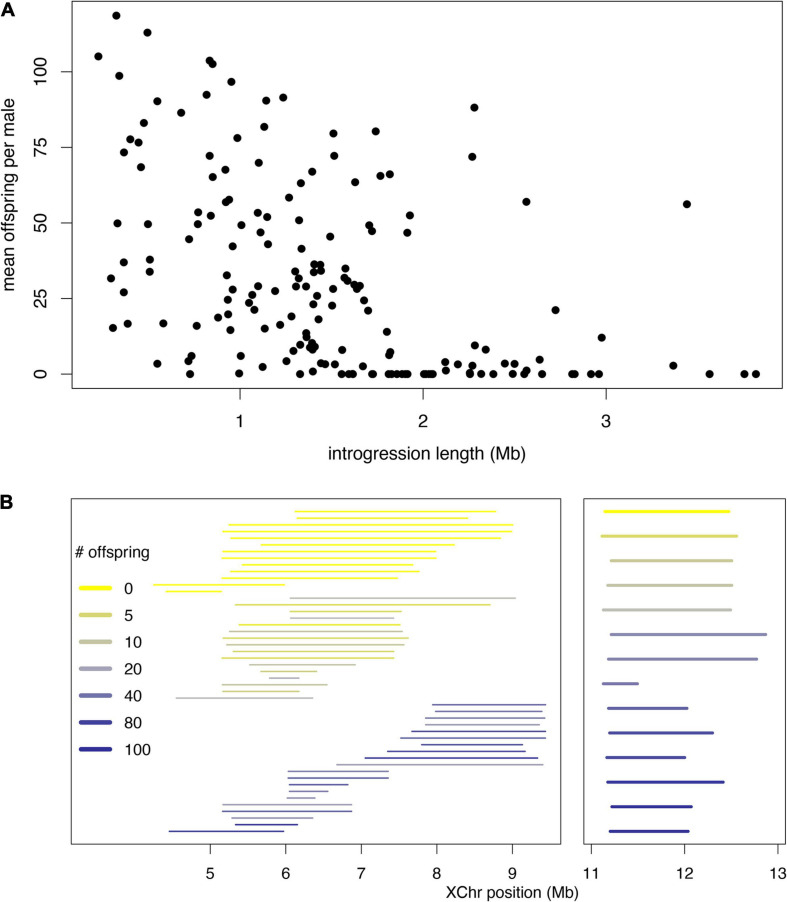
The three fruitfly species of the clade- , and - have served as important models in speciation genetics for over 40 years. These species are reproductively isolated by geography, ecology, sexual signals, postmating-prezygotic interactions, and postzygotic genetic incompatibilities. All pairwise crosses between these species conform to Haldane's rule, producing fertile F hybrid females and sterile F hybrid males. The close phylogenetic proximity of the clade species to the model organism, , has empowered genetic analyses of their species differences, including reproductive incompatibilities. But perhaps no phenotype has been subject to more continuous and intensive genetic scrutiny than hybrid male sterility. Here we review the history, progress, and current state of our understanding of hybrid male sterility among the clade species. Our aim is to integrate the available information from experimental and population genetics analyses bearing on the causes and consequences of hybrid male sterility. We highlight numerous conclusions that have emerged as well as issues that remain unresolved. We focus on the special role of sex chromosomes, the fine-scale genetic architecture of hybrid male sterility, and the history of gene flow between species. The biggest surprises to emerge from this work are that () genetic conflicts may be an important general force in the evolution of hybrid incompatibility, () hybrid male sterility is polygenic with contributions of complex epistasis, and () speciation, even among these geographically allopatric taxa, has involved the interplay of gene flow, negative selection, and positive selection. These three conclusions are marked departures from the classical views of speciation that emerged from the modern evolutionary synthesis.
进化枝中的三种果蝇物种,即[具体物种名1]、[具体物种名2]和[具体物种名3],在物种形成遗传学领域作为重要模型已有40多年。这些物种在地理、生态、性信号、交配后合子前相互作用以及合子后遗传不相容性等方面存在生殖隔离。这些物种之间的所有两两杂交都符合霍尔丹法则,产生可育的F1杂种雌性和不育的F1杂种雄性。进化枝物种与模式生物[具体模式生物名]在系统发育上的紧密亲缘关系,使得对它们物种差异的遗传分析成为可能,包括生殖不相容性分析。但也许没有哪种表型比杂种雄性不育受到过更持续、更深入的遗传审视。在此,我们回顾了进化枝物种中杂种雄性不育的研究历史、进展和当前认知状态。我们的目的是整合来自实验遗传学和群体遗传学分析的现有信息,以探讨杂种雄性不育的成因及后果。我们强调了已得出的众多结论以及仍未解决的问题。我们聚焦于性染色体的特殊作用、杂种雄性不育的精细遗传结构以及物种间基因流的历史。这项工作中出现的最大惊喜在于:(1)遗传冲突可能是杂种不相容性进化中的一股重要普遍力量;(2)杂种雄性不育是多基因的,存在复杂的上位性作用;(3)物种形成,即使在这些地理上异域分布的分类群中,也涉及基因流、负选择和正选择的相互作用。这三个结论与现代进化综合理论中形成的物种形成经典观点有显著不同。