Udroiu Ion, Sgura Antonella
Department of Science, Roma Tre University, Rome 00146, Italy.
World J Stem Cells. 2021 Jun 26;13(6):594-604. doi: 10.4252/wjsc.v13.i6.594.
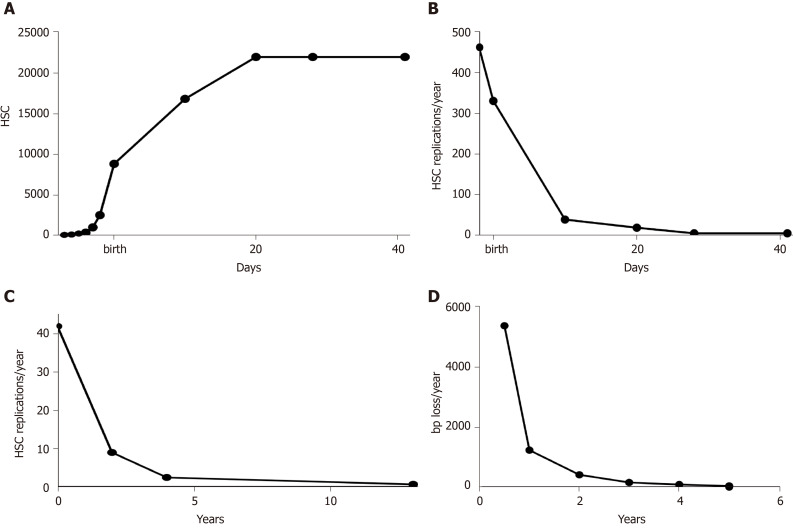
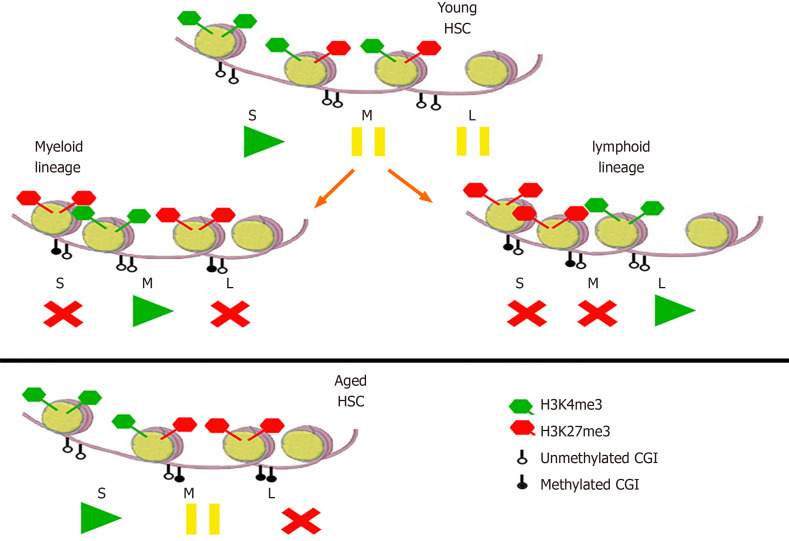
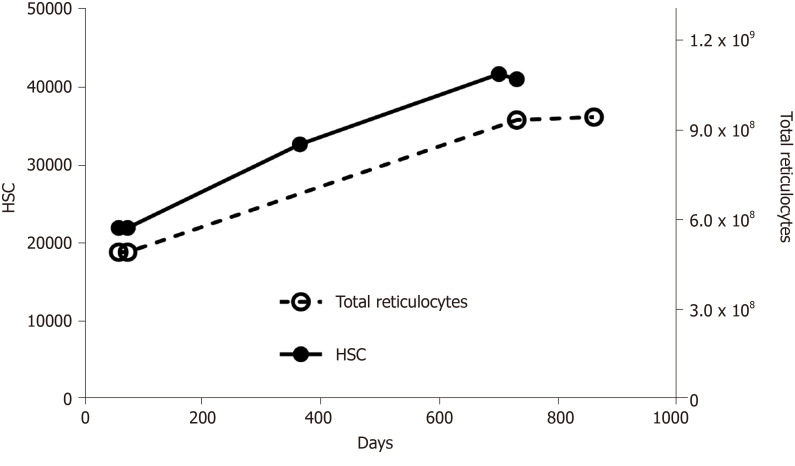
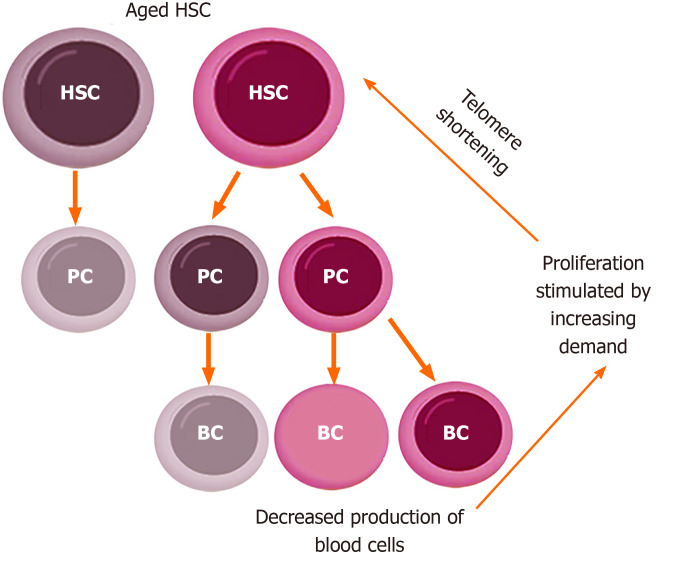
In the hematopoietic system, a small number of stem cells produce a progeny of several distinct lineages. During ontogeny, they arise in the aorta-gonad-mesonephros region of the embryo and the placenta, afterwards colonise the liver and finally the bone marrow. After this fetal phase of rapid expansion, the number of hematopoietic stem cells continues to grow, in order to sustain the increasing blood volume of the developing newborn, and eventually reaches a steady-state. The kinetics of this growth are mirrored by the rates of telomere shortening in leukocytes. During adulthood, hematopoietic stem cells undergo a very small number of cell divisions. Nonetheless, they are subjected to aging, eventually reducing their potential to produce differentiated progeny. The causal relationships between telomere shortening, DNA damage, epigenetic changes, and aging have still to be elucidated.
在造血系统中,少量干细胞可产生几个不同谱系的子代细胞。在个体发育过程中,它们起源于胚胎和胎盘的主动脉-性腺-中肾区域,随后定殖于肝脏,最终定殖于骨髓。在这个快速扩张的胎儿期之后,造血干细胞的数量持续增长,以维持发育中新生儿不断增加的血容量,并最终达到稳态。这种生长的动力学反映在白细胞中端粒缩短的速率上。在成年期,造血干细胞仅经历极少量的细胞分裂。尽管如此,它们仍会衰老,最终降低产生分化子代细胞的能力。端粒缩短、DNA损伤、表观遗传变化与衰老之间的因果关系仍有待阐明。