Ju Lixia, Yang Juan, Zhai Changyun, Chai Shuizhen, Dong Zhiyi, Li Minghua
Department of Integrative Medicine, Shanghai Pulmonary Hospital, Tongji University, Shanghai, China.
Department of Medical Oncology, Yancheng Traditional Chinese Medicine (TCM) Hospital, Nanjing University of Traditional Chinese Medicine, Yancheng, China.
Front Oncol. 2021 Jun 25;11:683318. doi: 10.3389/fonc.2021.683318. eCollection 2021.
The prognosis for small cell lung cancer (SCLC) patients receiving later-line treatment is very poor and there is still no standard treatments after the second-line setting. Analyzing the susceptibility of chemotherapeutic drugs with circulating tumor cells (CTCs) cultured may contribute to optimize the therapeutic regimen. However, so far CTCs have been barely used for studying their chemosensitivity due to the lack of technology to obtain wholly intact and viable CTCs.
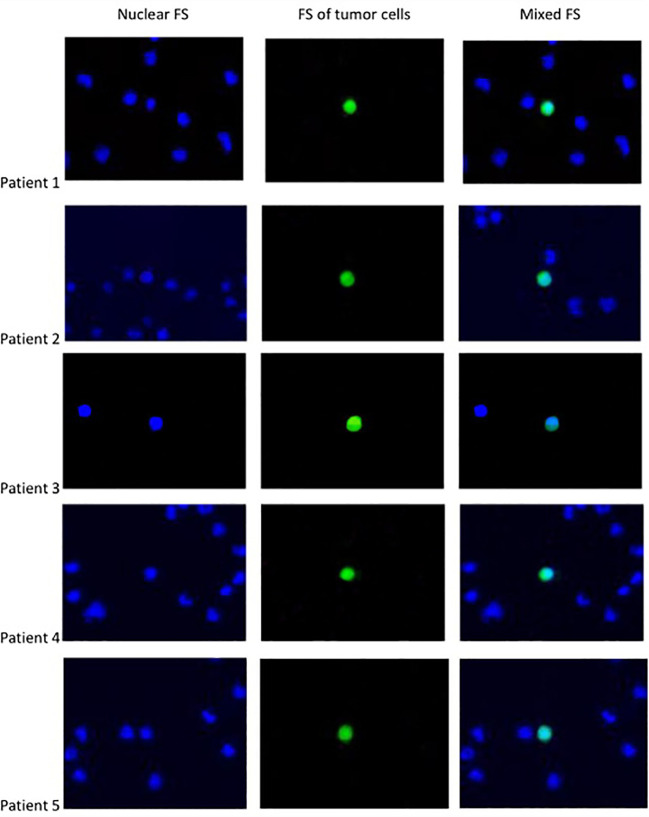
Based on a retrospective study of the therapeutic response of 99 patients with unresectable SCLC, the CTC count in 14 SCLC patients was detected before and after chemotherapy to evaluate its role as a potential marker of response. Furthermore, the drug susceptibility of CTCs cultured obtained from ClearCell FX System was tested and the therapy response was evaluated.
All of the 99 patients received the first-line chemotherapy and the objective response rate (ORR) was 74.7%. A total of 36 patients received the second-line therapy and the average duration was 2.6 months, and only 11 cases out of them received the third-line therapy but no one responded. The change of CTC counts was identified to be correlated with therapy response. However all the five SCLC patients who were administered with the drugs according to the drug susceptibility test of CTCs for two cycles underwent progression of disease.
The results showed that the responses of chemotherapy are very poor in later lines and the drug susceptibility test using CTCs primary cultured may not benefit the improvement of therapeutic regimen of SCLC patients.
接受后线治疗的小细胞肺癌(SCLC)患者预后很差,二线治疗后仍没有标准治疗方案。分析化疗药物对培养的循环肿瘤细胞(CTC)的敏感性可能有助于优化治疗方案。然而,由于缺乏获取完整且存活的CTC的技术,到目前为止,CTC几乎未被用于研究其化疗敏感性。
基于对99例不可切除SCLC患者治疗反应的回顾性研究,检测14例SCLC患者化疗前后的CTC计数,以评估其作为反应潜在标志物的作用。此外,对从ClearCell FX系统获得的培养的CTC进行药敏试验并评估治疗反应。
99例患者均接受一线化疗,客观缓解率(ORR)为74.7%。共有36例患者接受二线治疗,平均持续时间为2.6个月,其中只有11例接受三线治疗,但均无反应。CTC计数的变化被确定与治疗反应相关。然而,所有根据CTC药敏试验给药两个周期的5例SCLC患者均病情进展。
结果表明,后线化疗反应很差,使用原代培养的CTC进行药敏试验可能无助于改善SCLC患者的治疗方案。