Clinical Genome Center, KingMed Diagnostics, Guangzhou, China.
Institute of KingMed Translational Medicine, Guangzhou, China.
Pathol Oncol Res. 2021 Apr 7;27:602726. doi: 10.3389/pore.2021.602726. eCollection 2021.
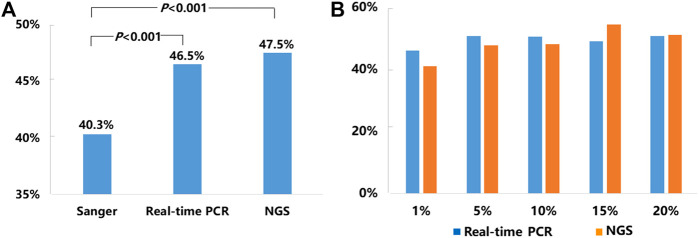
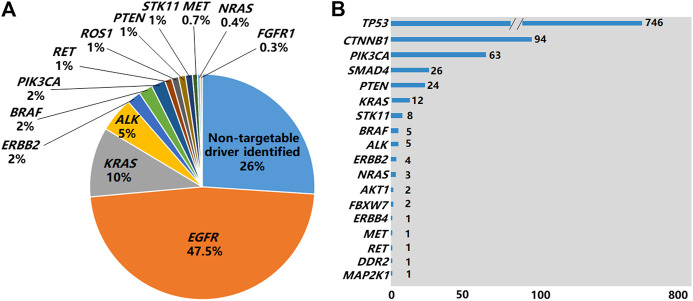
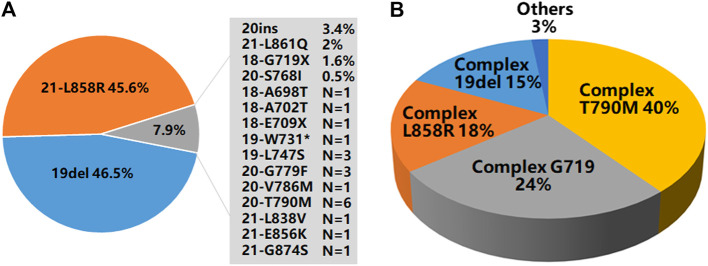
Genotyping epidermal growth factor receptor () gene in patients with advanced non-small cell lung cancers (NSCLC) is essential for identifying those patients who may benefit from targeted therapies. Systemically evaluating mutation detection rates of different methods currently used in clinical setting will provide valuable information to clinicians and laboratory scientists who take care of NSCLC patients. This study retrospectively reviewed the data obtained in our laboratory in last 10 years. A total of 21,324 NSCLC cases successfully underwent genotyping for clinical therapeutic purpose, including 5,244 cases tested by Sanger sequencing, 13,329 cases tested by real-time PCR, and 2,751 tested by next-generation sequencing (NGS). The average mutation rate was 45.1%, with 40.3% identified by Sanger sequencing, 46.5% by real-time PCR and 47.5% by NGS. Of these cases with mutations identified, 93.3% of them harbored a single mutation (92.1% with 19del or L858R, and 7.9% with uncommon mutations) and 6.7% harbored complex mutations. Of the 72 distinct variants identified in this study, 15 of them (single or complex mutations) were newly identified in NSCLC. For these cases with mutations tested by NGS, 65.3% of them also carried tumor-related variants in some non- genes and about one third of them were considered candidates of targeted drugs. NGS method showed advantages over Sanger sequencing and real-time PCR not only by providing the highest mutation detection rate of but also by identifying actionable non- mutations with targeted drugs in clinical setting.
对晚期非小细胞肺癌(NSCLC)患者的表皮生长因子受体()基因进行基因分型对于确定可能受益于靶向治疗的患者至关重要。系统评估目前临床应用中不同方法的检测率,将为照顾 NSCLC 患者的临床医生和实验室科学家提供有价值的信息。本研究回顾性分析了我们实验室过去 10 年获得的数据。共有 21324 例 NSCLC 病例成功进行了用于临床治疗目的的基因分型,其中 5244 例通过 Sanger 测序检测,13329 例通过实时 PCR 检测,2751 例通过下一代测序(NGS)检测。突变率平均为 45.1%,其中 Sanger 测序检出率为 40.3%,实时 PCR 为 46.5%,NGS 为 47.5%。在这些鉴定出的突变病例中,93.3%(92.1%为 19del 或 L858R,7.9%为罕见突变)为单一突变,6.7%为复杂突变。在本研究中鉴定的 72 个不同的突变中,有 15 个(单突变或复杂突变)在 NSCLC 中是新发现的。在这些通过 NGS 检测到的突变病例中,有 65.3%的病例还携带一些非基因中的肿瘤相关变异,约三分之一的病例被认为是靶向药物的候选者。NGS 方法不仅通过提供最高的突变检测率,而且通过在临床环境中识别具有靶向药物的可操作的非基因突变,显示出优于 Sanger 测序和实时 PCR 的优势。