Department of Cardiology, Shanghai Pudong Hospital, Fudan University Pudong Medical Center, Pudong New District, Shanghai 201399, China.
Cardiovasc Ther. 2021 Jun 23;2021:5554569. doi: 10.1155/2021/5554569. eCollection 2021.
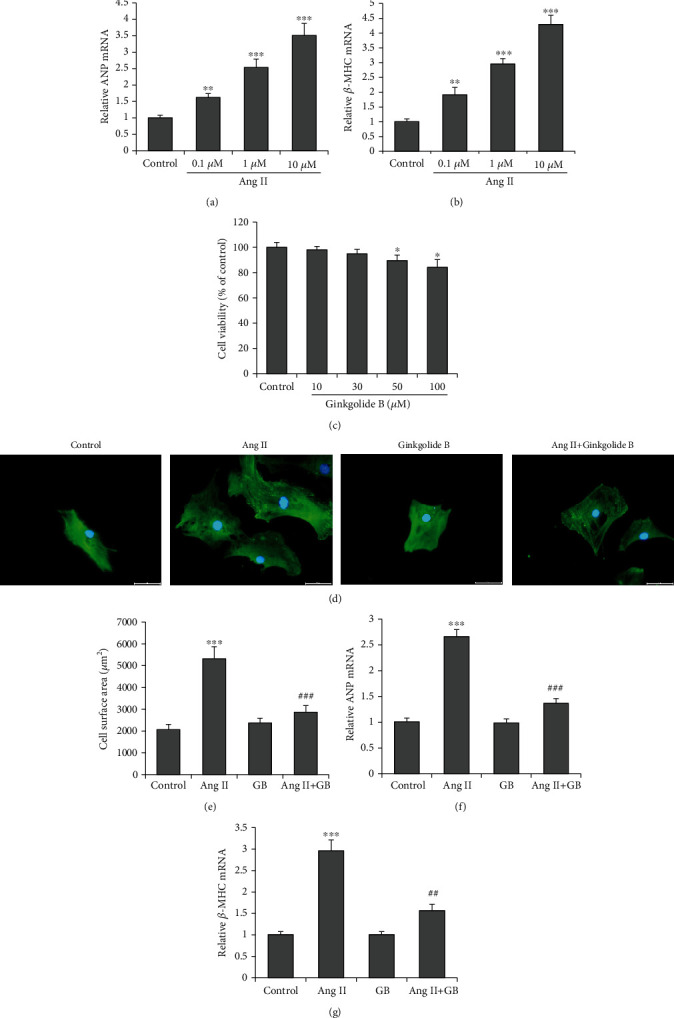
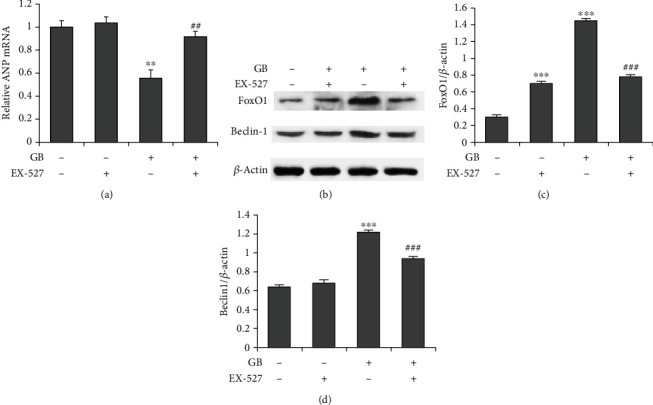
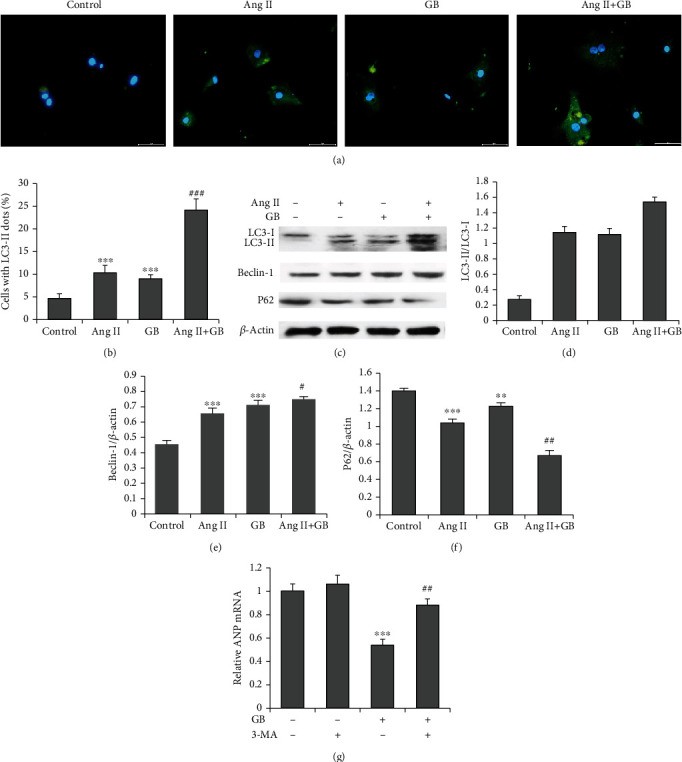
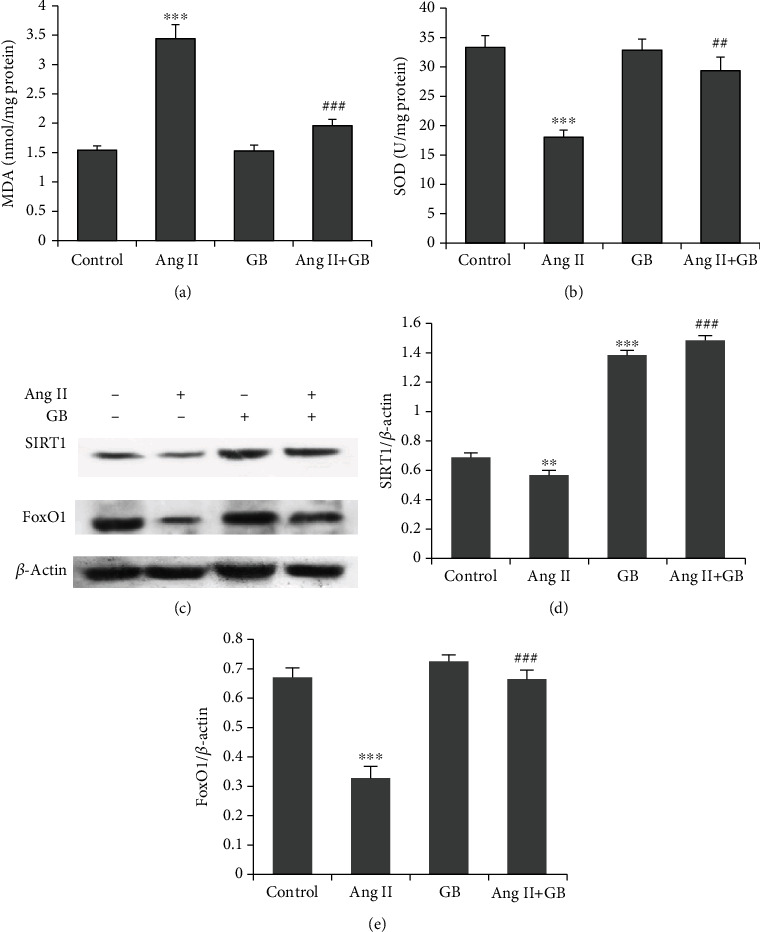
Ginkgolide B (GB) is an active ingredient extracted from Ginkgo biloba leaves. However, the effects of GB on cardiac hypertrophy remain unclear. The study is aimed at determining whether GB could alleviate cardiac hypertrophy and exploring its underlying molecular mechanism. Rat cardiomyocyte cell line H9c2 cells were pretreated with GB and incubated with angiotensin II (Ang II) to simulate an in vitro cardiac hypertrophy model. Cell viability, cell size, hypertrophy markers, and autophagy were determined in H9c2 cells after Ang II treatment. Proteins involved in autophagy and the SIRT1 pathway were determined by western blot. Our data demonstrated that GB attenuated Ang II-induced cardiac hypertrophy and reduced the mRNA expressions of hypertrophy marker, atrial natriuretic peptide (ANP), and -myosin heavy chain (-MHC). GB further increased Ang II-induced autophagy in H9c2 cells and modulated expressions of autophagy-related proteins Beclin1 and P62. Modulation of autophagy using autophagy inhibitor 3-methyladenine (3-MA) could abrogate GB-downregulated transcription of NPPA. We then showed that GB attenuated Ang II-induced oxidative stress and reduction in SIRT1 and FoxO1 protein expression. Finally, the effect of GB on autophagy and cardiac hypertrophy could be reversed by SIRT1 inhibitor EX-527. GB inhibits Ang II-induced cardiac hypertrophy by enhancing autophagy via the SIRT1-FoxO1 signaling pathway and might be a potential agent in treating pathological cardiac hypertrophy.
银杏内酯 B(GB)是从银杏叶中提取的一种有效成分。然而,GB 对心肌肥厚的影响尚不清楚。本研究旨在确定 GB 是否能减轻心肌肥厚,并探讨其潜在的分子机制。用 GB 预处理大鼠心肌细胞系 H9c2 细胞,并用血管紧张素 II(Ang II)孵育以模拟体外心肌肥厚模型。用 Ang II 处理后,测定 H9c2 细胞的细胞活力、细胞大小、肥大标志物和自噬。通过 Western blot 测定自噬和 SIRT1 通路相关的蛋白。我们的数据表明,GB 减轻了 Ang II 诱导的心肌肥厚,降低了肥大标志物、心房利钠肽(ANP)和 -肌球蛋白重链(-MHC)的 mRNA 表达。GB 进一步增加了 Ang II 诱导的 H9c2 细胞自噬,并调节自噬相关蛋白 Beclin1 和 P62 的表达。用自噬抑制剂 3-甲基腺嘌呤(3-MA)调节自噬可以阻断 GB 下调 NPPA 的转录。然后我们表明,GB 减轻了 Ang II 诱导的氧化应激和 SIRT1 和 FoxO1 蛋白表达的减少。最后,SIRT1 抑制剂 EX-527 可以逆转 GB 对自噬和心肌肥厚的作用。GB 通过 SIRT1-FoxO1 信号通路增强自噬来抑制 Ang II 诱导的心肌肥厚,可能是治疗病理性心肌肥厚的潜在药物。