Jang-Liaw Nian-Hong
Conservation Genetics Laboratory Conservation and Research Center Taipei Zoo Taipei City Taiwan.
Ecol Evol. 2021 Jun 4;11(13):8795-8813. doi: 10.1002/ece3.7712. eCollection 2021 Jul.
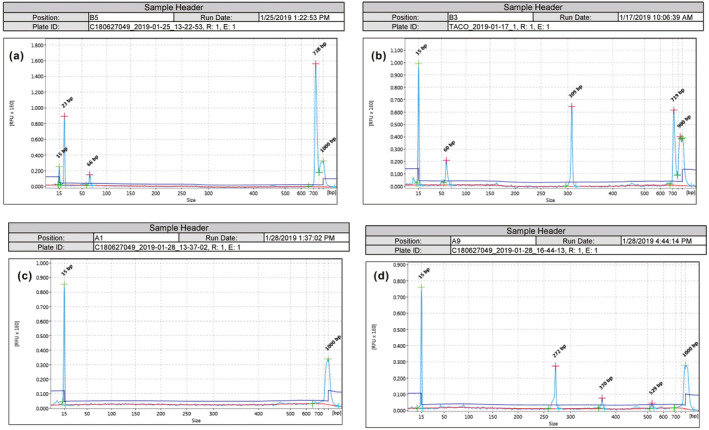
While it is well known that Eurasian otters principally feed on fishes and crustaceans, their detailed diet taxonomies are not fully understood. This is partly due to their nocturnal behavior and the limited resolving power of traditional morphological identification from scat. A suitable, reliable molecular method for diet studies is therefore needed.I performed a series of Sanger-sequencing reactions, utilizing nine primer sets for Eurasian otter diet research. These are mainly based on the barcoding concept to determine the taxonomic composition of spraints. The primer sets target different types of animals, amplifying each separately. This procedure was used to detect the prey contents of 64 spraint samples collected from Kinmen Island. Through high-resolution gel electrophoresis and sequencing, it was evident that PCR products could be successfully amplified by the different primer sets and from spraint samples comprising multiple prey species.Extracted DNA from all spraint samples was PCR-amplified with 9 primer sets. In total, 16 prey types were identified across all 64 samples. Fourteen were identified at the species level.The aim of this study was to develop and apply a novel diet research method to Eurasian otters. Eight of the primers are universal primers designed for COI segments of different animal groups, and one primer set was designed specifically for tilapia groups. This method can be applied to study the diets of not only Kinmen Eurasian otter populations, but also other Eurasian otter populations and other small carnivorous animals.
虽然众所周知欧亚水獭主要以鱼类和甲壳类动物为食,但其详细的饮食分类尚未完全了解。部分原因是它们的夜行性以及从粪便进行传统形态学鉴定的分辨能力有限。因此,需要一种合适、可靠的分子方法来进行饮食研究。
我进行了一系列桑格测序反应,利用九组引物进行欧亚水獭饮食研究。这些主要基于条形码概念来确定粪便的分类组成。引物组针对不同类型的动物,分别进行扩增。该程序用于检测从金门岛收集的64份粪便样本中的猎物成分。通过高分辨率凝胶电泳和测序,很明显不同的引物组能够成功扩增PCR产物,并且能从包含多种猎物物种的粪便样本中扩增出来。
从所有粪便样本中提取的DNA用9组引物进行PCR扩增。在所有64个样本中总共鉴定出16种猎物类型。其中14种在物种水平上得到鉴定。
本研究的目的是开发并将一种新的饮食研究方法应用于欧亚水獭。其中8种引物是为不同动物群体的细胞色素氧化酶亚基I(COI)片段设计的通用引物,还有一组引物是专门为罗非鱼群体设计的。这种方法不仅可以应用于研究金门欧亚水獭种群的饮食,还可以应用于其他欧亚水獭种群以及其他小型食肉动物的饮食研究。