
系统性红斑狼疮的关节和软组织受累的影像学表现。
Imaging of Joint and Soft Tissue Involvement in Systemic Lupus Erythematosus.
机构信息
Polytechnic University of Marche, Rheumatology Unit, Department of Clinical and Molecular Sciences, "Carlo Urbani" Hospital, Via Aldo Moro 25, 60035 Jesi, Ancona, Italy.
出版信息
Curr Rheumatol Rep. 2021 Jul 16;23(9):73. doi: 10.1007/s11926-021-01040-8.
PURPOSE OF REVIEW
To highlight the potential uses and applications of imaging in the assessment of the most common and relevant musculoskeletal (MSK) manifestations in systemic lupus erythematosus (SLE).
RECENT FINDINGS
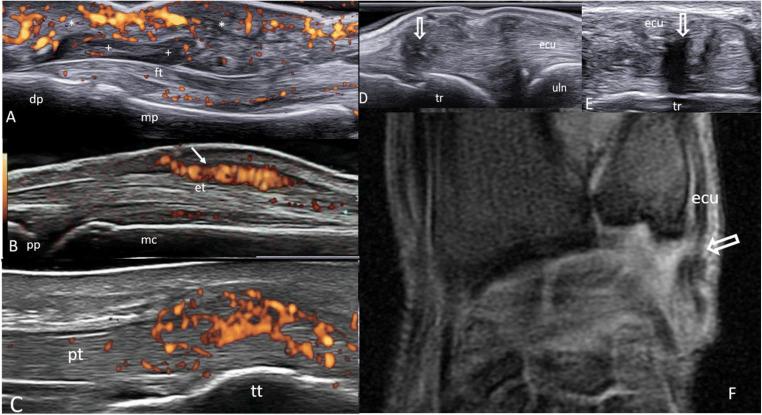
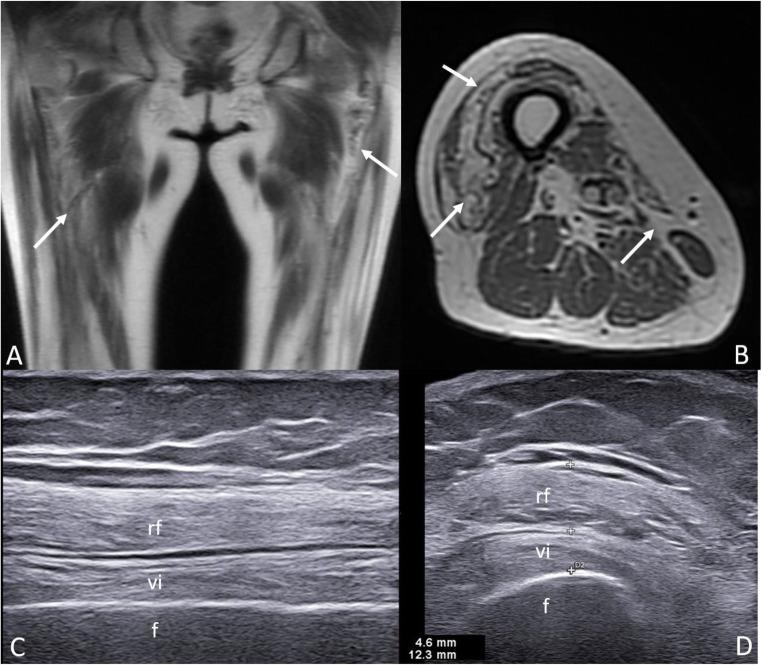
Ultrasound (US) and magnetic resonance imaging (MRI) are accurate and sensitive in the assessment of inflammation and structural damage at the joint and soft tissue structures in patients with SLE. The US is particularly helpful for the detection of joint and/or tendon inflammation in patients with arthralgia but without clinical synovitis, and for the early identification of bone erosions. MRI plays a key role in the early diagnosis of osteonecrosis and in the assessment of muscle involvement (i.e., myositis and myopathy). Conventional radiography (CR) remains the traditional gold standard for the evaluation of structural damage in patients with joint involvement, and for the study of bone pathology. The diagnostic value of CR is affected by the poor sensitivity in demonstrating early structural changes at joint and soft tissue level. Computed tomography allows a detailed evaluation of bone damage. However, the inability to distinguish different soft tissues and the need for ionizing radiation limit its use to selected clinical circumstances. Nuclear imaging techniques are valuable resources in patients with suspected bone infection (i.e., osteomyelitis), especially when MRI is contraindicated. Finally, dual energy X-ray absorptiometry represents the imaging mainstay for the assessment and monitoring of bone status in patients with or at-risk of osteoporosis. Imaging provides relevant and valuable information in the assessment of MSK involvement in SLE.
目的综述
强调影像学在评估系统性红斑狼疮(SLE)最常见和相关的肌肉骨骼(MSK)表现中的潜在用途和应用。
最新发现
超声(US)和磁共振成像(MRI)在评估 SLE 患者关节和软组织结构的炎症和结构损伤方面具有准确性和敏感性。US 特别有助于检测有关节痛但无临床滑膜炎的患者的关节和/或肌腱炎症,并有助于早期识别骨侵蚀。MRI 在早期诊断骨坏死和评估肌肉受累(即肌炎和肌病)方面发挥着关键作用。传统射线照相(CR)仍然是评估关节受累患者结构损伤和骨骼病理学的传统金标准。CR 的诊断价值受到在关节和软组织水平上显示早期结构变化的敏感性差的影响。计算机断层扫描允许对骨损伤进行详细评估。然而,由于无法区分不同的软组织以及需要电离辐射,其在选择的临床情况下限制使用。核成像技术是怀疑骨骼感染(即骨髓炎)患者的有价值的资源,尤其是在 MRI 禁忌的情况下。最后,双能 X 射线吸收法是评估和监测骨质疏松症或有骨质疏松症风险的患者骨骼状况的影像学主要方法。影像学在评估 SLE 的 MSK 受累方面提供了相关和有价值的信息。




 Zotero 插件